Taiwan Plans to Make Unauthorised AI-Chip Exports to China a Crime
Taiwan plans to add AI servers and cutting-edge chips to its export-control list, making unauthorised shipments to China a crime under the Foreign Trade Act.

On this page
Key takeaways
- Taiwan's economic affairs minister, Kung Ming-hsin, told Bloomberg News that Taipei plans to add AI servers and cutting-edge semiconductors to its list of controlled export items, in an interview reported on October 16, 2026.
- Once the measures take effect, shipping restricted AI hardware to China would become a criminal offence under Taiwan's Foreign Trade Act; today prosecutors can only charge suspected smugglers under other local laws.
- Kung declined to give a timetable, and the scope of the controls is undefined, so the plan is announced but not yet in force.
- The controls would build on U.S. restrictions first imposed in 2022 and on a January 2026 U.S.-Taiwan trade agreement in which TSMC-led firms pledged $250 billion in U.S. semiconductor and AI investment.
- Taiwan's semiconductor exports reached a record $87.22 billion in September 2026, up 60.9% year on year, a figure reported by CryptoBriefing.
Taiwan is preparing to tighten its export controls on AI chips and bring them closer to U.S. restrictions, a step that would make unauthorised shipments of advanced AI hardware to China a criminal offence. Economy Minister Kung Ming-hsin told Bloomberg News that Taipei plans to add AI servers and cutting-edge semiconductors to its list of controlled items, in an interview reported on October 16, 2026.
Related reading: TSMC Posts a Sixth Straight Record Quarter as AI Demand Outruns Supply · TSMC's August Revenue Hits a Record NT$514.8 Billion as AI Demand Outruns Supply.
Kung declined to say when the government would implement the measures, so the plan is announced rather than in force. He also gave no definition of how far the term “advanced” reaches, so the practical scope of the controls is undefined.
The change is legal as much as commercial. Taiwan does not currently treat unauthorised AI-chip exports to China as a crime, and prosecutors who suspect smuggling can only charge people under other, existing local laws. Once the new measures take effect, restricted AI hardware sent to China would fall under the Foreign Trade Act, according to the same Bloomberg report.
What changes, and what does not
Taiwan already controls some strategic exports, and it has not been passive on AI chips. In May 2026 it detained its first known AI-chip smugglers under new policy measures, with further legal actions following by October, as CryptoBriefing reported. What is new in Kung’s plan is the category of goods covered and the penalty attached to moving them.
Adding AI servers matters because a server is harder to hide than a single chip. A graphics card can travel in a suitcase. A rack-scale AI system needs freight, power documentation and a buyer willing to file the paperwork. If Taiwan adds servers to the controlled list, the enforcement question shifts from catching a courier to auditing a supply chain.
That sequence, a clear signal followed by silence on detail, has repeated through the year. Taiwan first signalled plans to restrict sales to all Chinese customers. In June it confirmed it was in consultations with Washington. The October remarks move the plan one stage further without fixing a date.
Why Taiwan’s rules carry weight
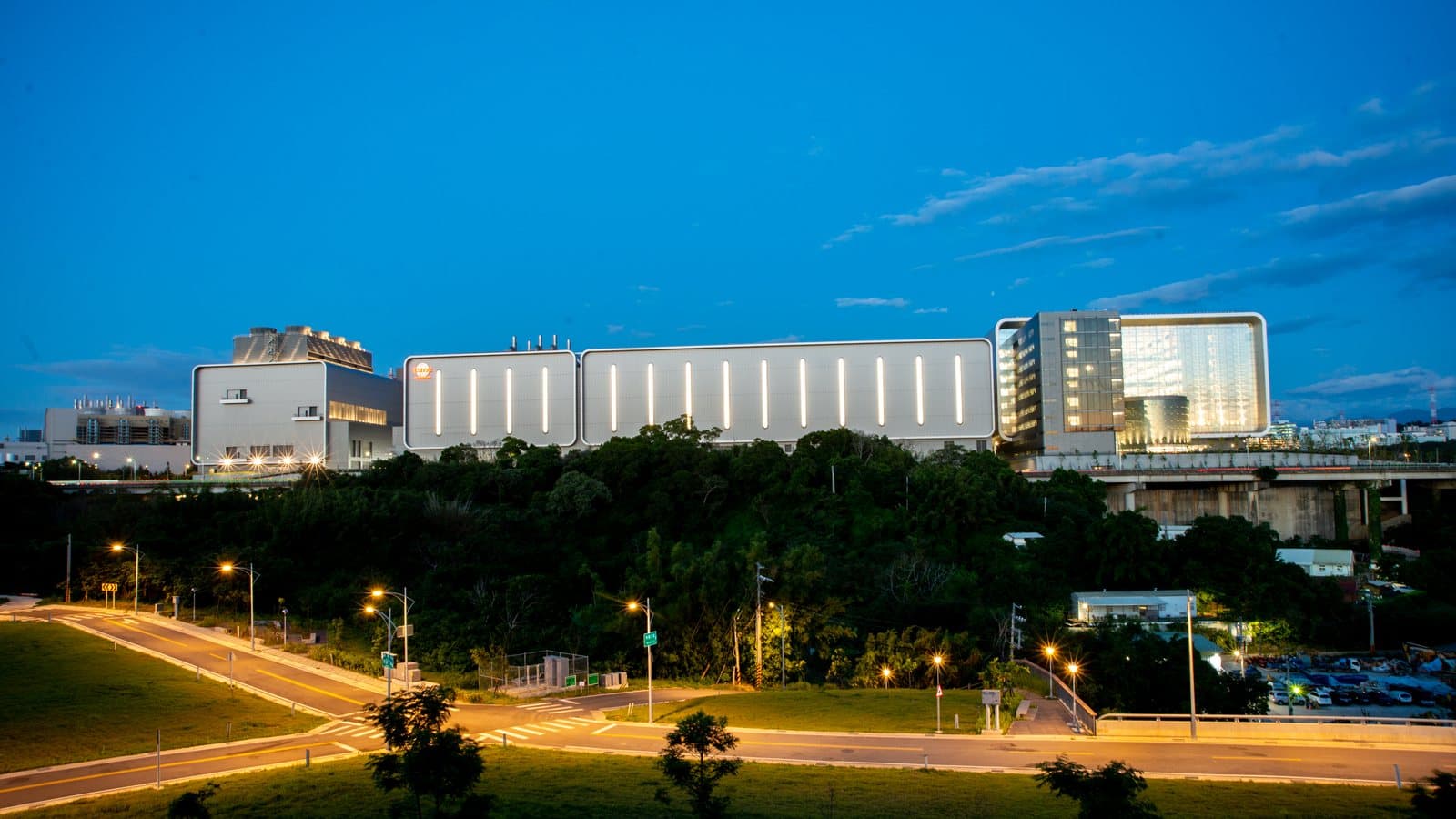
Taiwan is a semiconductor manufacturing hub, and the fabrication plants at its centre, including TSMC’s Fab 18, sit at the start of the AI-hardware supply chain rather than at the end of it. That position changes what an export control can do. A U.S. rule acts at the point of sale or shipment from American soil. A Taiwanese rule would act where much of the most advanced logic is fabricated in the first place, one step closer to the die. A rule at the fabrication stage reaches more of the supply chain, but it only bites if it names the right goods. The undefined scope of “advanced” AI chips is therefore more than a drafting detail.
The black market the rules are aimed at
The United States has restricted Chinese purchases of AI chips from Nvidia and AMD for years, yet companies in China have still obtained accelerators through a black market. U.S. officials allege that billions of dollars’ worth of Nvidia hardware reached China over the past few years, a figure that is an allegation rather than an audited number.
The enforcement record is thin but not empty. In its October 9 China-Taiwan update, the Institute for the Study of War reported that U.S. and Taiwanese authorities had indicted multiple individuals for illegally reselling U.S.-manufactured semiconductors to the People’s Republic of China, in some cases routing the chips through Southeast Asia to evade U.S. export restrictions. Taiwan’s own first smuggling detentions, in May 2026, followed the same pattern.
Not yet a law
The controls are planned, not in force. Kung gave no start date, and no text has been published, so what counts as an “advanced” chip and who is liable under the Foreign Trade Act remain open.
Why Taipei is moving now
The policy builds on U.S. export restrictions first imposed in 2022 to limit China’s military capabilities. It also sits inside a trade relationship that has changed shape. As part of the January 2026 U.S.-Taiwan trade agreement, Taiwanese firms led by TSMC pledged $250 billion in U.S. semiconductor and AI investment. Taiwan’s government confirmed in June 2026 that it was in ongoing consultations with Washington on advanced-chip rules, having first signalled plans to restrict sales to all Chinese customers.
Kung ties the alignment to the trade deal. He said some of Taiwan’s controlled-item measures will correspond to American ones because of commitments made in the Agreement on Reciprocal Trade.
“Going forward, some of our measures on controlled items will correspond to American ones because we have made quite some commitments in the Agreement on Reciprocal Trade.” — Taiwan Economy Minister Kung Ming-hsin, interview with Bloomberg News, October 2026
Once in place, the controls would rank among the strictest measures from President Lai Ching-te’s administration to protect Taiwan’s technological and national security interests. Lai has said Taiwan will address unspecified U.S. concerns over export controls, without offering details.
The alignment runs in both directions. Kung said this week that Taiwan plans to raise billions of dollars to develop industrial parks in the United States, building a base for an in-country supply chain for Nvidia and other AI-hardware makers.
Kung’s remarks were made to a foreign news organisation, and they carry two messages at once. To Washington, the message is that Taiwan will close the gaps U.S. officials have complained about. To Taiwanese industry, the message is softer, because the government has not published a list and no one has to change behaviour today. The gap between signalling and implementation is a familiar feature of export-control politics. An announcement tests the reaction before the rule is written, and it leaves room to narrow or widen the final text.
The export boom underneath the politics
Taiwan’s semiconductor exports hit a record $87.22 billion in September 2026, up 60.9% year on year, driven largely by U.S. demand, according to trade data reported by CryptoBriefing. The number is worth holding next to the export-controls story for a simple reason. The part of Taiwan’s chip trade that goes to America is booming, and the part that would be restricted is the part aimed at China.
That changes the political cost of tighter controls. Cutting off Chinese buyers would once have threatened a large share of Taiwanese output. Today the growth is concentrated in U.S.-bound sales, which makes the China restriction easier to absorb commercially. This is a judgment about incentives, not a forecast, and the September figure covers all semiconductor exports rather than AI chips alone.
Record exports and tighter controls can coexist. The September figure describes total semiconductor shipments, most of them outside the AI-accelerator category the new rules would cover, so a strong month does not signal that the controls will be cheap to enforce.
Enforcement is the unresolved part
A criminal penalty matters only if it changes behaviour. Prosecutors can act on a company that files false export documents. They have a harder time with chips that leave Taiwan legally for a third country and are re-exported to China before anyone checks. The ISW’s account of chips routed through Southeast Asia describes exactly that gap.
So the practical reach of the new rules depends on three things that are not yet in place: a definition of which chips are covered, a licensing or screening system at the point of export, and cooperation from the transit countries. Each has its own failure point. A broad definition slows legitimate trade, while a narrow one invites substitution into older parts that still train models. Screening raises costs for Taiwan’s own exporters. And transit-country cooperation depends on governments that have their own reasons to look away.
Controllers and exporters have few tools to trace a chip once it is sealed inside a server and on a ship. Serial-number tracking, end-user certificates and post-shipment audits all depend on records that a determined intermediary can falsify, and each check adds delay to legitimate orders.
What the law adds
Taiwan already intercepts chip smuggling. The new element is a specific criminal offence under the Foreign Trade Act for sending restricted AI hardware to China, which gives prosecutors a charge designed for the offence instead of a workaround.
Caveats
Three parts of this story are reported rather than settled, and the distinction matters.
- The controls are planned, not in force. Kung declined to give a timetable, and the scope of “advanced” AI chips is undefined, so any account of what will be covered is provisional.
- The comparison to U.S. controls is directional. Kung said some measures “will correspond” to American ones; he did not say Taiwan would copy the U.S. rulebook in full, and he gave no list.
- The “billions of dollars” of diverted Nvidia hardware is an allegation from U.S. officials, not an audited figure. It should be read as a claim about scale, not a measurement.
- The record September export figure comes via CryptoBriefing and covers total semiconductor exports. It is reported trade data, and it is not specific to AI chips.
What to watch
- Whether Taipei publishes a definition of the chips and servers covered, and how broad it is.
- Whether a start date appears. A plan without a date cannot be enforced.
- Whether the criminal provision survives contact with industry, which will argue that vague rules chill legitimate sales.
- Whether the U.S. and Taiwan name the transit countries that chip flows use, and whether those countries act.
- Whether the record export run continues, and how much of it is U.S.-bound.
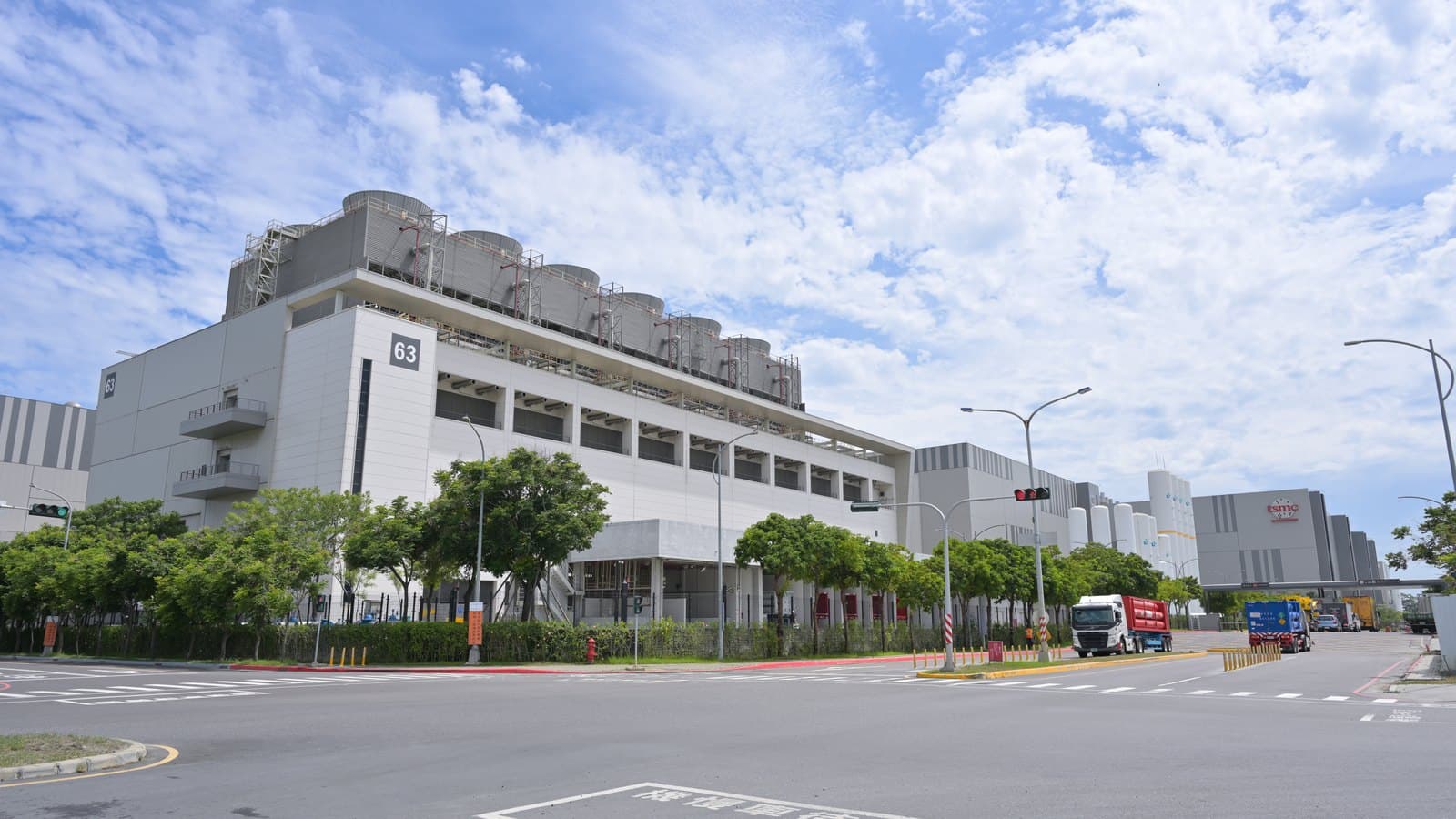
Cover image: TSMC Fab 18 May 2025.jpg by 4300streetcar via Wikimedia Commons, CC BY 4.0.
Tags
Frequently asked questions
- What are Taiwan's new AI-chip export controls?
- Taiwan's government plans to add AI servers and cutting-edge semiconductors to a list of controlled export items, according to Economy Minister Kung Ming-hsin. After the measures take effect, shipping restricted AI hardware to China would be a criminal offence under the Foreign Trade Act.
- When will Taiwan's AI-chip export controls take effect?
- Kung declined to give a timetable, and the exact scope of what counts as an advanced chip is undefined. As reported on October 16, 2026, the controls are planned but not yet in force.
- Why is Taiwan tightening AI-chip exports to China?
- Taipei is aligning with U.S. export restrictions and has said it will address U.S. concerns. Taiwan's government frames the move as protecting its technological and national security interests.
- How is Taiwan enforcing chip export rules now?
- Taiwan detained its first known AI-chip smugglers in May 2026, and U.S. and Taiwanese authorities have since indicted multiple people for illegally reselling U.S.-made semiconductors to China, in some cases routing them through Southeast Asia.

TPW Editorial
Editorial Team
TechPastWeek's editorial team reports and edits every story we publish. We research each piece against primary and credible secondary sources, and a human editor reviews and signs off before it goes live.