TSMC's August Revenue Hits a Record NT$514.8 Billion as AI Demand Outruns Supply
TSMC's August 2026 revenue hit a record NT$514.8 billion, up 53.3% year on year, as AI demand keeps outrunning its expanding fab and packaging capacity.

On this page
On September 10, 2026, TSMC reported record monthly revenue for August: consolidated net revenue of NT$514.806 billion, or about US$16.35 billion, up 10.1 percent from July and 53.3 percent from a year earlier, according to TSMC's own monthly revenue report. It was the fourth consecutive monthly record and the first time the company has cleared NT$500 billion in a single month. Revenue for January through August reached NT$3,386.87 billion, up 39.3 percent year on year.
Related reading: TSMC Posts a Sixth Straight Record Quarter as AI Demand Outruns Supply · Taiwan Plans to Make Unauthorised AI-Chip Exports to China a Crime.
The breadth of coverage that followed focused on one cause: artificial-intelligence demand. TSMC is the supplier to Nvidia, AMD, Apple, Broadcom and the hyperscalers' custom-silicon programs, which makes its monthly revenue the industry's cleanest real-time read on how much AI hardware is actually being bought. On that measure, the answer in August was simple, more than the company can currently build.
What the number actually says
August accelerated rather than plateaued. Bloomberg framed the month as revenue rising 53 percent because demand "outstrips supply," and July's year-on-year growth was already around 45 percent. The cumulative slope tells the same story: revenue through June was up 35.6 percent, through July 37.0 percent, and through August 39.3 percent. A high base is not slowing the growth rate; it is rising with it.
The mix matters, too. TrendForce data cited by CNBC put TSMC's second-quarter foundry market share at 72.5 percent, with Samsung Foundry at 5.9 percent and China's SMIC at 5.4 percent. Demand for AI server processors kept TSMC's 5-, 4- and 3-nanometer lines fully booked through the quarter. In other words, the record is not being driven by a single flagship node: mature leading-edge capacity is being consumed at the same time.
During its July earnings call, TSMC described AI-related demand as "extremely robust," and management has since guided third-quarter revenue to US$44.6 billion–US$45.8 billion. The company has told investors to expect full-year 2026 revenue growth of slightly more than 40 percent in US-dollar terms and lifted its 2026 capital budget to US$60 billion–US$64 billion. August's run rate sits above the full-year guidance, which is why the market read the print as a bet that the fourth quarter will be strong too.
The print also lands in the middle of a live argument about whether AI capital spending is a durable build-out or a front-loaded cycle. The bullish reading leans on the upstream order book: fabs do not book phantom orders, and a growth rate that steps up from roughly 45 percent to 53 percent in a single month is hard to square with a genuine demand pullback. The skeptical reading notes that TSMC's own third-quarter guidance implies sequential growth of roughly 10 percent from the second quarter (healthy, but not the acceleration the monthly figures suggest) and that monthly revenue can be flattered when customers pull orders forward to lock in scarce capacity. Both can be true at once: demand is real and still rising, while its durability beyond 2026 is the open question.
The ceiling is capacity, not orders
The most important thing about a record like this one is what it does not say. TSMC is not demand-constrained; it is constrained by how fast it can convert orders into finished, tested packages. Advanced packaging (principally CoWoS, the process that bonds compute dies and high-bandwidth memory onto a silicon interposer) is the binding step. Industry estimates compiled by SupplyICs put TSMC's CoWoS capacity at roughly 120,000–140,000 wafers per month in mid-2026, up from about 50,000 at the end of 2024, with a further climb toward 150,000–160,000 by year-end. Even so, the supply-demand gap was still estimated at about 10 percent, and Nvidia is reported to hold roughly 60 percent of the available allocation.
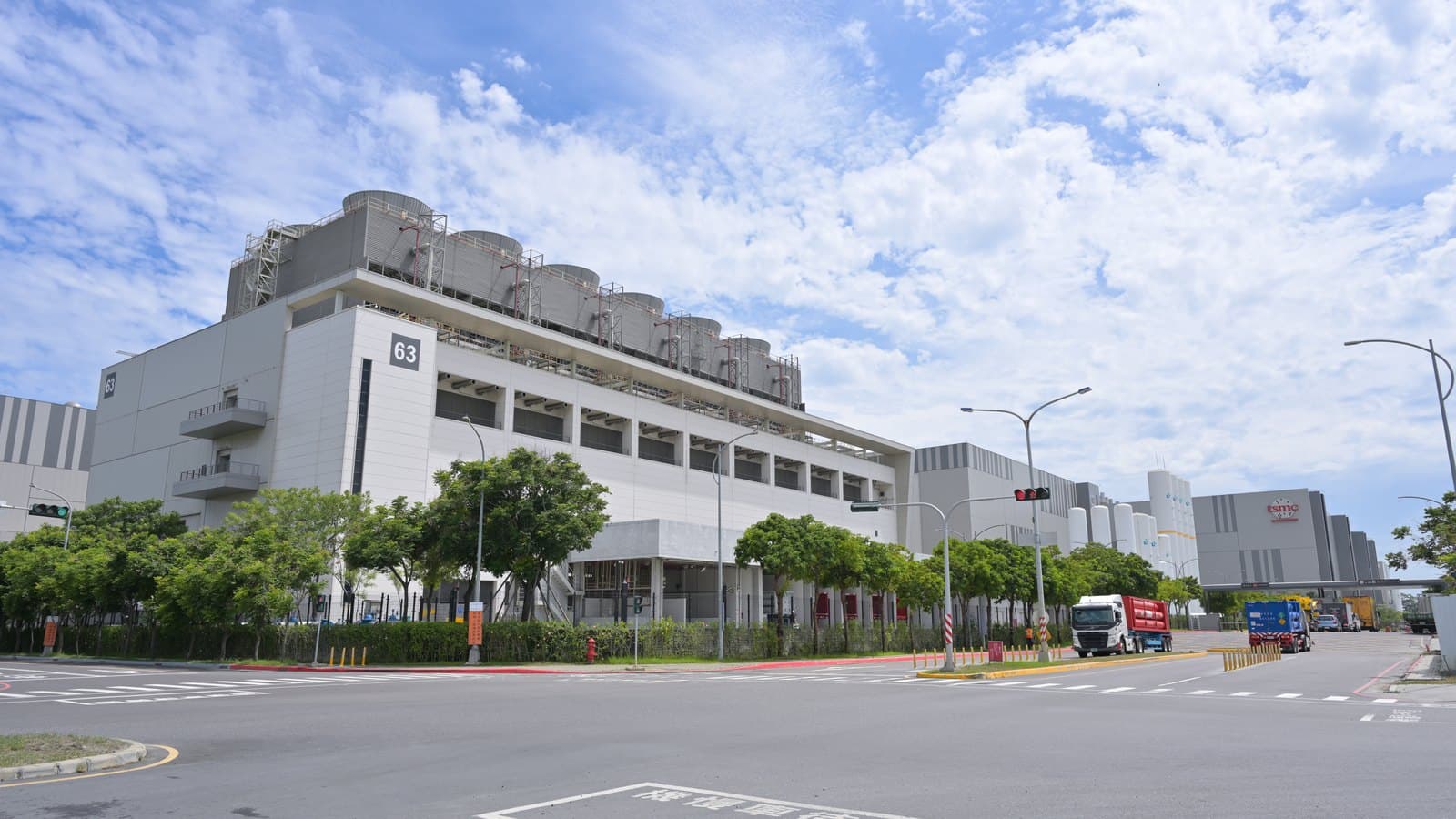
TSMC's own executives have been blunt about the arithmetic. The company is simultaneously working on about 20 fabs in Taiwan and overseas, roughly five times its historical pace, and its need for chipmaking tools has nearly doubled since the end of last year. "Right now you're almost 4x or 5x, trying to catch up, but still you cannot meet demand," deputy co-chief operating officer Cliff Hou said this month, as reported by Bloomberg. Management has separately described the gap between unconstrained demand and available supply as "a very big gap," with packaging "so tight" that it limits what customers can ship.
Why packaging, not wafers, is the gate
A leading AI accelerator needs a front-end wafer, a CoWoS packaging slot and an allocation of high-bandwidth memory. TSMC can now add wafer capacity faster than it can add the advanced-packaging and memory steps that turn a die into a shippable part, which is why record wafer output alone does not satisfy demand.
A record month no longer measures only how much TSMC can sell. It measures how much it can physically finish and package, and that ceiling is still the AI industry's real constraint.
Pricing power, with a catch
Full utilisation across the most advanced nodes is what gives TSMC pricing leverage, and the profit line shows it. Second-quarter operating income rose 65.4 percent year on year and net income rose 77.4 percent, both faster than revenue, according to 24/7 Wall St.. Analysts quoted by Bloomberg Intelligence expect pricing to offset part of the margin drag from the 2-nanometer ramp and from overseas fabs, which TSMC has guided will each dilute gross margin by three to four percentage points. Some planned second-half 2026 price increases have been deferred into the first quarter of 2027, which supports 2027 margins but leaves the near-term mix to carry the load.
Pricing power is not uniform across the stack. TSMC's 5-nanometer family still accounted for roughly a third of revenue in the second quarter, with 2-nanometer only beginning to contribute, and pricing for the newest node is expected to exceed US$30,000 per wafer, up from roughly US$20,000 at 3-nanometer. That gives the company room to raise prices on the nodes its largest customers need most, even as it absorbs the higher costs and lower initial yields of a brand-new process.
The catch is that monthly revenue is not profit. The NT$514.8 billion is nominal growth in New Taiwan dollars, blending volume, product mix, node pricing and currency moves. A weaker NT dollar flatters the local-currency figure without changing how many wafers shipped. And a single record month says nothing about whether AI capital spending holds up in 2027, only that it was still running hot through August.
The memory squeeze running alongside
Advanced nodes are only one half of an AI accelerator. The other half is high-bandwidth memory, and that market is tighter still. J.P. Morgan research estimates DRAM prices will have risen more than 400 percent between the start of 2024 and the end of 2026, and TrendForce expects server DRAM contract prices to rise another 13–18 percent quarter on quarter in the third quarter of 2026. Samsung and SK Hynix, which together control roughly two-thirds of DRAM revenue, have been reported to hold fewer than 10 days of finished inventory, effectively no buffer.
The knock-on is visible well beyond AI. Reuters reported that Huawei and Cambricon raised prices on current and next-generation AI chips by 20–50 percent as high-bandwidth memory costs surged. The same squeeze raises costs for phones, PCs and enterprise storage, because HBM production consumes roughly three times the wafer capacity of equivalent conventional DRAM. Memory is Korea's chokepoint more than TSMC's, but it is the other gate on the same accelerator, and it means TSMC's record month coexists with rising costs across the wider hardware chain.
The concentration risk does not shrink
The more revenue TSMC books, the more the world depends on one island. More than 90 percent of the most advanced logic chips are still fabricated in Taiwan, and Bloomberg Economics has estimated that a conflict severe enough to halt that production could cost the global economy on the order of US$10 trillion. TSMC has responded with a huge overseas build (a commitment to its Arizona campus that started near US$65 billion and has since been described in the US$165 billion–US$265 billion range across planned phases) but the diversification is partial. Arizona is expected to account for only a low double-digit share of TSMC's output for years, and advanced packaging remains concentrated in Taiwan: even wafers made in Phoenix have largely been shipped back to Taiwan for CoWoS. The chokepoint is being hedged at the margin, not relocated.
Caveats and what to watch
Three things are worth holding at once. First, the 53.3 percent figure is year-on-year growth in nominal NT dollars, not a unit count, and it is total company revenue rather than a pure AI line, TSMC also makes smartphone, PC and automotive silicon. Second, the customer list is concentrated: Nvidia is TSMC's single largest customer, and a pause in one hyperscaler's capital spending would be felt quickly. Third, the market's reaction was muted (TSMC shares slipped on the report), which suggests investors are looking past the beat toward 2027 comparisons, Taiwan geopolitics and the cost of the build-out.
Competition is a longer-term concern rather than a near-term one. Samsung Foundry and SMIC are gaining share at the edges, and Intel is pitching its foundry and packaging as a genuine second source, but neither matches TSMC's leading-edge yields or advanced-packaging volume today. The risk is not that TSMC loses its position quickly; it is that customers wary of concentration fund alternatives faster than they otherwise would, which is what the Arizona build, Apple's reported work with Intel, and the scramble for second-source packaging all point toward. A record revenue month does nothing to reduce that incentive; if anything, it sharpens it.
What to watch next is concrete. The September revenue print, due in early October, will show whether NT$500 billion has become the new floor or was a seasonal peak, and TSMC's full third-quarter results will reveal whether pricing held. On the supply side, the pace at which CoWoS capacity climbs toward 200,000 wafers per month and whether TSMC's plan to bring ASML's High-NA lithography into high-volume manufacturing from 2030 stays on schedule will determine how quickly the capacity gap closes. And the memory market (with inventory near record lows and no meaningful new supply before 2027) is the variable most likely to decide whether the AI build-out keeps pulling TSMC to new records or finally meets a ceiling.
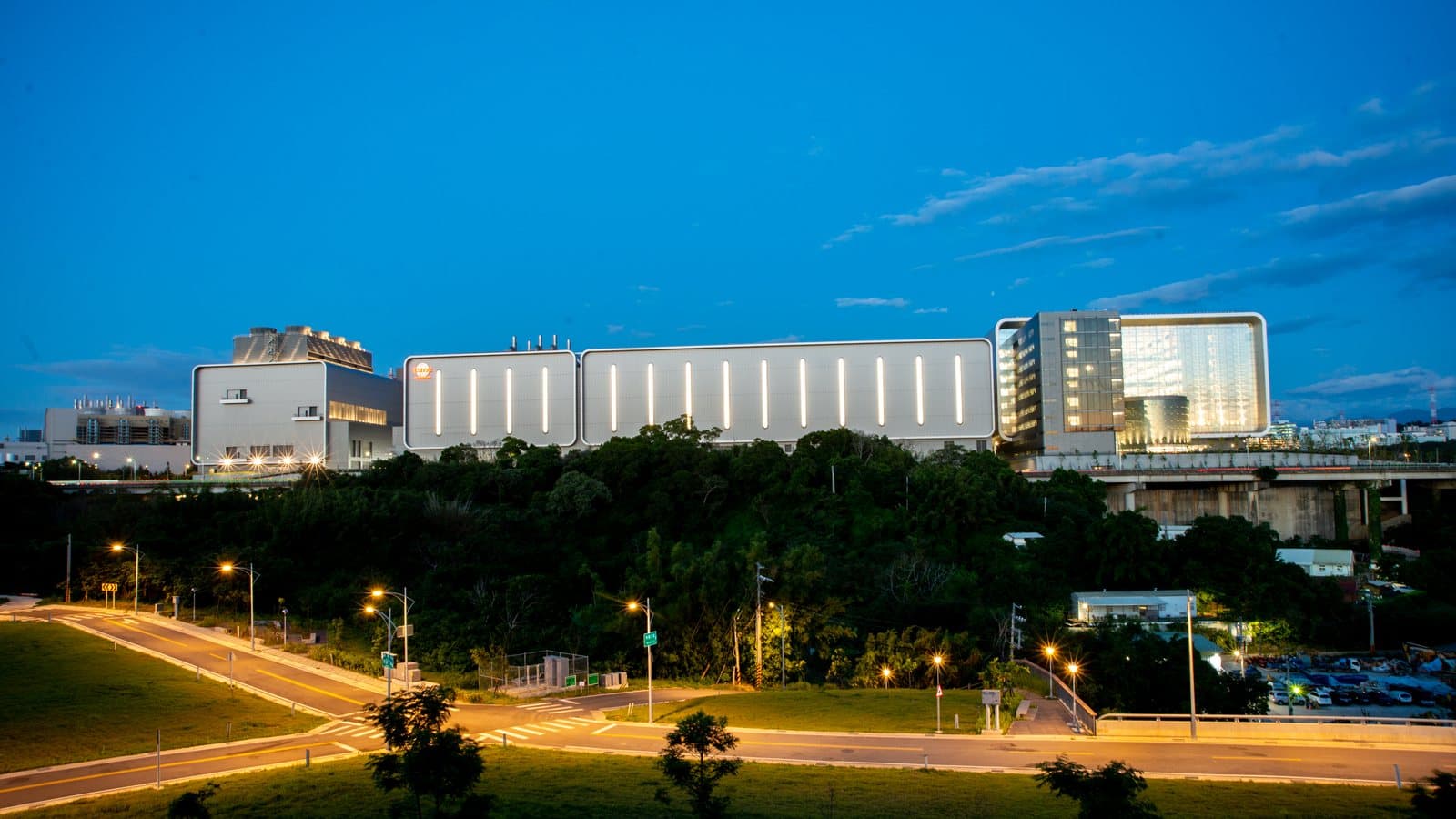
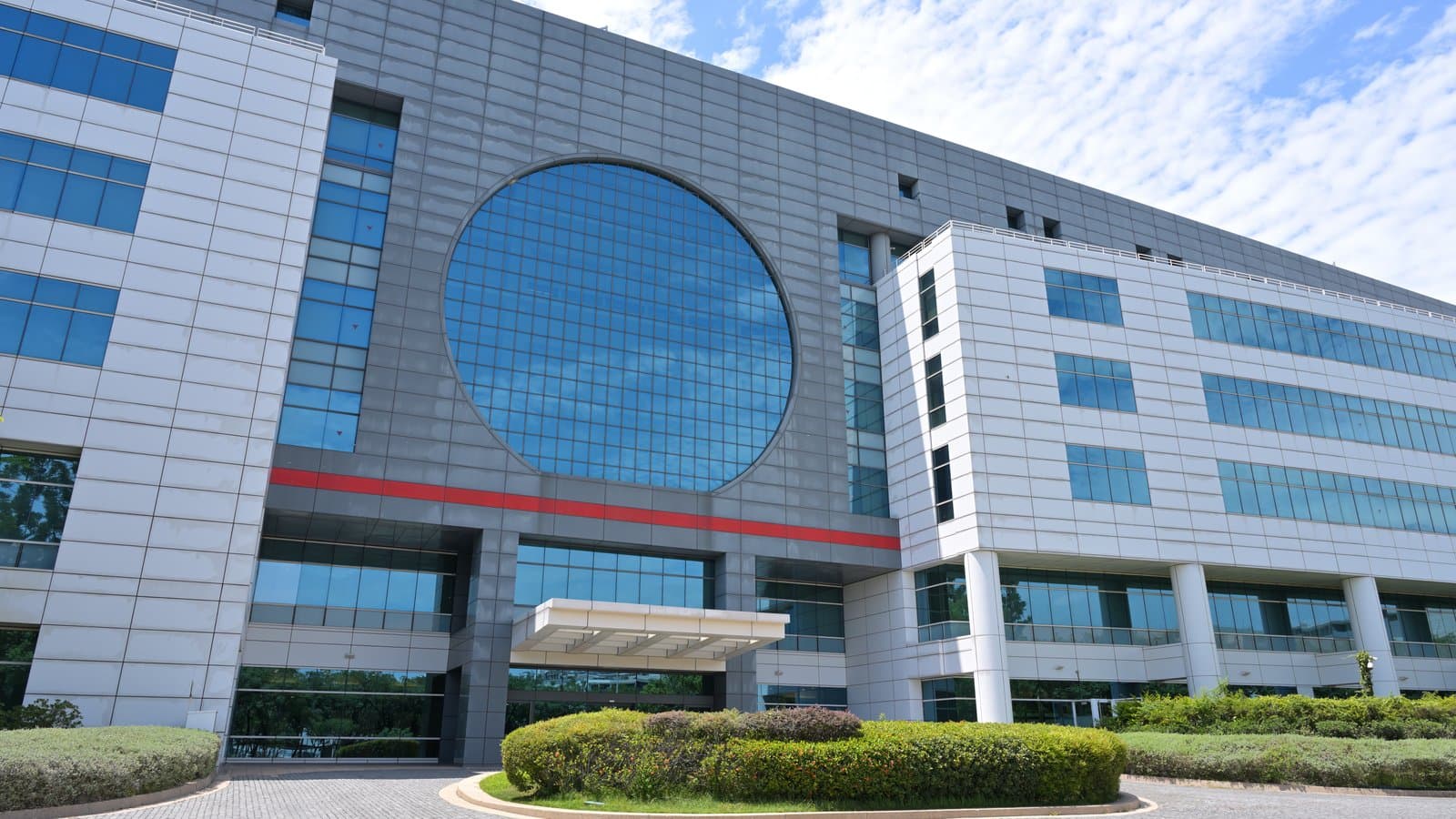
Cover image: TSMC Fab 6 in Taiwan, whose facade window is shaped like a silicon wafer, photographed by 4300streetcar (Wikimedia Commons), licensed under CC BY 4.0; cropped to 16:9.
Tags

TPW Editorial
Editorial Team
TechPastWeek's editorial team reports and edits every story we publish. We research each piece against primary and credible secondary sources, and a human editor reviews and signs off before it goes live.