Intel's Data Center Revenue Rose 78% and the Stock Fell 28.58%
Intel beat its own Q3 guidance as data center revenue rose 78%, then guided Q4 about 9% below consensus. Its shares fell 28.58% in one of their worst sessions.

On this page
Key takeaways
- Intel reported third-quarter 2026 revenue of $16.513bn on 29 October, up 21% year on year, and said revenue, gross margin and EPS all exceeded its own guidance.
- Data Center and AI revenue rose 78% to $7.3bn, which Intel calls its strongest data centre growth in 15 years, while Client Computing and Physical AI Group revenue fell 5% to $8.1bn.
- Intel guided fourth-quarter revenue to $15.0bn to $16.0bn, a midpoint about 9% below the $17.1bn LSEG consensus, and guided non-GAAP EPS of $0.25 against $0.43 expected.
- The 14 October explosion at Fab 28 in Kiryat Gat, Israel, is expected to cost about $600m in lost revenue, split roughly evenly between the fourth quarter of 2026 and the first quarter of 2027.
- Intel shares closed 28.58% lower on 30 October, the worst day since 1974 by StockTitan's count, after the company warned it would burn cash this year.
Intel reported third-quarter 2026 results after the US close on 29 October, and by 4pm ET the next day the shares had closed 28.58% lower. StockTitan logged that as Intel's worst day since 1974. The Wall Street Journal called it the worst in the company's history at about 29%. Whether that is the worst day since 1974 or the worst on record depends on the series being counted.
Related reading: Samsung's Profit Topped 100 Trillion Won for the First Time on AI Memory · TSMC Posts a Sixth Straight Record Quarter as AI Demand Outruns Supply.
The quarter was strong on the numbers Intel reported. Revenue rose 21% to $16.513bn, data centre revenue rose 78%, and the company says revenue, gross margin and earnings per share all beat its own guidance. The forecast was the problem. Intel guided the fourth quarter to a midpoint about 9% below consensus, with gross margin down more than six points, and said the PC slump would last at least through the first half of next year.
Demand for the CPUs that orchestrate AI work is strong enough that Intel says it cannot make enough of them. The business that sells CPUs into PCs is shrinking. A fire at an Israeli fab took about $600m of revenue out of the next two quarters. The foundry still has almost no customers from outside the company.
A clean beat, then a 9% shortfall
Non-GAAP gross margin was 44.1% against 40.0% a year earlier, and non-GAAP operating margin was 19.6%. Non-GAAP net income was $2.8bn, up 169%, and non-GAAP EPS $0.52, up 126%. GAAP net income fell 18% to $3.3bn and GAAP EPS fell 33% to $0.60, faster than net income because the diluted share count rose 17% after the August equity offering. Cash from operations was $5.1bn.
CFO David Zinsner said the company had delivered "another solid quarter" and that revenue, gross margin and EPS "exceeded guidance, including our strongest data center revenue growth in 15 years." Then came the guidance: $15.0bn to $16.0bn of revenue, non-GAAP gross margin of 38.0%, non-GAAP EPS of $0.25. Consensus, per LSEG data cited by CNBC, was $17.1bn and $0.43. The revenue midpoint of $15.5bn is 9.4% below the first number. The EPS guide is 42% below the second.
Intel put the shortfall down to weak PC demand, the Israeli fab shutdown and factory underutilization. It did not say how much of the gap each one explains, which leaves readers unable to tell how much of the $1.6bn gap to consensus is temporary and how much reflects a permanently smaller business. Reuters reported that Intel also warned it would burn cash this year because of the weak PC market, manufacturing bottlenecks and spending to expand production.
Data centre: 78% growth on a depressed base
Data Center and AI revenue was $7.3bn, up 78%, and Intel calls it the strongest data centre growth in 15 years. The comparison is with a quarter when the segment was considerably smaller, so the percentage flatters the absolute number. It is still $7.3bn in three months, close to half of Intel Products' $15.4bn.
CNBC attributes part of the demand to agentic AI, where software agents run long chains of tasks and the CPU does the orchestration while GPUs handle the matrix arithmetic. That work needs Xeon capacity, and Intel does not have enough of it. Lip-Bu Tan said in the release: "Our immediate priority is to unlock additional supply to meet extraordinary demand for our Xeon family." Reuters listed manufacturing bottlenecks among the reasons the company expects negative cash flow for the year.
None of this shows Intel winning AI accelerators. A CPU that schedules work is a different product from the chip that performs it, and 78% says more about demand for orchestration than about Intel's position against Nvidia. The segment's growth rate is the number Intel has to sustain once the base normalises. Whether it can depends on how much new capacity arrives.
The PC business shrank 5%
Client Computing and Physical AI Group revenue was $8.1bn, down 5%, and it remains Intel's largest segment. Zinsner put it plainly: Intel sees "the PC slowdown continuing at least through the first half of next year."
The pressure starts with components. Global PC shipments fell 4% year on year in the second quarter of 2026 as memory and component costs rose, according to Counterpoint Research figures cited by CNBC. That is Q2 data, so it describes the run-up to this quarter rather than the quarter itself. Memory and other components make up much of a PC's cost, so when their prices rise the finished machine gets more expensive. The Journal tied part of Friday's selling to a memory-chip crunch weighing on PC sales.
Intel's exposure is direct: every one of those machines carries a processor, and a smaller PC market means fewer sockets. The segment's full name also includes the Physical AI Group, so the $8.1bn is not a pure PC number.
Fab 28: two deaths and a $600m hole
On 14 October, a gas cylinder is suspected to have failed during a material transfer at Intel's Kiryat Gat site in Israel, causing an explosion and fire at Fab 28. Two workers were killed and a third was seriously injured, Data Center Dynamics reported. A nitrogen trifluoride leak followed. Police found no evidence of terrorism or criminal activity.
The plant was shut for about two weeks. Intel expects the incident to cost about $600m in lost revenue, roughly $300m in the fourth quarter and $300m in the first quarter of 2027, according to Tom's Hardware. Fab 28 runs the Intel 7 process, which is used for products including 13th and 14th Gen Core chips, 5th Gen Xeon Emerald Rapids and the I/O die for Xeon 6 Granite Rapids, so the closure hit 10nm-class server output. Zinsner said on the call: "In Israel, we have been shut down for about two weeks... We feel like we are going to be starting up production here by the end of this week."
No EPS figure for the fire appears in the release or the coverage used here. The $600m is the company's estimate, and it is spread over two quarters, so the fourth-quarter guide carries about half of it and the first quarter of 2027 carries the rest.
Foundry: $6.7bn, most of it Intel's own
Intel Foundry revenue was $6.7bn, up 58%, and the segment lost $1.9bn on an operating basis, $236m less than in the second quarter. Most of it is Intel's product divisions paying Intel's factories, and those sales cancel out at the consolidated level: intersegment eliminations were -$6.3bn. External foundry revenue was $411m, up $118m from the previous quarter.
$6.7bn is not merchant foundry revenue
Intel Foundry's $6.7bn includes wafers that other Intel divisions buy, and those sales are eliminated at the consolidated level. External foundry revenue was $411m. The segment total is about 16 times that, so it cannot be set beside a merchant foundry's revenue.
18A is in high-volume production in Arizona, and the next Arizona fab is due to begin operations by the end of 2028. Intel has no major external customers for its new nodes yet. Tan said on the call: "We're going to have a couple of customers ready to announce the next two quarters." That gives the claim a two-quarter expiry. The company also released the 14A 0.9 process design kit in October, the tooling a customer needs before it can design a chip for that node.
"We will remain disciplined as we invest, and we will not spend $1 of capital unless we have confidence in the health of our products and process technologies, and clear evidence of customer demand." — David Zinsner, Intel CFO, on the third-quarter 2026 earnings call, via CNBC, 29 October 2026
The $23bn equity offering Intel completed in August gives it room to keep funding the build. It leaves the external customer count where it was.
What to watch
AMD reports next week and Nvidia in mid-November. Both sell into the same AI build-out, and their guidance will show whether Intel's data centre demand is a market-wide supply squeeze or something specific to Xeon. Intel's own guide assumes the PC slump runs through the first half of 2027, so the next set of PC shipment and inventory figures will test whether that is conservative or optimistic.
The 18A customer list is the open question. Tan's two-quarter window runs to roughly the April 2027 earnings call. If no external customer is named by then, the foundry business is where it stood before this quarter.
Intel is also evaluating options for its Ohio site, including a reported and unconfirmed memory partnership with SK hynix. The first structural truss went up the week before earnings.
Caveats
- The figures are company-reported and unaudited. All segment and margin numbers come from Intel's release and call.
- The 78% is off a depressed base. It measures demand for CPUs, not share of AI accelerators.
- Foundry's $6.7bn is not external business. External revenue was $411m, and the segment lost $1.9bn.
- The $600m Israel cost is Intel's estimate. The EPS impact was not quantified in the sources used here.
- The Q4 guide is not decomposed. Intel did not break out how much comes from the PC slump, the fab shutdown or underutilization.
- The PC shipment data is from Q2 2026. It is context for the guide, not a third-quarter result.
- The 28.58% is a 30 October closing snapshot. Outlets differ on whether it was the worst day since 1974 or the worst on record.
AMD's results next week and Nvidia's in November will test the AI demand case from outside Intel. The PC side resolves more slowly, over the two quarters Zinsner named. The next checkpoint is January, when the fourth-quarter report shows whether the $300m fire cost and the PC trough landed where the company said they would.
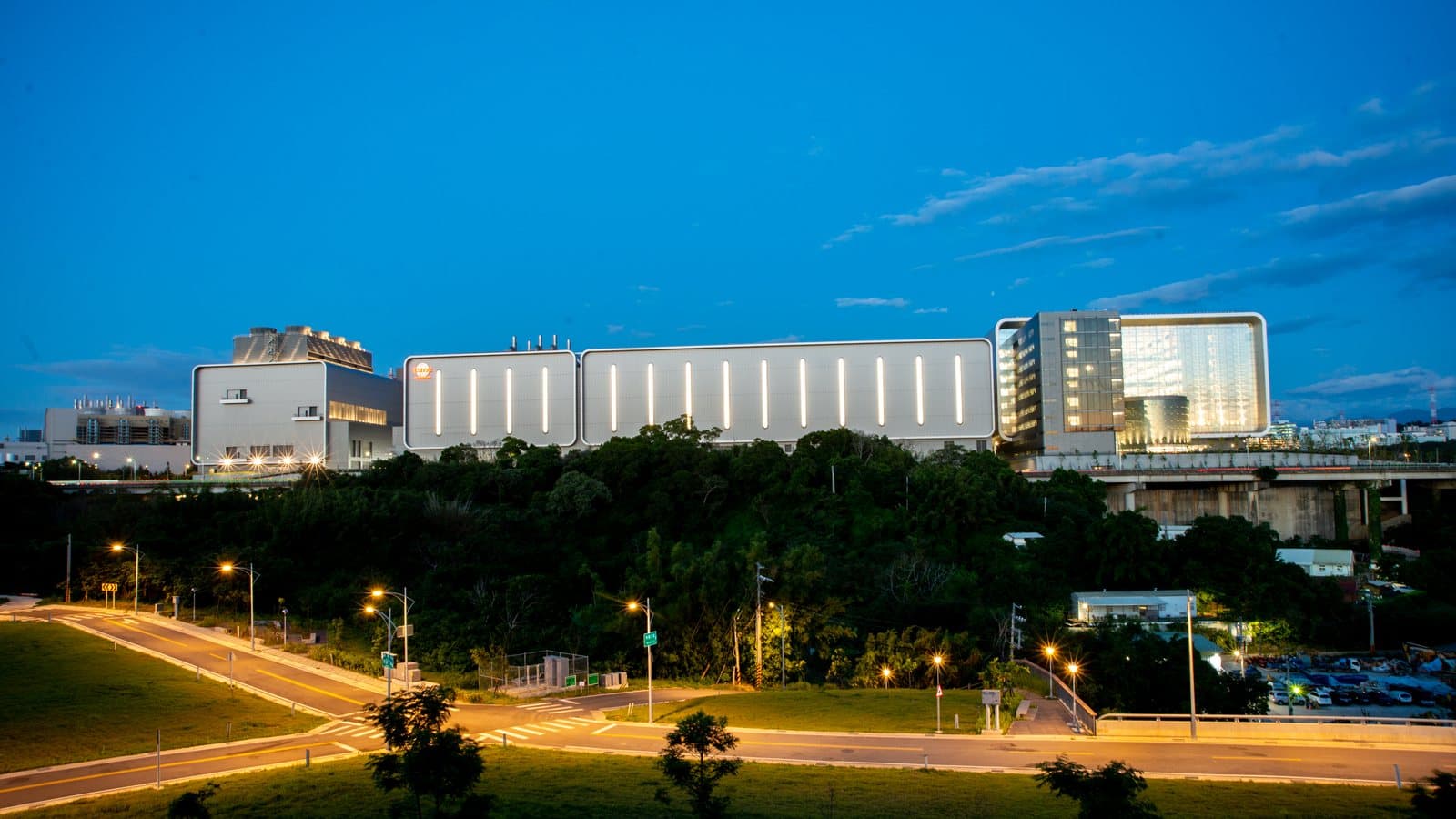
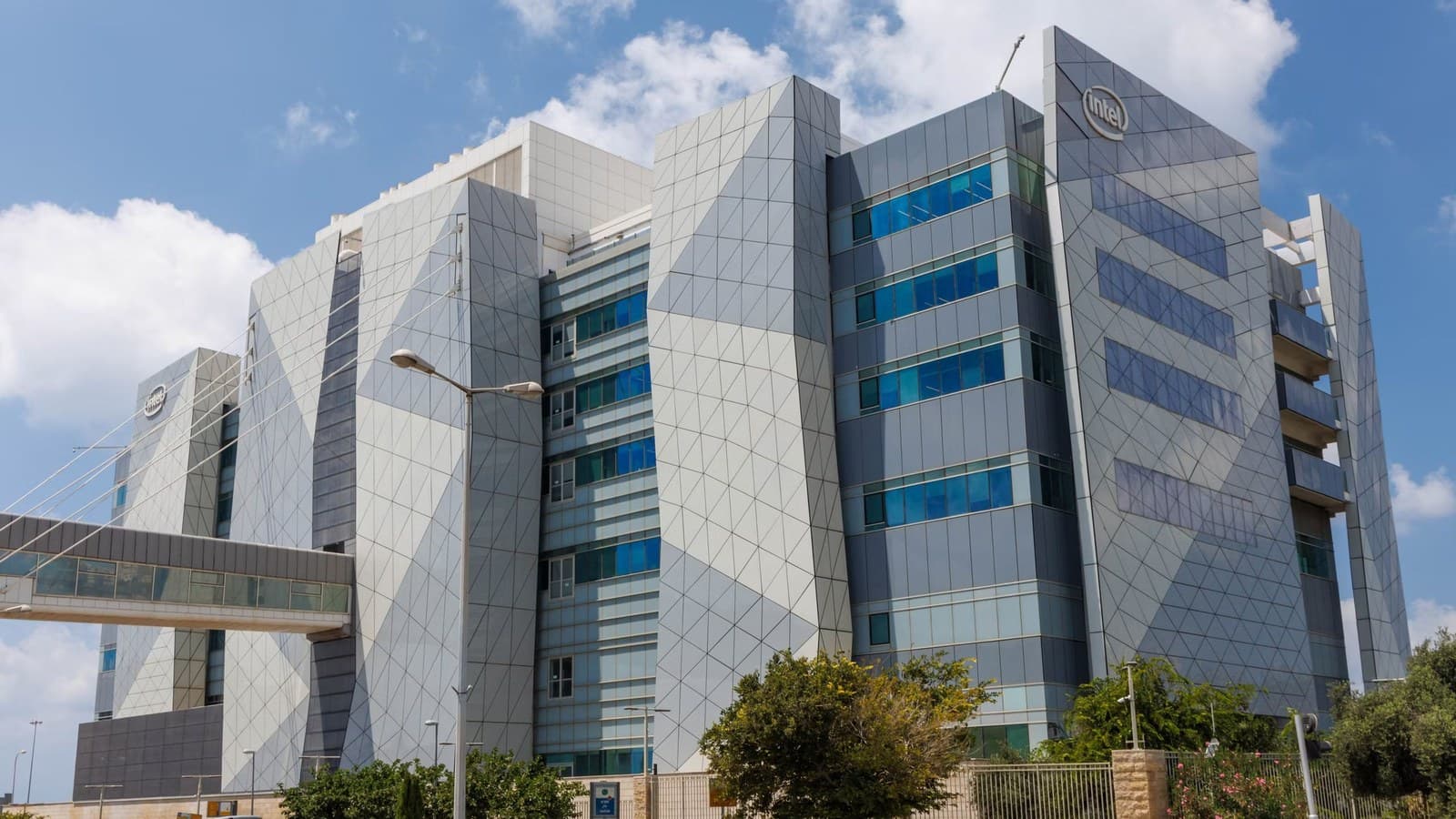
Cover: Intel's office building in Kiryat Gat, Israel, image courtesy of Intel, via Tom's Hardware, cropped 16:9.
Tags
Frequently asked questions
- Why did Intel stock fall 28.58%?
- Intel guided fourth-quarter revenue to $15.0bn to $16.0bn, a midpoint about 9% below the $17.1bn consensus, and said it would burn cash this year. The forecast also absorbs about $300m of lost revenue from the Fab 28 fire in Israel and a PC market that Intel expects to stay weak through the first half of 2027.
- How much will the Israel fab explosion cost Intel?
- Intel expects the 14 October explosion at Fab 28 in Kiryat Gat to cost about $600m in lost revenue, with roughly $300m falling in the fourth quarter of 2026 and $300m in the first quarter of 2027. Intel has not quantified the effect on earnings per share in the sources used here.
- Is Intel's foundry business making money?
- No. Intel Foundry reported $6.7bn of revenue in the third quarter but an operating loss of $1.9bn. Most of that revenue is internal, and external foundry revenue was only $411m, up $118m from the previous quarter.
- Did Intel beat estimates in the third quarter of 2026?
- Intel said its third-quarter revenue, gross margin and EPS all exceeded the guidance it had given. The share price reaction was driven by the fourth-quarter forecast, whose revenue midpoint came in about 9% below the LSEG consensus.

TPW Editorial
Editorial Team
TechPastWeek's editorial team reports and edits every story we publish. We research each piece against primary and credible secondary sources, and a human editor reviews and signs off before it goes live.