Samsung's Profit Topped 100 Trillion Won for the First Time on AI Memory
Samsung's Q3 operating profit hit KRW 107.4 trillion, the first above KRW 100 trillion for a tech company, as memory earned 99% and devices lost money.

On this page
Key takeaways
- Samsung reported KRW 195.3 trillion in revenue and KRW 107.4 trillion in operating profit for Q3 2026, the first quarter above KRW 100 trillion for a technology company.
- The Device Solutions chip division earned KRW 106.5 trillion of that operating profit, about 99% of the group total, on KRW 147.1 trillion of revenue.
- Memory revenue reached KRW 140.7 trillion in the quarter, up 427% year on year, as HBM4 sales scaled up.
- The Device eXperience division posted a KRW 0.8 trillion operating loss, its second consecutive quarter at that level, on KRW 52.1 trillion of revenue.
- Samsung declared a Q3 dividend of KRW 4,601 per share, KRW 30 trillion in total, and put 2026 shareholder returns at KRW 90-110 trillion.
Samsung Electronics reported KRW 195.3 trillion in revenue and KRW 107.4 trillion in operating profit for the third quarter of 2026 on 29 October, becoming the first technology company to clear KRW 100 trillion in a single quarter. The company's release records revenue up 14% on the second quarter. CNBC puts the year-on-year growth at 126.88% for revenue and 783.11% for operating profit, and converts the revenue line to about $124 billion. The operating margin reached 55.0%, against 52.2% in the second quarter, according to the Seoul Economic Daily. Samsung's shares closed 4.13% lower in Seoul the same day.
Related reading: Samsung's HBM4 Just Hit 'Golden Yield': Four Months Early · SK Hynix Posts a Record 104.6 Trillion Won Quarter as HBM4 Ramps.
That margin is not a company-wide achievement. It belongs to one division, and the rest of Samsung is on the paying side of it.
One division earned 99% of the profit
Device Solutions, the chip arm, booked KRW 147.1 trillion in revenue, up 15% on the previous quarter, and KRW 106.5 trillion in operating profit. The Seoul Economic Daily puts that at about 99% of the group's operating profit. Three-quarters of everything Samsung sold in the quarter came from the division that also produced nearly all of its profit, and on those two numbers the chip division ran at an operating margin of about 72%, against 55.0% for the group.
Memory alone brought in KRW 140.7 trillion, a record for a quarter, up 427% year on year. It was the second consecutive quarter above 400% growth. Samsung credits HBM4 sales scaling up, along with strong demand for server DRAM and server SSDs. HBM4 is the sixth-generation high-bandwidth memory that feeds AI accelerators, and Samsung shipped the industry's first commercial units in February 2026.
The growth rate and the revenue level are separate facts, and the level is doing most of the work here. A 427% comparison is measured against a quarter when memory prices sat near a cyclical trough. KRW 140.7 trillion is what Samsung actually booked, and it is almost the whole of the chip division's revenue. Memory accounted for about 96% of Device Solutions sales in the quarter. Foundry and system chips made up the rest.
Phones and appliances lost money again
Device eXperience, which holds phones, televisions and appliances, took KRW 52.1 trillion in revenue, up 8% on the second quarter, and lost KRW 0.8 trillion at the operating line. That is the second consecutive quarter with the same KRW 0.8 trillion loss. Samsung attributes the result to higher costs.
The segments inside it, from the Seoul Economic Daily's reading of the release:
- MX and Networks, the phone business: KRW 37.7 trillion in revenue and a KRW 0.6 trillion operating loss.
- VD and DA, televisions and appliances: KRW 13.9 trillion in revenue and a KRW 0.2 trillion operating loss.
- Samsung Display: KRW 8.0 trillion in revenue and KRW 1.1 trillion in operating profit.
- Harman: improved earnings on audio and automotive sales, helped by non-recurring US tariff refunds.
The two halves are connected by the same price. Memory that sells at record prices is revenue for Device Solutions and a bill of materials for Device eXperience, which buys DRAM and NAND for every phone and television it ships. Samsung is on both sides of that trade. The gap between them is the quarter: KRW 106.5 trillion of operating profit on one line, a KRW 0.8 trillion loss on the other.
What “demand will exceed supply” actually is
For the fourth quarter, Samsung expects AI infrastructure investment to continue, memory demand to grow around new CPU and GPU platforms, and surging QLC SSD demand tied to personal AI agents. For 2027, it says AI infrastructure capex will “reach a historic level” and AI-driven demand will “far exceed the industry supply” compared with 2026.
A forecast with direction and no numbers
“Far exceed the industry supply” is Samsung's expectation, not a measured gap. The release gives no 2027 capex figure, no bit-growth target and no price assumption, so the sentence describes a shortage without sizing it. The operational commitments underneath are firmer: more HBM, server DRAM and SSD sales, more high-speed server DDR5 and QLC SSD supply, and multi-year contracts rather than spot business. On the foundry side Samsung names 2nm HPC customers including major hyperscalers and says the Taylor, Texas fab will start operations. System LSI is listed for flagship SoCs and 200MP image sensors.
A shortage forecast is also a price forecast, and Samsung does not put a number on either. What the release does name is where the money goes: capacity for the memory types AI servers consume, and a foundry line at Taylor, Texas that is due to start operations.
The record arrived with a falling share price
Revenue came in slightly below the LSEG SmartEstimate of KRW 195.79 trillion. Operating profit was roughly in line with the KRW 107.66 trillion analysts expected. It was the fourth consecutive quarter of record revenue and record profit, a streak that turns a record into a baseline.
The gap was small. Revenue fell KRW 0.49 trillion short of the estimate, about a quarter of one percent, and operating profit came in KRW 0.22 trillion under consensus.
The stock still fell, after dropping as much as 5% during the session. Josh Gilbert, APAC lead analyst at eToro, told CNBC that the market has stopped treating these numbers as news: “Investors have been so spoilt by the AI trade that a record result is now treated as the bare minimum rather than a reason to celebrate.”
“For all the talk of Samsung being a diversified giant, anyone holding the stock today is really holding a memory maker with a phone business attached.” — Josh Gilbert, APAC lead analyst at eToro, via CNBC, 29 October 2026
An investor buying Samsung gets a memory business priced on the AI cycle and a device business that has lost KRW 0.8 trillion for two quarters running. Diversification has not spread the risk here; it has concentrated the profit in one division and left the losses in the others.
KRW 29 trillion of capex in one quarter
Capital spending for the quarter was KRW 29 trillion, up KRW 12.2 trillion on the second quarter and KRW 19.8 trillion on the same quarter a year earlier. Device Solutions took KRW 27.2 trillion of it and Samsung Display KRW 1.1 trillion.
The full-year plan is about KRW 84.4 trillion, split KRW 76.8 trillion for Device Solutions and KRW 3.9 trillion for the display unit. One quarter therefore carried roughly a third of the annual budget, which is what an AI memory supercycle looks like in the cash flow statement: the money goes out before the wafers come back. For a chip division that earned KRW 106.5 trillion, KRW 27.2 trillion of quarterly capex is about a quarter of the profit going straight back into capacity.
Set that against the dividend and the tension in the shareholder plan becomes visible. Samsung declared KRW 30 trillion in dividends against KRW 29 trillion of capex in the same quarter, and it is still telling investors that KRW 55 trillion to KRW 75 trillion of the year's return programme has not been allocated yet.
A KRW 30 trillion dividend and a January decision
The third-quarter cash dividend is KRW 4,601 per common and preferred share, KRW 30 trillion in total. The record date was 30 September and payment falls on 27 November 2026.
For the full year, Samsung puts total shareholder returns at KRW 90 trillion to KRW 110 trillion. KRW 35 trillion is already planned or completed, which leaves KRW 55 trillion to KRW 75 trillion on the company's own subtraction. The Seoul Economic Daily puts the unallocated amount at KRW 60 trillion to KRW 80 trillion; the two accounts differ in how they treat the KRW 30 trillion quarterly dividend, so treat the remainder as a range rather than a fixed figure.
The board finalises the remainder in late January 2027. If the full KRW 110 trillion is executed, the Seoul Economic Daily reports it would be the largest return programme on Samsung's record, more than five times the previous high of KRW 20.3 trillion in 2020.
Caveats
- The figures are company-reported. Samsung's release presents consolidated numbers without an auditor's opinion, as is normal for quarterly results. Divisional figures are the company's own allocation of cost and revenue.
- Dollar conversions disagree between outlets. The same group operating profit has been reported as about $75 billion and about $80 billion, depending on the won-dollar rate applied. This article uses won throughout, with one CNBC conversion for revenue.
- The 427% is a base effect as much as a boom. It compares the quarter with a weak prior-year period. The second consecutive quarter above 400% growth and the absolute KRW 140.7 trillion are the sturdier measures.
- The 2027 outlook is a forecast without numbers. “Historic level” and “far exceed the industry supply” are the company's expectations. No capex figure, unit target or price assumption accompanies them.
- The shareholder-return range is an estimate. KRW 90 trillion to KRW 110 trillion depends on the board's January decision, and the two published calculations of what remains differ by KRW 5 trillion.
- SK hynix is context, not a comparison in this piece. The rival reported record third-quarter results on 28 October, a day earlier, and TechPastWeek covered those separately.
The dividend record date has passed. Payment lands on 27 November. The board's decision on the rest of the year's returns is due in late January 2027, after the fourth-quarter results, and that quarter is the first one that will show whether the device businesses can do better than another KRW 0.8 trillion loss while memory keeps earning.
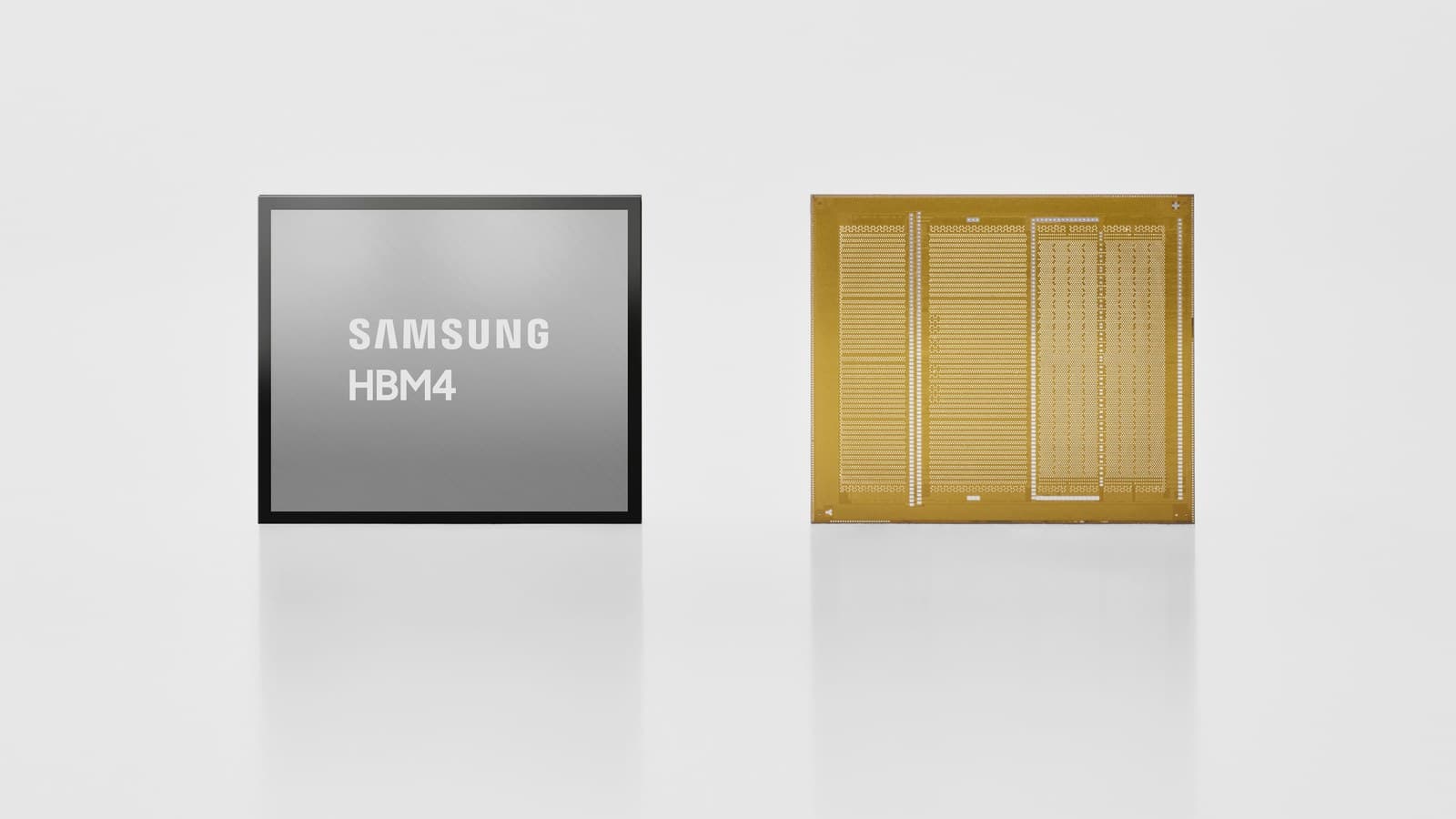
Cover image: Samsung HBM4 product image courtesy of Samsung Electronics.
Tags
Frequently asked questions
- How much profit did Samsung make in Q3 2026?
- Samsung reported KRW 107.4 trillion in operating profit on KRW 195.3 trillion in revenue for the three months to September 2026. Both were records, and the company says it is the first technology company to exceed KRW 100 trillion in quarterly operating profit.
- Why did Samsung shares fall after a record quarter?
- The stock closed 4.13% lower in Seoul on 29 October 2026 even though profit was a record. Revenue came in slightly below the LSEG SmartEstimate of KRW 195.79 trillion, and operating profit was roughly in line with the KRW 107.66 trillion analysts expected.
- How much of Samsung's profit came from memory chips?
- Almost all of it. The Device Solutions division made KRW 106.5 trillion of the group's KRW 107.4 trillion operating profit, and memory revenue alone was KRW 140.7 trillion, up 427% year on year.
- Is Samsung's 2027 memory forecast the same as guidance?
- No. Samsung said it expects AI-driven demand in 2027 to far exceed industry supply and AI infrastructure capex to reach a historic level, but the release gives no capex figure, no volume target and no price assumption.

TPW Editorial
Editorial Team
TechPastWeek's editorial team reports and edits every story we publish. We research each piece against primary and credible secondary sources, and a human editor reviews and signs off before it goes live.