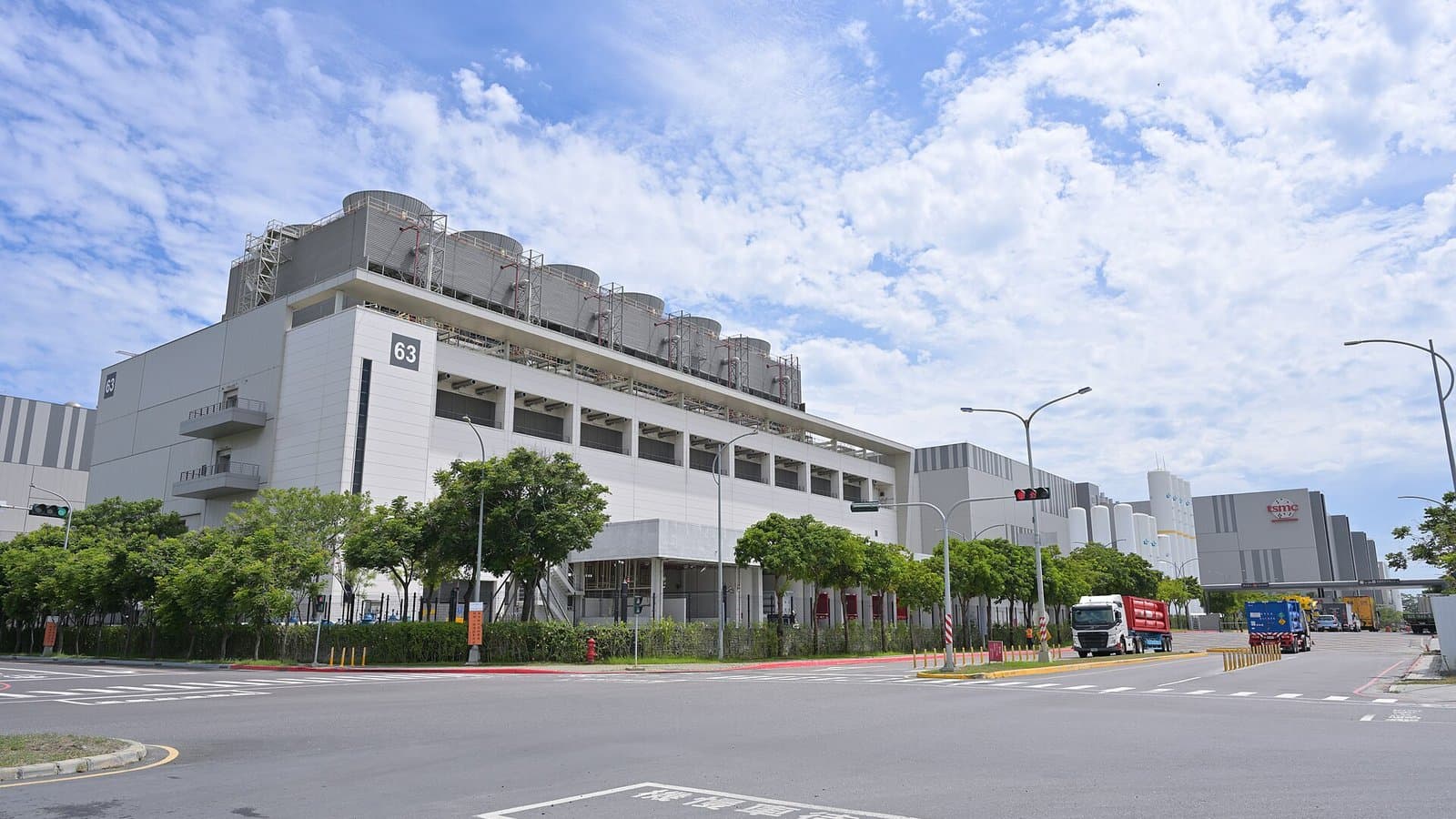
Samsung Starts Trial Production of Tesla's AI5 Chip at Its Texas 2nm Fab
Samsung has begun 2nm trial runs for Tesla's next-generation AI5 processor at its Taylor, Texas fab, pulling production forward as TSMC capacity stays tight.

On this page
Key takeaways
- Samsung has begun 2nm wafer trial production at its Taylor, Texas foundry for Tesla's next-generation AI5 chip, according to Korean industry reports on September 15, 2026.
- The Taylor plant had been slated for full operation around November 2026; Samsung pulled trial production forward to run yield verification earlier.
- Samsung plans to finish mass-production verification by year-end and start full supply in 2027, the reports said.
- The work sits under a $16.5 billion chip supply contract Samsung signed with Tesla in 2025.
- TSMC held 72.5% of the global foundry market in Q2 2026 versus Samsung's 5.9%, according to TrendForce.
Samsung Electronics has started trial production at its Taylor, Texas foundry on its 2-nanometer process for Tesla's next-generation AI5 processor, according to Korean industry reports published on September 15 and 16. The move pulls the plant's start forward from a previous plan for full operation around November, and the company is running yield verification on part of the line while the rest of the facility is completed.
Related reading: Samsung's Profit Topped 100 Trillion Won for the First Time on AI Memory · Eight Tech Companies Are Evaluating Intel's 14A Node, and None Has Signed.
The reports come from Seoul Economic Daily, Businesskorea and Digitimes, citing semiconductor industry sources. Samsung has not issued a public statement confirming the trial run, so the details should be read as reported rather than announced. Still, the substance lines up with a supply relationship the two companies have already disclosed.
What the Taylor fab is doing
Samsung broke ground on the Taylor facility years ago and held an equipment move-in ceremony on April 24. On July 13 it said the AI5 design had reached tape-out, the handoff from design to actual wafer manufacturing. The new reports say some lines at the plant are now producing 2nm wafers for Tesla while mass-production verification proceeds.
The reported schedule is tight. Samsung intends to complete that verification around the end of the year and move into full-scale supply in 2027. The acceleration, sources told the Korean outlets, was driven by demand pressure rather than a leisurely ramp: advanced lines at Samsung's Hwaseong and Pyeongtaek campuses, which handle nodes from 2nm to 4nm, are described as running at or near full capacity.
The centerpiece product is the AI5. Samsung signed a chip supply contract worth $16.5 billion with Tesla in 2025, and the AI5 is expected to appear across Tesla's futures: the Model 3 and Model Y, the Cybercab robotaxi, the Optimus humanoid robot and the company's AI data centers. That breadth is why the chip matters beyond a single vehicle program. Tesla is designing silicon for a range of products that all depend on the same inference capabilities, and the volumes implied by robotaxis and robots are large.
Trial production is a yield-learning step, not commercial output. Wafers are run to measure how many usable chips the process produces, and the numbers decide whether a customer commits to high-volume orders. Getting to trial production early matters most when a customer is waiting on capacity.
Why Samsung is moving fast
The strategic backdrop is a foundry market that is consolidating around one player. According to TrendForce, TSMC held 72.5% of global foundry revenue in the second quarter of 2026, up from 72.3% in the first quarter. Samsung stayed second but slipped from 6.5% to 5.9%, and China's SMIC closed to 5.4%. TSMC's August revenue alone hit a record, up more than 50% year on year, on AI accelerator and custom-silicon orders.
That concentration has a side effect: customers cannot always get leading-edge capacity when they want it. Samsung has been recruiting foundry sales staff in San Jose, California, targeting hyperscalers building their own AI accelerators and fabless chipmakers, on the argument that it is the only real alternative for advanced nodes. The company said on its July earnings call that it had secured 2nm projects from major cloud and high-performance-computing customers, a sign that spillover from TSMC is turning into orders.
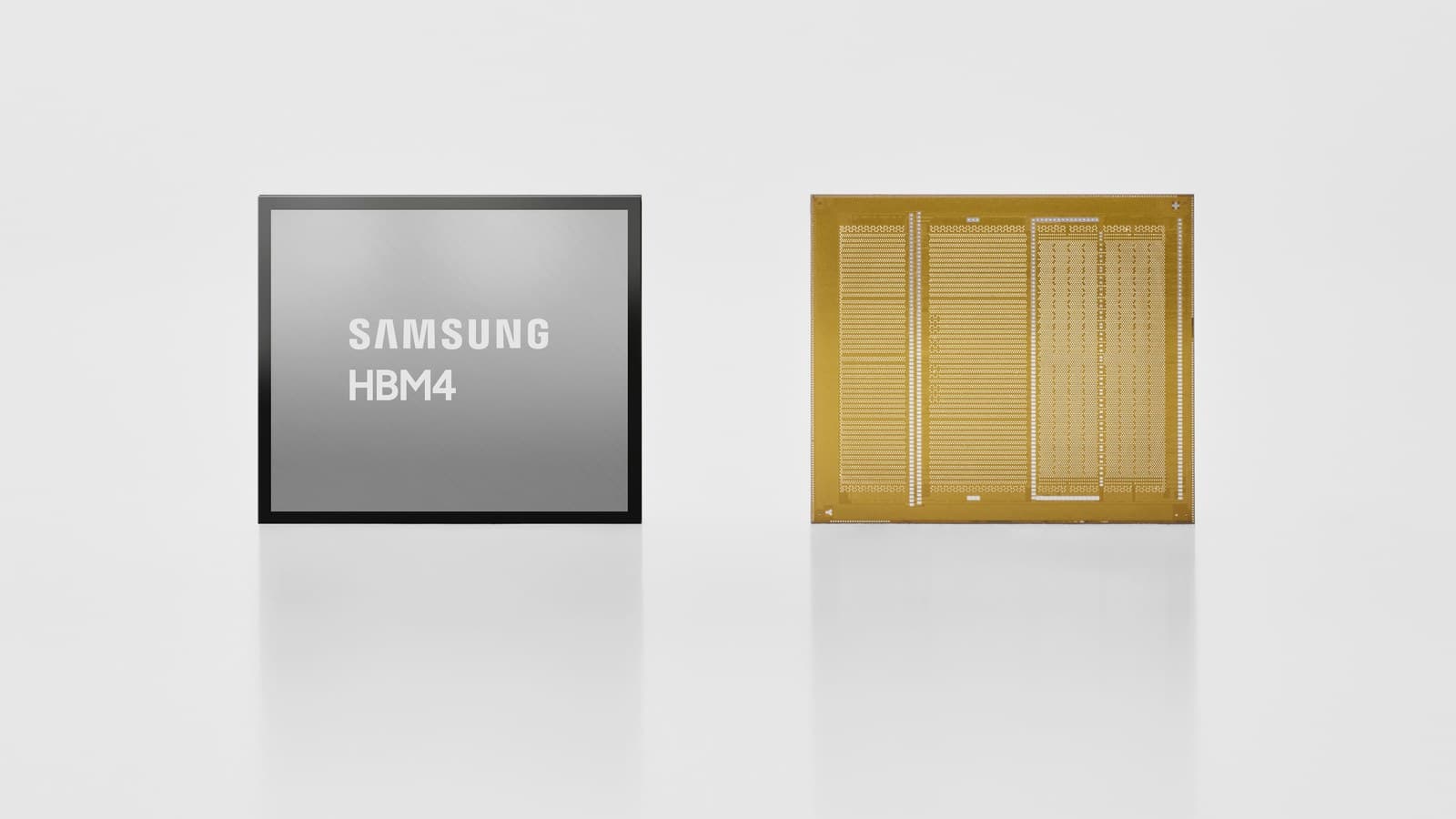
Samsung also has a vertical-integration pitch that a pure-play foundry cannot match. It makes memory and logic and offers advanced packaging. In early September it shipped the industry's first HBM4E high-bandwidth memory samples, and in July it signed a memorandum of understanding with Broadcom covering more than $200 billion of collaboration in memory, foundry and packaging through 2030. For a customer like Tesla, which needs compute, memory and packaging, Samsung can offer all three under one roof.
The yield question
The reports put Samsung's 2nm position as improving but not settled. Analysts at KB Securities have said Samsung's 2nm gate-all-around yield is climbing past 70%, while industry sources quoted by TechTimes earlier in September put yield at the Taylor facility at roughly 80%. Samsung's first-generation 2nm work had been estimated around 50% in late 2025. None of those figures is independently verified, and yield claims in foundry are notoriously hard to audit from outside.
That is the number to watch. A customer will move a design to a second source only if the process is reliable enough to justify the cost of qualifying it. Moving a tape-out is expensive, and it is usually reserved for older products or a deliberate multi-vendor strategy. Samsung does not need to beat TSMC on headline density to win this business; it needs to hit its promised dates and yields.
The AI5 is also not a fresh design experiment. Tesla's earlier chips have been manufactured at TSMC, alongside the AI hardware in its current vehicles. Bringing a US-designed chip to a US fab, with CHIPS Act incentives attached to Samsung's roughly $37 billion Taylor investment, fits a broader effort to reduce single-country exposure in the AI supply chain. Politically, that matters: the subsidies behind the plant are meant to buy supply-chain resilience, and a customer as visible as Tesla is the kind of validation that justifies the money.
Why 2 nanometers matters here
The node number is not a marketing detail. Samsung's 2nm process uses gate-all-around transistors, the same class of device TSMC deploys at its N2 node, and the shift from the older fin-based design is what allows a chip to pack more computation into the same area without burning proportionally more power. For Tesla, the AI5 has to serve vehicles with tight thermal and energy budgets, robots that run on batteries, and data centers where electricity dominates operating cost. Efficiency per watt, not peak speed, is the constraint that matters.
Samsung has spent the past year trying to prove it can manufacture that class of chip reliably. Its first-generation 2nm work was estimated at roughly half of wafers being usable, below the level most customers will pay for. The reported climb toward 70% and then 80% at Taylor is the whole story of the plant. A fab that can only produce good chips half the time cannot compete for flagship orders, and memory of that gap is why some analysts remain skeptical until production data arrives.
There is also a packaging angle. Modern AI chips are not single dies. They pair logic with high-bandwidth memory and advanced interposers, and the hardest yield problems often sit in that assembly, not in the transistor. Samsung is unusual in making logic, memory and packaging, and it has been pushing all three. Shipping HBM4E samples to customers weeks before the Tesla news is not a coincidence. The company is trying to sell a complete compute package, and the Taylor fab is the logic piece of that pitch.
For Tesla, the calculation is about control as much as cost. Designing its own silicon gives it a roadmap it does not have to negotiate with Nvidia, and building it in the United States reduces exposure to a supply chain concentrated in Taiwan. The AI5 is scheduled to sit at the center of that strategy across several product lines, which raises the cost of a delay and explains why Samsung is being pushed to validate the process quickly rather than at a comfortable pace.
What to watch
Three things will tell whether this becomes more than a trial run. First, whether Samsung confirms the schedule publicly and names the node and yield milestones. Second, whether TSMC's capacity crunch persists into 2027, because that is the window Samsung is racing to own. Third, whether the second Taylor plant, which the industry expects to break ground around the end of 2026 and to adopt a 1.4nm process when it comes online near 2030, stays on track.
Samsung's foundry business has spent years being described as the perpetual runner-up. A working 2nm line supplying a flagship customer on schedule would not change the market overnight, but it would give the industry something it has not had in the current AI cycle: a real second option for the most advanced silicon.
The competitive question cuts both ways. If Samsung delivers, it gets a reference customer whose name carries weight across automotive, robotics and data centers, and that reference is worth more than the initial order. If it slips, the same history that made the Taylor plant a hard sell returns, and customers keep paying whatever TSMC charges.
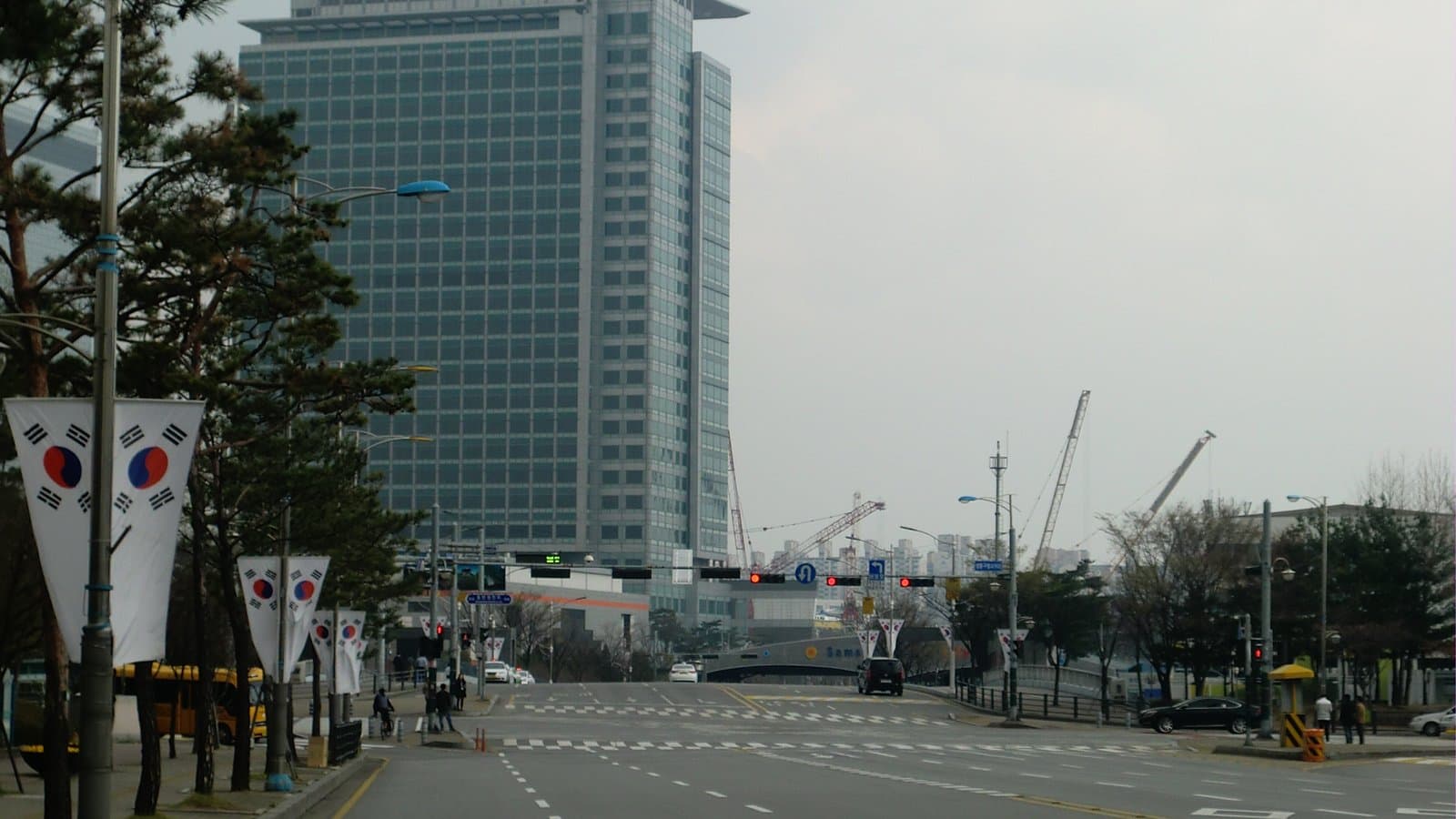
Cover: The Samsung Electronics campus in Suwon, South Korea, by hyolee2 (CC BY-SA 4.0) via Wikimedia Commons, cropped 16:9.
Tags
Frequently asked questions
- What chip is Samsung making for Tesla?
- Samsung's Taylor, Texas fab is running trial production of Tesla's next-generation AI5 processor on its 2nm process. The AI5 is expected to serve Tesla vehicles, the Cybercab robotaxi, the Optimus humanoid robot and Tesla's AI data centers.
- When will Samsung start shipping the Tesla AI5?
- Korean industry reports from mid-September 2026 say Samsung aims to complete mass-production verification by the end of 2026 and begin full-scale supply in 2027. Samsung has not made a formal public announcement of the trial production.
- Why does this matter for the foundry market?
- TSMC dominates leading-edge foundry work, and its advanced-node capacity has been tight because of AI demand. Any credible second source for 2nm-class chips gives customers more leverage and gives Samsung a route back into single-digit territory it wants to escape.

TPW Editorial
Editorial Team
TechPastWeek's editorial team reports and edits every story we publish. We research each piece against primary and credible secondary sources, and a human editor reviews and signs off before it goes live.