SK Hynix Posts a Record 104.6 Trillion Won Quarter as HBM4 Ramps
SK Hynix posted record third-quarter 2026 revenue of 104.62 trillion won and an 80% operating margin, with HBM4 set to outsell HBM3E in the fourth quarter.

On this page
Key takeaways
- SK hynix reported third-quarter 2026 revenue of 104.62 trillion won, about $78.86 billion, and operating profit of 83.33 trillion won on October 28, 2026.
- Quarterly sales passed 100 trillion won for the first time in the company's history; revenue rose 327.9% and operating profit 632.1% year on year.
- The operating margin reached 80%, while net profit of 39.78 trillion won fell 58% from the prior quarter, which carried a large non-operating gain.
- SK hynix expects HBM4 to surpass HBM3E in shipments and revenue in the fourth quarter as its M15X plant in Cheongju reaches full capacity.
- The company plans about 100 trillion won in 2026 shareholder returns, including at least 30 trillion won in cash dividends and 60 trillion won in buybacks and cancellations.
SK hynix booked 104.62 trillion won of revenue in the three months to September 2026, the first quarter in its history above 100 trillion won. Operating profit was 83.33 trillion won, an operating margin of 80%, according to the company's results release published on October 28, 2026.
Related reading: Samsung's Profit Topped 100 Trillion Won for the First Time on AI Memory · SK Hynix Weighs Making Memory in the US by Leasing Intel's Ohio Site.
Both lines beat the analyst consensus. LSEG SmartEstimates, which weights forecasts toward analysts with the better track records, had expected revenue of 98.34 trillion won and operating profit of 76.72 trillion won, CNBC reported. Revenue rose 327.9% from a year earlier and operating profit rose 632.1%. At the exchange rate CNBC used, about 1,326.8 won to the dollar, the quarter's revenue is roughly $78.86 billion.
Memory has been the least glamorous layer of the AI stack for most of its history. The quarter shows what that layer can earn once it becomes the constraint on how fast data centers get built.
What the quarter contained
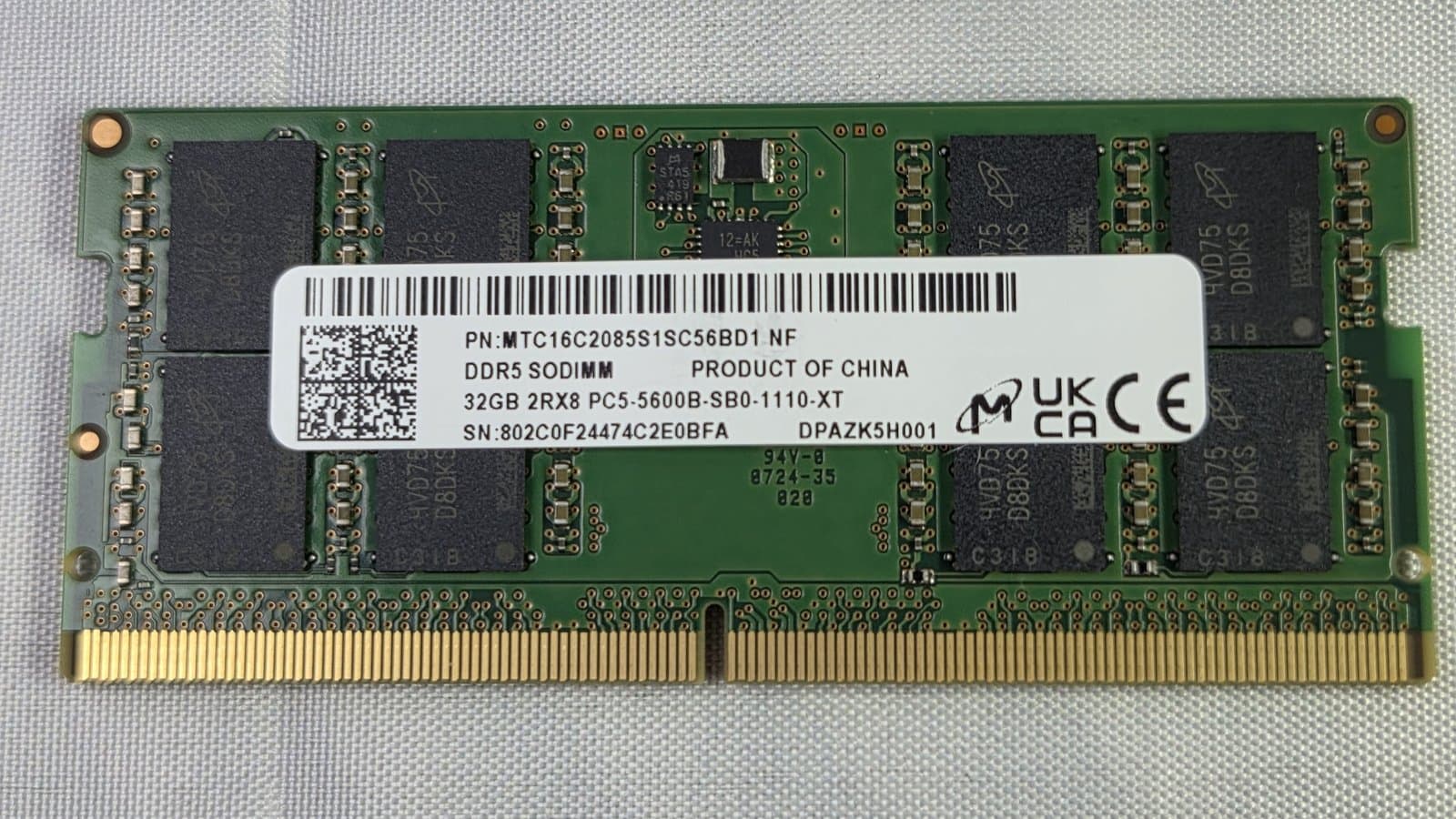
The revenue came from a mix tilted toward the parts AI servers need. SK hynix said server DDR5 sales rose sharply and HBM4 shipments began in earnest, while NAND benefited from 321-layer TLC enterprise SSDs. Those are the highest-value products in the portfolio, and steering output toward them is what turns a capacity business into a margin business.
An 80% operating margin means 80 won of every 100 won of sales survived after the cost of producing the memory and running the company. A year earlier, in the third quarter of 2025, the same measure was 47% on revenue of 24.45 trillion won and operating profit of 11.38 trillion won, according to the year-earlier release. Sequentially, revenue rose 31.9% and operating profit 37.6% from a second quarter that had already set records.
Net profit was 39.78 trillion won, a net margin of 38%, and it carries a wrinkle. The figure is down 58% from 93.92 trillion won in the second quarter. But second-quarter net income was far above that quarter's operating profit of 60.54 trillion won, which points to a large non-operating gain in the earlier quarter. The third-quarter comparison says more about that item than about any deterioration in the chip business.
The balance sheet moved in the same direction as the income statement. Cash and cash equivalents reached 114.5 trillion won at the end of September, up 26.5 trillion won in three months, while borrowings fell 2.8 trillion won to 15.8 trillion won. Net cash stood at 98.7 trillion won. For a company that spent years carrying the reputation of a capital-hungry cyclical, that is an unusual place to be.
Why HBM4 matters more than the record
Records from a memory maker invite a shrug, because the industry has produced them before and lost them before. What SK hynix sells has changed generation, and that matters more than the number.
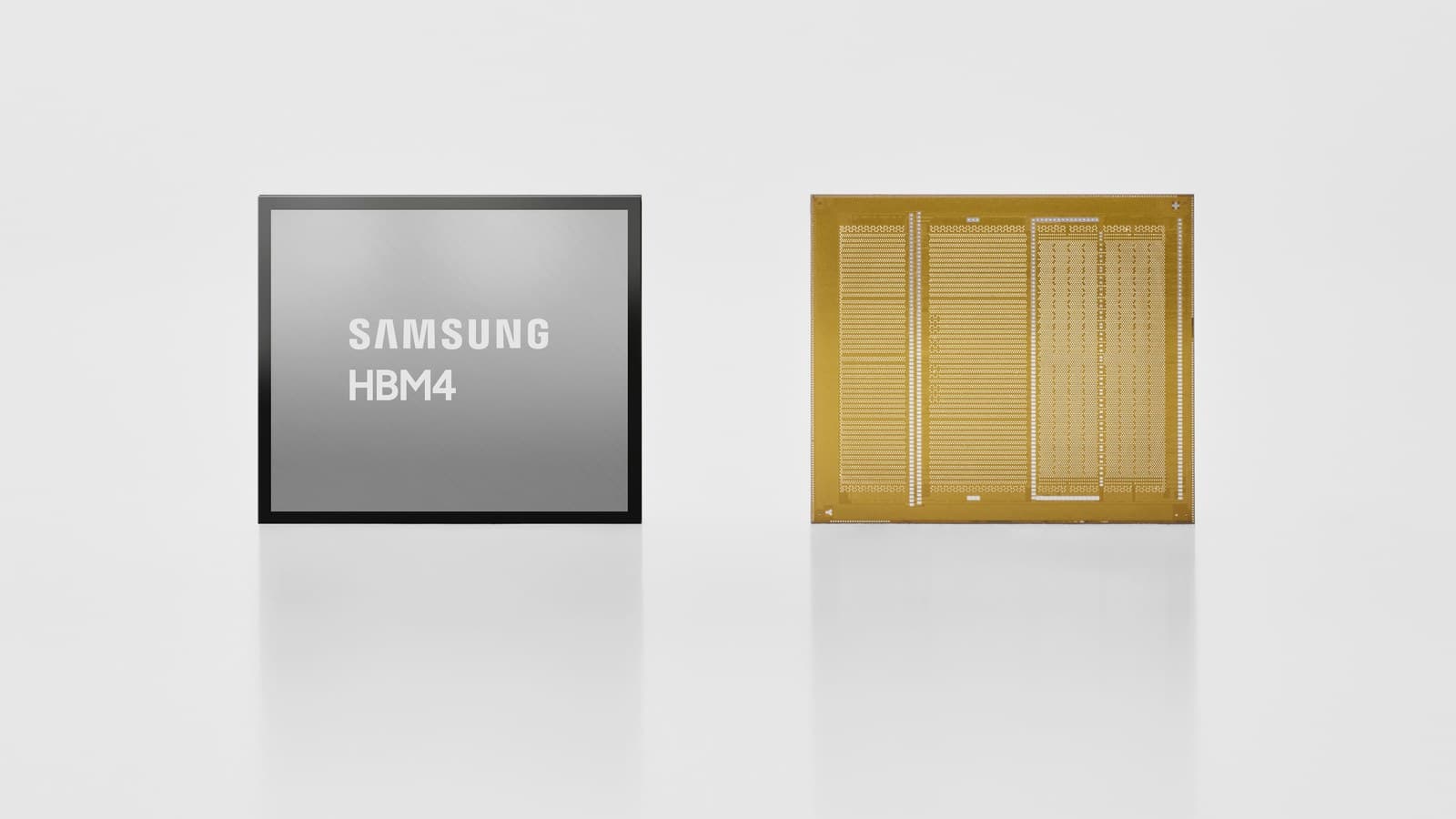
HBM is dynamic memory stacked in layers and placed next to an AI processor, where it feeds the chip at bandwidth that ordinary modules cannot reach. HBM4 is the sixth generation of that product. SK hynix said HBM4 shipments started in earnest during the third quarter and that it expects the part to pass HBM3E in both shipment volume and revenue in the fourth quarter, making it the mainstream product.
A generation change inside a record quarter
Each HBM generation changes the number of stacked dies, the width of the interface to the processor and the manufacturing yield. Customers qualify a new part against their own accelerators before volume orders follow, so a crossover inside one quarter means the qualification work is largely done and the ramp has turned into a production problem.
The production answer is M15X, the facility in Cheongju, South Korea, which SK hynix says will be ramped to maximum capacity by the end of the year. The company also plans to raise the share of its 1c, or sixth-generation 10nm-class, process in DRAM output and to sell more DDR5 and LPDDR5 SOCAMM for AI servers. In NAND, the 321-layer process is meant to exceed half of domestic capacity in the fourth quarter.
Each of those is a production target, and the customers who have signed long-term agreements have an interest in seeing them met.
Contracts are replacing the spot market
The contracting is what separates this cycle from previous ones.
SK hynix said it has long-term agreements with 14 major customers, including global cloud providers, covering more than 50% of its total production capacity for 2027 and 2028. The agreements typically run five years, and the company is discussing extensions with several customers.
"By introducing a mechanism that reflects market conditions within a price range agreed upon with customers, the company has established a structure that secures stable profitability while allowing flexible responses to market changes." SK hynix, 3Q26 results release, October 28, 2026
That is a deliberate attempt to flatten the cycle. In a pure spot market, memory prices spike when supply is tight and collapse when new capacity arrives, and the supplier absorbs both swings. A contract with a price band keeps some of the upside while limiting the downside, and it gives the customer assured volume. Whether the band is wide or narrow decides how much of the old volatility survives. SK hynix did not publish the terms, the customers or the volumes.
The same logic sits behind the capacity plans. SK hynix said the Yongin Phase 1 site enters full-scale operation next year and that investment will increase significantly, with the scale and timing adjusted according to customer demand, competitiveness, profitability and investment efficiency. A company that expected a short boom would not be signing five-year supply agreements or building for 2028.
It also expects the shortage to last. SK hynix projected that demand will exceed supply through 2030, citing the technical difficulty of leading-edge processes and the long lead time for new fabs. That is a company forecast about its own market, and it is the kind of forecast that suppliers in cyclical industries have made before just as capacity caught up.
The payout, and what it signals
Alongside the results, the board approved returns that would be extraordinary for any company and are almost unrecognizable for a memory maker.
SK hynix plans about 100 trillion won in shareholder returns for fiscal 2026: at least 30 trillion won in cash dividends and 60 trillion won or more in buybacks and cancellations, including the 40 trillion won program announced in August. That August repurchase was completed the week before the results, and the shares will be cancelled shortly. The new plan adds a 20 trillion won buyback, half of it to be cancelled this year; the other half is earmarked for employee compensation and is not counted in the return total.
The third-quarter dividend is 14 trillion won, or 20,000 won per share: 10,000 won tied to earnings and a 10,000 won special dividend that passes on gains from the company's Kioxia investment. Management set out three principles, saying the dividend would follow operating results, that large investment gains would be returned through special dividends, and that buybacks would continue each quarter.
The scale is easier to read against the cash pile. A 14 trillion won quarterly dividend and a 20 trillion won buyback are affordable when net cash is 98.7 trillion won and a single quarter generates 83.33 trillion won of operating profit. The harder question is whether returning that much while promising a significant increase in capital spending leaves enough room if prices turn. SK hynix says it will adjust investment flexibly, which is the standard answer for a capital-intensive business and the only one available until the spending plan is published.
The Solidigm question
Four days before the results, SK hynix's U.S. subsidiary Solidigm halted its review of pre-IPO fundraising and IPO options, citing market volatility and share price trends. The company said it would keep assessing timing, scale and financing options for the unit. The decision also followed a warning from South Korea's Financial Supervisory Service that a U.S. listing could conflict with the country's dual-listing rules, Reuters reported.
Solidigm is the NAND business SK hynix bought from Intel, and a listing would have given the parent a way to fund it without carrying the whole cost. Halting the review is not the same as cancelling a listing, and no new timetable was given. For now the NAND expansion, including the 321-layer ramp, stays inside the parent's balance sheet.
Caveats
Every figure here is company-reported and unaudited. SK hynix's own release says the third-quarter review has not been finalized and that the numbers may change during the independent audit. The "expected" comparisons come from LSEG SmartEstimates, a particular way of weighting analyst forecasts, not a simple average.
The dollar figure depends on the exchange rate. The won numbers are the primary ones; at a different rate, $78.86 billion moves.
The demand forecast is the company's view. "Demand exceeds supply through 2030" is a projection from a supplier with an interest in that outcome, and it rests on assumptions about AI infrastructure spending that no one outside SK hynix can verify. The long-term agreements cover more than half of 2027 and 2028 capacity, which leaves a substantial share exposed to whatever the market does.
Memory is still cyclical. Shortages have turned into gluts before once every supplier added capacity at the same time, and SK hynix, Samsung and Micron are all adding now.
What to watch
- The HBM4 crossover. Whether HBM4 actually passes HBM3E in shipments and revenue in the fourth quarter is the first test of the ramp at M15X.
- Capital spending. SK hynix has promised a significant increase next year without a number. The figure, when it comes, will show how confident the company really is about the run through 2030.
- Customer concentration. Fourteen customers hold contracts for more than half of 2027 and 2028 output. Any renegotiation or delay from a large cloud buyer would be visible quickly.
- The next print. Fourth-quarter results will show whether the 80% margin held as HBM4 volumes replaced HBM3E, since new generations usually start with lower yields.
- Solidigm. A restart of the IPO review, or a decision to fund the NAND business another way, would clarify how SK hynix intends to pay for its second product line.
What SK hynix has not yet shown is whether an 80% margin survives the end of the shortage that produced it.
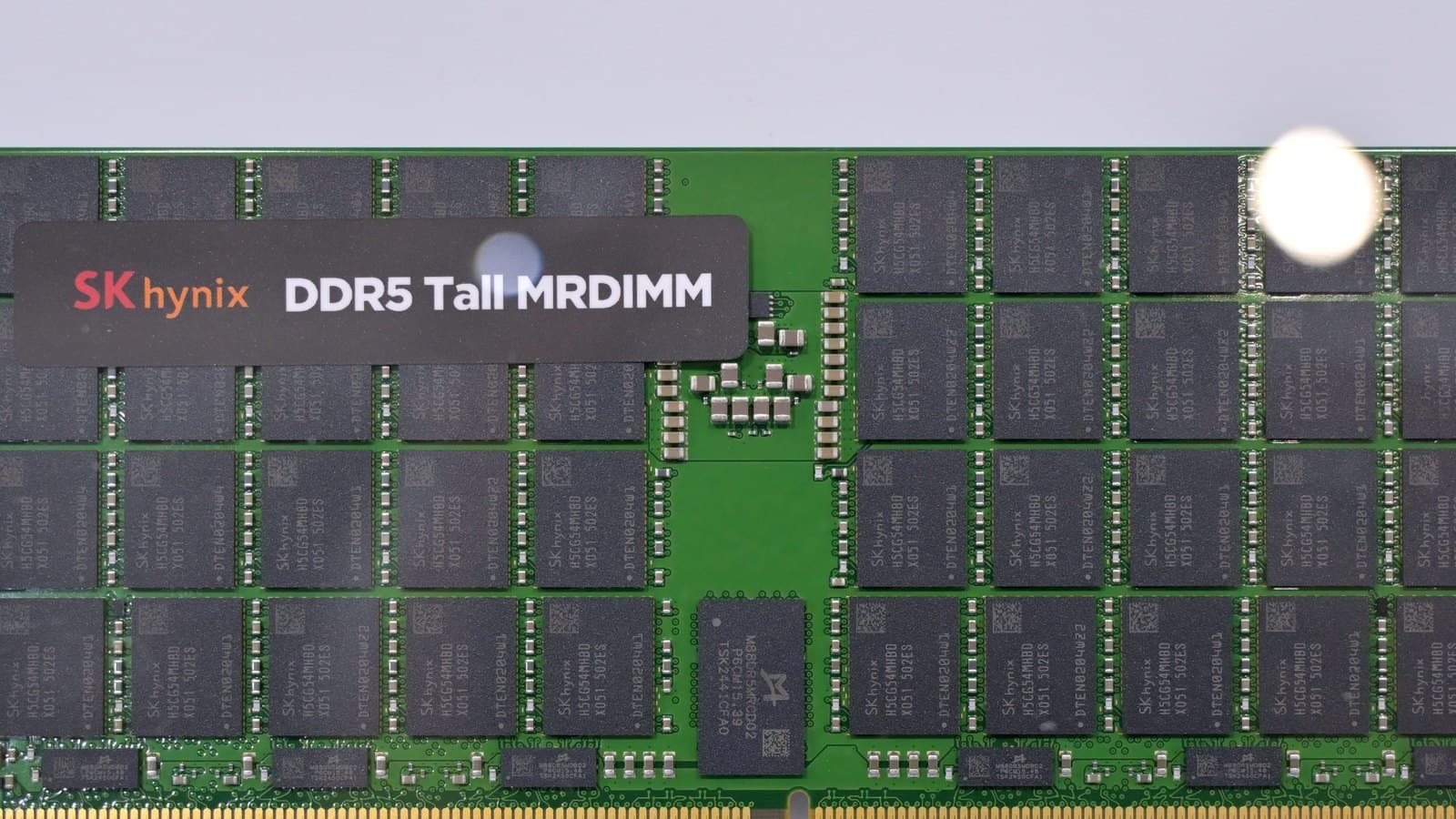
Cover image: "SK Hynix DDR5 Tall MRDIMM" by 4300streetcar, CC BY 4.0, via Wikimedia Commons.
Tags
Frequently asked questions
- How much did SK hynix earn in the third quarter of 2026?
- SK hynix reported revenue of 104.62 trillion won and operating profit of 83.33 trillion won for the quarter ended September 30, 2026. At the exchange rate CNBC used, that is about $78.86 billion in revenue.
- When will HBM4 become SK hynix's main memory product?
- SK hynix says HBM4 should pass HBM3E in both shipment volume and revenue during the fourth quarter of 2026, as the M15X facility in Cheongju ramps to maximum capacity. That is the company's forecast, not a reported result.
- How much is SK hynix returning to shareholders?
- The company plans about 100 trillion won in returns for fiscal 2026: at least 30 trillion won in cash dividends and 60 trillion won in share buybacks and cancellations. A 14 trillion won third-quarter dividend and a 20 trillion won buyback were approved on October 28, 2026.
- Why did SK hynix's net profit fall from the previous quarter?
- Net profit was 39.78 trillion won, down 58% from 93.92 trillion won in the second quarter. Second-quarter net income was well above that quarter's operating profit of 60.54 trillion won, so the comparison reflects a large non-operating gain in the earlier period rather than weaker chip operations.

TPW Editorial
Editorial Team
TechPastWeek's editorial team reports and edits every story we publish. We research each piece against primary and credible secondary sources, and a human editor reviews and signs off before it goes live.