Samsung's HBM4 Just Hit 'Golden Yield': Four Months Early
Samsung's HBM4 yield has reportedly reached 80%, the industry's 'golden yield' threshold, unlocking volume supply for major Nvidia and AMD accelerators.

On this page
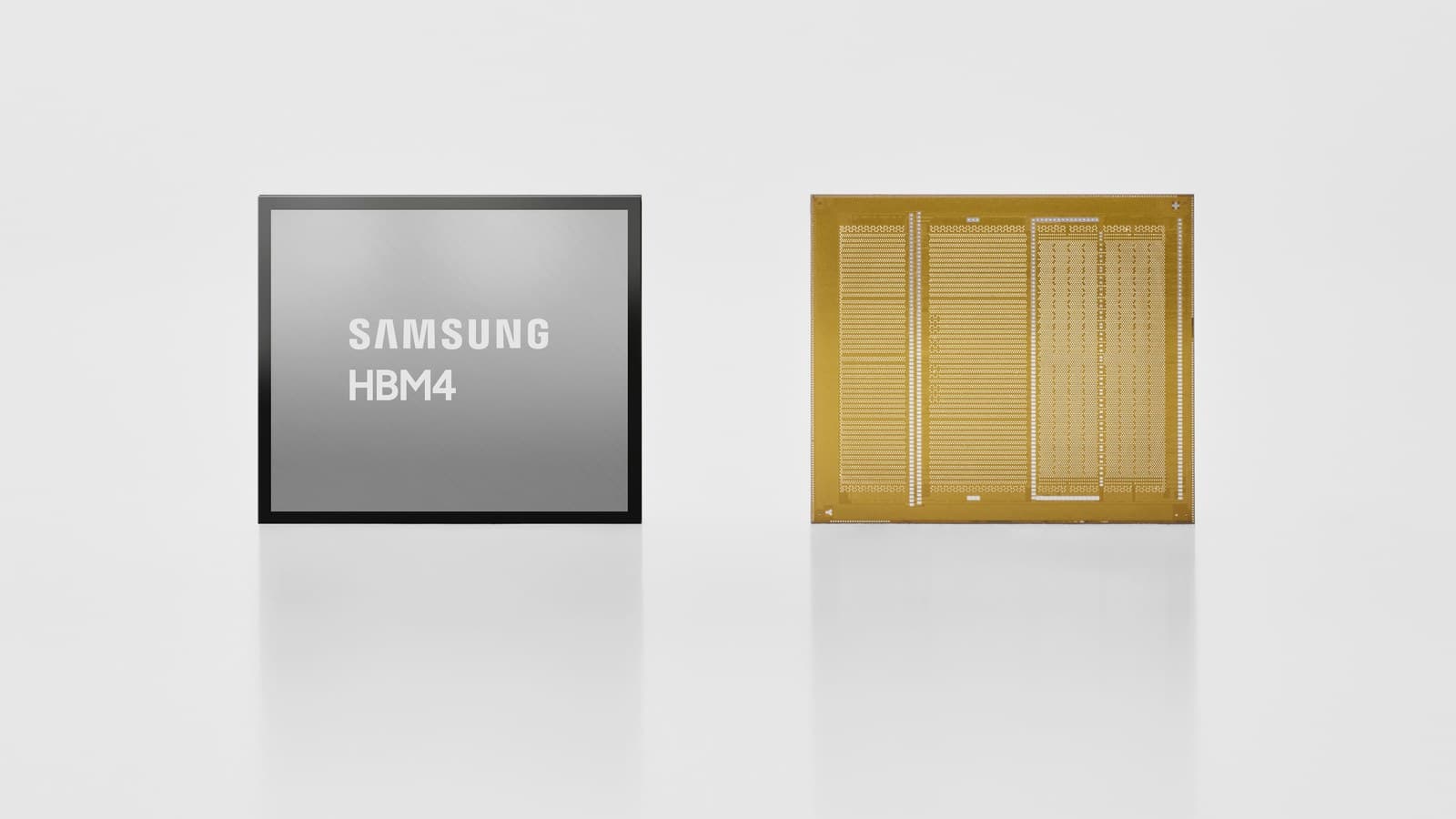
Samsung Electronics has reportedly pushed the manufacturing yield of its sixth-generation high-bandwidth memory, HBM4, to roughly 80%, crossing the threshold the semiconductor industry calls "golden yield" about four months earlier than its own internal target. If the figure holds, it removes one of the most stubborn constraints on the global supply of AI accelerators and hands Samsung a credible route back to the front of the memory market.
Related reading: Samsung's Profit Topped 100 Trillion Won for the First Time on AI Memory · SK Hynix Posts a Record 104.6 Trillion Won Quarter as HBM4 Ramps.
The number comes from industry sources cited by the Seoul Economic Daily on August 10. Samsung began mass-producing HBM4 in February 2026 (a world first) with yields that were struggling below 60%. Reaching the low-80s within six months is the kind of process improvement that turns a technically impressive product into a business.
What "golden yield" actually means
In memory manufacturing, yield is the share of chips on a wafer that pass quality tests. Because the fixed costs of a fab are enormous, yield is the single biggest lever on both unit cost and how many parts a company can actually deliver. An 80% yield is widely described as "golden" because it minimizes defect waste and signals that a process has reached production maturity, the point at which a manufacturer can commit to volume contracts without fear of failing to fill them.
Samsung's original plan called for an 80% HBM4 yield by the end of 2026. Process improvements outran that schedule as second-half production volumes ramped. The company has said it now expects to more than triple its HBM4 revenue in the third quarter compared with the previous quarter and to lift HBM4's share of its total HBM revenue above 60% in the second half. It has also set a goal of raising its overall HBM market share to a level closer to its roughly 38% share of conventional DRAM.
The company's CTO, Song Jai-hyuk, said at an internal briefing in late June that the reliability-test yield for the next-generation HBM4E had already climbed above 70% (before mass production), which implies Samsung's development pipeline is running well ahead of where it was a generation ago.
Why yield is the whole ballgame
HBM is not a commodity DDR5 stick. It is a stack of DRAM dies connected vertically by through-silicon vias and mounted on a logic base die. Every additional failed die in a stack wastes the good ones around it, so yield compounds: a few points of improvement at the stack level translate into large swings in usable output and cost. At 80%, HBM4 stops being a yield problem and starts being a volume business.
Why Nvidia and AMD care
HBM is the memory that feeds AI accelerators, and it has been the tightest link in the AI supply chain for two years. Every flagship GPU needs multiple HBM stacks, and the bandwidth those stacks provide determines how quickly a model can move weights and activations, which is often what limits training and inference performance.
Samsung's improved HBM4 output is expected to give momentum to production of Nvidia's Vera Rubin accelerator, the successor to Blackwell, which the report identifies as a key beneficiary. Samsung is also positioned to supply HBM4 for AMD's Instinct MI455X. Under an agreement signed in March 2026, Samsung is the priority (and for now exclusive) HBM4 supplier for the MI455X, which integrates twelve 36GB stacks for 432GB of HBM per GPU, exceeding the roughly 288GB anticipated for Rubin (The Elec).
That is a lot of memory per accelerator, and it is why the memory line is now as strategically important as the logic line. Nvidia has historically leaned on SK hynix for the leading HBM generations; a second qualified supplier with real volume gives the entire AI industry a release valve.
The process story: TC-NCF and 1c DRAM
Getting HBM4 yields up required Samsung to solve problems at two levels.
The first is stacking. Samsung uses thermal-compression non-conductive film (TC-NCF) to bond its DRAM dies into a stack, a technique that has long been regarded as a weak point relative to rivals. TrendForce noted that Samsung made notable progress on TC-NCF this year, with the improvements showing up directly in stack-level yields.
The second is the underlying DRAM. HBM4 is built on a 1c-class DRAM process, Samsung's sixth-generation 10-nanometer-class node. Samsung had already pushed 1c DRAM yields above 80% earlier in 2026, which established a stable base of good dies for the HBM line to work with. The HBM yield improvement is, in large part, the downstream payoff of fixing the DRAM yield upstream.
A memory company does not win on the height of its stack. It wins on how many good stacks it can ship without throwing money away.
Samsung versus SK hynix
The timing matters because the competitive balance in HBM has been unusually lopsided. SK hynix captured most of the lucrative HBM business during the Blackwell generation and has been the default supplier for Nvidia's most demanding parts.
That dominance is now being tested. Industry analysts cited by Silicon Analysts say SK hynix's own HBM4 yield has also reached the 80% band, meaning both leading suppliers have achieved mass-production maturity on the sixth-generation node at roughly the same time. TrendForce added a separate wrinkle: labor talks at SK hynix introduce a degree of operational uncertainty at exactly the moment its rival is ramping.
The result is a market that is still short of HBM, but no longer short of qualified suppliers. That is good for everyone downstream of memory, provided the demand holds.
The economics of a memory upcycle
To understand why a yield headline moved markets, it helps to remember what HBM does to a memory maker's financials. A conventional DRAM die might sell for a few dollars. The same die, once stacked, tested and packaged into an HBM module, sells for many times that. So every wafer Samsung routes to HBM instead of commodity DRAM carries dramatically higher revenue, provided the stacking yield is good enough to make the extra processing worthwhile.
That is the leverage a golden yield unlocks. At sub-60% yields, a large fraction of the expensive stacking and packaging work is wasted, and the effective cost per good module stays high. At 80%, the math flips: the same fab capacity produces far more sellable product, and Samsung can shift more wafers toward HBM without destroying its DRAM margins. The company's stated plan to take HBM4 past 60% of its HBM revenue and to push its overall HBM share toward its ~38% DRAM share is essentially a plan to repeat that conversion at scale.
There is a broader macroeconomic angle, too. Memory is the most cyclical business in semiconductors, and the industry is in the upswing of a cycle driven almost entirely by AI. When HBM demand surges, fabs that would otherwise make consumer DRAM get retooled for the higher-margin product, which tightens supply and raises prices for laptops, phones and servers alike. Better HBM4 yields do not reverse that dynamic; if anything, they let Samsung convert more capacity to the lucrative end of the market, which can keep the squeeze on everything else.
What it means for the AI memory bottleneck
For the past two years, the binding constraint on AI buildouts has moved back and forth between logic, packaging, power and memory. Right now, memory is the constraint that bites hardest. HBM capacity is booked out, prices are rising, and the spillover has pushed up conventional DRAM prices as fabs reallocate wafers.
A faster-than-expected HBM4 ramp loosens that constraint, but only partially. Even with both Samsung and SK hynix at 80% yields, the industry is not going to wake up to a memory glut. Silicon Analysts reports that 2027 HBM supply is already effectively fully booked across the three major vendors. Demand from AI data centers is growing faster than any plausible yield improvement can offset, which is why the price of HBM has kinked upward rather than fallen.
Yield improvement is not the same as price relief
Better yields lower Samsung's unit cost and raise its output. They do not automatically lower what customers pay. With HBM sold out through next year, the immediate effect of more supply is likely to be that more accelerators get built, not that memory gets cheaper.
The bigger strategic read-through is about leverage. When yields were bad, Samsung had to accept whatever terms the market offered to keep its HBM business alive. At golden yield, it can negotiate from strength, choose which customers to prioritize, and use memory as a wedge into adjacent businesses, including foundry, where it has been trying to win advanced AI chip production.
Caveats and what to watch
Three cautions are worth keeping in mind.
First, the yield figure is reported, not confirmed. It comes from industry sources rather than an audited disclosure, and Samsung has not published a formal number. Yield claims are notoriously sensitive to how "yield" is defined (whether it is measured at the die, stack or reliability-test stage) so 80% should be read as a directional signal, not a precise specification.
Second, "approaching 80%" and "sustaining 80% at volume" are different claims. A yield that is achieved in a pilot line under close supervision can regress when production scales. The real test will be whether Samsung holds the level through the second half as HBM4 volumes rise.
Third, the AI demand that underpins all of this is itself volatile. Memory is the most cyclical business in technology, and today's sold-out order book can become tomorrow's inventory write-down if accelerator demand cools.
What to watch next is HBM4E. Samsung's next-generation part is already at a ~70% reliability-test yield, with mass production expected in the first half of 2027. If Samsung can lead on HBM4E the way it is now keeping pace on HBM4, the memory market's balance of power will look very different a year from now, and so will the supply picture for every AI accelerator that depends on it.
Tags

TPW Editorial
Editorial Team
TechPastWeek's editorial team reports and edits every story we publish. We research each piece against primary and credible secondary sources, and a human editor reviews and signs off before it goes live.