The Week in Tech: DeepSeek Raises Prices, Samsung Raises Yields
DeepSeek repriced the frontier, Samsung hit golden yield on HBM4, Google put Gemini on-device, Databricks raised $5B and Microsoft patched 400 flaws.

On this page
The week of August 10–16, 2026 will be remembered for two repricings. DeepSeek, the company that taught the world to expect frontier AI at commodity prices, raised its API rates by as much as fourteenfold. Samsung, the memory giant that spent a generation chasing its rival's yields, crossed the "golden yield" threshold on HBM4 four months early.
Related reading: Samsung's Profit Topped 100 Trillion Won for the First Time on AI Memory · SK Hynix Posts a Record 104.6 Trillion Won Quarter as HBM4 Ramps.
They look like separate stories, one about software economics, one about silicon manufacturing. They are the same story. The AI industry spent two years convincing itself that capability would keep getting cheaper, then discovered that the physical and financial costs of producing it were not going away. This week, both were repriced at once.
Around those two anchors, the week also brought Google's most software-centric Pixel launch yet, another nine-figure enterprise-AI round, one of the largest Patch Tuesdays in Microsoft's history, and a reminder that the model-release treadmill has not slowed down. Here is what actually happened, and why it matters.
1. DeepSeek repriced the frontier
DeepSeek formally released V4 Pro on August 13, ending a preview that had run for nearly four months, and simultaneously announced the steepest price increase in its history. The company's flagship is now the priciest model it sells, by a wide margin.
The numbers, as measured by Artificial Analysis and reported by Reuters, are $1.32 per million input tokens and $3.96 per million output tokens at peak times. That is roughly nine times the input price and fourteen times the output price of V4 Flash, the cheap model that built DeepSeek's reputation. Against DeepSeek's own previous V4-Pro pricing, output tokens rise from $0.87 to $3.96.
The increase comes with a new billing structure. Effective 16:00 UTC on August 16, DeepSeek charges peak rates during 01:00–04:00 and 06:00–10:00 UTC and half those rates at all other times, a demand-smoothing mechanism borrowed straight from the cloud playbook. The largest percentage jumps land on the cheapest line item, cache hits, which in some cases rise by more than 1,100% (Quartz).
Why would a company whose entire brand is low prices do this? Because the old prices were a land grab, not a business. DeepSeek used ultra-low rates to win users at about one-tenth of competitors' prices, and it worked: it recently claimed the top spot in global token-processing volume. But customer acquisition is a cost, and the bill comes due eventually. Analysts quoted by the Seoul Economic Daily described the strategy as having hit its limits, with profitability pressure building ahead of a roughly 50-billion-yuan (about $7 billion) fundraising round and a planned Shanghai IPO.
There is a second layer to the story. DeepSeek is the standard-bearer for capable open-weight models, and the mere existence of those weights has held down prices across the industry. By charging more for its hosted API, DeepSeek is testing how much of that pressure it can release before customers self-host, route to a cheaper rival, or both. Its pricing power is bounded in a way a closed lab's is not.
Why the cache-hit increase matters
Cache hits are reused context, the tokens an application does not have to reprocess because it already sent them. They were DeepSeek's cheapest product by far, and the company is now pricing them closer to their real opportunity cost. For cost-sensitive applications built around repeated context, that is the line item to watch, not the headline output rate.
For developers, the practical takeaways are unglamorous but immediate. Workloads heavy on output tokens will see the biggest absolute increases. Batch and non-urgent jobs should be moved outside the peak windows, where rates are half. And portability (the ability to switch providers without rewriting an application) is now the single best hedge against any vendor's pricing decision. The safest assumption is the one that was always true and is now impossible to ignore: model prices are a variable, not a constant.
2. Samsung crossed "golden yield" on HBM4
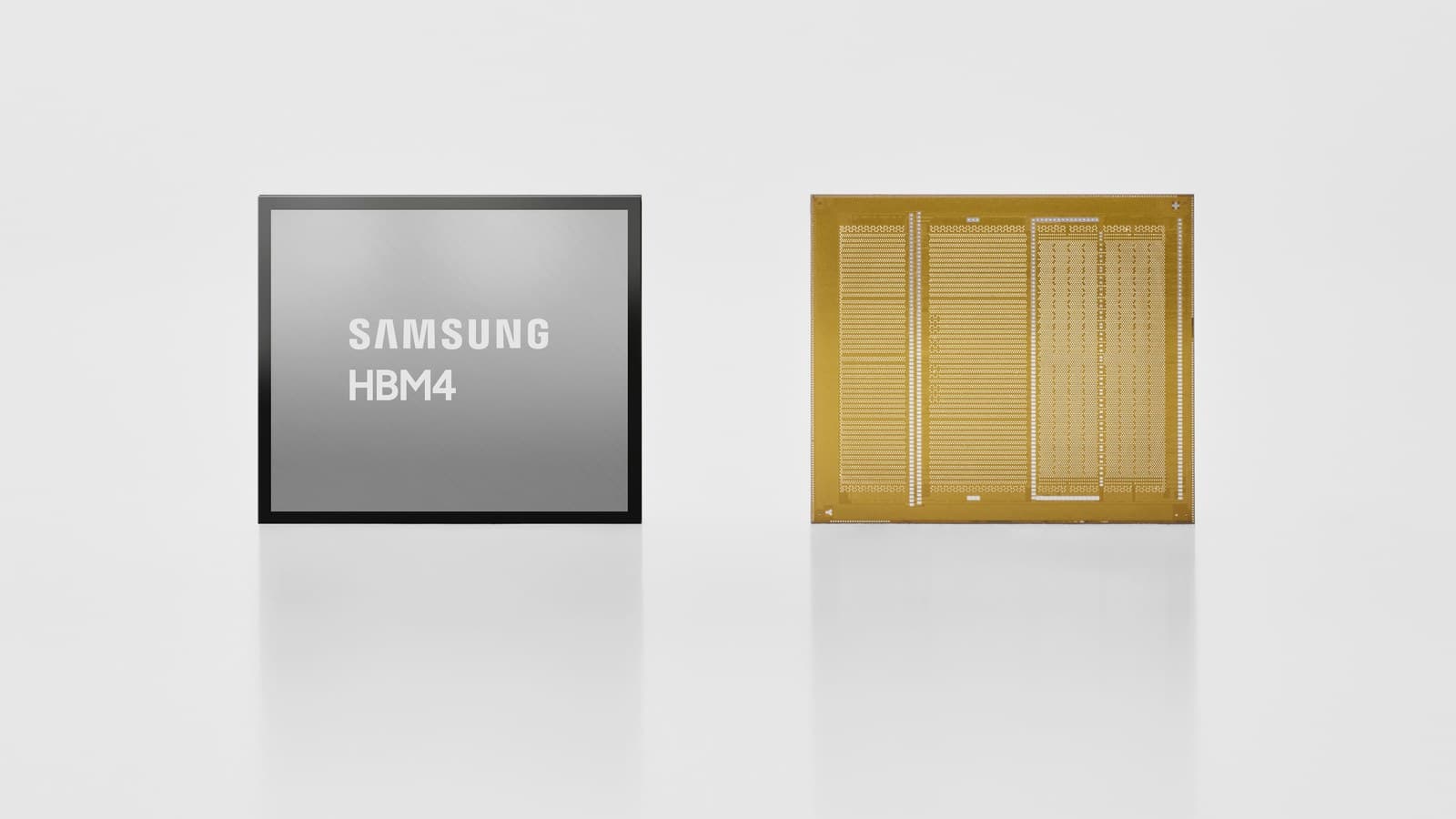
While DeepSeek was repricing software, Samsung was fixing the hardware that runs it. Industry sources cited by the Seoul Economic Daily reported on August 10 that the yield on Samsung's sixth-generation high-bandwidth memory, HBM4, had reached approximately 80%, the threshold the chip industry calls "golden yield."
To understand why that number matters, you have to understand what HBM is. It is not an ordinary memory stick. It is a stack of DRAM dies connected vertically by through-silicon vias and mounted on a logic base die, and it is the memory that feeds AI accelerators. Every failed die in a stack wastes the good ones around it, so yield compounds: small gains at the stack level produce large swings in usable output and unit cost. At 80%, HBM4 stops being a yield problem and becomes a volume business.
Samsung began mass-producing HBM4 in February 2026 (a world first) with yields below 60%. Its original plan targeted 80% by the end of the year. Process improvements, helped by progress on its thermal-compression non-conductive film (TC-NCF) stacking and by earlier gains in the underlying 1c-class DRAM, pulled the milestone forward by about four months.
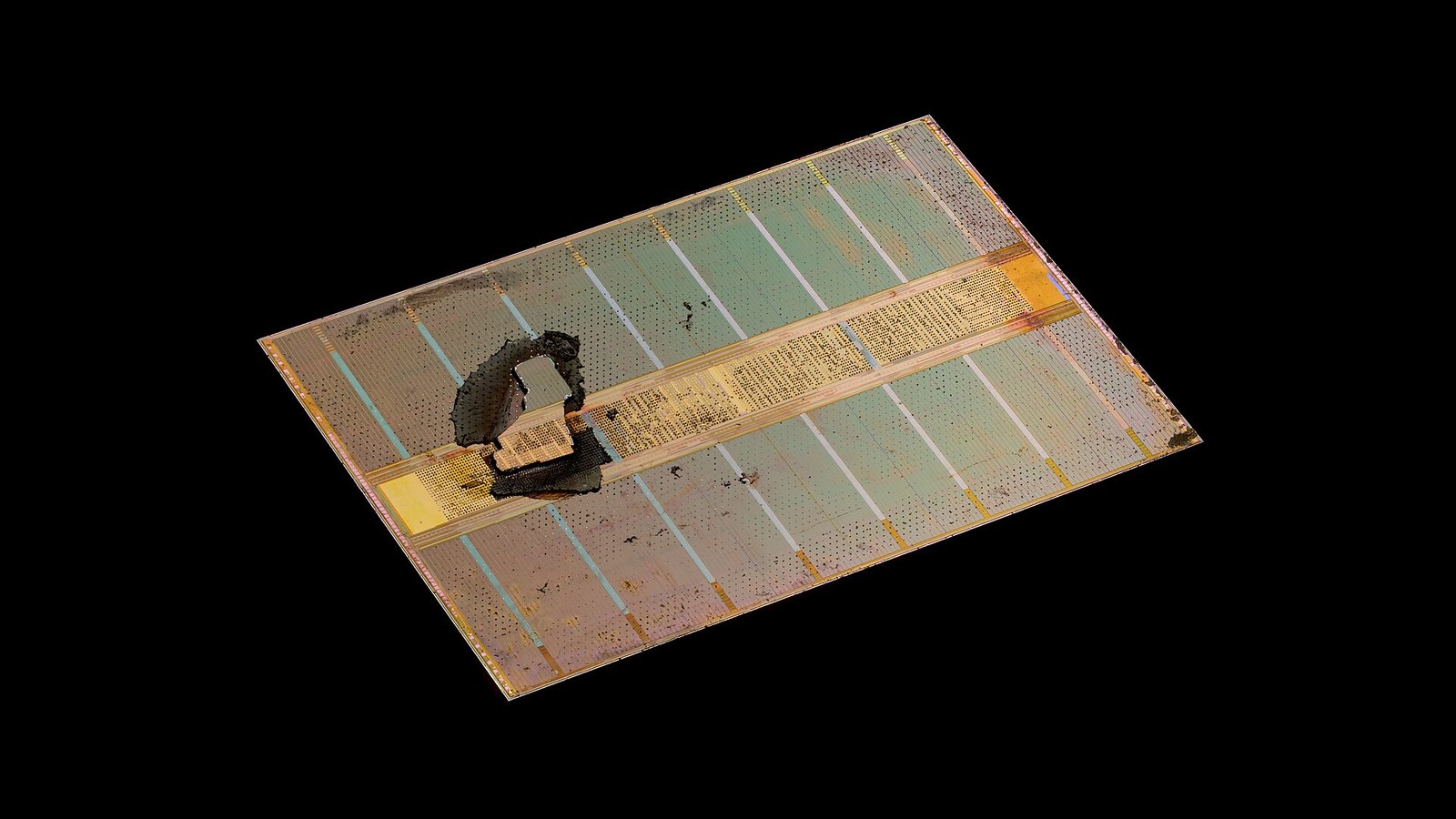
The payoff is concrete. Samsung has said it expects to more than triple its HBM4 revenue in the third quarter compared with the previous quarter, to lift HBM4's share of its total HBM revenue above 60% in the second half, and to move its overall HBM market share toward its roughly 38% share of conventional DRAM. Its next-generation HBM4E is already at about a 70% reliability-test yield, with mass production expected in the first half of 2027.
The strategic consequence is that the AI supply chain now has two qualified HBM4 suppliers rather than one. Samsung's improved output is expected to support Nvidia's Vera Rubin accelerator and AMD's Instinct MI455X, for which Samsung is the priority and for now exclusive HBM4 supplier under a March agreement. The MI455X packs twelve 36GB stacks for 432GB of HBM per GPU, more than the roughly 288GB anticipated for Rubin (The Elec).
Better yields are not price relief
It is tempting to read a yield breakthrough as the end of the memory crunch. It is not. Higher yields raise Samsung's output and lower its unit cost; they do not automatically lower what customers pay. With HBM sold out through 2027, the near-term effect of more supply is likely to be more accelerators built, not cheaper memory.
Two caveats are worth holding onto. The 80% figure is reported, not confirmed by Samsung, and yield claims are highly sensitive to whether they are measured at the die, stack or reliability-test stage. And a yield achieved on a closely supervised line is not the same as a yield sustained at full volume. The real test is whether Samsung holds the level through the second half as HBM4 shipments climb.
Still, the direction is unmistakable: the AI memory bottleneck is loosening, slowly, and the balance of power in the memory market is shifting. These are huge developments for HBM4 and mark an important milestone.
3. Google put Gemini at the center of the Pixel 11
Google's Made by Google event on August 12 was, on paper, a phone launch: the Pixel 11, Pixel 11 Pro, Pixel 11 Pro XL and Pixel 11 Pro Fold, plus the Pixel Watch 5 and the first Pixel Tag. In substance, it was an argument about where AI should run.
The centerpiece is Tensor G6, which Google says delivers 50% more TPU compute and up to 3.5× faster on-device AI while using up to 3.5× less energy. The CPU brings 25% faster web browsing and 15% quicker app launches. A new image signal processor powers faster Night Sight and expanded zoom, 30× Super Zoom across the line, up to 120× on the Pro XL. The Titan M3 security coprocessor adds post-quantum cryptography.
Around that silicon, Google built what it calls Gemini Intelligence: an assistant that acts proactively (surfacing flight details in a message thread, automating multi-step tasks, coordinating across apps), rather than waiting for a prompt. That shift from chatbot to agent is the defining platform race of 2026, and it changes what a phone's hardware needs to do. A model that runs constantly in the background, handling sensitive context, cannot afford to send every decision to a server. Latency, cost and privacy all push inference onto the device.

The hardware itself is deliberately iterative, and reviewers said so. The Verge described "a little new hardware and a lot of software"; TechCrunch noted more Gemini and fewer hardware changes; Engadget argued Google is "coasting" on foldables while Samsung iterates. The Pixel 11 Pro Fold, in particular, is heavier and thicker than Samsung's Z Fold 8 line, and its battery actually shrank year over year.
That criticism is fair, and it may also be beside the point. Google does not need to win a spec-sheet war in 2026; it needs to establish that Gemini-powered, on-device intelligence is a reason to buy a phone. The Pixel line has always been the vehicle for Google's platform ambitions. Prices start at $899, $1,099 and $1,299 for the three slab phones and $1,899 for the Pro Fold, with devices on shelves August 20.
One under-discussed driver of those prices is memory. As AI data centers absorb an ever-larger share of global DRAM production, the cost of the storage inside a phone rises with everything else. Google's modest price bumps are a small reminder that the AI boom raises input costs across consumer electronics, not only for AI products.
4. Databricks raised $5B and still won't IPO
Private capital has not lost its appetite for enterprise AI. Databricks closed a $5 billion round at a $190 billion valuation on August 13, six months after raising $5 billion in equity plus $2 billion in debt capacity at about $134 billion (Reuters).
The most revealing detail was the demand the company turned away. CEO Ali Ghodsi told TechCrunch that Databricks wanted to raise about $1 billion while investors wanted to commit roughly $15 billion; it settled on $5 billion. That oversubscription explains why the company announced a round at a $188 billion valuation in July without disclosing the size, then confirmed the final $190 billion figure this week.
The fundamentals behind the number are strong: Databricks crossed a $7 billion revenue run-rate and grew more than 80% year over year in its second quarter. It is directing the capital at three products that map onto the enterprise-AI obsession with context, governance and cost: Lakebase, its serverless Postgres database for AI agents, which has passed a $100 million run-rate; Genie, an "AI coworker" that turns business data into answers and actions; and Unity AI Gateway, a governance and cost-control layer for companies running multiple models.
The notable choice is the one Databricks is not making. Ghodsi told Forbes the company is "very unlikely" to go public before Anthropic or OpenAI do, a convenient way of saying "not soon," and one CNBC noted is shared across a cohort of companies now content to sit out the IPO market. As long as private investors will fund a company above what public markets might pay, the incentive to list is weak.
That choice has costs. At a $7 billion run-rate, $190 billion implies roughly 27 times forward revenue, defensible for a company growing above 80%, but demanding if growth slows. And staying private means the valuation is a price agreed by a small group of sophisticated investors, not a measurement rendered by a market. Treat it as a negotiated opinion.
5. Microsoft's 400-flaw Patch Tuesday
Microsoft shipped one of the largest security updates in its history on August 11, fixing roughly 400 vulnerabilities across Windows, Office, Azure, Exchange and SharePoint. The release included three zero-days (one actively exploited) and a fully documented unauthenticated remote code execution chain.
The exploited flaw is CVE-2026-68820, an elevation-of-privilege bug in the Windows Ancillary Function Driver for WinSock (afd.sys). It is a use-after-free that lets a local attacker escalate to SYSTEM. Its severity rating is modest (CVSS 7.0, rated only "Important") but Check Point researchers reported that North Korean actors tracked as Lazarus used it to deploy a new version of their FudModule kernel-mode rootkit. The pattern is now a rule: the actively exploited flaw is rarely the highest-scored one.
Two more flaws were public before patches shipped: CVE-2026-62832 in the Windows User Profile Service and CVE-2026-72971 in the Container Isolation FS Filter Driver. The most technically significant fix, though, was CVE-2026-63520, an unsafe .NET type-instantiation flaw in SharePoint's Business Connectivity Services. Chained with July's JWT authentication bypass (CVE-2026-55040), it yields full remote code execution against on-premises SharePoint Server 2016, 2019 and Subscription Edition with no credentials at all.
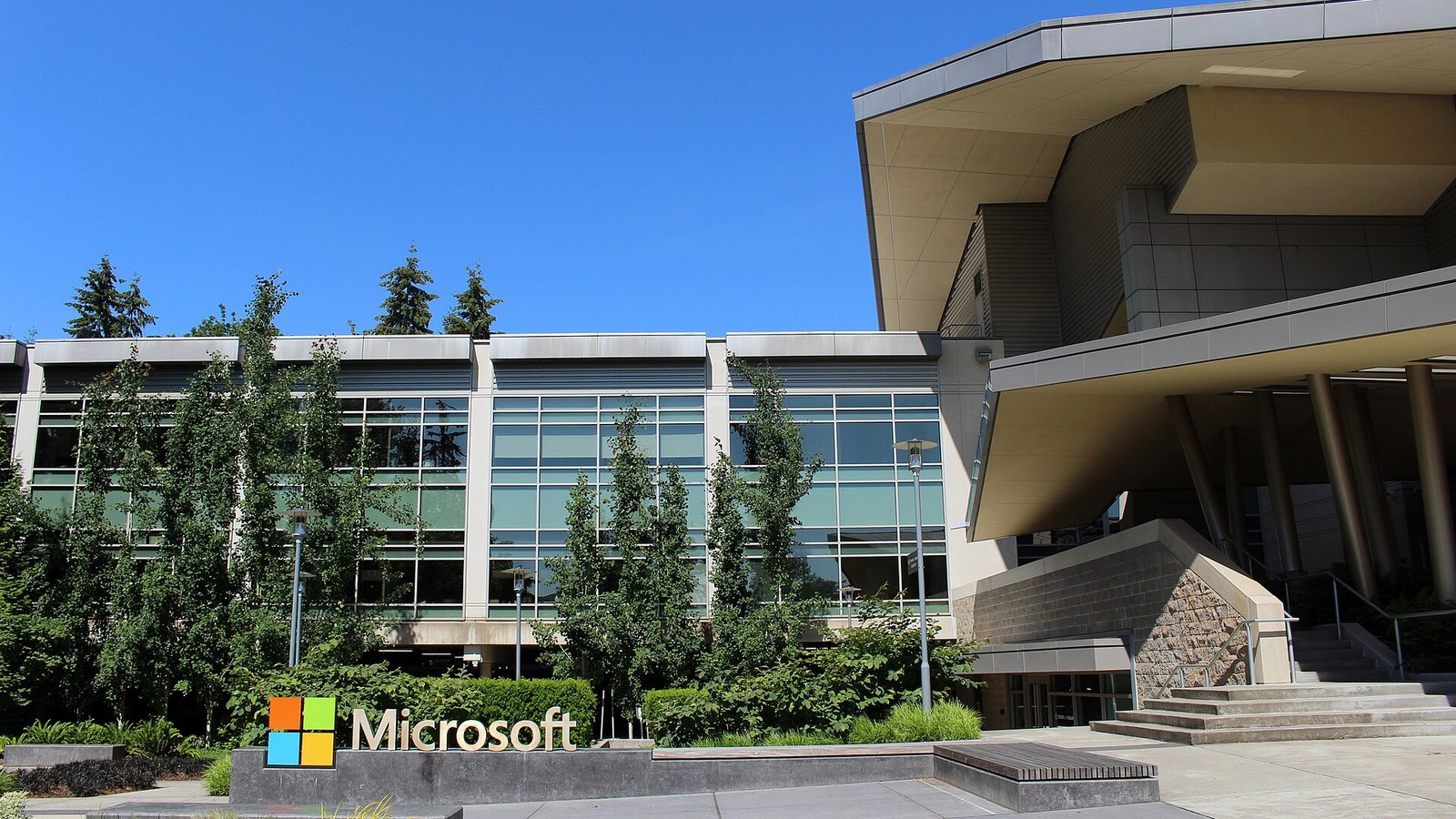
The count itself has become a story. BleepingComputer counts 400 CVEs; Tenable 398; Cisco Talos 421, differences driven by whether cloud fixes shipped earlier in the month are included and how advisories are classified. The disagreement does not change the priority list, but it does illustrate how unwieldy the monthly release has become.
The deeper trend is that discovery has exploded while exploitation has not. Across the last five releases, monthly volume has run roughly 167, 120, 200, 570 and 400 CVEs, while actively exploited zero-days ran two, zero, one, two and one. More bugs are being found and fixed than ever; the number being weaponized stays roughly flat. Some of the credit or blame goes to AI-assisted vulnerability research, which is accelerating discovery on both the attackers' and defenders' side.
Patch order for August
CVE-2026-68820 first (exploited, everywhere, SYSTEM). Then CVE-2026-63520 for any on-premises SharePoint server exposed to a network. Then the two publicly disclosed zero-days. Everything else: automate, rank by exposure, and accept that complete coverage within 24 hours is not realistic at this volume.
6. Gemini 3.7 Flash and the model treadmill
Google was busy on multiple fronts this week. One day after the Pixel event, it released Gemini 3.7 Flash, its most capable "workhorse" model yet for coding and agentic tasks, and just three weeks after Gemini 3.6 Flash.
The pitch is price-performance. At an introductory $0.75 per million input tokens and $3.75 per million output tokens through the end of 2026 (half the original 3.6 Flash rate) Google is positioning the model for production agents that need to run cheaply at scale. It is rolling out immediately to Gemini Spark, the company's subscription agent service. Google offered no date for a flagship Pro release.
There is a telling symmetry here. On the same week DeepSeek raised prices, Google cut one. The two moves describe the same competitive reality from opposite ends: the cost of a given level of capability keeps falling, even as the cost of the most capable models rises. For buyers, the lesson is to route aggressively, use the cheap, good-enough model for most traffic and reserve the expensive frontier for the hard cases.
Also this week
River AI raised $1.1 billion. The startup founded by xAI co-founder Igor Babuschkin closed a combined seed and Series A led by General Catalyst and AMP PBC, with strategic investment from Nvidia and AMD Ventures and participation from Y Combinator and Temasek (Reuters). River's pitch is tools that let companies train, tune and serve their own models on their own data ("ownership" of AI, in the company's framing) and the presence of both Nvidia and AMD on the cap table highlights how strategically important the fine-tuning layer has become.
GM exited its battery joint venture with Samsung SDI. Samsung SDI signed a new agreement to co-develop next-generation prismatic batteries with GM and, separately, acquired GM's 49.99% stake in their Indiana joint venture, making the New Carlisle plant its first wholly owned battery factory in North America (Samsung SDI). The reason was explicit: slower-than-expected EV demand. The plant, still under construction, will initially build batteries for energy storage systems rather than cars. The episode is a clean signal of how the EV slowdown is reshaping battery supply chains, and of how storage, not vehicles, is becoming the near-term demand story.
Honor launched a robot phone. Honor's Robot Phone went on sale in China with a motorized gimbal camera that pops out of the top of the device, a 200-megapixel main sensor co-developed with cinema-equipment maker ARRI, and AI subject tracking that uses the gimbal for framing (Honor, WIRED). It starts at 9,999 yuan (about $1,480) and, for now, is a China exclusive. It is a niche device, but it is the kind of physical, embodied-AI experiment that "AI phones" have mostly only promised.
The thread running through the week
Put the week's biggest stories side by side and a single theme emerges: the cost of AI is being repriced, and the industry is being forced to say so out loud.
DeepSeek's price increase is the clearest version. For two years it sold inference below what it cost to serve, using investor capital to buy market share. This week it started charging closer to the real thing. Samsung's golden yield is the same story from the hardware side: better yields lower the true cost of HBM, which is what allows the AI buildout to continue without prices spiraling infinitely upward. Google's on-device push is about moving inference off the expensive centralized path and onto silicon the customer already owns. And Databricks' $190 billion round is the financial mirror image, capital so abundant that the cost question can be deferred for another year.
The uncomfortable truth in all of it is that the last two years trained the industry to plan around falling prices. Engineering teams built on the assumption that a capable model would always get cheaper, and routed accordingly. The events of this week suggest a more complicated future: the cheap end of the market will keep getting better and cheaper, while the frontier (the models that do the hardest work) will cost more, not less, at least until the infrastructure catches up.
Re-run your unit economics
If your product's unit economics assume a fixed or falling inference cost per request, this is the week to re-run them with a rising-cost scenario. The teams that weather hardware and pricing cycles best are the ones that keep their model layer swappable, their prompts portable and their workload efficient.
That does not make the AI boom a bubble. It makes it a business. The companies that thrived in earlier platform shifts (cloud, mobile, the web) did so by treating infrastructure cost as a first-class product concern rather than an afterthought. There is no reason to expect the AI transition to reward anything less.
What we're watching next week
Three things are on our list.
First, whether DeepSeek's price increases stick. If its token volumes hold through September, it will have shown that a Chinese lab can charge premium prices for a premium model. If volumes slide, it will have shown that its users were loyal to the price, not the logo.
Second, the HBM supply picture heading into Rubin's launch. Samsung's yields are improving and SK hynix is holding pace, but HBM is reportedly sold out through 2027. Watch whether memory prices ease at all, or whether the constraint simply shifts from manufacturing to allocation.
Third, the response to Google's on-device bet. If users keep Gemini Intelligence enabled after the novelty fades, the Pixel 11 will be remembered as the point at which on-device AI became something people actually use. If they turn it off, the platform war continues, on someone else's terms.
How this issue is made
A short note on method, because it matters to us. Every item in this digest is drawn from primary sources (company announcements, filings, vendor advisories and technical documentation) and cross-checked against independent reporting. Where sources disagree, we say so, as we did with Microsoft's CVE count. Where a figure is reported rather than confirmed, we label it as such, as we did with Samsung's HBM4 yield and DeepSeek's projected valuation.
We also publish everything in English, German, Spanish and French, and we keep a public log of sources and image licenses. If something here is wrong, we want to know, because a weekly digest is only as good as its willingness to be corrected.
The bottom line
The through-line this week is that AI is entering its accounting era. The capability is real and improving; the free lunch is over. DeepSeek, the industry's loudest low-price evangelist, raised its prices. Samsung, the supply chain's biggest question mark, started answering the yield question. Google, the platform giant, moved the intelligence closer to the user. Databricks, the private-market bellwether, raised more money than it wanted. And Microsoft's security engineers, under a flood of AI-assisted discovery, shipped more fixes than any team can easily absorb.
That is a less cinematic story than a new model topping a benchmark. It is also the story that will decide which of this week's winners are still standing in two years. The magic is still here. The work of paying for it has begun.
Tags

TPW Editorial
Editorial Team
TechPastWeek's editorial team reports and edits every story we publish. We research each piece against primary and credible secondary sources, and a human editor reviews and signs off before it goes live.