Broadcom Raises Its AI Chip Forecast to $115 Billion, and $230 Billion by 2028
Broadcom's custom AI chip business tripled to $16.7 billion last quarter as the company raised its two-year outlook, even as next-quarter guidance landed just below Wall Street's bar.

On this page
Broadcom raised its multiyear outlook for custom AI chips on Wednesday, telling investors it now expects about $115 billion of AI semiconductor revenue in the fiscal year ending October 2027 (up from a prior forecast of more than $100 billion) and that the total should roughly double again, to about $230 billion, in fiscal 2028. The company delivered the forecast alongside fiscal third-quarter results that beat expectations on almost every line. Yet the stock fell in extended trading, because guidance for the current quarter landed just below the number Wall Street had modeled. The split response captured the central tension in the AI hardware trade: demand is enormous and visibly accelerating, but expectations have been set so high that even a blowout can read as a disappointment.
Related reading: TSMC Posts a Sixth Straight Record Quarter as AI Demand Outruns Supply · TSMC's August Revenue Hits a Record NT$514.8 Billion as AI Demand Outruns Supply.
Broadcom reported the results on September 2 for the quarter ended August 2, 2026. AI semiconductor revenue more than tripled year over year to $16.7 billion, up about 221 percent and up 54 percent from the prior quarter. Total revenue rose 86 percent to $29.59 billion, edging past the roughly $29.36 billion analysts had expected, according to Reuters. Net income climbed about 216 percent to $13.088 billion, and adjusted earnings per share came in at $3.32, ahead of the roughly $3.24 consensus.
The composition of the quarter matters as much as the headline growth. Semiconductor solutions revenue reached $20.839 billion, up 127 percent year over year and about 70 percent of the total. Infrastructure software, the business Broadcom inherited with its acquisition of VMware, brought in $8.752 billion, up 29 percent, steady, but no longer the center of the story. Broadcom is now, first and foremost, an AI silicon supplier, and the AI line is growing several times faster than everything else it sells.
Then came the guidance that took the shine off. The company said fourth-quarter revenue should be about $34.8 billion, below the roughly $35.03 billion analysts polled by LSEG had expected. AI chip revenue for the quarter is forecast at about $21.7 billion, up 236 percent year over year and slightly above the roughly $21.33 billion estimate compiled by Visible Alpha. Broadcom also guided to an adjusted operating margin of about 66 percent. Shares fell in after-hours trading, with some reports citing a decline of more than 1 percent and others more than 3 percent; the stock was up about 6 percent for the year, lagging the broader semiconductor market, Bloomberg noted.
The short version
Broadcom's AI business is growing faster than almost any large semiconductor franchise in history. The problem is not demand; it is the gap between very high expectations and guidance that was merely very good. The raised multiyear forecast is the more important number, and it points to a company that expects this cycle to keep compounding rather than crest.
The custom-silicon thesis
Broadcom's rise is a bet on a specific idea: that the largest AI operators will increasingly run their most important workloads on chips designed for them, not on general-purpose processors bought off the shelf. The company builds custom accelerators (application-specific integrated circuits, or ASICs) and the high-speed networking that ties thousands of them together inside a data center. Its custom chips and AI networking gear are used by Meta, Alphabet's Google and OpenAI, among others, Reuters reported.
The logic is straightforward. A company that controls its own accelerator can tune the silicon to its own workloads, avoid the margin of a merchant chip vendor and, in principle, extract more useful computation per dollar and per watt. The trade-off is commitment: custom silicon is expensive to develop, takes years to bring to market and only pays off at enormous scale. That is why the customer list is short and the names on it are among the richest technology companies in the world, and why each design win is worth billions of dollars over its lifetime.
For Broadcom, the model has produced both revenue and visibility. Bookings for AI chips topped $30 billion in the last quarter alone, the company said, a backlog that helps underpin the higher forecast. Chief Executive Hock Tan told analysts that "Demand for custom AI accelerators and networking products remains very strong," adding that "this growth momentum will continue in the fourth quarter," according to the Reuters report carried by CNA.
The networking half of the business is easy to overlook and hard to overstate. Accelerators are only useful when they can be connected to one another at very high speed and low latency, and that fabric is itself a specialized, high-margin product. As AI clusters grow from thousands of chips to hundreds of thousands, the networking content per deployment rises, and Broadcom sells into that growth as well.
Supply, and the gigawatt test
The raised outlook is not only about demand. Tan said Broadcom has secured enough supply to support the higher forecast next year, a claim that matters in an industry where the binding constraint has shifted from orders to components. He pointed to visibility into additional deployments through 2028: more than 10 gigawatts for Anthropic, over 5 GW for OpenAI and 3 GW for Meta, CNA reported. Those figures describe the physical footprint of AI data centers rather than chip counts, but they are the most concrete forward-looking numbers Broadcom has offered, and they explain why management felt comfortable doubling its 2028 target.
Analyst reaction centered on that supply commitment. "That is committed capacity, not aspiration, and it closes most of the gap to what the market wanted," Patrick Moorhead of Moor Insights & Strategy told Reuters.
"That is committed capacity, not aspiration, and it closes most of the gap to what the market wanted." — Patrick Moorhead, Moor Insights & Strategy
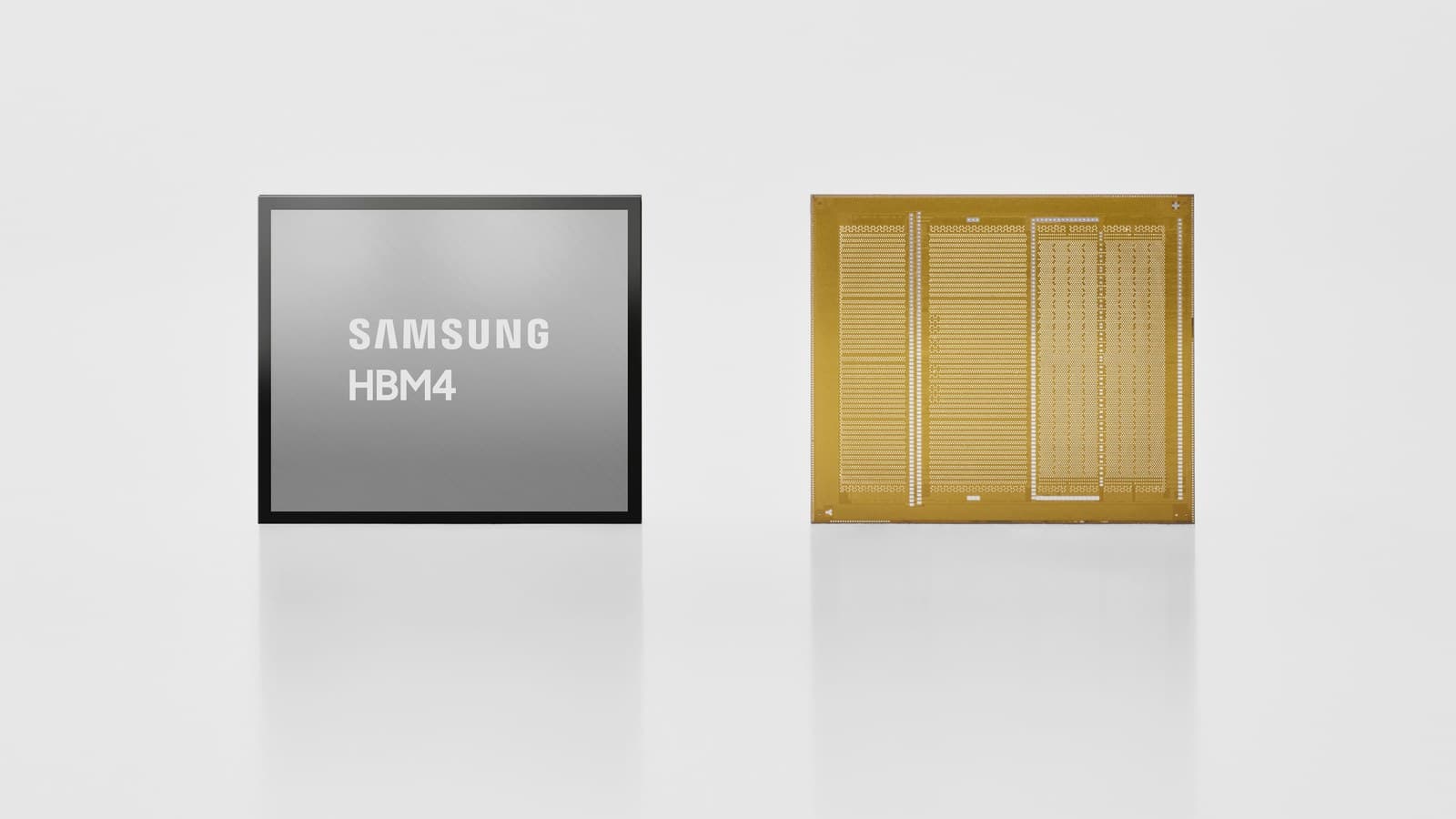
Supply is also where Broadcom is hedging. The company has flagged tightness in advanced substrates and other components, and it has moved to spread its manufacturing risk. To reduce its reliance on any single manufacturer, it signed a multiyear memorandum of understanding with Samsung Electronics in July worth more than $200 billion, Reuters reported. The deal is a reminder that in AI hardware, manufacturing capacity is a strategic asset, and that the companies able to lock it up early gain an advantage that is difficult to replicate once demand arrives.
The competition is getting louder
Broadcom's custom-silicon franchise is not unopposed. In August, rival Marvell Technology struck an expanded custom chip deal with Google that could generate roughly $120 billion in revenue through fiscal 2033 if the search giant hits its purchasing targets. As part of the agreement, Google received a warrant to buy up to 58.97 million Marvell shares at $206.58 apiece, a stake worth about $12.2 billion at full exercise, according to Reuters. The headline numbers are enormous, though the structure is conditional: most of the warrant vests only as Google buys, so the $120 billion is a threshold implied by the deal's mechanics rather than a committed order.
The deal matters for two reasons. First, it shows Google (one of Broadcom's most important customers) diversifying its supply base rather than concentrating it. Broadcom has a separate long-term agreement to supply Google with future generations of custom AI chips through 2031, so the two arrangements are not mutually exclusive, but the direction of travel is toward more vendors, not fewer. Second, it reframes the competitive question. The contest is no longer only about who makes the fastest accelerator; it is about who can deliver volume, on schedule, across multiple generations, without becoming a single point of failure.
Why the whole market is watching
The Broadcom report is a test case for a broader question: whether the enormous capital expenditure being poured into AI infrastructure is translating into durable revenue for the companies that supply it. Nvidia's GPUs have dominated the first phase of the build-out, but spending is broadening. Custom accelerators and the high-speed networking that connects them are becoming a larger share of the bill of materials for a modern AI cluster, and Broadcom sits at the center of both. That is why its guidance is read as a signal both about Broadcom and about the shape of AI demand itself.
The mixed market reaction deserves careful reading. A company guiding to 236 percent year-over-year growth in a single quarter was marked down because its total revenue outlook was less than one percent below consensus. The episode says less about Broadcom's fundamentals than about how much optimism is already priced in. When a stock is valued on the assumption of near-perfect execution, any wobble (even one inside the normal range of quarterly variability) becomes an event.
There is also a structural caveat. Broadcom's AI revenue is concentrated in a handful of very large customers, and those customers are themselves making bets that could change. If AI model economics improve faster than expected, or if a new architecture reduces the amount of custom silicon a workload requires, the demand curve could bend. Conversely, if a start-up or a cloud provider decides to bring accelerator design in-house, Broadcom could lose a customer as quickly as it won one. Concentration cuts both ways, and the same names that make the forecast credible are the ones that make it fragile.
What to watch next quarter
Three things will determine whether the raised forecast holds. The first is the fourth-quarter print itself: whether revenue lands near the guided $34.8 billion and whether AI chip sales hit the roughly $21.7 billion target. A miss on the AI line, even a narrow one, would test the credibility of the much larger 2027 and 2028 numbers, because those forecasts rest on the same execution engine.
The second is the margin. Broadcom guided to roughly 66 percent adjusted operating margin, and sustaining that while scaling a capital-intensive, packaging-heavy business is not guaranteed. If margins compress, the earnings power implied by the $230 billion forecast shrinks, and the valuation argument that has supported the stock weakens.
The third is the supply chain. The forecast assumes secured capacity in leading-edge wafers, advanced substrates and high-bandwidth memory. Any disruption (a packaging bottleneck, a memory shortage, a manufacturing hiccup) would show up first as a delay and later as a guidance cut. Broadcom has said it has the supply it needs. The next two quarters will show whether that claim survives contact with demand. The company's own chief executive has described the outlook as carefully structured and conservative, a reminder that these numbers estimate what can be built and deployed, not guarantee it.
The bottom line
Broadcom's message is that the AI build-out is no longer a GPU story alone. Custom accelerators and the networking around them are becoming a distinct, fast-growing market, and Broadcom intends to be its most important supplier. The raised forecast ($115 billion in 2027, $230 billion in 2028) is the most aggressive multiyear target the company has ever given, and it rests on what management describes as secured supply rather than a hope. The next-quarter guidance, however, shows that even a company growing at triple-digit rates can fall short of a market that has already decided what the future looks like. The tension between those two facts is the real story, and it will not be resolved until the numbers arrive.
Tags

TPW Editorial
Editorial Team
TechPastWeek's editorial team reports and edits every story we publish. We research each piece against primary and credible secondary sources, and a human editor reviews and signs off before it goes live.