Tencent Reportedly Leases 100,000 AI Chips From Oracle in a $7 Billion Overseas Deal
Tencent has reportedly leased 100,000 AI chips in Oracle data centers in South-East Asia for five years and about $7 billion, a deal neither firm confirms.

On this page
Key takeaways
- Tencent reportedly signed a five-year lease for about 100,000 advanced AI chips housed in Oracle data centers in South-East Asia, the Financial Times reported in late September 2026 and Reuters relayed on September 30.
- The FT estimates the lease at about $7 billion, with roughly 30 percent paid upfront, or about $1.60 per chip-hour; neither Tencent nor Oracle has publicly confirmed the terms.
- US export controls bar selling such chips into China but allow offshore cloud leases, because the hardware stays outside Chinese territory.
- Tencent plans to use the compute first to train larger Hunyuan models and later to run them for inference, with Tencent Cloud possibly renting the capacity out.
- Tencent's cash flow turned negative in the second quarter of 2026 at about RMB 13.8 billion (roughly $2.06 billion), which its CFO attributed to AI infrastructure spending and compute prepayments.
Tencent has agreed to lease about 100,000 advanced AI chips under a five-year deal, the Financial Times reported in late September 2026, in an account Reuters relayed on September 30. The chips would sit in several Oracle data centers in South-East Asia, not on Chinese soil. Neither Tencent nor Oracle has publicly confirmed the terms, and every number here traces to the FT's reporting and the outlets that carried it.
Related reading: Taiwan Plans to Make Unauthorised AI-Chip Exports to China a Crime · SpaceX in Talks to Raise $40 Billion to Buy Nvidia AI Chips.
The headline figure is about $7 billion. The FT put roughly 30 percent of that as an upfront payment and worked the total down to about $1.60 per chip-hour. If the report holds, it would be Tencent's largest overseas lease from a US cloud provider, and a clear example of how export controls have shaped the AI build-out. The rules do not stop Chinese firms from using the most advanced compute. They change where it is located.
A ban on selling accelerators into China is not a ban on using them. Renting capacity from a US operator in a third country keeps the hardware, and the legal title to it, outside China, which the FT reported is enough to satisfy the current rules.
A lease the export rules allow
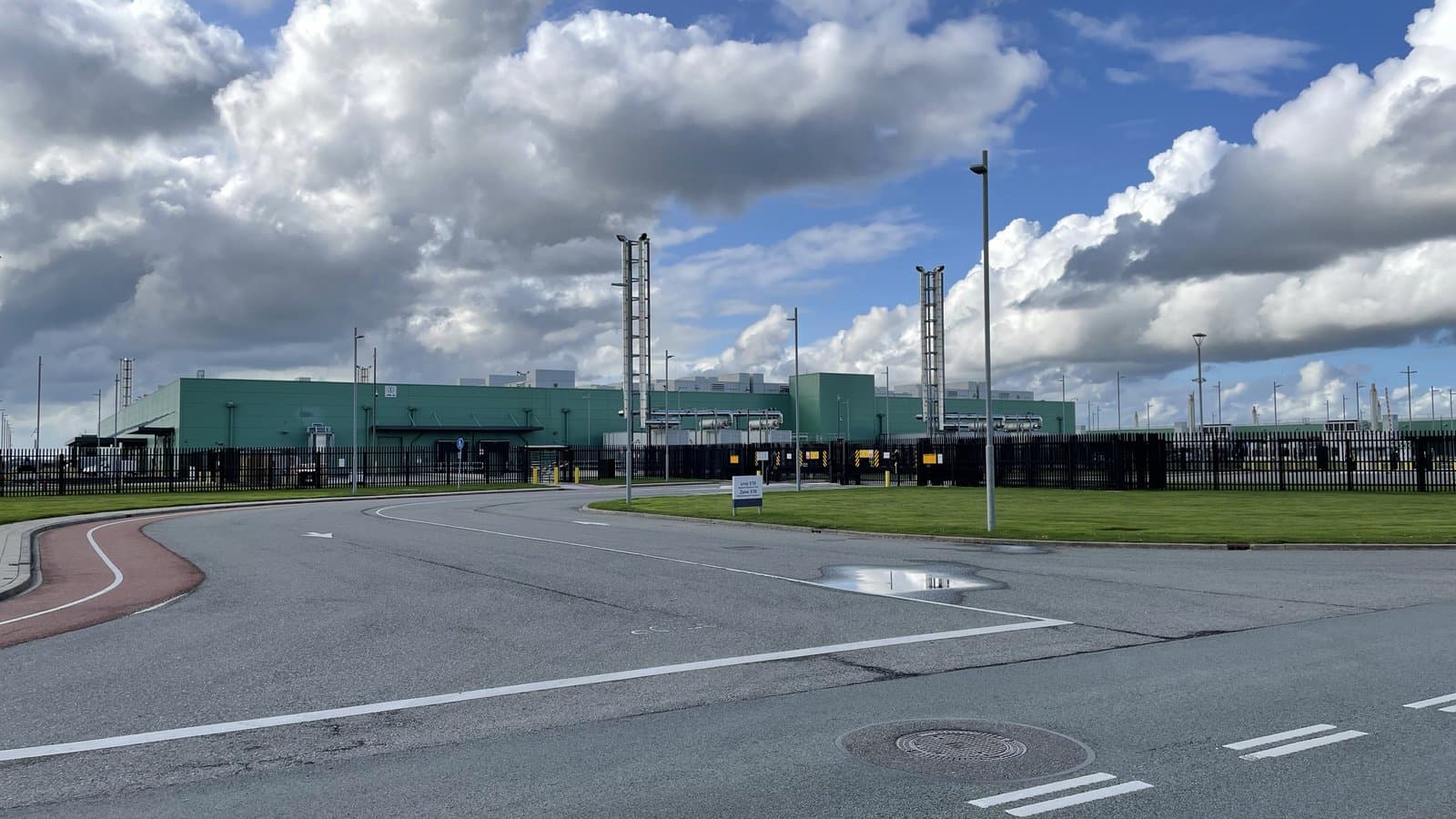
The chips in question are not available to buy inside China under US export controls. Tencent cannot simply order them and have them shipped. What it can do, per the FT, is contract for cloud capacity in data centers that Oracle owns and runs in South-East Asia.
The legal logic turns on location. The accelerators never enter China, so the export restriction that governs their sale does not attach in the same way. Tencent is buying access, not hardware, and access has no customs border to cross. Reuters carried the same framing when it relayed the report.
Whether that structure survives scrutiny is the live question. The FT reports that it is permitted today. Permission of this kind is a policy choice rather than a physical limit, and policy choices can be revised faster than a five-year lease can be unwound.
What the reported deal covers
The terms are specific enough to test. About 100,000 chips, five years, several Oracle facilities in South-East Asia, roughly $7 billion, about 30 percent upfront. The per-hour math of about $1.60 is the number that has traveled furthest, because it lets readers compare the deal with published cloud pricing.
The report does not name the chip model, and that gap matters, because export rules treat different accelerators differently. Without the part number, the per-chip-hour figure describes a class of hardware rather than a specific chip. TrendForce and The Next Web both treated the $7 billion and 100,000-chip figures as the core of the story.
Why Tencent leases instead of buying
Reuters, relaying the FT, described the deal as part of Tencent's push to accelerate its AI work. The FT's account says Tencent would use the capacity first to train larger Hunyuan models, its in-house family of large language models, and later to run them for inference. A third stage is possible: Tencent Cloud could rent the capacity out to other customers.
That sequence explains why a company would lease rather than wait. Training is the compute-hungry phase, and it is where a shortage of accelerators is felt most. Inference is cheaper per query but runs continuously, so capacity that serves both has value beyond a single model release. If Tencent later resells access through its cloud arm, the lease becomes a product line as well as an internal input.
Why a lease is not a purchase
US export controls restrict selling the most advanced AI chips into China. They do not stop a Chinese company from renting those chips in a data center outside China, which is the structure the FT describes: Oracle keeps and operates the hardware, and Tencent buys access to it.
Tencent's AI bill is already visible
The lease lands against a strained balance sheet. Tencent's cash flow turned negative in the second quarter of 2026, at about RMB 13.8 billion, or roughly $2.06 billion, according to coverage of the results. The company's CFO attributed the swing to heavy spending on AI infrastructure and to prepayments for compute. It was the first negative quarter in more than a decade.
The FT's reporting fits that picture. Tencent is spending on AI on several fronts at once. It is also an investor in the Chinese chipmaker Enflame, which nearly tripled in its Shanghai IPO debut in September 2026, a bet that domestic silicon can carry more of the load over time while offshore leases cover the near term.
None of this means Tencent is short of money. A negative cash flow quarter at a company of its size is a statement about the scale of investment, not about solvency. It does explain why a five-year lease with an upfront payment might suit Tencent: it turns a lumpy capital cost into a contracted stream, and it avoids the export-licence problem that buying the chips would create.
Oracle's side of the trade
For Oracle, the reported deal is a customer for a build-out that has weighed on its numbers. Its stock had fallen about 29.5 percent in 2026 going into the report, DatacenterDynamics noted, and its free cash flow has been below zero for several quarters because of AI data-center spending. Its remaining performance obligations, the backlog Oracle reports, stand around $664 billion.
An overseas tenant fits Oracle's position. It has committed enormous sums to data centers and needs revenue to fill them. Tencent's upfront payment and five-year commitment are the kind of contracted cash flow that makes the spending easier to defend to investors, though the report does not say how the $7 billion is scheduled across the term.
A pattern, not a one-off
Tencent is not the only Chinese firm renting compute abroad. ByteDance accounted for nearly 75 percent of the UK cloud firm Nscale's 2025 sales, per Nscale's filings. The arrangement is the same in spirit: buy access to capacity that cannot be bought as hardware.
Reported, not confirmed
Neither Tencent nor Oracle has publicly confirmed the lease or its terms. The Financial Times reported the deal in late September 2026, and Reuters and other outlets relayed it. Treat the $7 billion value, the 30 percent upfront figure and the $1.60 per chip-hour rate as the FT's estimates, not as company statements.
Two threads in the coverage deserve separating. This story is a reported offshore lease that the FT says export rules permit. It is not the US prosecution over illegally re-exported Nvidia servers, a separate case that involved criminal charges and different allegations. The two get merged in casual discussion, and only one of them is about a structure the rules allow.
The economics of renting
The lease reads as a financing choice. Buying 100,000 advanced accelerators would require export licences that the rules effectively rule out for China, so ownership is not on the table. Leasing moves the question from "can we import it" to "where is it hosted", which is a legal question Tencent has answered by moving the location rather than the buyer.
The open questions are about price. At about $1.60 per chip-hour, the implied rate is modest for high-end accelerators. Whether that reflects a volume discount, a long commitment, or a particular chip type is not clear from the report. The FT's numbers come from people familiar with the deal, and the true cost will surface in Oracle's own disclosures if it is material.
Export controls did not stop Chinese firms from using the most advanced AI chips. They changed where those chips sit.
Caveats
Three caveats belong alongside the reported terms.
First, confirmation. The FT's sources are people familiar with the arrangement, and neither party has signed off publicly. A lease this size would normally surface in an earnings call or a filing. Until it does, the deal is a well-sourced report rather than a disclosed transaction.
Second, the rate. The $1.60 per chip-hour figure depends on spreading the total value evenly across five years of full use, an assumption baked into the FT's arithmetic. If Tencent pays for reserved capacity whether or not it uses it, the effective rate differs. If usage ramps up over the term, it differs again. The comparison with spot pricing is rougher than it first looks.
Third, the rules. The FT reports that current export rules allow an offshore cloud lease. That permission can change. A future rule aimed at exactly this structure would not be a surprise, and Tencent's five-year term assumes today's rules survive the term.
What to watch
- Confirmation from either company. Oracle's next earnings report or a Tencent filing would turn a reported deal into a disclosed one.
- Whether Tencent Cloud resells the capacity. The FT says that is a later option, and it would make the lease a commercial product as well as an internal input.
- Export-rule movement. Any US rule aimed at offshore leases of advanced chips would test the structure directly.
- Hunyuan's next training run. If Tencent's next model is trained on this capacity, the lease will show up in what the model can do.
- Oracle's backlog conversion. A $664 billion backlog matters only if it turns into revenue and cash. A named tenant would make that conversion more credible.
The deal, if it holds, marks a line: the compute fight has moved from who can buy the chips to who can host them. The next chapter is whether the rules follow the chips across the border.
Cover: Tencent's headquarters in Shenzhen, China. Photo by Soramimi via Wikimedia Commons, CC BY-SA 4.0.
Tags
Frequently asked questions
- Did Tencent buy 100,000 AI chips from Oracle?
- No. According to the Financial Times, Tencent signed a five-year lease for access to about 100,000 advanced AI chips in Oracle data centers in South-East Asia. Neither Tencent nor Oracle has publicly confirmed the deal.
- How much is Tencent's reported Oracle chip lease worth?
- The FT estimates about $7 billion, with roughly 30 percent paid upfront, which works out to about $1.60 per chip-hour. Oracle and Tencent have not confirmed the figure.
- Why would Tencent lease AI chips overseas instead of buying them?
- US export controls prevent the most advanced AI chips from being sold into China. Renting cloud capacity in South-East Asia keeps the hardware outside Chinese territory, which the FT reports is allowed under the current rules.
- What will Tencent do with the Oracle compute?
- The FT reported that Tencent will use it first to train larger Hunyuan models and then to run them, and that Tencent Cloud could later rent the capacity to other customers.

TPW Editorial
Editorial Team
TechPastWeek's editorial team reports and edits every story we publish. We research each piece against primary and credible secondary sources, and a human editor reviews and signs off before it goes live.