Alibaba Unveils the Zhenwu V900 AI Chip and a 20GW Data-Center Target for 2032
Alibaba's T-Head unit unveiled the Zhenwu V900 AI accelerator at Apsara 2026 and set a target of more than 20GW of global data-center capacity by 2032.

On this page
Key takeaways
- Alibaba's T-Head chip unit unveiled the Zhenwu V900 AI accelerator at the Apsara Conference in Hangzhou on 22 September 2026, claiming three times the performance of its predecessor, the Zhenwu M890.
- The V900 has 216GB of GPU memory and 1,200GB/s of inter-chip bandwidth and can be clustered to 500,000 units; Alibaba plans mass production and commercial release in the first quarter of 2027.
- CEO Eddie Wu set a target of more than 20GW of global Alibaba Cloud data-center capacity by 2032, and said Alibaba is developing Qwen models at scales up to 10 trillion parameters.
- Alibaba has committed more than 380 billion yuan, about US$53 billion, over three years to AI and cloud, and raised roughly US$10.2 billion in a Hong Kong share offering in August 2026.
- The 'most powerful in China' and 'three times' claims are Alibaba's own and have not been independently verified.
Alibaba used its annual Apsara Conference in Hangzhou to lay out a full-stack AI strategy, unveiling a new accelerator from its T-Head chip unit and setting a data-center target that would make the company one of the largest infrastructure operators in the world.
Related reading: SpaceX in Talks to Raise $40 Billion to Buy Nvidia AI Chips · Tencent Reportedly Leases 100,000 AI Chips From Oracle in a $7 Billion Overseas Deal.
The centrepiece was the Zhenwu V900, an AI processor for both training and inference that Alibaba calls the most powerful AI chip in China. According to Alibaba's announcement, the V900 delivers three times the performance of its predecessor, the Zhenwu M890, which shipped in May. The company says the chip carries 216GB of memory and 1,200GB/s of inter-chip bandwidth and supports multiple data precisions, including FP8 and FP4.
Alibaba also showed a supernode server that combines the V900 with its ICN Switch, Panmai smart network card and Zhenyue SSD controller. The company says a single cluster can scale to 500,000 of the accelerators, a configuration it describes as capable of powering frontier-model training and inference. Mass production and commercial release are planned for the first quarter of 2027, which means the chip is being announced well ahead of availability.
A 20GW target and a 10-trillion-parameter model
Alongside the silicon, Alibaba Group chief executive Eddie Wu set out the scale of the company's ambition. He said Alibaba Cloud aims to operate more than 20 gigawatts of global data-center capacity by 2032, and that Alibaba is developing next-generation Qwen models with parameter counts of five to ten trillion.
Wu framed the target around the idea that machine intelligence is still in its early days. He said the total volume of machine thinking is currently less than 3% of human thinking, and argued that if it scales a thousandfold there is a large runway for growth. "Our target is that by 2032, the global data center capacity operated by Alibaba Cloud will surpass 20GW, fueling the industry's exponentially rising demand for AI," Wu said, according to the company's release.
The conference also brought a mobile push. Alibaba launched Qwen Intelligence for phones and described an agentic cloud designed around AI agents that act on a user's behalf. The company's chairman, Joe Tsai, said the theme of this year's event was taking AI from technical breakthroughs toward value creation.
The context: export controls and a domestic supply chain
The V900 matters most because of what it replaces. US export restrictions have limited Chinese access to Nvidia's most advanced accelerators, and Chinese cloud providers have responded by funding domestic chip programmes. Alibaba, Huawei, Baidu and others are all building accelerators to keep their AI workloads running on hardware they can buy at home.
Huawei's Ascend roadmap has been the most visible of those efforts, and the two companies are now competing for the same customers. The Register noted that Alibaba would fill its data centres with what it calls China's most advanced AI chip, and that Wu did not say when the V900 would enter production or when Alibaba would have enough of them for a full 500,000-card cluster. That gap between announcement and volume is the central open question.
The financial backdrop is substantial. Alibaba has committed more than 380 billion yuan, about US$53 billion, over three years to AI and cloud infrastructure. In August it raised roughly US$10.2 billion in a follow-on offering in Hong Kong. Bloomberg has reported that Alibaba is considering a separate listing for T-Head, which would give the chip unit its own access to capital and a clearer valuation.
Investors responded positively to the conference. Alibaba shares rose about 5% in Hong Kong on the day of the keynote, with Tencent also higher, according to market reports. Citigroup has estimated that the 20GW buildout could generate more than US$160 billion in external revenue for Alibaba Cloud, though that is a projection built on assumptions about demand and pricing that are far from certain.
Vendor claims: Alibaba's description of the V900 as "the most powerful AI chip in China" and its "three times the performance" figure are the company's own, based on comparisons with its previous generation. No independent benchmark results for the V900 have been published.
Reading the numbers carefully
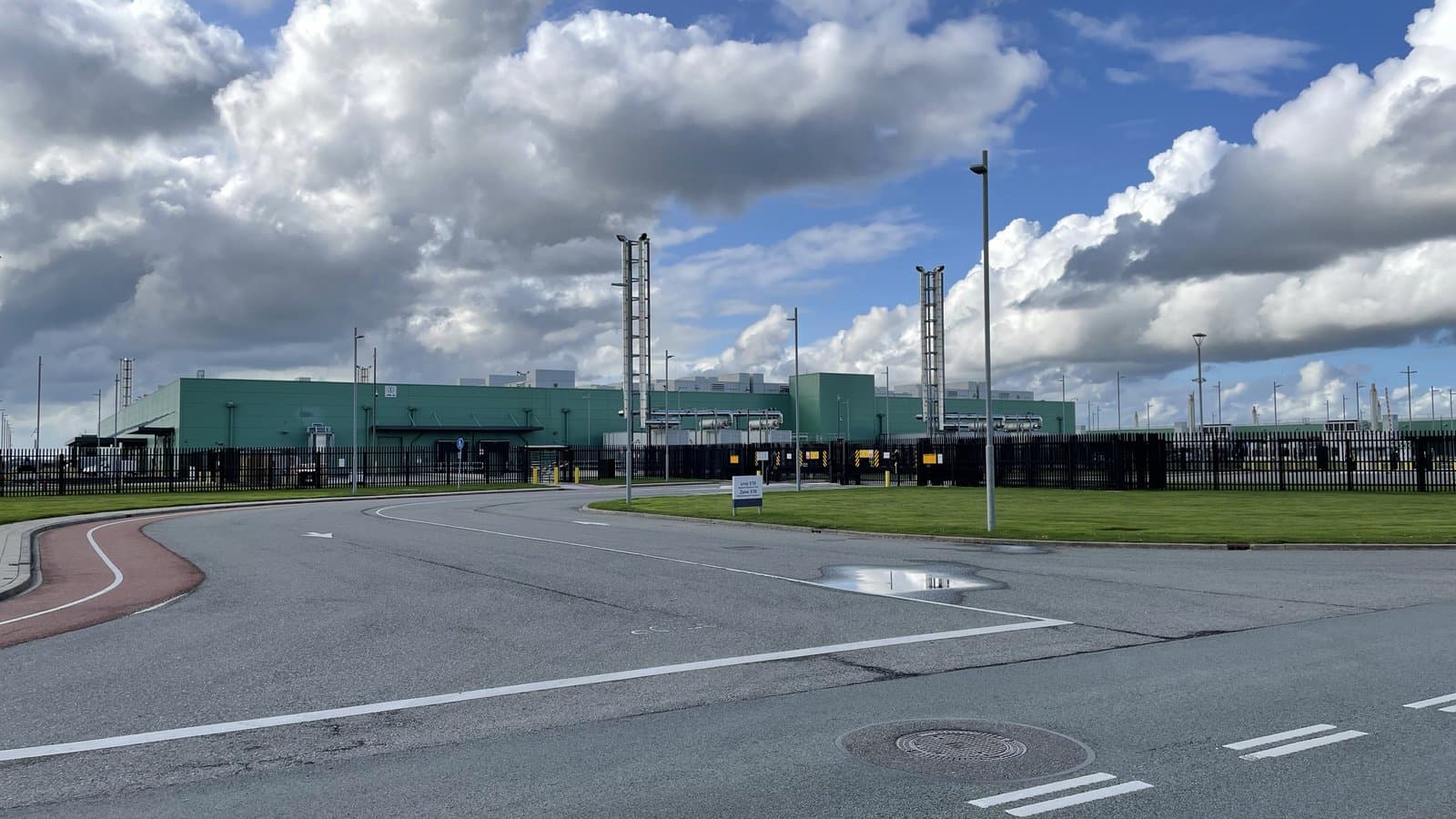
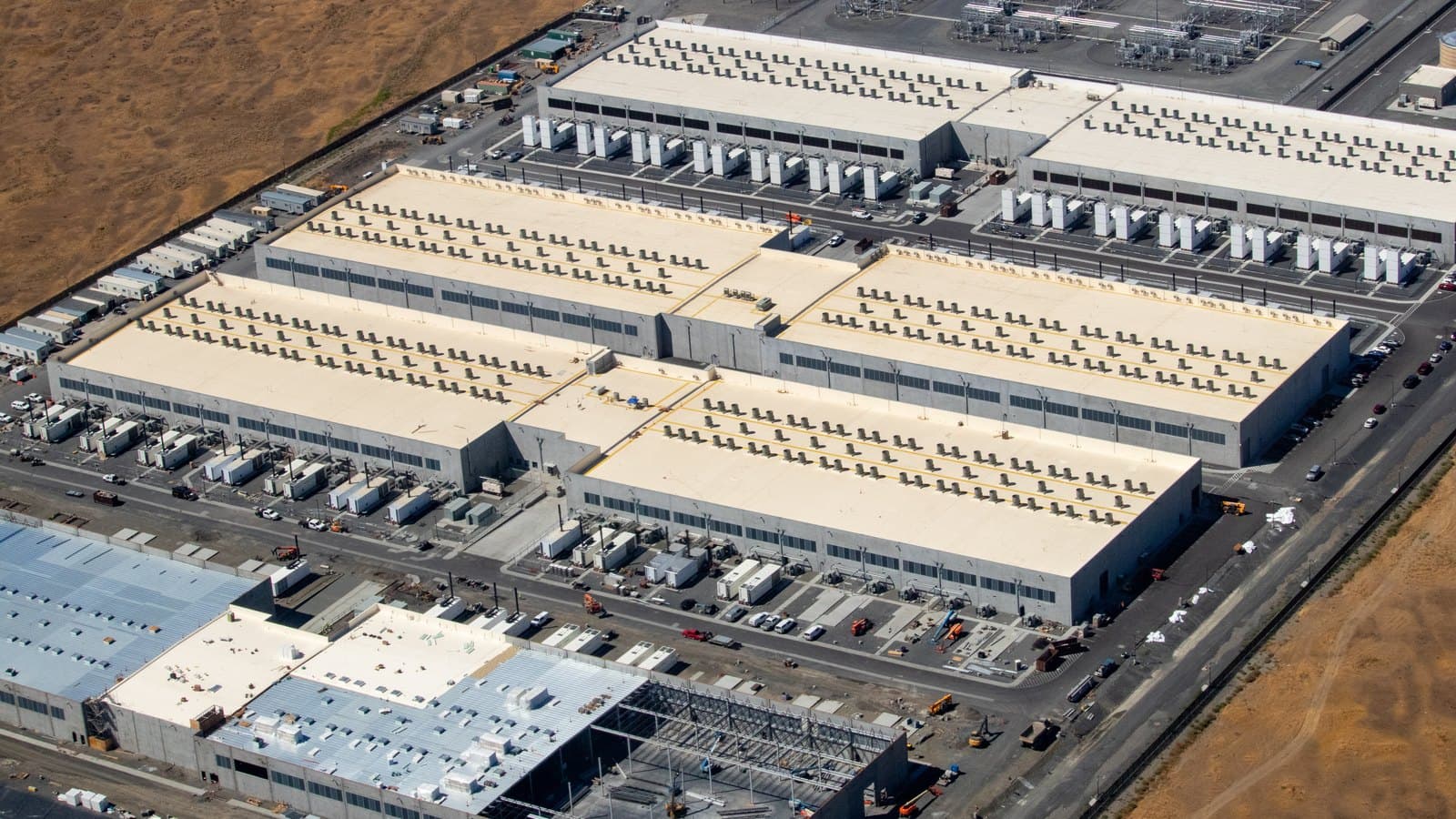
Two numbers in the announcement deserve scrutiny. The first is the 20GW target, which is a capacity goal for 2032 rather than deployed infrastructure. Data-centre capacity is also a measure of power draw, not computing power, so it says more about how much electricity Alibaba expects to consume than about how much AI it will run. The company's current footprint is a fraction of that figure.
The second is the parameter scale. Alibaba says it is working on Qwen models with five to ten trillion parameters, which would be among the largest models disclosed by any company. Parameter count is a rough proxy for capability rather than a guarantee of it, and training models at that size requires enormous compute, much of it dependent on the very chips the V900 is meant to supply.
The 500,000-card cluster is similarly a design target. Building a cluster that large requires networking, power, cooling and software that work together at scale, and no customer deployment of that size has been announced. Alibaba has said its Zhenwu chips already serve more than 650 customers across industries including automotive, finance, energy and manufacturing, which is a more concrete measure of traction.
Why Alibaba wants the whole stack
The Apsara announcements were deliberately organised around a single idea: that Alibaba should own every layer of AI, from the silicon to the models to the cloud that rents them out. That is a different strategy from the one most cloud providers followed in the first AI boom, when they competed mainly on access to Nvidia hardware and on the price of renting it.
Owning the chip matters because it changes the cost structure. A cloud provider that designs its own accelerators does not pay a margin to a supplier, and it can tune the hardware to the workloads it sells. The trade-off is that in-house silicon usually lags the best merchant chips on raw performance and takes years to reach volume. Alibaba's answer is to position the V900 as good enough for its own workloads, where it controls the software stack, rather than as a direct competitor to Nvidia in every market.
The model layer reinforces that. Qwen is one of the most widely used open-weight model families, and Alibaba releases versions that developers can run themselves. Those releases build mindshare and feed demand back into Alibaba Cloud, where the company sells hosted versions and the infrastructure to run them. The plan to train models at five to ten trillion parameters is about staying near the frontier so that the hosted offering remains competitive with US labs.
The agentic cloud and Qwen Intelligence for mobile devices extend the same logic to applications. If AI agents become the main way people use software, the company that supplies the models, the chips and the cloud underneath them captures value at several points in the chain. Alibaba is betting that being vertically integrated is an advantage when the underlying technology is still changing quickly.
Full-stack in one line: Alibaba is trying to own the model (Qwen), the chip (Zhenwu V900), the cloud that hosts them and the agent platforms on top, rather than competing on any one layer alone.
What to watch
The first test is whether the V900 reaches volume production on schedule. The Q1 2027 date is ambitious for a chip that has not yet shipped, and any delay would leave Alibaba relying on older silicon or on the limited supply of Nvidia hardware it can legally import.
The second is whether the domestic chip strategy translates into competitive models. Alibaba's Qwen family is widely used and has been released in open-weight versions, but the frontier of model capability is still set by US labs with access to the most advanced accelerators. The V900 is meant to close part of that gap on the training side.
The third is T-Head's corporate future. A separate listing would sharpen the chip unit's finances and give outside investors a direct stake in China's semiconductor push. It would also expose the business to the same export-control and geopolitical risks that shape the rest of the sector.
For Alibaba, the Apsara announcements were as much about signalling as about products. The company wants to be seen as a full-stack AI player that controls its models, its cloud and now its chips. Whether the V900 can carry that story depends on the hardware that ships in 2027, not the slideware shown in Hangzhou.
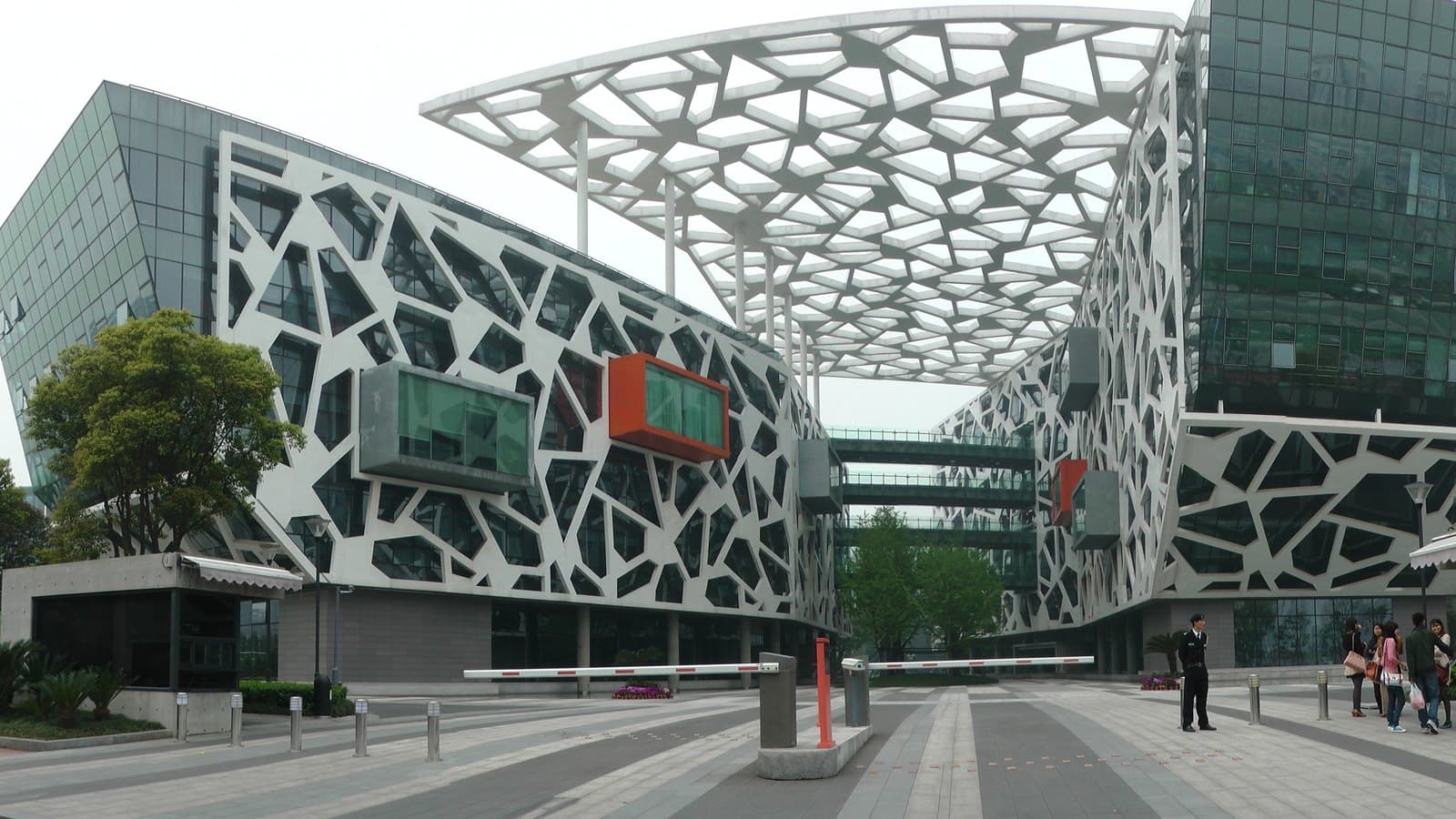
Cover: Wikimedia Commons photo of the Alibaba Group headquarters in Hangzhou by Thomas Lombard (CC BY-SA 3.0).
Tags
Frequently asked questions
- What is the Alibaba Zhenwu V900?
- It is an AI accelerator for training and inference designed by Alibaba's T-Head chip unit. Alibaba says it has 216GB of memory, 1,200GB/s of inter-chip bandwidth and support for FP8 and FP4 data formats, and that it delivers three times the performance of the Zhenwu M890.
- When will the Zhenwu V900 ship?
- Alibaba says mass production and commercial release are planned for the first quarter of 2027. No pricing has been announced.
- What is Alibaba's data-center target?
- CEO Eddie Wu said Alibaba Cloud aims to operate more than 20 gigawatts of global data-center capacity by 2032. The figure is a future capacity target, not current deployment.
- Why is Alibaba building its own AI chips?
- US export controls limit Chinese access to Nvidia's most advanced accelerators, so Alibaba and other Chinese cloud providers are developing domestic chips to train and run large models on their own infrastructure.

TPW Editorial
Editorial Team
TechPastWeek's editorial team reports and edits every story we publish. We research each piece against primary and credible secondary sources, and a human editor reviews and signs off before it goes live.