U.S. Charges California Tech CEO in Alleged $300 Million Nvidia Server Smuggling Case
U.S. prosecutors charged Greg Lui and his firm Earthmade Computer with smuggling $300 million in Nvidia AI servers to China via Malaysia and Singapore.

On this page
Key takeaways
- The Justice Department announced on October 1, 2026 that Greg Lui, 38, of San Gabriel, California, was arrested on a three-count indictment charging him with smuggling more than $300 million in export-controlled servers to China.
- Lui owns Earthmade Computer Inc. of City of Industry, California; the counts are conspiracy to violate export-control law, outbound smuggling, and conspiracy to commit money laundering.
- Prosecutors allege the scheme ran from 2023 to 2024, routing servers through Malaysia and Singapore under false paperwork before re-exporting them to China.
- From January to October 2024, Earthmade received more than $176 million from two Malaysia-based shipment companies as part of the alleged scheme, the government said.
- Maximum penalties if convicted on all counts are 20 years on each conspiracy count and 10 years on smuggling; the indictment is an allegation and Lui is presumed innocent.
The U.S. Justice Department announced on October 1, 2026 that Greg Lui, 38, also known as “Yiu Kong Lui,” of San Gabriel, California, was arrested that day on a three-count federal indictment charging him with smuggling more than $300 million worth of export-controlled computer servers to China. The indictment was returned on September 29, and the servers contained U.S.-made graphics processors built for artificial-intelligence work, the department said.
Related reading: FCC Tells California to Stop Blocking AT&T's Copper Retirement · California Subpoenas Nvidia Over Whether Its Chips Reached China.
Lui owns Earthmade Computer Inc., a technology company in the City of Industry, California. The charges are one count of conspiracy to violate the Export Control Reform Act and the Export Administration Regulations, one count of outbound smuggling, and one count of conspiracy to commit money laundering, according to the department. If Lui were convicted on all three counts, the statutory maximum penalties would be 20 years on the export-control conspiracy charge, 20 years on the money-laundering conspiracy charge, and 10 years on the smuggling charge.
Those are allegations. An indictment is not evidence, and the Justice Department states that all defendants are presumed innocent until proven guilty. Lui was expected to be arraigned in federal court in the Central District of California on the afternoon of October 1. No finding of guilt had been made, and the case was still pending.
What the indictment alleges
The alleged scheme ran from 2023 to 2024, prosecutors said. Earthmade bought export-controlled items and sent them toward China without the licenses the U.S. Commerce Department requires for such shipments. Rather than export the servers directly, the company sent them to countries including Malaysia and Singapore, where no such license was required, then re-exported them to China, per the Justice Department.
To obtain the equipment, Lui and co-conspirators allegedly gave U.S. manufacturers false documentation that misrepresented who the end users were and where the servers were going. Ars Technica reported that the paperwork described buyers and destinations that did not match the reality of the shipments.
Prosecutors cited one exchange as an example. In January 2024, Lui emailed a co-conspirator about a Malaysian transshipment company that wanted 70 servers with export-restricted GPUs, and attached an export-compliance form. Later that month, Lui submitted a purchase order to a U.S. manufacturer for 27 servers for about $7,614,000, shipped from Los Angeles to Kuala Lumpur. In March 2024, a co-conspirator emailed a Malaysian government official that the 27 servers had been transshipped to a China-based buyer, according to the department and coverage of the case.
The money followed the hardware. From January 2024 to October 2024, Earthmade received more than $176 million from two Malaysia-based shipment companies as part of the scheme, prosecutors said.
The gap between a rule and a shipment
A license requirement applies at the point of export from the United States. A server that legally lands in Malaysia has not necessarily finished its journey. Re-exporting that same machine to China is where the alleged violation sits, which is why the case turns on documents and destinations.
Why Washington treats advanced GPUs as security goods
The hardware at the center of the case is the same class of accelerator that has become a focus of U.S. export policy. Advanced graphics processors used for training and running large AI models are treated as national-security items because the compute they provide can be used for military and intelligence work as well as commercial products. The Commerce Department’s Bureau of Industry and Security administers the controls, and the license requirement is meant to keep specific performance tiers out of the hands of adversaries.
That policy has tightened repeatedly in recent years, and the demand it restricts has not gone away. Chinese buyers still want the fastest available accelerators, and a global market for chips makes those parts hard to track once they leave a U.S. port. The result is a gray market where the legal question is usually about who is buying the hardware and where it ends up. The South China Morning Post reported that the case fits a broader U.S. push against networks that move restricted AI hardware through third countries.
The department framed the arrest in those terms. Assistant Attorney General for National Security John A. Eisenberg said the National Security Division will protect “the American advantage in the chips that power this technology” from illegal diversion by adversaries, according to the release. The controls are a licensing regime rather than a blanket ban, and the government’s allegation is that Earthmade bypassed the license requirement.
The third-country route that makes controls hard to enforce
Malaysia and Singapore are not the target of the charges. They are the route. Neither country required a U.S. export license for the middle leg of the journey as described, so the servers could move into them lawfully. What prosecutors describe as illegal is the step after that: sending the same equipment onward to China without the license that the original U.S. export would have required.
That structure is what makes controls difficult to police. A shipment can be compliant at every checkpoint it passes and still end up where the rules forbid it, provided the paperwork describes a different buyer or a different final destination. Enforcement then depends on catching the mismatch between documents and reality, which is often a matter of following money and email rather than inspecting a container. Reporting on the sector has described earlier U.S. arrests over Nvidia hardware routed to China, though the department has not tied this indictment to a specific prior case.
Charges are not convictions
The three counts against Lui are accusations in an indictment returned September 29, 2026. He had not entered a plea as of the department’s October 1 statement, and the government has to prove its case in court. The maximum sentences describe what the law allows, not what any judge would impose.
What the case signals about enforcement
Three agencies worked the investigation: the Commerce Department’s Bureau of Industry and Security Office of Export Enforcement, the Defense Department’s Defense Criminal Investigative Service, and the FBI. That mix, a civilian export regulator alongside a defense investigator and the bureau, is a signal of how the government now classifies advanced-compute diversion. It treats the movement of AI servers less as a trade-compliance matter and more as a national-security investigation. The department did not say whether it had identified the two Malaysia-based shipment companies that paid Earthmade, or whether it expected to charge them.
First Assistant U.S. Attorney Bill Essayli said the defendant “allegedly used false paperwork and shipments through third countries to smuggle more than $300 million in export-controlled computer servers to China.” FBI Assistant Director Roman Rozhavsky said the investigation “revealed that Lui allegedly sold the Chinese government hundreds of millions of dollars’ worth of American Super Intelligence technology,” the department said.
“The defendant allegedly used false paperwork and shipments through third countries to smuggle more than $300 million in export-controlled computer servers to China.” — Bill Essayli, First Assistant U.S. Attorney for the Central District of California, in the Justice Department’s October 1, 2026 release
The dollar figure is the government’s own estimate of the hardware involved. A single purchase order for 27 servers at about $7,614,000 works out to roughly $282,000 per machine, a price consistent with high-end AI servers. At that level, the alleged scheme’s scale is measured in data-center equipment.
Caveats
Several limits belong next to the charges.
The first is legal status. Everything described here is alleged conduct. Lui has been accused, not convicted, and the presumption of innocence applies until a court decides otherwise. The Justice Department’s own release makes that point explicitly.
The second is the source of the facts. The sequence, the dollar totals, and the January 2024 example all come from prosecutors and from reporting that relies on the indictment and the department’s statement. The government has described its theory of the case; Lui’s response, including any defense to the charges, had not been laid out publicly at the time of the announcement.
The third is the scope. The release names Lui and refers to co-conspirators without naming them, so it is not clear how many people or companies could ultimately be charged. The $300 million figure is the value of servers prosecutors say moved through the scheme, not money they say Lui kept.
Two figures in the case measure different things. The $176 million that flowed to Earthmade and the $300 million in hardware were counted at different points in the chain. Neither is a claimed profit, and both are the government’s characterizations of an alleged scheme that a jury has not reviewed.
What to watch
- The arraignment. Lui was expected in court on October 1. Whether he enters a plea, seeks release, or contests the charges will set the case’s early tempo.
- Co-conspirators. The indictment describes co-conspirators who are not named. New charges, or cooperation agreements, would show how far the government intends to take the investigation.
- Enforcement reach. Cases built on third-country transshipment test how well U.S. controls can follow hardware once it leaves the country. More arrests would signal that the route itself is a target.
- Industry compliance. Server and component makers that receive export-compliance forms face pressure to verify end users more aggressively. Their screening practices are part of what the alleged false documents defeated.
- Demand. The controls suppress supply without removing demand. As long as Chinese buyers pay a premium for the fastest accelerators, the incentive behind the alleged scheme remains.
The indictment describes a route through Malaysia and Singapore and a paper trail that prosecutors say did not match it. The court will decide whether that account holds.
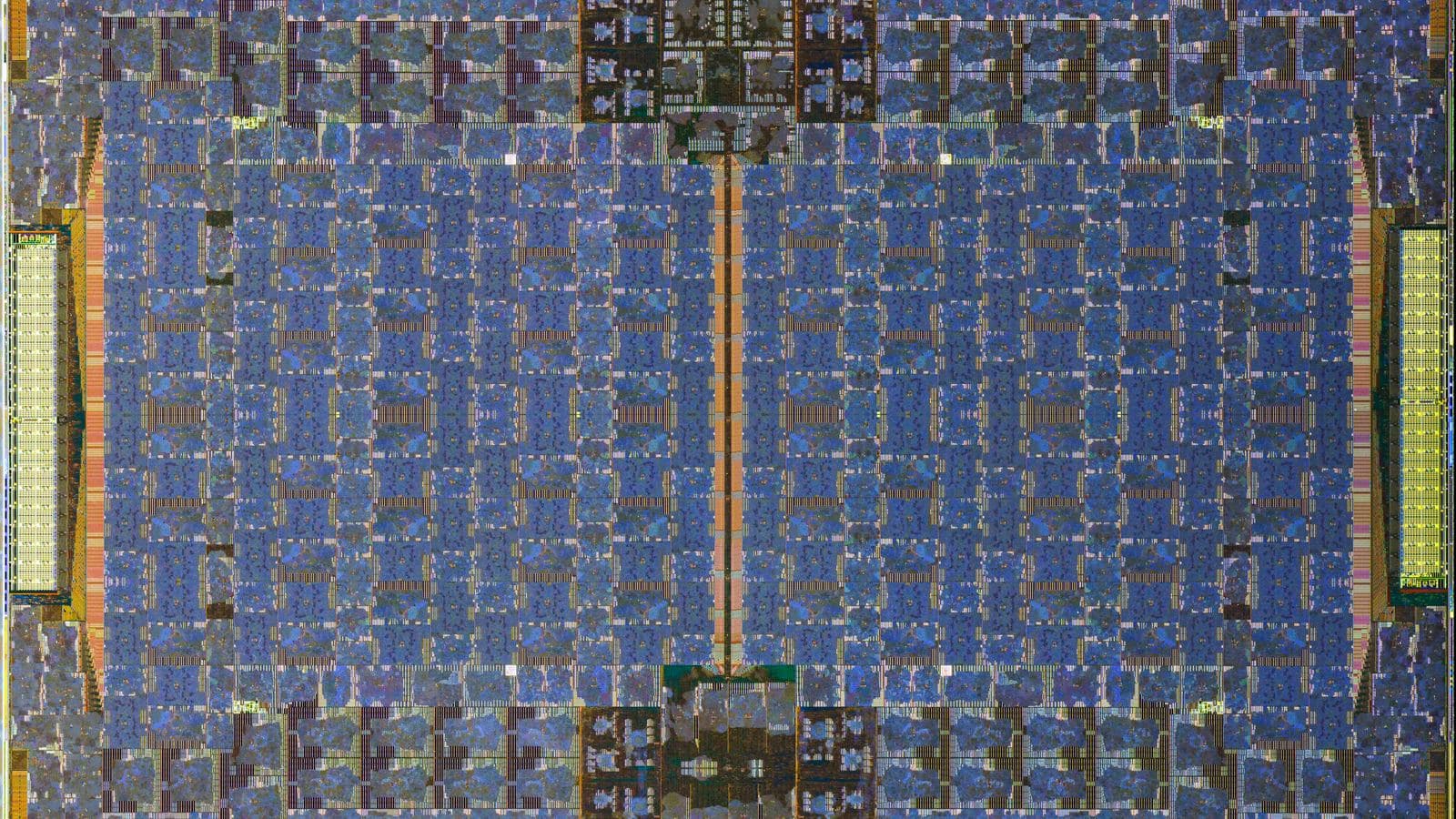
Cover: A die shot of Nvidia’s GA100 data-center GPU. Image via Wikimedia Commons, CC BY 3.0.
Tags
Frequently asked questions
- What is Greg Lui accused of?
- Federal prosecutors accuse Lui, 38, of San Gabriel, California, of smuggling more than $300 million worth of export-controlled computer servers containing U.S.-made AI GPUs to China. He faces three counts: conspiracy to violate export-control law, outbound smuggling, and conspiracy to commit money laundering.
- How did the servers allegedly reach China?
- According to the indictment, Earthmade shipped the servers to countries including Malaysia and Singapore, where no U.S. license was required for that leg, then re-exported them to China. Prosecutors say the company gave U.S. manufacturers false documents about the end users and destinations.
- What penalties does Greg Lui face if convicted?
- The statutory maximums are 20 years on the export-control conspiracy count, 20 years on the money-laundering conspiracy count, and 10 years on the smuggling count. Those are maximums, not a predicted sentence, and no conviction has been entered.
- Is Greg Lui guilty?
- No finding of guilt has been made. An indictment is an allegation, and the Justice Department says all defendants are presumed innocent until the government proves its case beyond a reasonable doubt.

TPW Editorial
Editorial Team
TechPastWeek's editorial team reports and edits every story we publish. We research each piece against primary and credible secondary sources, and a human editor reviews and signs off before it goes live.