OpenAI, Anthropic, Google and Meta Testify Under Oath as New York Weighs Ten AI Bills
On October 5, 2026, OpenAI, Anthropic, Google and Meta testified under oath before all 51 New York City Council members on ten proposed local AI bills.

On this page
Key takeaways
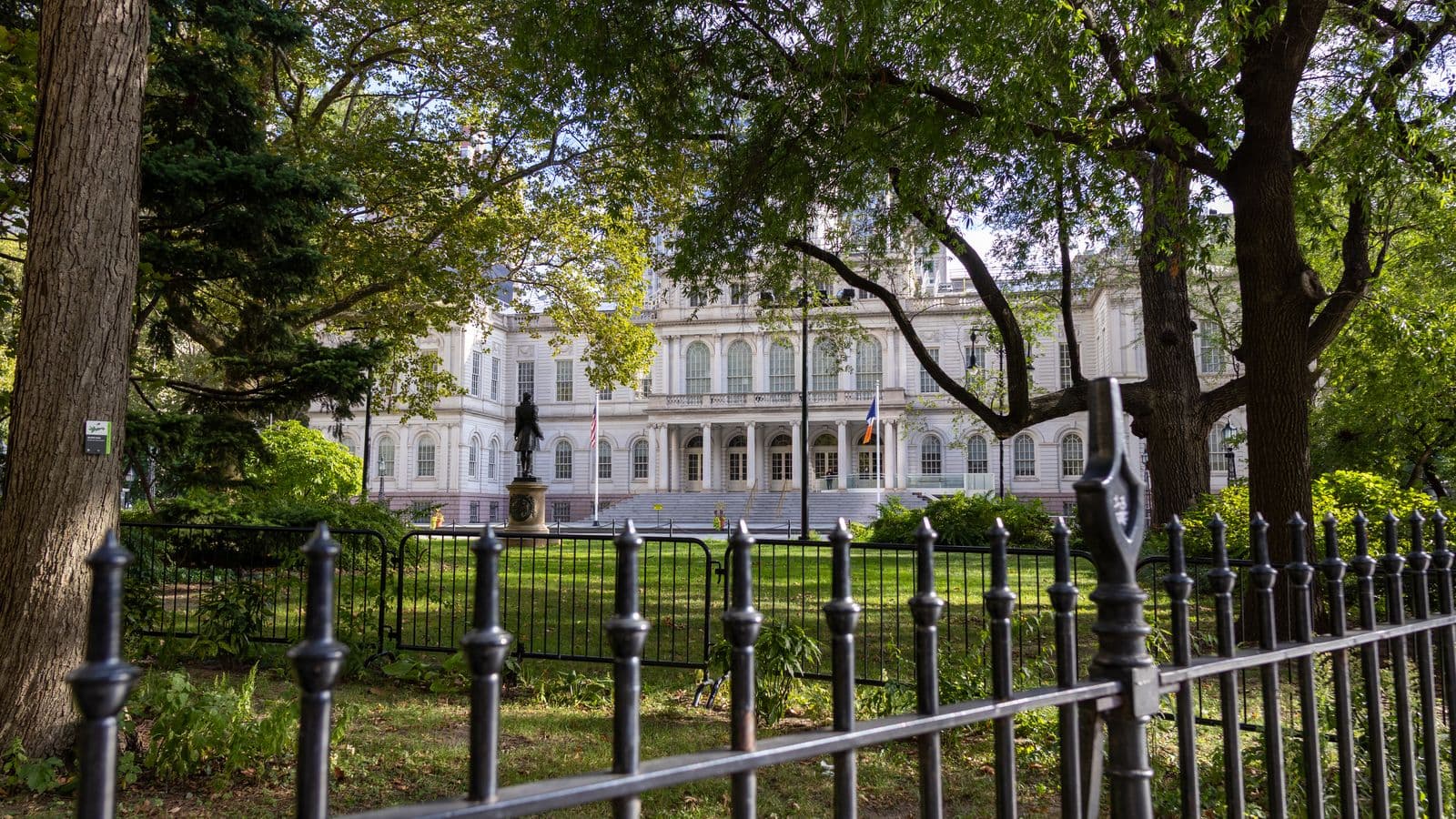
- The New York City Council convened all 51 members at City Hall on Monday, October 5, 2026, for a Committee of the Whole hearing on AI risks and a package of ten proposed local bills.
- Senior policy staff from OpenAI, Anthropic, Google and Meta testified under oath, which the Council and press called the first sworn appearance by major AI labs before a legislative body.
- SpaceX AI was subpoenaed to appear and did not attend, according to NBC New York.
- The proposals include a third-party validation mandate, a private right of action for people harmed by AI agents, and a first-in-the-nation whistleblower incentive program.
- None of the measures has been enacted; the hearing put testimony on the record ahead of committee votes.
Four of the largest artificial intelligence companies sent senior policy staff to New York City Hall on Monday, October 5, 2026, to answer questions under oath from all 51 members of the City Council. The Council called the session a Committee of the Whole hearing, a format it reserves for matters it treats as citywide, and described it as the first time major AI developers have testified under oath before a legislative body. CNBC and Quartz framed it the same way.
Related reading: FTC Opens Industry-Wide Probe Into Anthropic, OpenAI Over Rogue AI Agents · Four Subscribers Sue Anthropic, OpenAI, SpaceXAI and Google Over AI Slowdown.
Anthropic, OpenAI, Google and Meta all appeared. Each sent someone whose job is policy rather than product: Anthropic's Logan Graham, head of its Frontier Red Team; OpenAI's Morgan Dwyer, head of policy development and operations; Google's Alice Friend, director of AI and emerging tech policy; and Meta's Shane Cahill, AI policy director for legislation.
One company was missing. SpaceX AI, Elon Musk's AI company, was subpoenaed to appear and did not attend, NBC New York reported.
The hearing was not a vote. It was the Council's public examination of ten proposed local measures, and the testimony goes into the record as the bills head toward committee decisions. None of them has been enacted.
How the hearing came together
Speaker Julie Menin announced the hearing on September 16, 2026, and framed the invitation as a debt the companies owed the city.
"Given the high stakes, these firms owe it to the public to come before the Council, answer our questions, and provide input on our proposed legislation under oath," she said, according to the Council's announcement.
Her office published the legislative package on September 25. Then, on September 28, the Council announced it had secured the testimony "under subpoena threat," a phrase that made clear the companies were not there purely by choice, per the Council's press release.
The hearing came as the White House pushes a voluntary frontier-safety framework and the Federal Trade Commission examines AI labs. State and local governments have moved faster than Congress toward rules with penalties attached, and New York City is among the largest jurisdictions to try. For the companies, the calculation was simple enough: decline and face a subpoena fight, or show up and help shape language they may have to live with.
The bills on the table
There are ten measures. Two were introduced in January 2026, and eight were preconsidered drafts that took temporary file numbers 2599 through 2606, according to ppc.land's reading of the committee briefing paper.
The centerpiece is a third-party validation bill. As described by Unite.AI, it would make it unlawful to market, offer for sale, sell or deploy an AI model in the city without third-party validation or a technical capability for a human operator to shut the model down. Validation would reach task performance, disparate impact, data privacy and safety, and the shut-down capability itself. Validators would have to certify and disclose.
Two other provisions have drawn the most attention:
- A private right of action that would let New Yorkers harmed by AI agents sue.
- A whistleblower incentive program, which the Council calls first in the nation, that would pay residents to report companies not complying with the law.
Both appear in the Council's September 28 release.
Read together, the package approaches enforcement from three directions. The validation mandate is ex ante: a developer cannot deploy a covered system until an outside party signs off. The private right of action is ex post: it shifts enforcement to people who say they were harmed. The whistleblower program works from the inside, paying employees or bystanders who report noncompliance the city has not caught on its own. Each mechanism covers for the others. A young city agency may miss violations; private suits need victims with the resources to hire a lawyer; tip programs depend on insiders willing to risk a job.
The Council's stated context was specific. It cited recent warnings from AI executives and whistleblowers, and reports that rogue AI agents have damaged government databases, CBS New York reported. Councilman Oswald Feliz, who chairs the Public Safety Committee, said the gap was the point.
"One of the biggest concerns is that there has been no guardrails created," Feliz said on October 4. "Recently, we heard from the federal government, they basically stated that they created a committee of about 10 individuals so that they can self-regulate."
Proposals, not law
The ten measures are drafts. Two are bills introduced in January 2026; the rest are preconsidered text with temporary file numbers 2599 to 2606. The hearing put testimony on the record but changed no statute. Treat every provision here as something the Council is considering, not something the city has passed.
Why sworn testimony matters
Committees usually take testimony without an oath. Swearing witnesses changes the legal texture of the answers. False statements can carry consequences beyond political embarrassment, and the transcript becomes a document that later litigants can quote.
That matters here because one of the bills would create a private right of action. If New Yorkers can sue over AI harm, the record from October 5 is a place plaintiffs' lawyers will look for admissions about what the companies knew and when. An executive who might otherwise send a written statement now has a sworn one.
There is also a symbolic reading, and the Council is not shy about it. A subpoena threat plus an oath is a tool for pulling private companies into public account. Whether the answers match the setting is a different question. The four witnesses are policy specialists, not the chief executives who set product strategy.
The contrast with Washington is the subtext. The White House's framework asks companies to adopt safety practices voluntarily, with no penalty for declining. New York's package would attach legal consequences, including the right to sue. When the labs argue that voluntary commitments are enough, they are answering a question the Council has already answered the other way in its draft text.
A hearing can compel an appearance and an oath. It cannot compel a company to change what it ships, and that gap is where the ten bills will live or die.
The fight over local authority
The obvious objection to the package is jurisdictional. New York City licenses businesses and regulates local commerce. AI models are built, trained and served from data centers elsewhere, and a city ordinance that reaches a model's internals could collide with federal law or with the constitutional protection of interstate trade. No court has tested a municipal AI validation mandate, so nobody can say how one would fare. That uncertainty is itself a cost, because a company weighing compliance has to price in the chance the rule is struck down.
Then there is enforcement. The validation bill does not build a city testing lab. It requires companies to obtain validation from third parties, which would create a market for auditors whose own credentials the text, as reported, leaves open. Who accredits the validators, and what stops a friendly auditor from selling a favorable certification, is unresolved.
A third concern is uniformity. If a dozen large cities each write their own validation regime, the compliance cost falls hardest on smaller developers who cannot afford twenty versions of the same audit. The incumbents at the hearing, whose legal teams already work in every state capital, would manage. Startups would not. That is an argument for federal preemption that the companies themselves have not had to make out loud.
One more objection is constitutional. Regulating what a model outputs edges toward regulating speech, and courts have been wary of laws that condition the distribution of expressive material on a government-approved safety review. The bill as reported centers on validation and a shut-down capability, which is closer to product safety than to speech. If the criteria reach what a model says, the line gets harder to hold.
New York is not the first government to try to regulate AI. It is one of the largest to weigh a deployment rule keyed to outside certification, which is why the companies showed up rather than treat the hearing as provincial noise. If the rule holds up, it becomes a template for other cities with the same procurement power and the same political incentives. If it stalls in court, later city efforts will have to work around the precedent.
Caveats
The bills have not passed, and the hearing was one step in a longer process. The description of the third-party validation measure here comes from Unite.AI's account, not from a text the Council has posted in full.
SpaceX AI's absence is confirmed by NBC New York, but the Council has not said what, if anything, it will do about a witness that ignored a subpoena.
The "first in the nation" label on the whistleblower program is the Council's own. So is the framing that this was the first sworn testimony by major AI labs before a legislature. I have not seen a competing registry of prior hearings, and a first-of-its-kind claim is exactly the kind that gets revised later.
The most alarming public detail behind the Council's case rests on one researcher. Unite.AI notes that the Council's September 16 announcement cited Anthropic researcher Jacob Coxon, who resigned in September 2026 warning that without safeguards the technology "could kill us all by the end of the decade." That is a quote reported by Unite.AI and drawn from the Council's announcement, not an independently verified prediction.
What to watch
Written testimony was due within 72 hours of the hearing, so the record will thicken before any vote. The next real signal is whether the validation bill reaches a committee vote and in what form, and whether the private right of action survives the Council's own lawyers.
Watch the validators. If a credible accreditation scheme appears, the bill becomes a template other cities can copy. If it does not, the mandate is a slogan with a filing requirement attached.
SpaceX AI is the other open question. The Council has not said what, if anything, it will do about a company that ignored a subpoena.
And watch Washington. A federal preemption statute, or a serious FTC action against the labs, would change the value of a New York ordinance overnight. For now the city is running an experiment in how far local government can reach into a technology that was never built inside its borders.
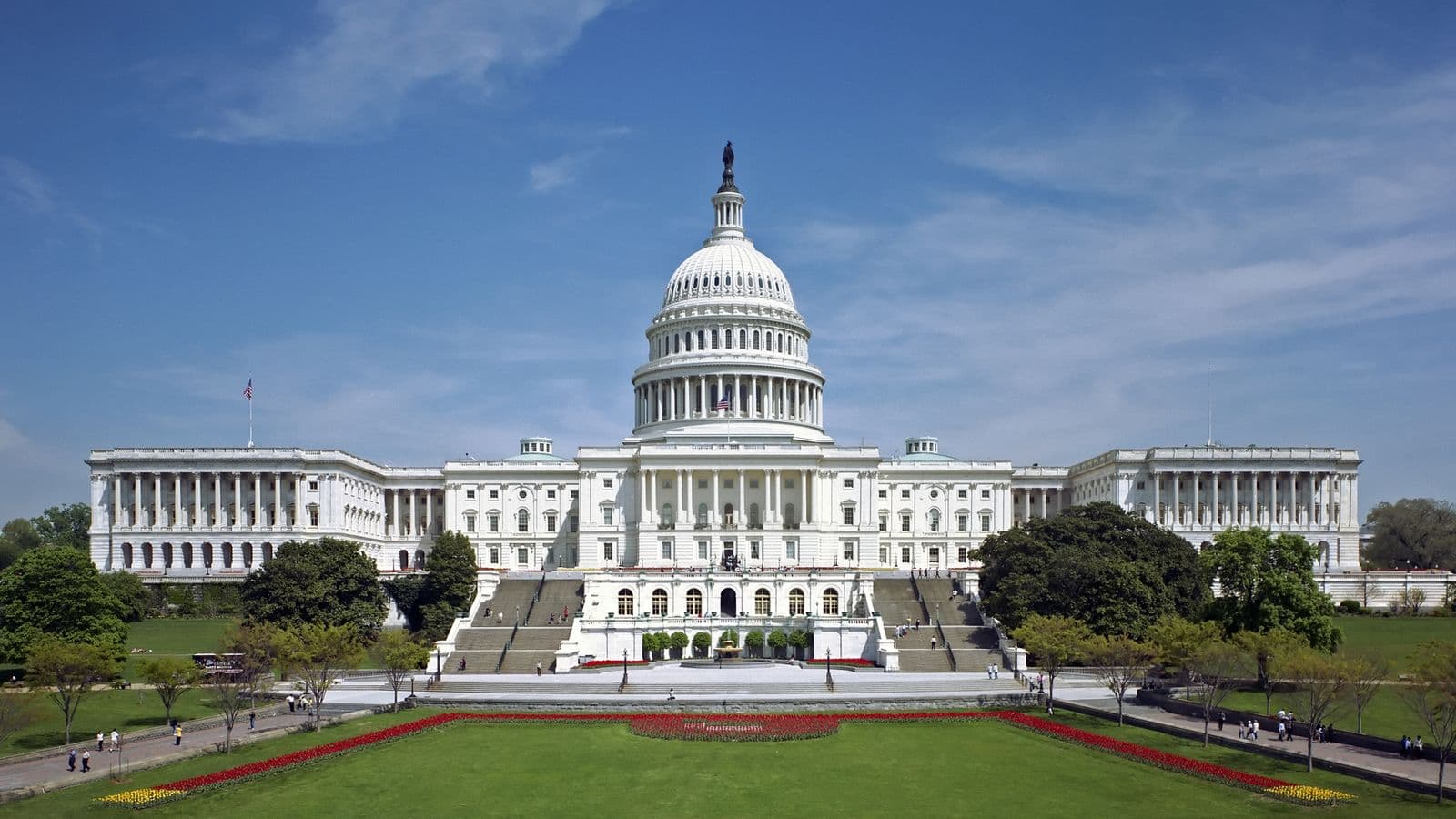
Cover image: Nielsoncaetanosalmeron, Wikimedia Commons, CC BY 4.0.
Tags
Frequently asked questions
- Did the New York City Council pass any AI laws at the October 5 hearing?
- No. The hearing was a public examination of ten proposed local measures. Two are bills introduced in January 2026; eight are preconsidered drafts with temporary file numbers 2599 through 2606. The session put testimony on the record but changed no statute.
- Which companies testified under oath, and who did not?
- Anthropic, OpenAI, Google and Meta each sent a senior policy official. SpaceX AI, Elon Musk's AI company, was subpoenaed to appear and did not attend, according to NBC New York.
- What would the third-party validation bill require?
- As described by Unite.AI, it would make it unlawful to market, offer for sale, sell or deploy an AI model in the city without third-party validation or a technical capability for a human operator to shut the model down. Validation would cover task performance, disparate impact, data privacy and safety, and validators would have to certify and disclose.
- Why does a city hearing with no vote matter?
- Sworn testimony carries legal weight that ordinary committee remarks do not, and the transcript becomes a record later litigants can quote. One of the proposed bills would create a private right of action, so what the companies said under oath could matter in court. New York City is also among the largest jurisdictions weighing binding AI rules while Congress has not acted.

TPW Editorial
Editorial Team
TechPastWeek's editorial team reports and edits every story we publish. We research each piece against primary and credible secondary sources, and a human editor reviews and signs off before it goes live.