DOJ Tells Its Lawyers to Call AI 'Super Intelligence,' a Term It Has Not Defined
The Justice Department told its staff to call AI 'super intelligence' and 'SI' in official records and court filings, before any federal definition exists.

On this page
Key takeaways
- On 6 October 2026 the Justice Department told its employees to use 'super intelligence' and 'SI' instead of 'AI' and 'artificial intelligence' in official records and court filings 'when appropriate,' according to a memo seen by Reuters and Bloomberg Law.
- The memo was sent by acting Deputy Attorney General Trent McCotter and follows President Trump's 29 September executive order, which directs agencies to prefer the new terms and not acknowledge the old ones.
- The federal government has not defined 'super intelligence'; the order asks the White House science office to propose a definition and legislative language by 28 November 2026.
- Law firm K&L Gates warns that a federal document silent on 'artificial intelligence' may simply be using the new terminology, a trap for companies that respond to solicitations or track rulemakings.
- AI labs and companies continue to use 'AI'; Wiley notes the phrase describes a technology the industry already uses to mean something that does not exist yet.
The US Department of Justice told its employees on 6 October 2026 to stop describing the technology as "artificial intelligence" in most official settings and to use "super intelligence" and the abbreviation "SI" instead, according to a memo seen by Reuters and Bloomberg Law. The instruction covers public communications, policy documents and other official records, and it reaches court filings "when appropriate." Acting Deputy Attorney General Trent McCotter sent the memo, the ABA Journal reported, and it points to President Trump's executive order of 29 September.
Related reading: Trump Says He Will Create an AI Force and Name an AI Czar, With No Details Yet · OpenAI, Anthropic, Google and Meta Testify Under Oath as New York Weighs Ten AI Bills.
That order, Executive Order 14434, "Inaugurating the Era of Super Intelligence," directs federal departments and agencies, "to the maximum extent permitted by law," to use "Super Intelligence" and "SI" in place of "Artificial Intelligence" and "AI" in official correspondence, public communications and records. It also tells agencies not to acknowledge the use of the older terms in applicable settings. The DOJ memo is the first department-level move to carry that order into daily practice, and it leaves the government's own lawyers using a category the government has not yet defined.
What the memo actually asks
The wording is broad and hedged. Employees should prefer "super intelligence" and "SI" "to the maximum extent permitted by law," which leaves room for cases where a statute, a contract or a court rule names artificial intelligence specifically. The court-filing clause is the one with the most reach. Judges, opposing counsel and clients read those documents, and a change in vocabulary there is visible in a way that a change in an internal email is not.
The memo is not a rule and does not change how any case is decided. It changes the words in the paperwork around the case. For a department that argues about language for a living, that is not trivial, and it is also why the instruction stops short of a flat rule.
The hedging is practical. Federal law is full of provisions that name artificial intelligence or AI directly, and a departmental memo cannot overwrite a statute by preference. Where the text of a rule controls, the old term stays. Where a lawyer is drafting in the open, the new term becomes the default. The likely result is a department speaking two vocabularies at once, one for the record and one for the podium.
A term the government is still defining
Nobody has agreed on what "super intelligence" means in federal usage, and the executive order says who is supposed to settle it. It directs the Assistant to the President for Science and Technology, based at the Office of Science and Technology Policy, to develop a federal definition and a report with proposed legislative language by 28 November 2026. Reporting describes that as roughly a 60-day task. K&L Gates notes that the order pairs the terminology change with that November deadline, so the government is renaming the thing in one document and defining it in another.
In ordinary technical use, "superintelligence" means a hypothetical system beyond human capability, something that does not exist. The administration is using the phrase differently, as an umbrella for the AI systems that are actually deployed. The law firm Wiley wrote on 2 October that the term describes technology the industry already uses to mean something that does not exist yet. That mismatch is the practical problem. A court asked to apply a statute that says "artificial intelligence" does not care what an agency calls the technology in a press release; a company reading a federal notice does.
What the order changes, and what it does not
Executive Order 14434 changes the language agencies use, not the rules they enforce. It does not create a new regulator, a new standard of liability or a new safety requirement. What it does create is a deadline: the White House science office is to propose a federal definition of "super intelligence," with legislative language, by 28 November 2026.
The rationale, and the doubt
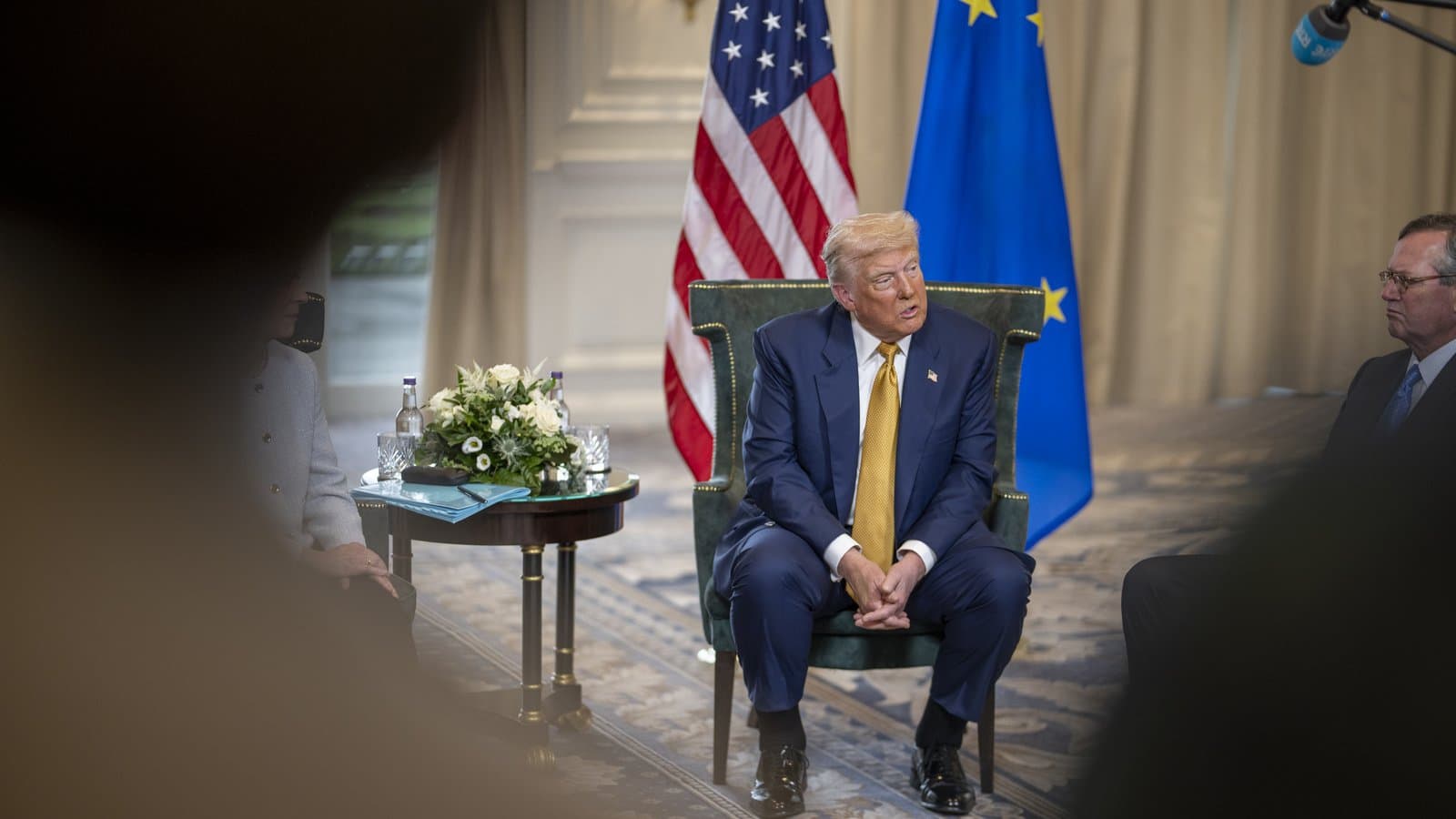
Trump framed the change as a matter of accuracy. "We don't call it Artificial Intelligence because it's not artificial, it's real. It's a terrible word," he said in the Oval Office, according to reporting on the order. The DOJ's own stated context, per Reuters, is different. Public perception of AI has soured after hacking incidents that raised safety questions, and while Trump has resisted new AI regulations, he has said the department would rein the technology in if necessary.
"We don't call it Artificial Intelligence because it's not artificial, it's real. It's a terrible word." — President Trump, quoted in coverage of the 29 September executive order
The objection raised in coverage centers on the gap beneath the slogan. The administration is asking agencies and courts to adopt a name for a category it is still writing the definition of, and the order tells agencies not to acknowledge the older term in the settings it covers. That instruction is unusual. Governments rename programs and offices often; telling staff to avoid a widely used technical term, and to avoid noting that they are avoiding it, goes further than a style guide.
What changes in court
The court-filing instruction is the part with concrete consequences. A brief that discusses a hacking incident, a software product or an enforcement target has to name the technology involved. If the government's preferred label is "super intelligence," filings will describe systems as SI that defendants, vendors and expert witnesses call AI. Judges can ask for clarification, and courts are free to use whatever term the record and the law use.
The hedge in the memo matters here. "When appropriate" and "to the maximum extent permitted by law" leave prosecutors and civil lawyers room to keep the old term where a statute or a rule requires it. That likely means a split practice: internal and public communications in the new vocabulary, legal filings that mix the two terms depending on what the underlying authority says. Lawyers reading the other side's papers will have to decide whether a document that never mentions AI is ignoring the subject or simply using the new name for it.
Why companies should pay attention
The effect reaches past the department. K&L Gates advises companies that respond to federal solicitations or track rulemakings to note that a document silent on "artificial intelligence" may simply be using the new terminology. A vendor scanning a notice for AI-related requirements could conclude there are none when the requirements are there under another label.
That risk is not limited to the DOJ. The executive order applies across federal departments and agencies, and K&L Gates reported that the administration also launched an "SI-powered" America.gov on 2 October. Agencies that follow the order will produce procurement documents, guidance and public notices in the new terms. Companies that sell AI systems to the government, or that comment on AI rulemakings, have a reason to search for both labels, and to keep a mapping between them.
The burden falls hardest on anyone who reads federal documents for a living. Procurement teams, compliance officers and trade associations rely on keyword searches to catch the notices that touch their products. A change of terminology breaks those searches unless the reader knows to expect it, and the memo does not travel to the companies on the other end of the pipeline.
The silence trap
A federal document that never says "artificial intelligence" is not necessarily a document with nothing to say about AI. Under the new terminology, it may use "super intelligence" or "SI" instead. Companies reviewing solicitations, guidance or proposed rules should search for all three terms before deciding a notice is out of scope.
The industry is not following
The AI labs and the companies that build and sell AI systems have kept using "AI." There is no sign that the major model developers are adopting "super intelligence" in their products, documentation or earnings calls. The term the government is now instructing its agencies to prefer is, for the industry, still a phrase for something that has not been built.
That divergence has a cost. The government buys AI from the same companies that market it as AI, and it regulates a sector whose own vocabulary runs the other way. If the federal definition due in November tracks the industry's use, the relabeling may fade. If it does not, agencies and the companies they deal with will be working from two vocabularies at once.
The caveats
Two caveats matter here. First, the memo is an internal document that has not been published in full. Reuters and Bloomberg Law reported it after seeing it, and the Justice Department has not confirmed its contents or released the text, so the exact scope of the instruction rests on that reporting.
Second, the executive order behind it sits just outside the news window, signed on 29 September, a week before the DOJ memo. The memo is the event that put the change into practice. The order is the instruction the memo cites.
Language and authority are also different things. Nothing in the order or the memo repeals a statute, changes a filing deadline or alters what a regulator can investigate. A department that calls the technology something else still has to prove its case under the same laws, in front of the same judges.
What to watch
Three things will show whether the relabeling sticks. The first is the 28 November deadline: whether the White House science office produces a definition, and whether that definition draws the same boundary the industry uses or a different one. The second is whether other departments follow the DOJ with their own memos, and whether the term starts appearing in procurement documents and proposed rules where companies will have to respond to it. The third is the courtroom, where filings will show how far "when appropriate" really goes and whether judges accept the new label or keep the old one.
The memo itself answers none of that. It tells lawyers what to call the technology, and leaves the harder question of what the government means by it for November.
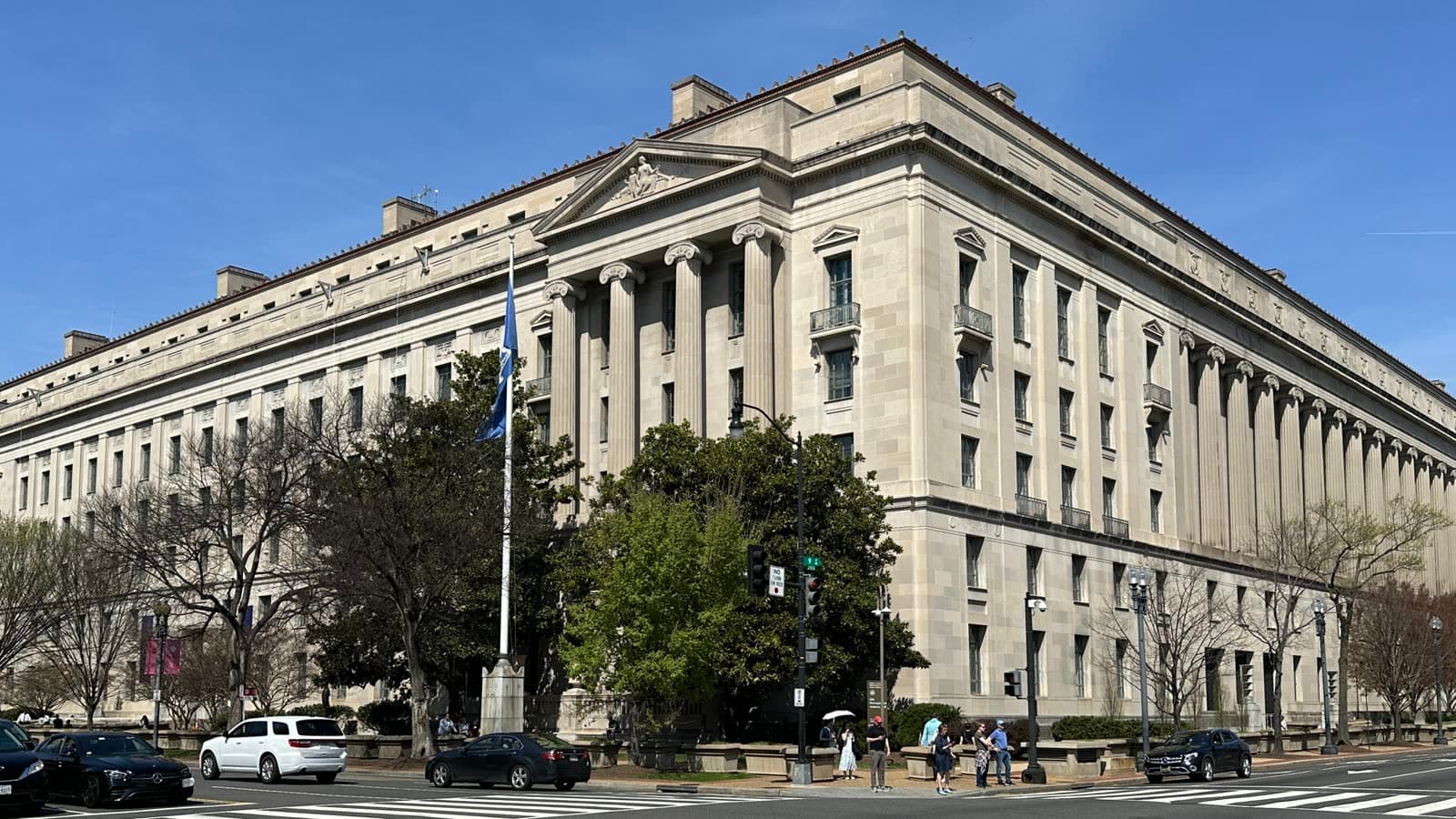
Feature image: the Robert F. Kennedy Department of Justice Building in Washington, D.C., by APK via Wikimedia Commons, CC BY 4.0.
Tags
Frequently asked questions
- Did the Justice Department really tell lawyers to stop saying AI?
- Yes. A memo sent on 6 October 2026 directs DOJ employees to use 'super intelligence' and 'SI' in place of 'artificial intelligence' and 'AI' to the maximum extent permitted by law, including in court filings when appropriate. Reuters and Bloomberg Law reported the memo; the department has not published it in full.
- What is 'super intelligence' according to the government?
- There is no agreed federal definition yet. President Trump's 29 September 2026 executive order asks the Assistant to the President for Science and Technology to develop one, with proposed legislative language due by 28 November 2026.
- Why is the DOJ using the term in court filings?
- The memo extends the instruction to court filings when appropriate, but leaves room for cases where a law, contract or court rule names artificial intelligence specifically. That means filings could use the new label while the underlying legal standards stay unchanged.
- Does the change affect companies that do business with the federal government?
- It can. K&L Gates advises companies responding to federal solicitations or monitoring rulemakings to check whether a document that never says 'artificial intelligence' is in fact using the new terminology, so they do not read silence as a lack of interest in the technology.

TPW Editorial
Editorial Team
TechPastWeek's editorial team reports and edits every story we publish. We research each piece against primary and credible secondary sources, and a human editor reviews and signs off before it goes live.