Congress Moves on a Federal Film and TV Tax Credit for Hollywood
A bipartisan bill introduced September 24 would give film and TV productions a 20 percent federal tax credit, rising to 30 percent with added uplifts.

On this page
Key takeaways
- A bipartisan group introduced the Motion Picture, Television, and Entertainment Revitalization Act on September 24, 2026, creating a 20 percent federal tax credit on U.S. labor for film and TV production.
- The credit rises to a maximum of 30 percent through four uplifts covering independent projects, economically distressed or disaster-hit locations, multi-state shoots and companies that shift work back to the United States.
- Only productions with budgets above one million dollars, where at least 75 percent of filming happens in the U.S., would qualify; post-production and visual effects labor counts as eligible.
- News, talk shows, soap operas, live sports, social media videos, commercials and corporate videos would be excluded, and the federal credit could stack on top of state incentives.
- The bill follows more than a year of lobbying and a shift by the Trump administration, after the Bureau of Labor Statistics recorded more than 100,000 job losses in motion picture and video industries since 2022.
A bipartisan group of lawmakers introduced legislation on September 24, 2026, to create the first broad federal tax incentive for film and television production in the United States. The Motion Picture, Television, and Entertainment Revitalization Act would establish a 20 percent federal tax credit on U.S. labor expenses, with uplifts that can push the effective rate to 30 percent.
Related reading: DOJ Tells Its Lawyers to Call AI 'Super Intelligence,' a Term It Has Not Defined · OpenAI, Anthropic, Google and Meta Testify Under Oath as New York Weighs Ten AI Bills.
The bill arrives after more than a year of lobbying by studios, unions and trade groups, and after an unusual alignment with the second Trump administration. It is the clearest sign yet that Washington is prepared to treat film and television production as an industry worth subsidizing directly, alongside semiconductors, clean energy and other sectors that already receive federal support.
The scale would be significant. A 20 percent federal credit on labor, stackable with state incentives, would be the largest single intervention in American film financing in decades, and one of the few aimed at an industry defined by intellectual property rather than factories.
How the credit would work
The base credit covers 20 percent of qualifying U.S. labor costs. To be eligible, a production must have a budget above one million dollars and must shoot at least 75 percent of its footage domestically. Four separate uplifts can raise the total to a maximum of 30 percent: one for independent projects, one for shoots in "opportunity zones" or disaster-impacted regions, one for productions that film in ten or more locations across the country, and one for companies that increase domestic production relative to their historical foreign spending.
Two details matter for the technology economy that sits behind filmmaking. First, post-production and visual effects labor count as eligible expenses, which brings the credit to bear on the expensive, software-heavy end of production that has increasingly moved to studios in Canada, the United Kingdom, Australia and India. Second, the federal credit would stack on top of state incentives rather than replace them, mimicking the layered national-plus-regional model that Canada and Australia use to attract shoots.
News programs, talk shows, soap operas, live sports, social media videos, commercials and corporate videos would be excluded. Those carve-outs keep the incentive focused on scripted film and television, the categories most likely to relocate for cost reasons.
The bill was led in the House by Representatives Laura Friedman (D-CA), Nathaniel Moran (R-TX), Linda Sánchez (D-CA) and Brian Jack (R-GA), and in the Senate by Adam Schiff (D-CA) and Tim Scott (R-SC).
The politics behind the timing
The proposal is a rare point of agreement in a divided Congress. For years, a federal film credit sat on the industry's wish list without moving, because Republicans were skeptical of subsidies and Democrats could not assemble a coalition large enough on their own. The unlock came partly through President Donald Trump's interest in domestic manufacturing and partly through the efforts of actor Jon Voight, one of three "special ambassadors" the president appointed to the entertainment industry.
Voight brought the idea to Mar-a-Lago as part of a broader package aimed at restoring domestic production. On August 31, Trump wrote on social media that Republicans and Democrats should "immediately craft Legislation to save the Movie, Television, and Entertainment Business in America," endorsing a federal tax credit. Conservative lawmakers who had been quietly supportive then endorsed it publicly, and the bipartisan bill followed.
Representative Moran framed his support around the ancillary businesses that depend on production, such as catering companies, hardware stores and hotels. "Those jobs are going overseas right now simply because other countries are offering bigger handouts," he said. "If we want to keep American storytelling in America, we have to level the playing field, and that's exactly what this bill does."
Representative Friedman, whose district stretches from Hollywood through Burbank, described the bill as the product of a deliberate coalition. "For over a year, I've worked to build a coalition of unions, studios, Republicans and Democrats and the White House, because we knew that a national film tax credit would bring hundreds of thousands of jobs back to our country," she said. "It tells every country that has been outbidding us for American work that we are done losing."
That coalition is itself unusual. Unions that rarely align with Republican lawmakers found common cause with studios and with an administration focused on bringing manufacturing home. The alliance may be the proposal's strongest asset in Congress and its biggest liability in a debate about whether Hollywood needs a federal subsidy at all.
A contraction as well as a relocation
Supporters have a concrete employment problem to point to. The Bureau of Labor Statistics has recorded more than 100,000 job losses in the motion picture and video industries since 2022, a decline caused by a mix of runaway production, last year's strikes and a broader contraction in how much scripted content streaming services commission. Studios have cut back spending after years of chasing subscriber growth, and the work that remains is increasingly spread across states and countries that offer the best rebates.
That dynamic has turned location incentives into a competitive industry of their own. Georgia, New York, Louisiana, New Mexico and others already offer generous state credits, and countries such as Canada and the U.K. pair national support with regional programs. A federal credit that stacks with those state incentives would give the U.S. a tool that no single state can match, though skeptics will argue that a subsidy race mostly transfers money to productions that might have been made anyway.
For the visual effects and post-production sector, the inclusion of labor in the eligible base is significant. The work is skill-intensive and project-based, and it has been among the most mobile parts of the pipeline. If the credit survives the legislative process, it could slow the flow of VFX work to lower-cost markets, though the bill's one-million-dollar floor and its domestic-shooting requirement mean smaller and fully outsourced projects would not benefit.
A crowded incentive landscape
The federal credit would enter a market already shaped by aggressive competition. Georgia, New York, Louisiana, New Mexico and others offer state rebates that can cover a large share of qualifying spending, and Canada and the United Kingdom pair national support with regional programs. Supporters argue that only a federal layer can match those packages, because no single state can offset a country-level subsidy on its own.
Critics of production incentives have a familiar counterargument: subsidies mostly reward work that would have been made anyway, and the jobs they create are often temporary. Several states have studied their own film credits and concluded that the economic return is modest, though the industry disputes those findings. A federal program would face the same scrutiny, with the added complication that its cost would be borne nationally while the benefits concentrate in a handful of production hubs.
The bill's design tries to answer some of that criticism. Tying the largest uplifts to multi-state shoots and to companies that increase their domestic share is meant to spread production beyond established centers and to reward behavior change rather than existing activity. Whether those incentives change decisions or simply subsidize them is the question that will decide how the legislation is judged.
What to watch
The bill has been introduced, not passed. Its path runs through committee hearings, cost scoring by the Congressional Budget Office and the usual negotiations over offsets, and its 20 to 30 percent rate and eligibility rules may change. The central question is whether a federal credit meaningfully reverses runaway production or mainly adds a federal subsidy on top of state ones.
The early signals to watch are whether the bill attracts co-sponsors from both parties outside the original group, whether the White House keeps pushing, and how studios describe their production plans for the 2027 slate. Supporters also need to show that the credit would not simply shift work between states. The multi-location uplift is an attempt to make that case, by rewarding productions that shoot in ten or more places; if the final version narrows or drops that provision under budget pressure, the program's critics will have an easier argument. If the incentive clears Congress, it would mark the first time the U.S. government has treated film and television as a strategic industry in the same way it treats chips and energy, with all the economic and cultural consequences that follow.
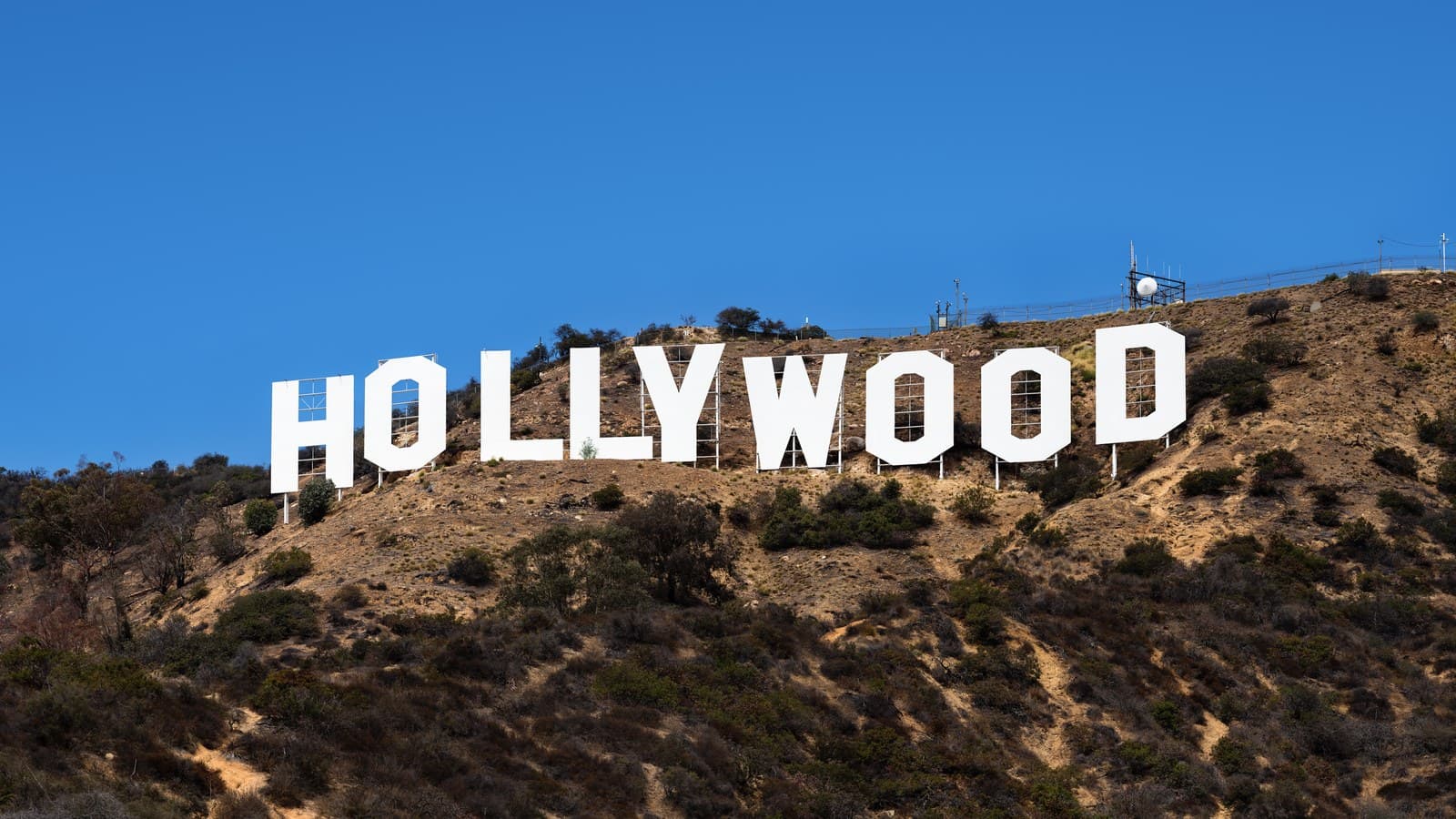
Cover image: the Hollywood Sign above Los Angeles, by Der Wolf im Wald via Wikimedia Commons (CC BY-SA 3.0).
Tags
Frequently asked questions
- What is the proposed federal film tax credit?
- The Motion Picture, Television, and Entertainment Revitalization Act would provide a 20 percent federal tax credit on U.S. labor costs for eligible film and TV productions, with uplifts that can raise the total to 30 percent.
- Which productions would qualify for the federal film tax credit?
- Projects with budgets over one million dollars and where at least 75 percent of filming occurs in the United States. News, talk shows, soaps, live sports, social media content, commercials and corporate videos are excluded.
- Can the federal credit be combined with state incentives?
- Yes. The bill is designed to stack on top of existing state tax incentives, mirroring how Canada and Australia layer national and regional support. That stacking is a central part of the argument that the U.S. needs to compete for production.
- Why are lawmakers proposing a film tax credit now?
- Supporters point to runaway production and a contraction in Hollywood employment, with more than 100,000 jobs lost in motion picture and video industries since 2022, and argue that other countries' incentives have pulled work overseas.

TPW Editorial
Editorial Team
TechPastWeek's editorial team reports and edits every story we publish. We research each piece against primary and credible secondary sources, and a human editor reviews and signs off before it goes live.