Abbott Halts Texas Data Center Environmental Permits Pending an ERCOT Audit
Texas Gov. Greg Abbott ordered regulators to halt all data center environmental permits until ERCOT finishes auditing the state's grid connection waitlist.

On this page
Key takeaways
- On Sept. 21, 2026, Texas Gov. Greg Abbott directed the Texas Commission on Environmental Quality to halt all permits sought by data centers until ERCOT completes an audit of projects waiting to connect to the state's grid.
- The directive extends an August 2026 moratorium on new data center grid approvals to environmental approvals, including air and water permits.
- Analysts at BloombergNEF estimate the pause puts nearly 49.8 GW of proposed data center capacity at risk, close to 20% of the U.S. 253-GW pipeline, with revenue losses estimated at just over $8 billion by the first quarter of 2027.
- JLL's February 2026 North America data center report projected Texas would overtake Virginia as the world's largest data center market by 2030.
- TCEQ must update the governor's office on its compliance by Oct. 19, 2026; ERCOT has said it expects to finish its audit in December.
Texas Governor Greg Abbott on Monday ordered the state's environmental regulator to stop issuing permits to data centers until the Electric Reliability Council of Texas finishes auditing the queue of projects waiting to connect to the state's grid. The directive, delivered in a letter to Texas Commission on Environmental Quality Executive Director Kelly Keel, widens a moratorium Abbott placed on new data center grid approvals in August and extends it to environmental permits.
Related reading: Meta Ordered to Pay $25 Billion in New Mexico Privacy Case · Trump and Six AI Chiefs Sign a Voluntary Frontier-Safety Accord, With No Enforcement.
The governor's office announced the move in a press release dated Sept. 21, 2026. "Simply put, Texans must come first," Abbott said. "Data centers must pay their own way, protect our grid and water, and complete the ERCOT and TWDB audits."
The order reaches past the electricity connections that the August moratorium already froze. It also covers the environmental permits that data centers need to operate. According to the Texas Tribune, those can include TCEQ approvals to draw water from local rivers or to build an on-site power plant. TCEQ spokesperson Ryan Vise confirmed the agency had stopped issuing them.
"At the direction of Governor Greg Abbott, the Texas Commission on Environmental Quality has paused the issuance of all air and water permits and authorizations related to the construction or development of infrastructure directly supporting data centers while ERCOT completes its comprehensive grid and community impact audit," Vise said, according to Houston Public Media. "TCEQ maintains environmental oversight over supporting infrastructure for these facilities."
Abbott framed the pause as a data-gathering step rather than a permanent ban. In the letter, he wrote that the Public Utility Commission of Texas, ERCOT and the Texas Water Development Board need information from their audits to make informed decisions, and that no state agency should grant regulatory approvals tied to data center development until that information exists. TCEQ must report to the governor's office on its compliance by Monday, Oct. 19, 2026.
The pause in short: TCEQ has stopped issuing air and water permits for data center projects. The stop remains in place until ERCOT finishes auditing the data centers in its interconnection queue. ERCOT has said it expects to complete that audit in December, and TCEQ must report its compliance to the governor by Oct. 19.
What the audit is looking for
The audit is the second half of a review Abbott set in motion in August, when he directed the Public Utility Commission and ERCOT to examine every data center in ERCOT's interconnection process. The questions cover whether projects plan to supply their own power or rely on the grid, how much water they will use, who owns them, and whether they have received state or federal incentives such as tax breaks, grants or abatements. Projects that fail the verification process, Abbott wrote, must be denied a connection.
ERCOT and the Texas Water Development Board are surveying more than 400 data centers on their electricity and water use as part of the work. The survey questions were published on Sept. 18, though individual company responses will stay confidential. Abbott separately directed the water board on Sept. 14 to penalize data centers that do not report their water use, after only a fraction of facilities answered an earlier state survey.
The scope has limits. Smaller data centers, and projects that would generate their own power on site instead of drawing from the ERCOT grid, were not included in the original August pause. Nor is the whole state covered: parts of East Texas, the Panhandle and the El Paso area sit outside the ERCOT-managed grid, and it is not clear how the Public Utility Commission would use its authority to stop new connections there. ERCOT has also postponed the first classification notices under its new large-load study process, known as Batch Zero, while the review runs.
Critics of the governor have pushed for a special legislative session to write new data center rules before the regular session begins in January 2027. That session will also be the venue for Abbott's pledge to strip financial incentives from data centers, a change that would outlast the audit itself.
Why Texas is the center of the fight
The pause lands on the largest data center buildout in the country. JLL's North America data center report, published in February 2026, projected that Texas would overtake Virginia as the world's largest data center market by 2030, helped by 6.5 GW of capacity under construction in the state. The report counted 64% of new North American capacity moving into markets outside the traditional hubs of Northern Virginia, Dallas-Fort Worth and Silicon Valley.
The numbers behind the regulatory scrutiny are just as large. ERCOT's interconnection queue holds roughly 474 GW of large-load requests, about 90% of them tied to data centers, according to Abbott's August directive. That is more than five times ERCOT's record peak demand, which reached 91.1 GW in late July 2026. The queue's size is one reason regulators argue they need to separate real projects from speculative ones.
Local resistance has grown alongside the pipeline. Texas has seen organized opposition to data centers from residents concerned about noise, water consumption and rising electricity bills, and Abbott has faced pressure from both parties to slow approvals before the November midterm elections.
The money at risk
Analysts at BloombergNEF put a figure on what the grid pause could cost. In an August analysis, the research firm found that the moratorium places almost 20% of the U.S.'s 253-GW data center pipeline at risk, or nearly 49.8 GW of proposed capacity in Texas. Under a base case that assumes 60% of the delayed capacity is AI-related, BloombergNEF estimated cumulative data center revenue losses could reach just over $8 billion by the first quarter of 2027. If all of the delayed capacity were AI compute, the estimate rises toward $15 billion.
The range reflects how the firm priced delay. BloombergNEF used rental benchmarks of about $175 million per gigawatt per month for conventional cloud capacity and about $1.76 billion per gigawatt per month for AI compute, then modeled a three-month slip. The estimate is a revenue-deferral figure, not a write-off, and the authors noted that load cannot be cleanly separated between cloud services, cryptocurrency mining and artificial intelligence.
The pressure is not confined to Texas. Advocacy group Data Center Watch reported that 45 data center projects worth about $68 billion were blocked or delayed nationally in the second quarter of 2026 because of local opposition, following roughly $130 billion in the first quarter. Its researchers counted 843 opposition groups across 49 states.
The cost estimate is a projection, not a booking. BloombergNEF's $8 billion figure assumes a three-month delay and a 60% AI-compute mix. It measures deferred leasing revenue, not money already lost, and the firm has said the total could rise toward $15 billion if the delay runs longer or the capacity is entirely AI-focused.
The politics of a reversal
Data centers have become an unusual campaign issue in the 2026 midterms, and Texas is where the politics and the infrastructure collide most directly. An NBC News poll published on Sept. 20 found that 64% of Americans would be less likely to vote for a candidate who "supports building local data centers," while just 11% said they would be more likely.
Abbott is running a tight race for a fourth term against state Rep. Gina Hinojosa, according to CNBC, and the governor has had to reverse course on his 2025 claim that Texas would be the "epicenter of AI development." The moratorium press release signaled a further shift: "Next session, Governor Abbott will work with the Legislature to eliminate any financial incentives for data centers," it said.
"Data centers must pay their own way, protect our grid and water, and complete the ERCOT and TWDB audits."
The industry's investors are watching the politics as closely as the permits. CNBC reported that Anthropic's much-anticipated IPO is poised to list negative public opinion toward AI and data centers as a risk factor in its prospectus, a sign that the backlash now reaches the companies building the facilities as well as the utilities serving them.
What to watch
Three dates structure the next phase. TCEQ's compliance report to the governor is due Oct. 19. ERCOT has said it expects to complete its audit in December, which would let the state decide whether to lift the pause or keep it in place. The Texas Legislature convenes in January 2027, when the incentive question Abbott raised in the moratorium release will move from a press statement to a bill.
The open question is where the projects go in the meantime. Developers with approved interconnections and financing are better placed to wait than speculative builders, and some may shift toward behind-the-meter generation or to states with fewer restrictions. How many do, and how quickly ERCOT can clear its queue, will decide whether Texas's pause is a short delay in an otherwise intact boom or the start of a slower buildout.
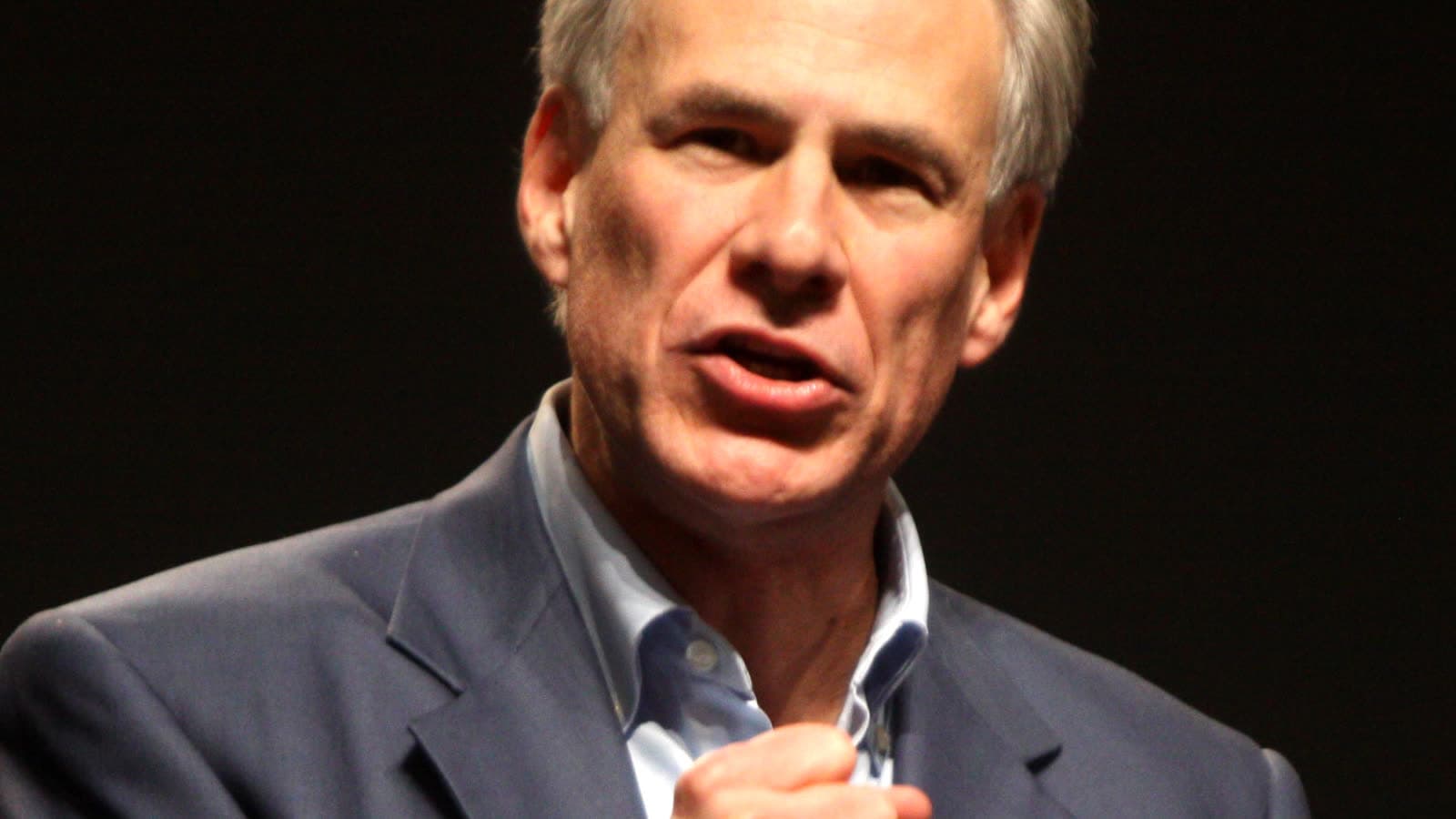
Cover: Wikimedia Commons photo of Texas Governor Greg Abbott speaking at a FreedomWorks event in Phoenix, Arizona, by Gage Skidmore (CC BY-SA 3.0).
Tags
Frequently asked questions
- What did Greg Abbott order TCEQ to do?
- Abbott directed the Texas Commission on Environmental Quality to stop issuing all permits sought by data centers, including air and water permits tied to their supporting infrastructure, until ERCOT completes an audit of data centers in its grid interconnection queue.
- Why is Texas pausing data center permits?
- Abbott has cited grid reliability, water use and the cost of serving large electricity loads. In his directive he said data centers must pay their own way and complete the ERCOT and Texas Water Development Board audits before state agencies move forward with approvals.
- How long will the pause last?
- There is no fixed end date. It is tied to ERCOT's audit, which the grid operator has said it expects to complete in December. TCEQ must report its compliance to the governor's office by Oct. 19, 2026.
- Which data centers are affected by the permit halt?
- The pause targets large data centers seeking grid connections through ERCOT. Smaller projects, facilities that build their own power plants, and areas of Texas outside the ERCOT grid, including parts of East Texas, the Panhandle and El Paso, are not covered in the same way.

TPW Editorial
Editorial Team
TechPastWeek's editorial team reports and edits every story we publish. We research each piece against primary and credible secondary sources, and a human editor reviews and signs off before it goes live.