NHTSA Orders Tesla to Swear the Cybercab Is Legal to Sell
NHTSA issued a Special Order demanding sworn answers by September 30 on how Tesla's driverless Cybercab complies with safety standards written for human drivers.

On this page
The National Highway Traffic Safety Administration has escalated its examination of Tesla's driverless Cybercab from a fact-finding review into a legal demand. A Special Order dated September 10, tied to Audit Query AQ26002, requires Tesla to explain under oath how a vehicle with no steering wheel, no pedals and no mirrors complies with federal safety standards that were written around a human driver. Tesla must respond by September 30, 2026.
Related reading: Meta Ordered to Pay $25 Billion in New Mexico Privacy Case · Trump and Six AI Chiefs Sign a Voluntary Frontier-Safety Accord, With No Enforcement.
The order carries real exposure. Failing to answer fully and truthfully can bring civil penalties of up to $139 million, and a false sworn statement can mean criminal liability for the signing officer of up to 15 years in prison. The company has not said publicly how it plans to respond.
The distinction between the two instruments matters. NHTSA opened the underlying audit query on September 3, the same day Tesla began charging for commercial Cybercab rides in Austin, Texas. An audit query is a request. A Special Order, issued under 49 U.S.C. 30166 and the agency's procedural rules, is a demand backed by an affidavit requirement. Reuters reported that the agency wants answers on whether Tesla properly self-certified the vehicle, and Automotive World noted that the escalation came with a September 30 deadline attached to a named officer's signature.
How self-certification is supposed to work
The United States does not run a pre-market approval system for cars. Automakers certify for themselves that a vehicle meets the applicable Federal Motor Vehicle Safety Standards, or FMVSS, and NHTSA checks that certification after the fact. Federal law prohibits issuing that certificate if the manufacturer "has reason to know the certificate is false or misleading in a material respect."
The Cybercab collides with that system in a specific way. Tesla designed a purpose-built robotaxi with no conventional manual controls and certified it as compliant with every applicable standard. NHTSA's 21 requests ask which standards Tesla treated as applicable, which it deemed inapplicable, what data and testing supported each determination, and how the vehicle passes standards the agency's own questions suggest it cannot.
The order defines its "subject vehicles" narrowly: those "lacking permanently attached, conventional manual controls," such as a brake pedal, accelerator pedal, steering wheel, mirrors and telltales. That phrase does the legal work of separating the production Cybercab from the prototypes and test mules that carried steering wheels.
The foot-brake problem
The most direct request concerns FMVSS No. 135, which governs light vehicle braking systems. In plain language, the standard states that "the service brakes shall be activated by means of a foot control." The Cybercab has no foot pedal. Tesla self-certified anyway.
NHTSA has stated publicly that a manufacturer of a vehicle without a foot-activated service brake could not certify to that standard, and the order asks Tesla to explain, in detail, how it did. The agency also points to its own 2022 rule on occupant protection for vehicles with automated driving systems, which said that further changes to the FMVSS would "likely be necessary" before a vehicle operated solely by an automated driving system could be manufactured for sale, unless the maker holds an exemption under Part 555.
Tesla does not hold one. It chose not to apply for one, and the order asks directly how the Cybercab is therefore legal to sell without it. That single question reaches past the brake pedal to the entire legal basis for putting a steering-wheel-free car on the road at scale.
Temporary controls and the make-inoperative rule
A second cluster of requests focuses on whether the Cybercab can be driven by a human using temporarily attached controls, and whether Tesla relied on those controls when it certified compliance. Tesla's published first-responder guide confirms that a number of Cybercabs, notably not all, are equipped with hardware for manual operation such as a steering wheel and pedals for testing and validation. People familiar with pre-launch events told the Wall Street Journal that Tesla displayed prototypes fitted with visible steering wheels before the public rollout.
If any part of Tesla's certification rested on equipment that is later removed, the agency wants to know how that squares with the Safety Act's "make inoperative" prohibition, which bars a manufacturer from rendering required safety equipment inoperative before delivery. The order asks whether temporarily installed human controls or other equipment were part of the basis for certifying any standard, and if so, which ones.
The standards a driverless cabin struggles to meet
Beyond braking, the order works through a list of requirements that assume a driver at the wheel. FMVSS 101 covers controls and telltales, including the location and identification of instruments. FMVSS 102 governs the display of shift position. FMVSS 108 requires turn signals that self-cancel through steering-wheel rotation and asks whether a manually operated control exists. FMVSS 111 covers rear visibility and mirrors. FMVSS 126 concerns electronic stability control telltales. Each request follows the same structure: state whether the requirement applies, and if not, justify the determination in detail.
The order also asks about the practical limits of the service, including maximum speed, geographic and time-of-day restrictions, and whether any touchscreen control lets an occupant move the vehicle. Those answers will paint the first regulatory picture of how Tesla actually operates the fleet, not how it markets it.
Zoox drew the map Tesla declined to follow
The sharpest contrast in the case is procedural, and it involves a competitor. Amazon's Zoox built a robotaxi with no manual controls and did not claim it met every standard. Instead, Zoox applied for a temporary exemption under Part 555 and, in July 2026, received one covering eight federal standards, including the same foot-brake rule and mirror requirements now being pressed on Tesla. The exemption allows Zoox to charge for rides in its pods, caps it at 2,500 vehicles a year, runs through 2028, and followed an earlier, more limited demonstration exemption.
Tesla took the opposite route: no application, no exemption, no cap, and a commercial launch on September 3. That difference is why the agency's questions are pointed. It is not asking whether a robotaxi without controls can be safe in principle. It is asking why Tesla believes it can sell one without the legal step its competitor took.
There is a second, quieter contrast inside Tesla's own operations. The company has configured the Cybercab differently by jurisdiction, installing steering wheels and using human drivers for early New York City testing. That suggests the vehicle's regulatory posture may vary by state even before the federal question is resolved.
What the order does and does not say
It is worth being precise about the legal position. The Special Order does not find that the Cybercab is unsafe, and it does not find that Tesla broke the law. It requires the company to explain, under oath, the reasoning behind decisions it already made when it self-certified the vehicle. That is a lower bar than an enforcement action and a much higher one than a press inquiry, because the answers are signed and the penalties for a misleading response are severe.
The broader policy backdrop is unsettled in a way that cuts both directions. Tesla and other robotaxi companies, including Waymo, have backed plans by the Trump administration to change the rules so that automated vehicles do not need steering wheels, brake pedals or rear-view mirrors. NHTSA proposed ending the manual brake-pedal requirement for self-driving vehicles in June 2026, but that proposal has not been finalized and would likely not take effect until 2028. Until it does, the agency says, the existing standards remain in force. Tesla's argument that a rule is outdated does not make the rule inapplicable while it is still on the books.
The September 30 deadline
Tesla must deliver a response signed by a responsible officer, with an affidavit stating that a reasonable inquiry was made, to NHTSA's Office of the Chief Counsel by September 30, 2026. The agency can seek civil penalties of up to $139 million, and the sworn nature of the filing creates separate criminal exposure for false or incomplete answers.
Why it matters beyond one vehicle
The Cybercab is the first production robotaxi from a major American automaker to skip the exemption pathway entirely, and how NHTSA handles it will set expectations for every company that follows. If the agency accepts a self-certification built on determinations that whole standards are inapplicable, it effectively rewrites the compliance model through enforcement discretion. If it rejects the certification, Tesla faces a choice between seeking a Part 555 exemption, redesigning for temporary controls, or narrowing the service to fit within what the current rules allow.
The question also lands in the middle of a wider fight over robotaxi safety. Critics of the push to modernize the FMVSS argue that the rules should not be waived until companies can show their vehicles are safe, while supporters say the standards were written for human drivers and now block the very technology they should regulate. NHTSA's own framing is that it is overhauling the standards through eight rulemakings while the existing ones remain binding in the meantime.
For riders in Austin, nothing changes yet. Cybercab service continues through the Robotaxi app while the deadline approaches, and the Special Order does not pause operations. It only sets a date by which Tesla has to put its reasoning on the record with an officer's name attached.
What to watch
- The September 30 filing. Whether Tesla argues that the standards are inapplicable, that temporary controls satisfied them, or that a pending rule change should excuse compliance will define the next stage of the case.
- The Part 555 question. If Tesla applies for an exemption after the fact, the terms it requests, including any vehicle cap, will reveal how much of the current rollout it intends to keep on the road.
- The rulemaking clock. NHTSA's proposed brake-pedal change is not expected to be final before 2028, so any near-term resolution has to fit the standards as they are written today.
- State-level divergence. Tesla's use of steering wheels and human drivers in New York testing suggests the company may end up operating different versions of the Cybercab under different state rules while the federal question is open.
Tesla has spent years arguing that the safety standards were written for a world without autonomous driving. The Special Order forces the company to say that on the record, under oath, and with a deadline. That is a narrower fight than the future of robotaxis, and a more immediate one.
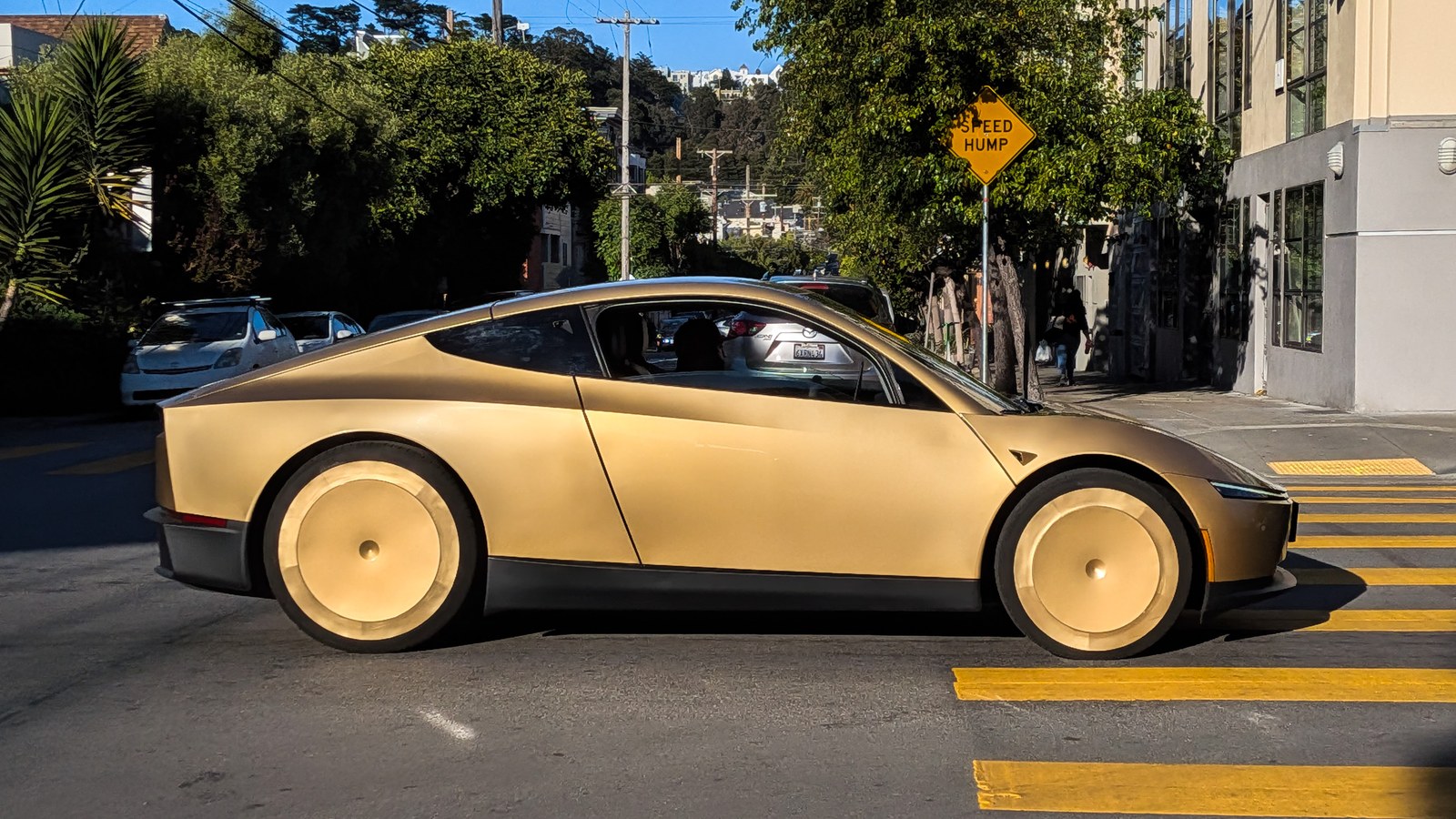
Cover: Tesla Cybercab, San Francisco, June 2026, by 9yz (CC BY 4.0) via Wikimedia Commons.
Tags

TPW Editorial
Editorial Team
TechPastWeek's editorial team reports and edits every story we publish. We research each piece against primary and credible secondary sources, and a human editor reviews and signs off before it goes live.