Judge Brinkema Spares Google an Ad-Tech Breakup, Orders Prebid Interoperability
Judge Brinkema rejected the DOJ's Google ad-tech breakup, ordering Prebid interoperability, real-time bid-data sharing, and a six-year compliance monitor.

On this page
Key takeaways
- Judge Leonie M. Brinkema's 106-page remedies opinion, unsealed on September 16, 2026, refused the DOJ's demand that Google sell AdX or DFP, calling structural remedies "neither realistic nor needed."
- Google must build API integrations connecting AdX and DFP to Prebid and make them "functionally equivalent"; AdX must also submit real-time bids to rival publisher ad servers on the same terms DFP receives.
- A court-appointed monitor gets a six-year term, not the 15 years the DOJ requested, with full access to Google's employees, systems and source code.
- The remedies apply globally and take effect 60 days after Brinkema signs the official order; the parties had until October 2, 2026 to file a joint proposed final judgment.
- DV360 escaped restrictions, the court declined to open-source DFP's auction logic, and Google says it will appeal the Ad Manager liability finding.
A federal judge has refused to break up Google's advertising technology business, choosing instead a set of behavioral mandates that would wire Google's ad exchange and publisher ad server into the open-source header-bidding framework Prebid and place the company under court supervision for six years.
Related reading: Google Rewrites European Search to Satisfy the DMA, and Warns Users Will Notice · DOJ Probes Whether Nvidia's Groq Deal Was Built to Avoid Antitrust Review.
The 106-page remedies opinion from U.S. District Judge Leonie M. Brinkema of the Eastern District of Virginia was unsealed on September 16, 2026, about two weeks after she filed it under seal and issued a short public order confirming that Google would not have to sell AdX. The decision follows her April 2025 finding that Google illegally monopolized parts of online ad technology and tied its ad server, DFP, to its exchange, AdX.
The ruling ends, at least at the trial level, the government's most direct attempt to split up a Google product since the search case against the company. It leaves publishers and rivals with a detailed compliance program rather than a changed ownership structure, and it makes a fresh round of litigation almost certain, because Google says it will appeal.
The breakup demand and the judge's answer
The Department of Justice and a group of states sued Google in January 2023, arguing that the company used its control of open-web display advertising to push publishers into its tools. After a 2024 trial, the court found Google liable for maintaining monopolies in the publisher ad server and ad exchange markets, and for auction tactics, including first look, last look and unified pricing rules, that blunted header bidding.
In the remedies phase, the DOJ asked for structural relief: a divestiture of AdX, an open-source version of DFP's auction logic, and a conditional sale of what remained of DFP. Google argued that behavioral commitments were enough and that no breakup was warranted. Brinkema agreed on structure. She rejected the core of the government's request, writing that structural remedies were "neither realistic nor needed" and that the parties' overlapping behavioral proposals, as she modified them, would "effectively pry open to competition" the markets Google had damaged.
Her stated reasons included the disruption a forced sale could cause, uncertainty about surviving the appeal process, and the risk to small publishers that rely on DFP. The Justice Department's announcement presented the outcome as substantial relief, noting the court's finding that it is not enough to order Google to stop prior anticompetitive behavior. The department said it was still reviewing the opinion to weigh its options.
What Google must actually do
The remedies fall into three groups: interoperability and data sharing, anti-discrimination rules, and limits on Google's buy-side bidding. The full opinion and the technical readout from AdExchanger lay out the specifics.
The interoperability mandate is the centerpiece. Google must build and support API integrations connecting AdX and DFP to Prebid, the open-source framework publishers use to collect competing bids outside Google's control. Those integrations must be "functionally equivalent," a standard meant to prevent Google from shipping a bridge that technically exists but performs worse than its own pipes. AdX also must submit real-time bids to rival publisher ad servers on the same terms that DFP receives them. In effect, the exchange can no longer treat its sibling ad server as a privileged destination.
Google must share real-time win and loss bid data with publishers, and it must publish technical documentation explaining how DFP selects a winner, including how ad candidates are priced and how bid adjustments are made. That replaces the DOJ's demand that the full auction logic be open-sourced. The DOJ summary also describes data-portability obligations that let publishers export their own data from DFP and AdX, which could make switching providers easier.
On the buy side, the court barred AdWords from bidding directly into DFP and from favoring Google's own ad tech. It rejected Google's argument that remedies could not reach AdWords, which the department called Google's "golden goose." Unified pricing rules, which constrained how publishers set different price floors for different bidders, are also gone.
The opinion also flags a workaround. According to Digiday, the court pointed to Google Partner Bidding, also called gBid Direct, a tool that lets Google's buying arm bid directly into a publisher's auction for in-app mobile inventory and skip the exchange entirely. It does not do that for open-web display yet, but the court treated the capability as a real risk. The requirement that AdX pass bids without regard to whether the tools involved belong to Google is intended to close that gap.
What "functionally equivalent" means for publishers
The phrase carries much of the weight in the opinion. For a publisher, the practical question is whether AdX demand becomes reachable through the same neutral bidding pipe that already carries other exchanges. If it does, a publisher can keep a rival ad server or route sales through Prebid without losing access to Google's advertiser demand.
For competing ad server operators and exchanges, the requirement sets a benchmark. A Google integration that is slow, expensive or incomplete would violate the standard on paper, but proving that would depend on the monitor and, eventually, the court. Industry observers have worried about the gap between the letter and the spirit of behavioral remedies, including the risk that Google complies technically while making mandated integrations harder or more costly to use than its own.
The remedy covers only open-web display advertising, the traditional banner and display inventory on websites. It does not reach connected television, in-app advertising or retail media, which are growing faster. Google's own figures, cited in the case, show the share of AdWords impressions going to open-web display falling from more than 40% in 2019 to about 11% in 2025. Critics argue the fix targets the part of the market that matters less each year.
A monitor with six years and source-code access
Compliance will be overseen by a court-appointed monitor and a technical committee. The monitor gets a six-year term, with full access to Google's employees, systems and source code. The DOJ had asked for 15 years, matching the length of the injunction it sought. Google had proposed six.
The monitor is one of the most consequential pieces for enforcement, and one of the most contested. Reporting runs quarterly, and Google gets time to respond and fix issues before a dispute can go to the judge. That is a slower process than some critics wanted. The monitor and committee are meant to give the court a technical view of conduct that publishers cannot easily observe on their own.
The DV360 exemption and the search-case parallel
DV360, Google's display and video buying platform, escaped the restrictions placed on AdWords. The court found the government had not made a sufficient connection between DV360 and the anticompetitive conduct at the heart of the case. The omission drew criticism, because the buy side is where advertisers and publishers say Google can still steer demand. The opinion does name Project Poirot, a 2017 program in which Google's buying tools cut bids on rival exchanges, as a further mechanism of competitive suppression.
The outcome mirrors the search case. In that matter, Judge Amit Mehta found Google liable for monopolizing search and then declined to order a Chrome or Android divestiture, choosing data-sharing and choice remedies instead. Both cases are now on appeal. The two rulings, one in each of two consecutive Septembers, have reinforced a view among observers that federal courts, even after liability findings, prefer behavioral fixes to breakups for dominant platforms.
The ad-tech case has its own appeal wrinkle. Google has said it disagrees with the liability ruling on Google Ad Manager, the product that bundles DFP and AdX, and will appeal. It has argued that a divestiture would hurt small businesses. The DOJ has said it will consider its options, leaving open the possibility of its own appeal seeking stronger relief.
The stakes in numbers
The remedies matter because of how much money runs through the systems they govern. Alphabet reported $402.8 billion in total revenue for 2025, of which roughly $294.7 billion came from Google advertising, about 73% of the total. Alphabet's market value has traded above $4.1 trillion. The opinion itself notes that global digital ad spend reached $424 billion in 2023 and is projected to exceed $605 billion by the end of 2027, even as open-web display remains a stable slice of a growing market.
What to watch
Three things will show whether the order changes behavior or mainly adds paperwork. The first is the opening Prebid integration Google ships. If it is a full bridge, publishers gain a real alternative path to AdX demand. If it is a minimal connector, the monitor becomes the focus.
The second is enforcement. How quickly the monitor can escalate a complaint to the court, and whether the DOJ pursues violations, will determine whether the six-year term has teeth. The final judgment still has to be entered; the parties had until October 2, 2026, to submit a joint proposed final judgment. Once Brinkema signs the official order, the requirements take effect 60 days later and apply globally. Digiday has reported timelines of roughly 12 months to open AdX to rival ad servers and 12 to 15 months to connect AdX and DFP to Prebid, with the whole judgment operating within about 15 months.
The third is the appeal. Google's challenge to the Ad Manager liability finding, and any DOJ cross-appeal, could stretch the case for years. The same dynamic hangs over the search case. Until the appeals resolve, the behavioral regime is the operative one, and the compliance record Google builds over the next year will shape how the courts view it.
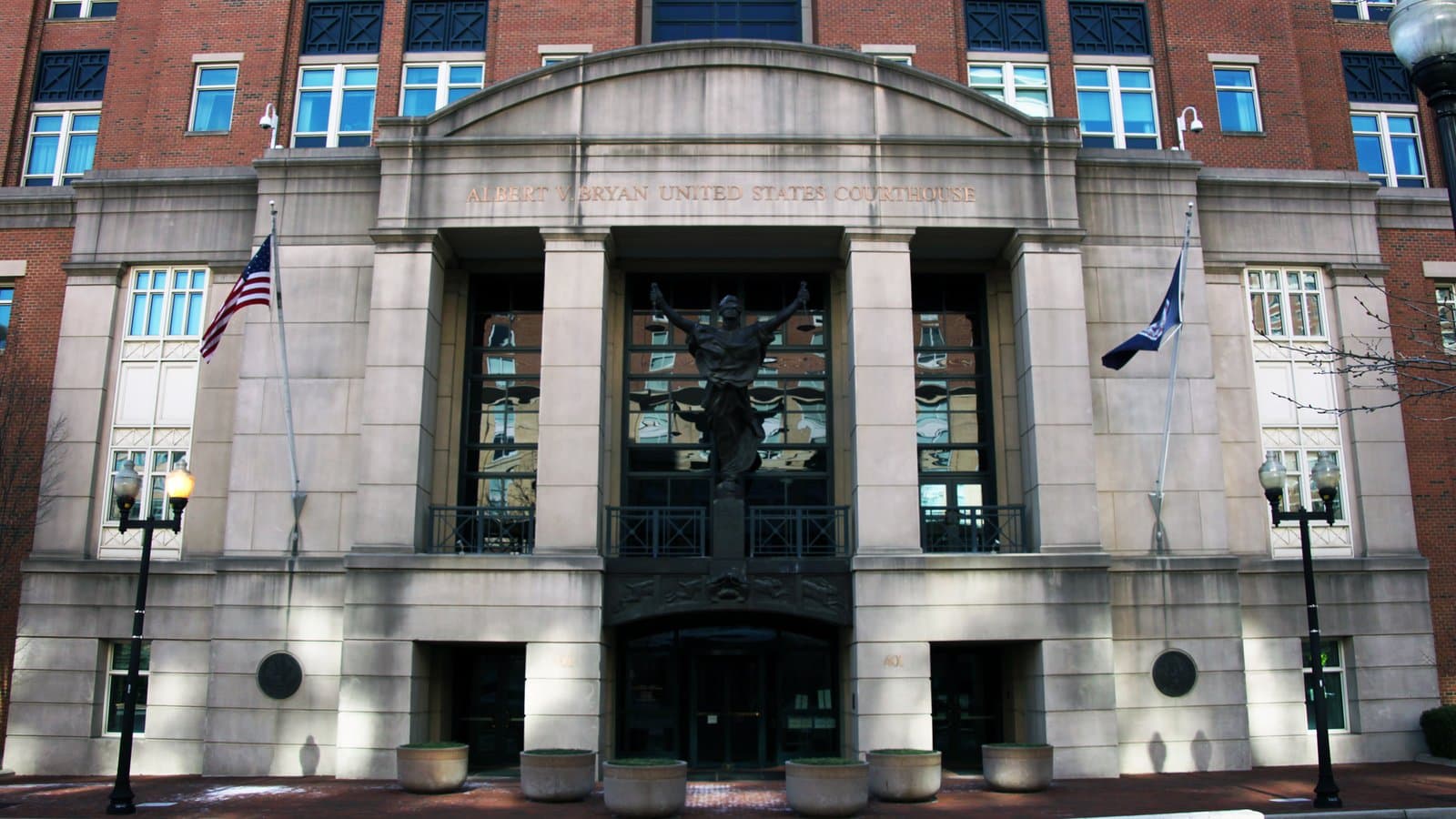
Cover: The Albert V. Bryan United States Courthouse in Alexandria, Virginia, where the case was heard. Photo by dctim1 via Wikimedia Commons (CC BY-SA 2.0).
Tags
Frequently asked questions
- Did Google have to break up its ad tech business?
- No. Judge Leonie M. Brinkema rejected the Justice Department's request to force a sale of the AdX exchange or the DFP ad server, ruling that structural remedies were "neither realistic nor needed." She imposed behavioral remedies instead.
- What does "functionally equivalent" mean in the Google ad tech ruling?
- It is the standard for API integrations that connect AdX and DFP to Prebid. The court's language is meant to block Google from shipping a connection that technically exists but works worse than Google's own ad tech, so rivals and publishers get comparable access.
- How long does the Google ad tech monitor serve and what can it access?
- The court-appointed monitor serves six years and has access to Google's employees, systems and source code. The Justice Department had asked for 15 years; Google had proposed six.
- When do the Google ad tech remedies take effect?
- The requirements take effect 60 days after Judge Brinkema signs the official final judgment and apply globally rather than only in the United States. Google is expected to appeal.

TPW Editorial
Editorial Team
TechPastWeek's editorial team reports and edits every story we publish. We research each piece against primary and credible secondary sources, and a human editor reviews and signs off before it goes live.