The EU Moves to Keep Under-15s Off Social Media and AI Chatbots
A leaked European Commission draft would bar under-15s from social media and video platforms, and impose safety-by-design rules on games and AI companions.

On this page
The European Union is preparing to propose one of the broadest restrictions any government has placed on children's access to digital services. A European Commission document seen by Reuters describes an EU Kids Act that would keep children under 15 off social media, video-sharing platforms, AI chatbots and online games unless they clear new age checks and parental controls, with the strictest limits reserved for the youngest children.
Related reading: California Bans ‘Addictive’ Feeds for Under-16s and Reins In AI Chatbots · Meta Ordered to Pay $25 Billion in New Mexico Privacy Case.
The proposal is due to be presented on September 17 by Commission President Ursula von der Leyen and Henna Virkkunen, the commissioner responsible for tech sovereignty. Von der Leyen may preview parts of it in her State of the Union address on September 16, and a Commission spokesperson confirmed the act is coming this week. The draft is not final, and any text will have to survive negotiation with EU governments and the European Parliament before it becomes law.
A graduated system, not a flat ban
The measure stops short of locking every teenager out. Instead it builds a tiered regime in which access widens with age, and the obligations on companies scale with the risk of the service. According to Reuters, children from 15 upward could open their own accounts. Children aged 13 and 14 could have introductory accounts on social media and video-sharing platforms, opened by a parent, with limited contact lists and firm time limits attached. Children under three would be barred from the covered services entirely.
The scope reaches well beyond the familiar social networks. It covers video-sharing platforms, online games, and the AI chatbots and companions that have become a default destination for young people seeking advice or company. Euronews, which obtained the same draft, reported that services designed for education or run by public authorities are excluded, as are AI systems intended for office or industrial work. Spain and the Netherlands had pushed for games and AI companions to be included, and the draft reflects that pressure.
That breadth is the notable part. Most national laws to date have targeted social media specifically. The EU draft treats a recommendation feed and a conversational chatbot as variants of the same problem, on the theory that infinite scrolling, autoplay, persistent notifications and algorithmic feeds carry similar risks whether they sit under a social app or a chat window.
Safety by design, and the end of the infinite scroll
The proposal pairs age limits with design requirements that apply to every covered service, whether or not it also sets a minimum age. Companies would have to build their products to be safe by default for minors. Euronews reported that the draft bans specific engagement mechanics, including infinite scrolling, artificial notifications and certain reward mechanisms, and requires accessible tools for reporting harmful content.
Age verification sits at the center of the plan. Social media and video-sharing platforms would have to check a user's age when a new account is created. Online gaming platforms would have to verify age before a child can download a game. The Commission has spent a year building the technical groundwork for this. It published a blueprint for a privacy-preserving age-verification app in July 2025, a so-called mini wallet that proves a user's age bracket without disclosing identity or personal details. Member states are expected to have the supporting infrastructure in place by the end of 2026, and the Commission intends to connect approved providers into a single EU Age Verification Scheme.
Enforcement would follow the pattern set by the Digital Services Act and the AI Act. POLITICO reported that the proposal includes a supervisory fee paid by companies to fund regulators, and that the highest-risk services would be overseen centrally by the Commission rather than left to national authorities alone. The AI Act and the DSA both concentrate enforcement of the largest platforms in Brussels, and the Kids Act would extend that architecture to child safety.
A long road from draft to law
The document seen by Reuters and Bloomberg is a draft that may still change before September 17. Even a published proposal is only a starting position. It must be agreed by the European Parliament and by member states in the Council, a process that for recent digital laws has taken years and produced substantial amendments.
Why Brussels is acting now
The proposal lands in the middle of a global shift on children and platforms. The Commission has already opened proceedings against Meta and TikTok under the Digital Services Act over how well they protect minors, and preliminary findings have sharpened the political case for a dedicated law. In August, Meta agreed to pay close to $18 billion to settle a multistate lawsuit in the United States alleging it designed Facebook and Instagram to be addictive to young users, a deal that came with a default two-hour daily limit for teenagers.
Several EU member states have stopped waiting for Brussels. France is pursuing a limit at 15 based on a blacklist of restricted services, and Greece has proposed a similar threshold. Denmark is weighing 16 with an option to lower it with parental consent, and Sweden is looking at a limit keyed to the year a child turns 15. Germany, Poland, Portugal and Spain have all debated the question. The Commission's argument is that a patchwork of national ages would fragment the single market for digital services, and that companies need one rulebook rather than 27.
The European Parliament added its own weight in November 2025, when it adopted a report calling for an EU-wide minimum age of 16 for social media, video-sharing platforms and AI companions, while allowing 13 to 16-year-olds access with parental consent. That report also urged bans on infinite scrolling, autoplay, reward loops and engagement-based recommendation systems for minors, and floated personal liability for senior managers at persistently non-compliant companies. The Kids Act is more permissive than the Parliament asked for, which makes the coming negotiations harder to predict.
Outside Europe, the direction is similar even where the mechanics differ. Australia has enacted a ban on social media accounts for under-16s. The United States has taken a more piecemeal route, with state laws in California and elsewhere targeting addictive design and chatbot behavior rather than imposing a single national age. The EU plan goes further by making age verification a legal gate rather than an optional safety feature.
The questions the draft does not settle
Age verification is the hardest part to get right. Effective checks require platforms to establish how old a user is without collecting the documents and data that would create a new privacy risk, and privacy groups have warned that poorly designed systems could turn identity verification for children into routine surveillance. The Commission's mini-wallet approach is meant to answer that objection by proving an age bracket rather than an identity, but it depends on a network of approved providers that does not yet exist.
The obligations on AI companions are also less defined than the rules for social feeds. POLITICO reported that the draft leans toward a co-regulatory model for chatbots and games, with industry-led commitments fleshed out over time rather than fixed in the legislation. Co-regulation can move faster than statute when technology changes, and it can also produce weak commitments that are hard to enforce.
Then there is the question of what happens to the teenagers who are already online. A verified age gate changes the signup flow, but it does not by itself change the content a 15-year-old sees the day they turn old enough for a full account. The design rules are meant to carry that load, which is why the Commission has framed them as the durable half of the package.
What to watch
The immediate test is September 17, when the Commission publishes the text and the specifics become official rather than leaked. Watch three things in the final draft. First, where the minimum age lands, since member states and the Parliament have pushed different numbers. Second, how age verification is specified, because that determines both the compliance burden and the privacy cost. Third, whether the enforcement architecture gives the Commission real teeth over non-EU platforms, which is the part that has made the DSA consequential.
After that, the proposal enters the slow machinery of EU lawmaking. If the last several digital files are any guide, the version that reaches the statute book will differ from the one presented this week. What is unlikely to change is the direction. Europe has decided that leaving children's access to the attention economy to platform defaults is no longer acceptable, and the Kids Act is the instrument it intends to use to say so.
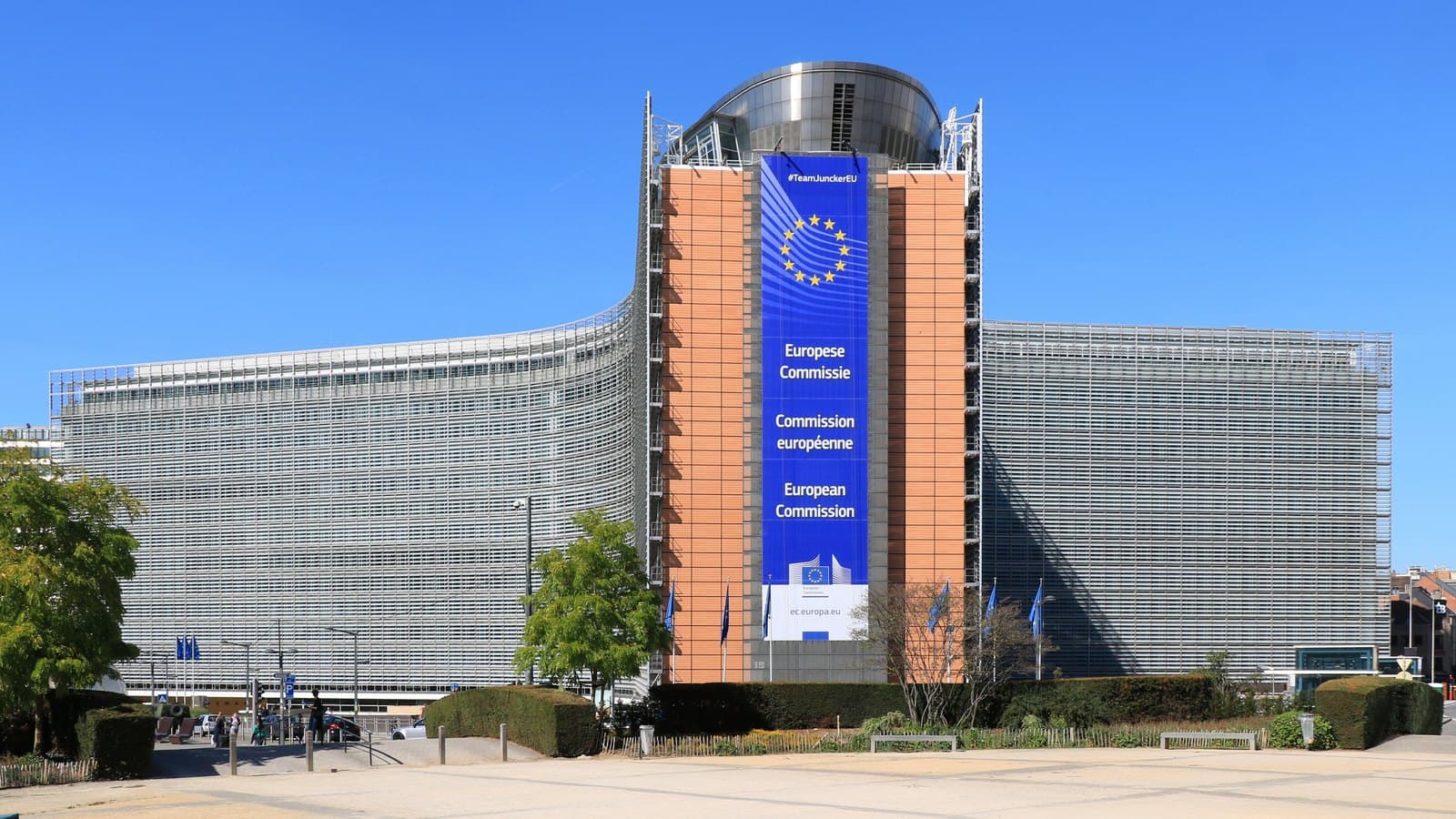
Cover image: the Berlaymont building in Brussels, headquarters of the European Commission. Photo by EmDee, via Wikimedia Commons, CC BY-SA 4.0.
Tags

TPW Editorial
Editorial Team
TechPastWeek's editorial team reports and edits every story we publish. We research each piece against primary and credible secondary sources, and a human editor reviews and signs off before it goes live.