California Bans ‘Addictive’ Feeds for Under-16s and Reins In AI Chatbots
California’s governor signed 13 online-safety bills, banning addictive social-media features for under-16s and imposing new chatbot safeguards and audits.


On this page
California Governor Gavin Newsom signed 13 technology and child-safety bills into law on September 10, 2026, in a package his office calls the strongest set of online protections for young people in the United States. Two measures carry most of the weight: a first-in-the-nation ban on “addictive” social-media features for users under 16, and a sweeping new safety regime for AI companion chatbots, named “Adam’s Law” after a California teenager who died by suicide in 2025 after lengthy chats with ChatGPT.
Related reading: The EU Moves to Keep Under-15s Off Social Media and AI Chatbots · Trump Says He Will Create an AI Force and Name an AI Czar, With No Details Yet.
The signing, held at the Bay Area Discovery Museum in Sausalito with First Partner Jennifer Siebel Newsom, Adam Raine’s mother Maria, and several legislators, capped a week in which Newsom also approved two Anthropic-backed laws creating a state framework for third-party AI auditors and a registry of auditors. Together the bills make California the most aggressive US state on youth online safety, and set up an almost certain constitutional fight over whether a state can regulate the design of feeds and chatbots as a matter of product safety.
What the package actually does
The 13 bills cover a lot of ground. The headline items:
- AB 1709 bars “covered platforms” from providing an “addictive feature” to any user under 16. The definition includes an algorithmic “addictive feed,” autoplay, and any further features the Attorney General designates by regulation. Platforms that do not want to strip those features for minors must keep under-16s off the service entirely.
- SB 1119 (Adam’s Law) requires chatbot operators to perform documented child-safety risk assessments, publish a child-safety policy, provide parental controls, run crisis-response protocols, and submit to independent child-safety audits. Its default settings cap minors at one-hour continuous sessions and two hours a day, and disable push notifications and persistent conversational memory.
- AB 2 makes social-media platforms with more than $100 million in annual revenue liable for statutory damages of up to $1 million per child when they fail to exercise ordinary care and injure a child.
- AB 1856 revises and expands age-checking requirements for software applications; AB 2246 replaces the California Age-Appropriate Design Code Act with new obligations for services “likely to be accessed by children.”
- AB 1946 expands platforms’ duties around child sexual abuse material; SB 1276 extends child sexual-exploitation law to digitally altered and AI-generated imagery of minors.
- AB 1159 restricts how K-12 pupil data can be used in AI systems; AB 302, AB 2071, AB 1128 and AB 2298 add school-related digital-wellness, parental-communication and computer-science provisions, including a family opt-out from school-issued devices.
- SB 867 imposes a four-year moratorium, through January 1, 2031, on manufacturing or selling toys that include a companion chatbot.
The addictive-features ban
AB 1709 is the most contentious piece. Under the new Business and Professions Code chapter, an “addictive feature” is defined as a “psychologically exploitative” mechanism intended to maximize engagement and foreseeably leading to compulsive use. It names the “addictive feed” (media recommended, selected or prioritized using information tied to the user or the user’s device) and autoplay, with a catch-all for features the Attorney General adds later.
Critically, unlike an earlier California law that let parents consent to algorithmic feeds, AB 1709 offers no parental-consent escape hatch for under-16s. A covered platform can either withhold the features or exclude those users. The bill takes effect January 1, 2027, the date the state’s Digital Age Assurance Act also begins, which relies on age-bracket signals passed by operating systems and app stores rather than collecting IDs directly.
Enforcement is narrow: only the Attorney General or a local public prosecutor can sue, with civil penalties of up to $50,000 per affected minor for a knowing violation and $25,000 for a negligent one. The law also creates an independent e-Safety Advisory Commission inside the Department of Justice to advise on age-assurance technology and harmful design. It passed the Legislature without a single no vote.
Adam’s Law: chatbots get a safety regime
SB 1119 builds on California’s existing chatbot rules (which already require a clear notice that a user is talking to AI, not a person) and adds an enforcement and design apparatus that takes effect July 1, 2027. Before releasing a new or substantially modified companion chatbot, an operator must document a comprehensive risk assessment covering foreseeable physical, financial, psychological and privacy harms, and then take reasonable steps to mitigate them.
For chatbots that allow children, the requirements are detailed. Operators must maintain a crisis-response protocol with referrals to 988 or an equivalent hotline; if the system detects a credible and imminent threat that a child will self-harm, it must notify a linked parent, or connect the child directly to a crisis line. Defaults (changeable only by a parent) must disable persistent conversational memory and push notifications and limit minors to one continuous hour and two hours total per day. Chatbots must periodically remind children they are talking to AI, and must not encourage self-harm or disordered eating, claim to be sentient, simulate romance, solicit gifts, or urge children to hide their usage from parents.
The supervision is layered. Operators must retain an independent child-safety audit (first by January 1, 2029, then every two years, with small operators under $500 million in revenue exempt until 2032) and submit a summary to the Attorney General. Public prosecutors can seek penalties of up to $5,000 per child for negligent violations and $15,000 for intentional ones, and a harmed child or parent can sue for actual damages. The definition of “companion chatbot” excludes customer-service bots, in-game bots limited to game topics, and simple voice assistants.
Adam’s Law drew support from an unusual quarter. OpenAI, which faces a lawsuit from Raine’s parents, backed the bill, and its vice president of global affairs, Chris Lehane, said it “both meets the moment for parents and sets teens up for educational success.” Pinterest also endorsed it. That bipartisanship (the chatbot rules advanced alongside the liability and design measures) is a notable contrast with the social-media fight.
Liability, age checks and children’s data
The rest of the package widens the legal exposure. AB 2 is a straightforward liability provision: a large social-media platform that violates its ordinary duty of care and injures a child owes the larger of $5,000 per violation, capped at $1 million per child, or three times the child’s actual damages. It applies only prospectively, until January 1, 2035, and excludes cases already pending. Newsom and legislators cast it as a deterrent meant to force safer design rather than a compensation scheme.
AB 2246, meanwhile, repeals and replaces the California Age-Appropriate Design Code Act, parts of which were tied up in the long-running NetChoice v. Bonta litigation. Its requirements for services “likely to be accessed by children” include estimating users’ ages, configuring high-privacy defaults, limiting profiling and precise-geolocation collection, and banning dark patterns. Penalties run to $5,000 per affected child for negligent violations and $15,000 for intentional ones, enforced by the Attorney General or a public prosecutor, with no private right of action. AB 1856 extends the state’s age-verification-signal regime, and AB 1159 narrows how school pupil data can feed AI systems.
The pushback
Industry and civil-liberties groups are not persuaded. NetChoice, the trade association whose members include Google, Meta and X, said the package raises First Amendment problems. “The state cannot simply describe speech as addictive and then claim a right to regulate access to it,” said Zach Lilly, the group’s director of government affairs. “Whether the governor and legislature choose to respect it, Californians have a right to express themselves, and NetChoice will continue to fight for that right.” TechNet argued that lawmakers should enforce existing laws and strengthen parental controls instead of adding new ones.
The Electronic Frontier Foundation had urged a veto of AB 1709, calling it “well-intentioned, but deeply flawed.” Rindala Alajaji, the EFF’s associate director of state affairs, said the bill’s definition of addictive features is so broad that it amounts to “a functional ban on social media use” for under-16s. “Denying minors access to digital forums — or stripping out basic tools needed to navigate them — is not going to help make young people safer or healthier in the AI age,” she said.
Those objections have a track record. NetChoice has repeatedly sued California over its online-safety laws, and courts have partly sided with it: the Ninth Circuit largely upheld the state’s 2024 addictive-feed law in September 2025, but struck down a default like-count provision, while the age-appropriate design code drew injunctions before being replaced. The Washington Post reported that AB 1709 “will almost certainly face legal challenges.”
A wider US and global wave
California is not acting alone. New York City banned student-facing generative AI through eighth grade in early September. In Florida, Attorney General James Uthmeier sued Netflix on September 9, accusing the streamer of misleading families and harvesting children’s viewing data while its default autoplay kept kids watching, a case seeking billions. California’s own move follows August’s multistate settlement in which Meta agreed to pay up to $17 billion and change teen-facing features.
Abroad, the United Kingdom said in June 2026 that it would bar social-media services for under-16s, and its July consultation response added on-by-default protections for 16- and 17-year-olds, mandatory breaks for under-18 chatbot users, and a ban on sexualised AI chatbots for minors, with regulations expected to take effect in spring 2027. Australia became the first country to ban social media for under-16s in late 2025, and more than 40 countries are now considering similar restrictions.
Caveats and what to watch
The laws’ bite is years away and depends heavily on rulemaking and enforcement. Much of AB 1709’s scope turns on regulations the Attorney General has not yet written; the chatbot regime does not fully apply until mid-2027, and audits arrive in 2029. Ed Howard of the University of San Diego’s Children’s Advocacy Institute warned that outcomes “will depend, in part, on how many resources lawyers and state regulators pour into enforcing them.”
Three questions will shape what happens next. First, how the Attorney General defines “covered platform” and “addictive feature”, the broader the definition, the more likely a court finds it unconstitutional. Second, whether NetChoice and the EFF can convert their objections into injunctions, and whether the Ninth Circuit’s recent deference to California’s feed law holds. Third, whether platforms actually redesign products or simply route minors away, and whether age-assurance systems can verify age without turning every social app into a surveillance chokepoint. California has now written some of the strictest rules in the country. Whether they protect children or merely relitigate the First Amendment will be decided in the years to come.
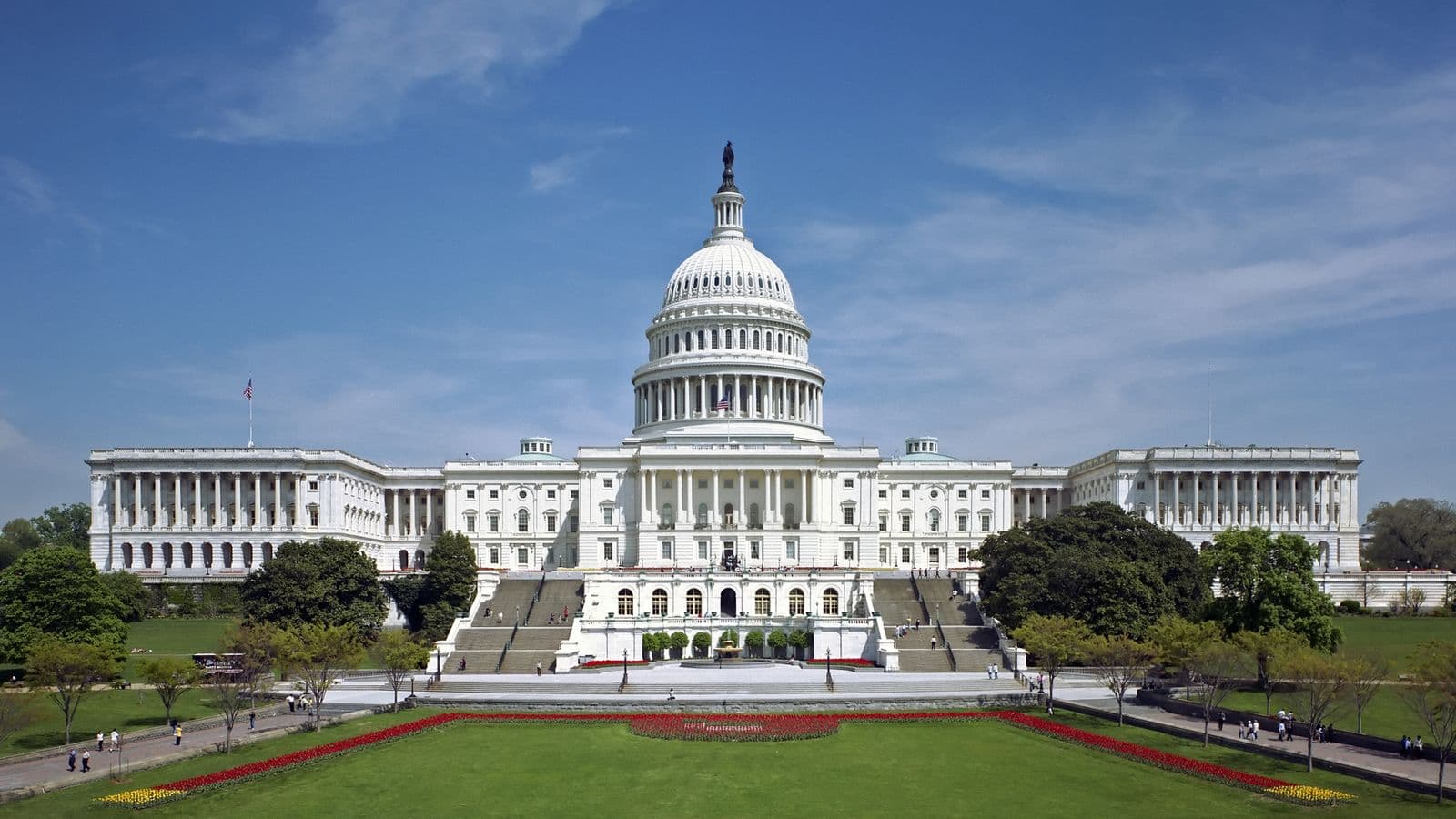
Cover: California State Capitol, Sacramento. Photo by Tony Webster, CC BY-SA 2.0, via Wikimedia Commons.
Tags

TPW Editorial
Editorial Team
TechPastWeek's editorial team reports and edits every story we publish. We research each piece against primary and credible secondary sources, and a human editor reviews and signs off before it goes live.