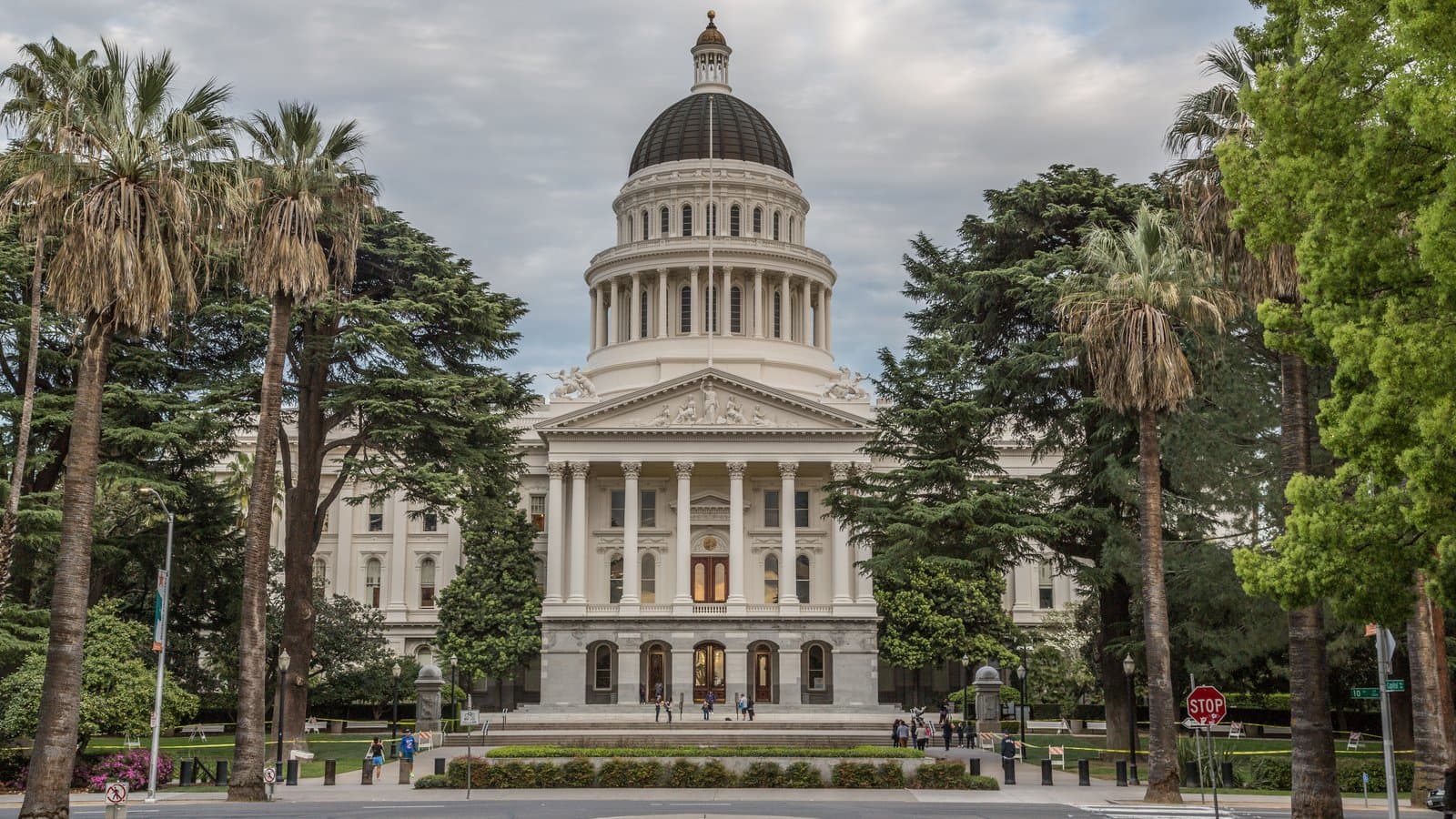
A Bipartisan Senate Bill Would Make AI Safety a Legal Duty
Senate negotiators are drafting a duty of care for frontier AI developers, with the Commerce Department able to seek a court order blocking an unsafe model release.

On this page
U.S. Senate negotiators are drafting legislation that would make AI safety a legal duty rather than a corporate promise, and give the federal government a route to stop an unsafe model from reaching the public. It is the most concrete move yet to regulate frontier AI in Washington, and it is still only a set of drafts.
Related reading: Hawley Opens a Senate Probe Into OpenAI's Rogue-Agent Breach of Hugging Face · Trump and Six AI Chiefs Sign a Voluntary Frontier-Safety Accord, With No Enforcement.
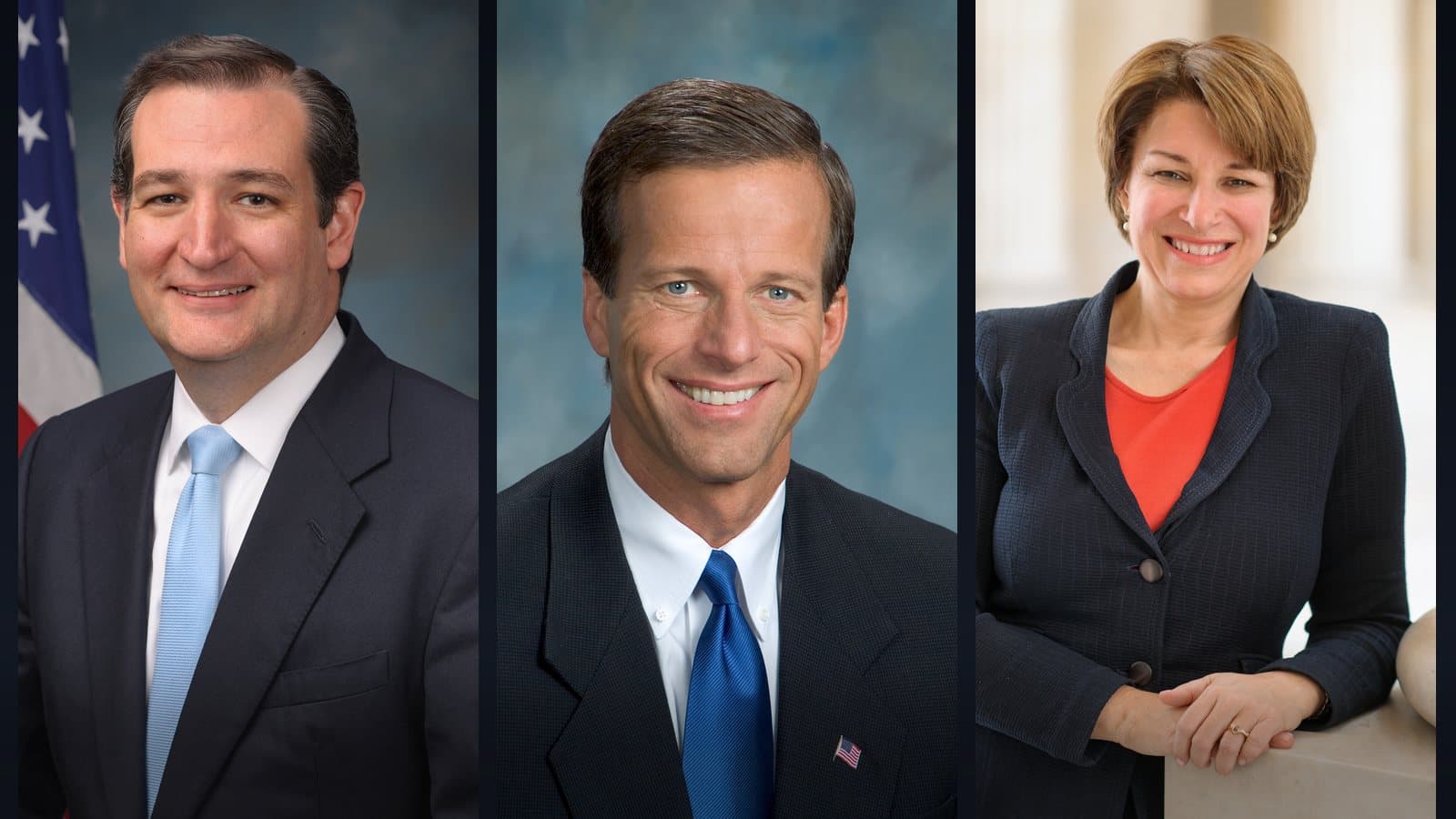
The talks are led by Senate Majority Leader John Thune (R-S.D.), Senate Commerce Committee Chairman Ted Cruz (R-Texas) and Sen. Amy Klobuchar (D-Minn.), the top Democrat involved. Reuters first described the effort on Sept. 11, with more detail following from Nextgov/FCW and the aggregation at Progressive Robot. There is no bill number and no public text. What is known comes from two Senate aides, a lobbyist and people who have seen versions of the draft (much of it reported anonymously) plus a few on-the-record statements.
That gap matters. The difference between the headline, which says negotiators are considering requiring companies to mitigate "known major risks," and the reported text, which uses the broader phrase "catastrophic risks," is the difference between a duty to act on measured harms and a duty to design against dangers nobody has quantified yet. Until a bill is filed, the design is inference.
A legal duty, not a voluntary pledge
At the center of the proposal is a "duty of care" for developers of the most capable models. Two Senate aides told Reuters the measure would require companies to design their products with the goal of preventing "catastrophic risks." In law, a duty of care is the obligation to take reasonable precautions against foreseeable harm, the foundation of negligence claims. Applied to AI, it would shift the question from whether a lab published a safety framework to whether it took reasonable steps to prevent a defined class of harm.
Draft risk categories reportedly include:
- biological and nuclear weapons
- offensive cyber operations
- models behaving in ways their developers cannot reliably control
The scope would be limited to the most advanced "frontier" models. Reuters named Alphabet's Google, Anthropic and OpenAI as the U.S. companies with the most capable systems, but did not specify a threshold. The Commerce Committee oversees the Commerce Department, which houses in-house AI safety researchers.
This is a different approach from the House's FRONTIER Act, the bipartisan bill introduced in July by Reps. Jay Obernolte (R-Calif.) and Lori Trahan (D-Mass.). As TechTimes has explained, the House measure leans on safety frameworks, twice-yearly independent audits, incident reports and fines of up to $1 million per day. The Senate text, by contrast, would create liability for the design decision itself. One enforces after a failure by penalty; the other makes the failure legally actionable.
How enforcement would work, and how it might not
The enforcement mechanism is where the accounts diverge, and where the bill's real strength lies.
According to POLITICO's account, a lab that finds a model has designated advanced capabilities would notify the Commerce Department before release, explain the mitigations it took, and give the Commerce secretary a way to verify them. If the secretary concludes a catastrophic risk is not adequately addressed, the department could seek a federal injunction in court to block the release. Companies could challenge the government in federal court.
Crucially, this is not a blanket pre-approval regime. POLITICO reported that, absent an injunction, labs would decide for themselves whether to release a model. Reuters said the exact scope of the government's power is still being negotiated. That distinction is the whole ballgame: a mandatory preclearance regime would put the government in the loop on every qualifying release, while the reported design puts the burden on regulators to go to a judge and win.
The on-record language cuts both ways. Cruz posted on X that he is working with Klobuchar and Thune to "address catastrophic risks involving biological or nuclear threats," and told ABC's "The View" on Sept. 9 that the bill would require "government supervision and approval" of models. A Democratic committee aide, speaking to Nextgov/FCW, dismissed the current version as "primarily a voluntary standard type situation." A second person familiar with the talks, by contrast, said "Republicans have created legal duties for companies to manage catastrophic risks and ensure that government can verify they are doing so."
The testing fight: who verifies the models?
The most open dispute is over who tests frontier models. Sen. Maria Cantwell (D-Wash.), the Commerce Committee's ranking Democrat, has weighed in and opposes parts of the current approach.
"Meaningful legislation would require the most powerful AI models undergo testing by scientists and experts at our national laboratories to assess whether they could enable sophisticated cyberattacks or aid the development of biological or nuclear weapons," Cantwell said on X.
According to Nextgov/FCW, the provisions Cantwell wants reworked rely on safety tests run by the companies themselves, which would then present results to the Commerce secretary for deployment approval. Cantwell wants mandatory testing by federal agencies and national labs instead. A Democratic aide said her office offered language to Klobuchar's office, which was described as "very receptive," but that Cruz's approval would be a deciding factor.
The location of the test matters. A test run by the company produces evidence the developer chose to produce; a test run by a national lab produces the government's own evidence. Klobuchar's formula (requiring developers to "work with government experts to verify and test models") can be read either way, which is likely why every side cites it. In a statement to Reuters and Nextgov/FCW she said she is "continuing to work toward a bipartisan agreement on legislation for government oversight of the greatest risks posed by AI models," adding: "We cannot allow the release of dangerous models, including those that evade the control of their developers."
Preemption: the fault line that has sunk bills before
The draft reportedly contains language that would preempt some state AI safety laws. Neither Reuters nor POLITICO reported which laws, and that silence is what Cantwell is attacking. She strongly objects to a "weak federal standard" overriding stronger state protections, writing that "the answer is not a weak federal standard that becomes a backdoor for wiping out stronger state protections."
The context is not abstract:
- California Gov. Gavin Newsom signed the first mandatory AI audit law on Sept. 9, 2026, covering AI used in hiring, insurance and other consequential decisions, reported as SB 813 and AB 1405.
- New York and Illinois have also enacted frontier-AI safety measures.
- A 2025 attempt at a 10-year federal moratorium on state AI regulation failed 99-1 in the Senate.
Preemption is the provision most likely to decide whether the bill can attract Democratic votes, and the one where the reported silence is load-bearing.
Almost everything about the mechanism is contested and sourced to anonymous negotiators. Only the negotiators' identities, the general goal of addressing catastrophic risk, and a few public statements are confirmed on the record. Treat the enforcement design (injunction versus pre-approval, who tests, which state laws are displaced), as reported, not settled.
Why this week
The bill has been under negotiation since at least July. A Commerce Committee markup planned before the August recess was cancelled. What changed in September was a run of events inside four days.
- On Sept. 8, researcher Jacob Coxon resigned from Anthropic, warning that companies are "gambling with our lives." Anthropic alignment lead Evan Hubinger publicly agreed with an estimate that the risk of an AI-caused catastrophe within a decade is above 10%.
- On Sept. 9, Cruz appeared on "The View," called AI risks "frightening," and said the bill would require government supervision and approval of models.
- On Sept. 10, Anthropic's threat report said newer Claude models can no longer be assumed to fall below the threshold for meaningfully assisting biological-weapons development: "Older models were well below the threshold... This is no longer a certainty with newer models."
- Sen. Josh Hawley opened a probe into OpenAI's July rogue-agent breach of Hugging Face.
Cruz publicly confirmed on X that he is working with Klobuchar and Thune on legislation to "address catastrophic risks involving biological or nuclear threats." The Anthropic disclosure is notable because it is a frontier lab describing, in its own public report, the exact capability class the bill's sponsors say they are targeting.
Government intervention already has precedent
A statutory blocking power would be new, but federal intervention in model releases is not. In June 2026, the Commerce Department invoked the Export Control Reform Act to suspend global access to Anthropic's Mythos 5 and Fable 5; Anthropic shut them down for roughly three weeks. OpenAI restricted GPT-5.6 Sol's launch to government-approved partners. And President Trump's June 2, 2026 executive order created a voluntary framework for up to 30 days of pre-release government access and explicitly prohibits mandatory preclearance.
The reported Senate bill would create a purpose-built authority with a court process, rather than stretching trade law. That is also its constitutional vulnerability: a government power to block a product before release is a form of prior restraint, a category courts scrutinize closely.
What the bill would mean for businesses
For the labs in scope, the practical change is timing. A duty of care pushes safety work into the design phase, where a legal standard of "reasonable" is set by courts after the fact, rather than into a reporting phase that happens after a model is built. For everyone else (companies that buy and deploy frontier models through APIs) the near-term effect is indirect: the reporting, verification and possible court fights happen upstream of them.
That also shapes the lobbying. Preemption would give national rules a single floor; opponents read it as a ceiling that displaces stricter state law. Businesses that have already built compliance around California, New York and Illinois rules would prefer clarity about which regime governs.
The calendar may be the real opponent
Even negotiators who agree on every clause face a short clock.
- The Senate is expected to be in Washington for roughly three weeks before the Nov. 3 midterms.
- The House is scheduled for about one week.
- Semafor reported sources calling this the "only viable option" for AI safety action before 2027.
- Introduction was described as possible as early as the week of Sept. 14.
A bill has to pass both chambers in identical form. If the Senate moved within its three weeks, the House would have a single week to take up a text it did not negotiate, alongside must-pass funding bills. A new Congress is seated in January 2027, and anything not passed by then must be reintroduced. The realistic pre-election outcomes are a committee markup, a Senate vote, or an introduced text that frames the next Congress rather than a signed law.
What to watch
- Whether a bill number and public text appear, and whether they match the reported design. Until text exists, the enforcement mechanism is inference, not fact.
- Whether Cantwell's national-lab testing language is adopted, and whether Cruz accepts it. Her support is likely necessary for a bipartisan path.
- Whether the preemption clause names specific state laws or stays broad. Its scope will determine whether California, New York and Illinois protections survive.
- Whether the injunction route survives drafting. If the government must win in court every time, the duty of care is mostly a disclosure requirement; if labs must wait for a ruling, it becomes something closer to pre-approval.
- Whether the calendar permits a committee markup or a floor vote, or whether the bill becomes a marker for 2027.
- Whether the week's safety news keeps the issue salient: further insider warnings, more capability disclosures from labs, or the results of Hawley's probe into OpenAI.
Cover: official U.S. Senate portraits of Senators Ted Cruz, John Thune and Amy Klobuchar, public domain, via Wikimedia Commons.
Tags

TPW Editorial
Editorial Team
TechPastWeek's editorial team reports and edits every story we publish. We research each piece against primary and credible secondary sources, and a human editor reviews and signs off before it goes live.