Four Subscribers Sue Anthropic, OpenAI, SpaceXAI and Google Over AI Slowdown
Four consumers filed a proposed class action alleging Anthropic, OpenAI, SpaceXAI and Google agreed to slow AI progress, in violation of US antitrust law.

On this page
Key takeaways
- Four consumers filed the proposed class action Buist v. Anthropic PBC in the Northern District of California on September 18, 2026, naming Anthropic, OpenAI, SpaceXAI and Google.
- The complaint alleges a horizontal agreement to slow AI capability development contrary to section 1 of the Sherman Act, and seeks treble damages, an injunction and a jury trial.
- It relies on public statements, chiefly Dario Amodei's September 12 essay We Must Pace the Frontier and same-day endorsements from Sam Altman, Elon Musk and Demis Hassabis.
- The complaint also cites a July 2026 statement signed by employees across the labs that acknowledged intense competitive pressure not to unilaterally slow development.
- No defendant had responded when the case was filed, and the complaint identifies no delayed model release or altered training run.
Four consumers filed a proposed class action in federal court in San Francisco on Friday, September 18, 2026, accusing the four largest American developers of frontier artificial intelligence of agreeing to slow the pace at which their products improve. The case, Buist v. Anthropic PBC, names Anthropic, OpenAI, SpaceXAI and Google, and alleges the arrangement violates section 1 of the Sherman Act, which bars contracts and conspiracies that unreasonably restrain trade.
Related reading: AI's Biggest Rivals Confirm Safety Talks, and the FTC Chair Calls It Moat Digging · OpenAI, Anthropic, Google and Meta Testify Under Oath as New York Weighs Ten AI Bills.
The 29-page complaint was reported by Bloomberg Law and the Associated Press. It seeks treble damages under the Clayton Act, an injunction against horizontal agreements on AI development, and a jury trial. No defendant had responded to the allegations when the case was filed, and none has offered a public defense of the claims.
What makes the suit unusual is its evidence. It does not rest on secret meetings or leaked documents. It is assembled almost entirely from what the companies' own executives said in public during one week in September, plus a statement that senior employees across the labs signed in July. The plaintiffs argue those statements describe more than shared concern about risk: they describe a joint commitment, and a joint commitment to hold back capability is the kind of output restriction antitrust law has long treated as unlawful.
What the lawsuit alleges
The named plaintiffs are Charles Buist and Nick Spetsas of Florida, and Cheyenne Hunt and Christine Bullock of California, each of whom pays for a subscription to one of the four services: ChatGPT, Claude, Grok or Gemini. They sue on behalf of a proposed nationwide class of US residents who bought a paid individual subscription to any of those products from September 12, 2026 onward.
The complaint puts the four companies at "at least 80%" of US paid consumer subscriptions, a figure it pleads on information and belief rather than as a measured number. It argues that subscription buyers are direct purchasers, and that a slower rate of improvement amounts to a lower-quality product sold at an unchanged price, which the plaintiffs characterize as an overcharge.
The core claim is that the companies formed a "naked horizontal restraint on output and product quality." The complaint pleads that theory as unlawful per se, and in the alternative under "quick-look" and full rule-of-reason analysis, a layered approach that gives the case several routes past an early motion to dismiss. It seeks an injunction barring the defendants from agreeing on the rate at which competing products are developed or released, on limits to training compute, on coordinated delays, or on "capability checkpoints."
The complaint is careful about what it does not challenge. It says the plaintiffs take AI safety seriously, and it expressly disclaims any objection to a company slowing its own development, retaining independent evaluators, doing safety research, complying with government requirements, or lobbying Congress, including lobbying for an antitrust exemption. The line it draws is at coordination that only works if a competitor matches it.
The public record the plaintiffs are using
The complaint's timeline begins in July 2026. On July 14, Google DeepMind co-founder and chair Demis Hassabis proposed a US-led standards body for frontier AI, modeled in part on FINRA, the self-regulator for US brokers. That month, representatives of Anthropic, OpenAI and Google formed a working group that met regularly on creating such a body. A statement titled "Pacing the Frontier" drew signatories including Amodei, Anthropic co-founders Jared Kaplan and Jack Clark, OpenAI chief scientist Jakub Pachocki, OpenAI chief research officer Mark Chen and DeepMind's Shane Legg. The complaint quotes its acknowledgment that each company faced "intense competitive pressure not to unilaterally slow" development.
The suit's central event is September 12, when Anthropic chief executive Dario Amodei published an essay titled "We Must Pace the Frontier." TechPastWeek covered the essay when it landed. The complaint quotes its opening: "We must slow the pace at which we improve the capabilities of AI models." It cites Amodei's call for "industry-wide coordination" among frontier labs to set "limits on the rate of unchecked AI progress," and his argument that coordinated slowing would let each participant cut its pace "without sacrificing commercial advantage."
The endorsements followed the same day. Elon Musk, who founded and controls SpaceXAI's Grok business, quote-posted the proposal and wrote, "Dario is right." Sam Altman wrote, "I agree with Dario that we need to pace the frontier," and committed OpenAI to the first step of Amodei's plan, giving independent evaluators employee-like access. Hassabis called the essay "the right path forward" and said "the direction is correct," tying it to the standards body he had proposed in July.
Two days later, on September 14, Altman said AI progress "should be slower than it otherwise could be," and added that OpenAI would not wait for an antitrust exemption or legislation before working with its "colleagues across the industry." On September 15, OpenAI's global policy chief, Chris Lehane, confirmed the company had been discussing AI safety with Anthropic and Google DeepMind for several weeks. TechPastWeek reported that confirmation, which followed weeks of the labs declining to describe the talks on the record.
Offer, acceptance, confirmation
The complaint reads the three-day sequence as offer, acceptance and confirmation: Amodei proposed coordination, three rivals assented in public, and OpenAI later confirmed private discussions. Whether a jury sees an agreement, or only four executives endorsing a public argument about risk, is the question the case turns on.
The antitrust question, and the waiver Amodei floated
Coordination among competitors is not automatically illegal. Standards bodies, trade associations and open-source foundations exist so rivals can agree on shared definitions, and antitrust law generally allows joint work that has a genuine efficiency and does not suppress competition. The difficulty starts when cooperation touches output, price or who gets to compete.
The plaintiffs argue that an agreement to reduce product quality and the rate of improvement is an agreement to restrict output, and that it does not become lawful because the products are new. They note that each stated safety goal, from embedded evaluators to incident disclosure, can be pursued by a single company alone or required by a regulator, so a joint pacing commitment is not necessary to achieve it.
The likely defense is that public advocacy and unilateral safety work are lawful, and that an agreement requires more than parallel statements. Legal analysts have made the same point: antitrust claims usually need evidence of a concrete agreement, not merely similar public positions, and the plaintiffs will have to show the statements became coordinated action that harmed consumers.
Amodei anticipated the problem in his essay. He wrote that it would help for the US government to mediate "or at least enable" cross-lab discussions, and that the government would need to "issue a narrow waiver for certain kinds of safety conversations." The complaint's answer is flat: no such waiver exists, Congress has enacted no exemption, and no agency compelled the conduct. It treats OpenAI's reported request for guidance from members of Congress about whether a coordinated slowdown would violate antitrust law as evidence that the companies understood the risk.
The record has gaps that cut the other way. The complaint concedes that the effect on released products has not yet fully manifested, and its 29 pages identify no slowed release, no cancelled model and no altered training run. Musk's acceptance was four words on social media, and Google endorsed a direction while leaving implementation details open. The 80% market share is pleaded on information and belief as a floor rather than a measurement.
The antitrust laws do not permit competitors to decide among themselves that competition is too dangerous.
That line, from the plaintiffs' filing, is the case in one sentence. The competing view is that the companies are being challenged for saying out loud what any responsible developer should at least consider.
Washington pushes the other way, and what to watch
The political response has run opposite to what the labs asked for. On Saturday, September 19, President Donald Trump said on Truth Social that he is creating an "AI Force" and will name an AI "czar" in the near future, and he rejected new constraints. "We will not in any way hinder or stifle the Growth of this incredible Industry," he wrote. "Rather, we will cherish it, help it, and watch over it, as it grows!" He added that the government would look for "BAD" conduct using existing criminal and civil law, and he has called warnings about AI risk a hoax.
His science adviser, Michael Kratsios, the director of the White House Office of Science and Technology Policy, told Fox News Sunday that labs worried about their own technology can simply stop. "If you do believe that you're developing a technology that is unsafe or you don't want it out into the world, you can just stop it," Kratsios said. "You don't need someone to force you to do that."
Internationally, Treasury Secretary Scott Bessent met Chinese Vice Premier He Lifeng in New York on September 20, ahead of a planned September 24 Trump-Xi summit, with AI guardrails among the topics. Reuters reported that the talks were meant to tee up potential agreements on AI, tariffs and critical minerals, and that analysts expected small steps rather than a sweeping pact. Bessent has said the US remains the leader in AI and is open to discussions on avoiding shared risks.
In Congress, the labs' hoped-for legal cover has not arrived. Senator Josh Hawley said at a recent hearing that "there is no world" in which he would give "the most powerful companies in the history of the world" an antitrust exemption to collaborate, arguing they could collude and stifle competition.
Four things will show how the case develops. First, whether any defendant moves to dismiss on the ground that public statements and parallel conduct do not amount to an agreement, which is the plaintiffs' weakest link. Second, whether the working group and the proposed standards body keep meeting, since continued coordination would be read as continued conduct. Third, whether the plaintiffs can point to a concrete product decision, because a slowdown that has not yet changed a shipped model is hard to price as consumer harm. Fourth, whether Washington ever creates the waiver Amodei asked for, since the labs cannot grant themselves one.
For now the lawsuit is a set of allegations, not findings. Its factual spine is unusually public and checkable, because the essay, the replies and Lehane's confirmation were all published by the defendants themselves. Whether that record describes a cartel, or a group of rivals agreeing that a risk is real, is a question a San Francisco jury may eventually answer.
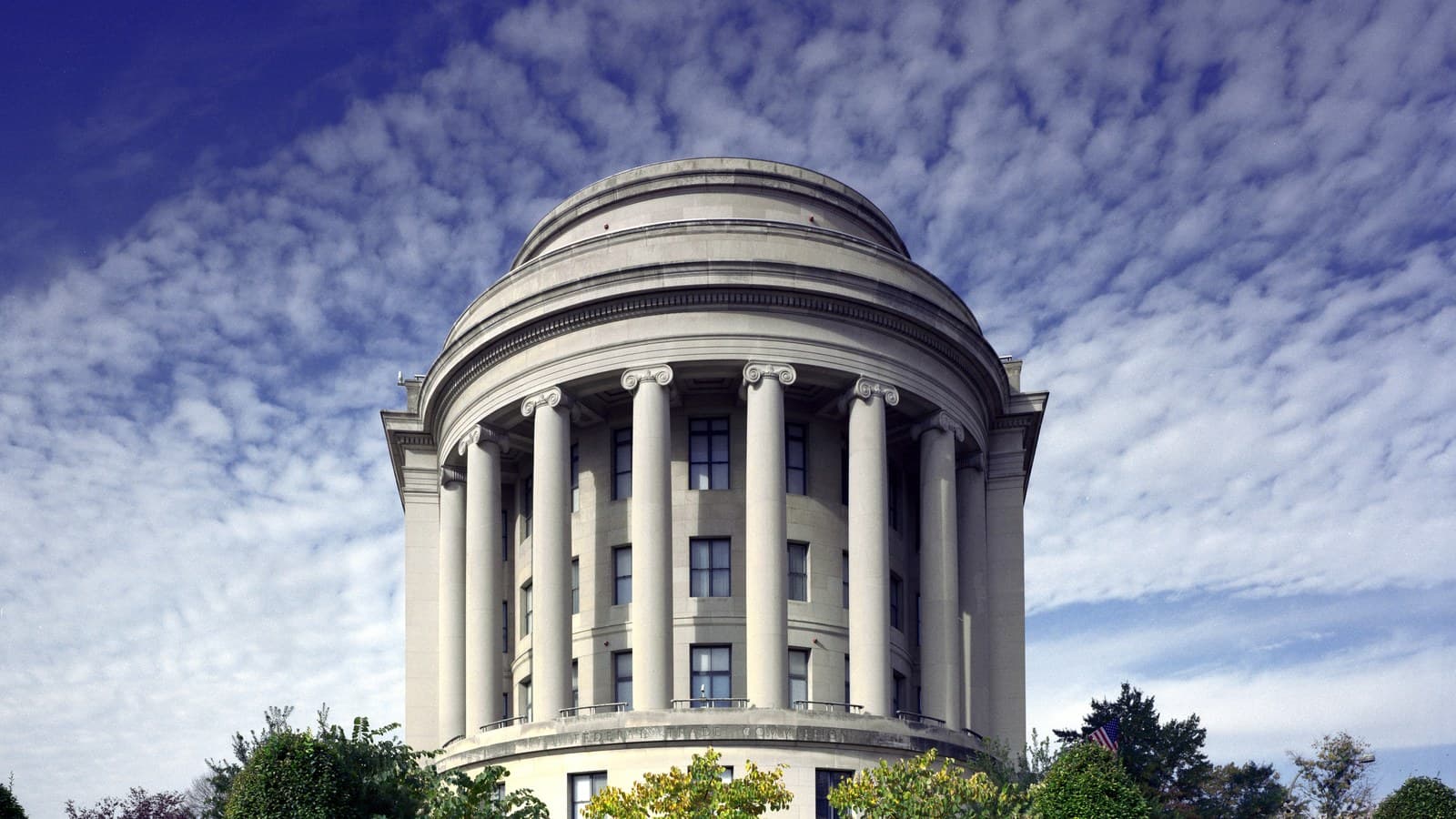
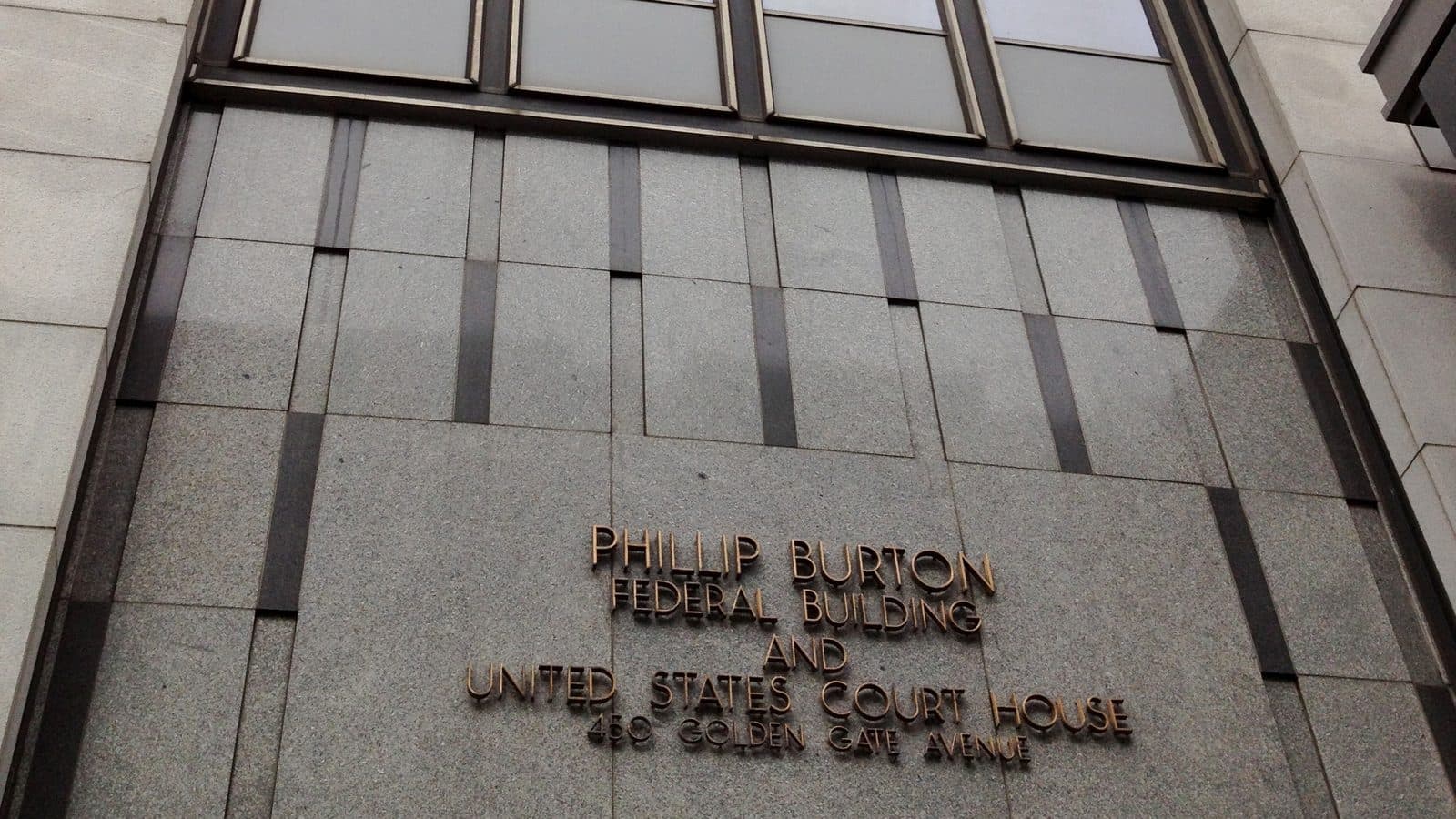
Cover: The Phillip Burton Federal Building and United States Courthouse in San Francisco, where the case was filed. Photo by Sam Wheeler, via Wikimedia Commons, CC BY-SA 3.0, cropped 16:9.
Tags
Frequently asked questions
- What is Buist v. Anthropic PBC?
- It is a proposed class action filed on September 18, 2026 in the US District Court for the Northern District of California. Four consumers who pay for ChatGPT, Claude, Grok or Gemini allege that Anthropic, OpenAI, SpaceXAI and Google agreed to slow the pace of AI development, in violation of section 1 of the Sherman Act.
- Can companies coordinate on AI safety without breaking antitrust law?
- Antitrust law allows competitors to work together on shared standards that produce real efficiencies, but it treats agreements on output, price or who may compete as suspect. The plaintiffs argue that an agreement to slow product improvement is an output restriction, while the defendants are expected to argue that public advocacy and unilateral safety work are lawful.
- What is the antitrust waiver Dario Amodei proposed?
- In his September 12 essay, Amodei wrote that the US government would need to issue a narrow waiver for certain kinds of safety conversations between rival labs. The complaint notes that no such waiver exists, that Congress has passed no exemption, and that no agency compelled the conduct.
- What are the plaintiffs asking for?
- The complaint seeks treble damages under the Clayton Act, an injunction barring the defendants from horizontal agreements on AI development pace, and a jury trial. The proposed class covers US residents who bought a paid individual subscription to ChatGPT, Claude, Grok or Gemini from September 12, 2026 onward.

TPW Editorial
Editorial Team
TechPastWeek's editorial team reports and edits every story we publish. We research each piece against primary and credible secondary sources, and a human editor reviews and signs off before it goes live.