The Justice Department Wants to Prosecute AI Misuse. It Has No New Law.
The DOJ's new Super Intelligence Task Force will coordinate criminal and civil AI enforcement under existing law, with no new offense, funding or case list.

On this page
Key takeaways
- The US Department of Justice announced the Super Intelligence Task Force on 5 November 2026, established by an Attorney General memorandum dated 13 October 2026.
- The task force is co-chaired by Associate Attorney General Stanley Woodward and Associate Deputy Attorney General Stephen Weiss, and it absorbs an AI task force announced on 9 January 2026.
- It coordinates criminal and civil AI enforcement, deconflicts investigations across DOJ components and US Attorneys' offices, and develops prosecution guidance, but it creates no new crime or penalty.
- No new funding, staffing number or list of pending cases was announced with the task force.
- The White House's Super Intelligence Force, chaired by Jay Clayton, is a separate body; the DOJ task force is the department's point of contact with it.
The US Department of Justice announced on Thursday 5 November 2026 that it has formed a Super Intelligence Task Force, a body built to coordinate criminal and civil AI enforcement across the department. It was established by an Attorney General memorandum dated 13 October 2026 and signed by Todd Blanche, and it is co-chaired by Associate Attorney General Stanley Woodward and Associate Deputy Attorney General Stephen Weiss.
Related reading: UK Says Its AI Security Institute Is Testing Unreleased Gemini 4 Argon Before Launch · OpenAI, Anthropic, Google and Meta Testify Under Oath as New York Weighs Ten AI Bills.
It creates no new crime. It arrives with no new statute, no announced budget and no list of pending cases. Prosecutors will still bring AI-related charges under fraud, computer-crime, sanctions and national-security laws that were written before the phrase "super intelligence" appeared in a government document.
That gap between the announcement and the legal machinery is the story. The department has built a coordinating body with a broad mandate and a name borrowed from a presidential executive order. It has left the hard parts, what counts as AI misuse, who gets prosecuted, and under which statute, to guidance that does not yet exist.
What can the task force actually do?
The memorandum gives the DOJ-SITF six functions. It organizes the department's criminal and civil enforcement involving super intelligence, shortened to SI throughout the document. It deconflicts investigations and cases across DOJ components and US Attorneys' offices. It recommends enforcement priorities. It is the department's main contact with the White House's Super Intelligence Force. It absorbs the work of an AI task force announced in January 2026 and coordinates affirmative civil litigation. And it develops guidance on prosecuting what the memo calls "unlawful SI-related conduct," plus advice on legislation and regulation.
The membership list is a signal. Representatives come from the Antitrust Division, the Attorney General's Advisory Committee, the Civil Division, the Criminal Division, the FBI, the National Fraud Enforcement Division, the National Security Division and the Office of the Solicitor General. Antitrust and national security sit in the same room.
There is also a reporting channel. The memo tells components and US Attorneys' offices to notify the task force, when the task force asks, before opening an investigation and before seeking charges or finalizing a resolution in matters involving SI. The notification process is supposed to avoid delaying action and can be skipped in emergencies, including imminent threats to public safety or the loss of evidence.
A task force with no new statute can still see cases early, shape priorities and keep different offices from working the same target. It is a coordinating mechanism with a view across the department, not a new prosecutor's office.
A name that arrives before a definition
"Super intelligence" is the administration's term. Executive Order 14434, Inaugurating the Era of Super Intelligence, was signed on 29 September 2026. Nextgov/FCW reported that the order instructed agencies to refer to artificial intelligence as super intelligence, a phrase President Trump called more accurate.
The same outlet noted that super intelligence already had an established meaning, "any intellect that greatly exceeds the cognitive performance of humans in virtually all domains of interest," as defined by the philosopher Nick Bostrom. That definition describes a system nobody has demonstrated. The executive order's definition is different and more modest: it maps SI onto the existing statutory definition of artificial intelligence, not Bostrom's hypothetical.
The memo itself does not define super intelligence. The executive order does, by reference: SI means the technologies and systems covered by the statutory definition of artificial intelligence at 15 U.S.C. 9401(3). That makes SI a new label for an existing legal category, not a category with its own elements a prosecutor must prove. A label in a press release does not expand jurisdiction. A fraud case is still a fraud case, and a sanctions case is still a sanctions case. The branding changes how the department describes the work. It does not change what a jury has to find.
Why existing law makes the cases harder
The mandate covers "foreign state and state-sponsored actors, transnational criminal organizations, and individual or corporate actors engaged in fraud or other unlawful conduct." Blanche's statement says the department will keep "identifying and prosecuting individuals whose use of SI violates the law," including by maliciously targeting taxpayers, critical infrastructure or other aspects of national security.
The promise is circular. The department will prosecute people who break the law. The question is which law, and whether it reaches the conduct.
Some cases are straightforward. A person who uses a model to run a wire-fraud scheme has committed wire fraud. A company that lies about what its system can do may face fraud or false-claims exposure. Sanctions and export controls can reach the transfer of models, chips or technical know-how. Computer-crime law can reach unauthorized access even when an agent did the clicking. None of that requires a new AI offense.
Other cases are harder. Intent is the first problem. A model that produces a harmful output may be doing what its operator asked, what a user asked, or something neither anticipated. Criminal responsibility needs a person or company whose state of mind can be proved. Causation is the second problem, because linking one output to one harm in a system with many users and layers is not simple. Scale is the third. AI misuse can be cheap, distributed and cross-border, which is the profile that strains conventional investigation.
The FTC is testing a parallel theory on the civil side. In September 2026 it opened an industry-wide investigation into Anthropic, OpenAI and other labs, asking whether existing consumer-protection authority reaches autonomous agents, as TechPastWeek reported. That inquiry and the DOJ task force share a premise: the law on the books is enough, or has to be made to be enough. Whether courts agree is unresolved in both.
The difference is the burden. The FTC can act on unfair or deceptive practices. The Justice Department has to prove a crime beyond a reasonable doubt. A task force can coordinate that work. It cannot lower the standard.
From fighting state rules to chasing misuse
The body the new task force absorbs was announced on 9 January 2026, when Pam Bondi was attorney general. Akin Gump's tracker records that the new group incorporates its work. Nextgov calls it the AI Litigation Task Force. MLex, which reported the merger, says the earlier body focused more narrowly on challenging state AI laws. The memo is explicit that the old group "shall cease to operate as a separate body" and that its matters, work product, personnel details and reporting obligations transfer to the new one.
That is a change in posture. The January body was aimed at state regulation, part of an effort to keep a patchwork of state rules from constraining the industry. The new one is aimed at conduct: foreign states, criminal networks and companies accused of fraud. The first posture protects developers from regulation. The second exposes them, and their customers, to enforcement.
Both can be described as protecting American AI leadership, which is how the department frames it. The memo says the task force will "take affirmative measures, as appropriate, to promote American SI dominance." The same document assigns it to prevent misuse. Promotion and policing sit inside one mandate, and the priority between them will be set case by case.
Companies are on notice, and much is still undefined
Weiss's statement is the most concrete signal for firms. He said the department has a responsibility to use "law enforcement tools at our disposal to deter improper use of SI, harden regular reporting on SI risk and response, and ensure companies exercise vigorous internal controls so that SI technology behaves as intended."
There is no compliance rule in the memo, no certification and no safe harbor. There is an expectation. If the task force later issues prosecution guidance, internal controls, incident reporting and risk assessments are the likely benchmarks. Companies that document those things will have an easier time arguing they acted in good faith. Companies that do not will have a harder time making that case.
"The Department also has a responsibility to utilize law enforcement tools at our disposal to deter improper use of SI, harden regular reporting on SI risk and response, and ensure companies exercise vigorous internal controls so that SI technology behaves as intended." — Stephen Weiss, Associate Deputy Attorney General
The announcement included no funding figure, no staffing number and no list of pending matters. The memo does not define "SI" or "misuse." It does not say whether the task force will bring cases itself or only coordinate them. It directs the group to develop a notification process, which means the process did not exist when the task force was announced.
Coordination is not a new statute
The DOJ-SITF creates no new offense, penalty or agency. Prosecutions still depend on existing statutes, and the memo itself says it is for internal management and creates no right or benefit enforceable in court. No budget, staffing level or case list has been published. Treat claims that the task force will prosecute a specific company or technology as speculation unless the department says so.
There is also a civil-liberties question. The mandate covers "individual or corporate actors engaged in fraud or other unlawful conduct," which is broad enough to include ordinary users as well as companies. Prosecutors already have discretion in every case. A task force that recommends priorities concentrates that discretion at the center of the department. The check on it is the same as before: the elements of the charged statute and a court.
The relationship with the White House body is another open point. The Super Intelligence Force is chaired by Jay Clayton, whom Nextgov identifies as the director of national intelligence. The DOJ task force is not that body. It is the department's point of contact with it. How much direction flows from one to the other is not spelled out in the memo.
What to watch
Guidance comes first. The memo tells the task force to develop prosecution guidance for unlawful SI-related conduct. When that document appears, it will show which statutes the department thinks fit and what conduct it intends to pursue. Until then, the mandate is a direction, not a standard.
Then the notification process. US Attorneys' offices are asked to tell the task force before opening an investigation or seeking charges in SI matters. How often that happens, and whether it speeds cases up or slows them down, will show in how quickly matters move.
Money and people are next. A task force staffed by detailees from existing divisions has a different capacity from one with its own budget. No funding was announced. Watch the next department budget request and any hiring notices.
Congress is the last variable. If the department can make existing statutes work, pressure for a new AI statute eases. If cases stall on intent or causation, the argument for legislation gets stronger. The task force's first year will be cited by both sides.
For now the department has a name and a mandate. It does not have a new law. The space between those facts is where the next round of AI enforcement will be argued.
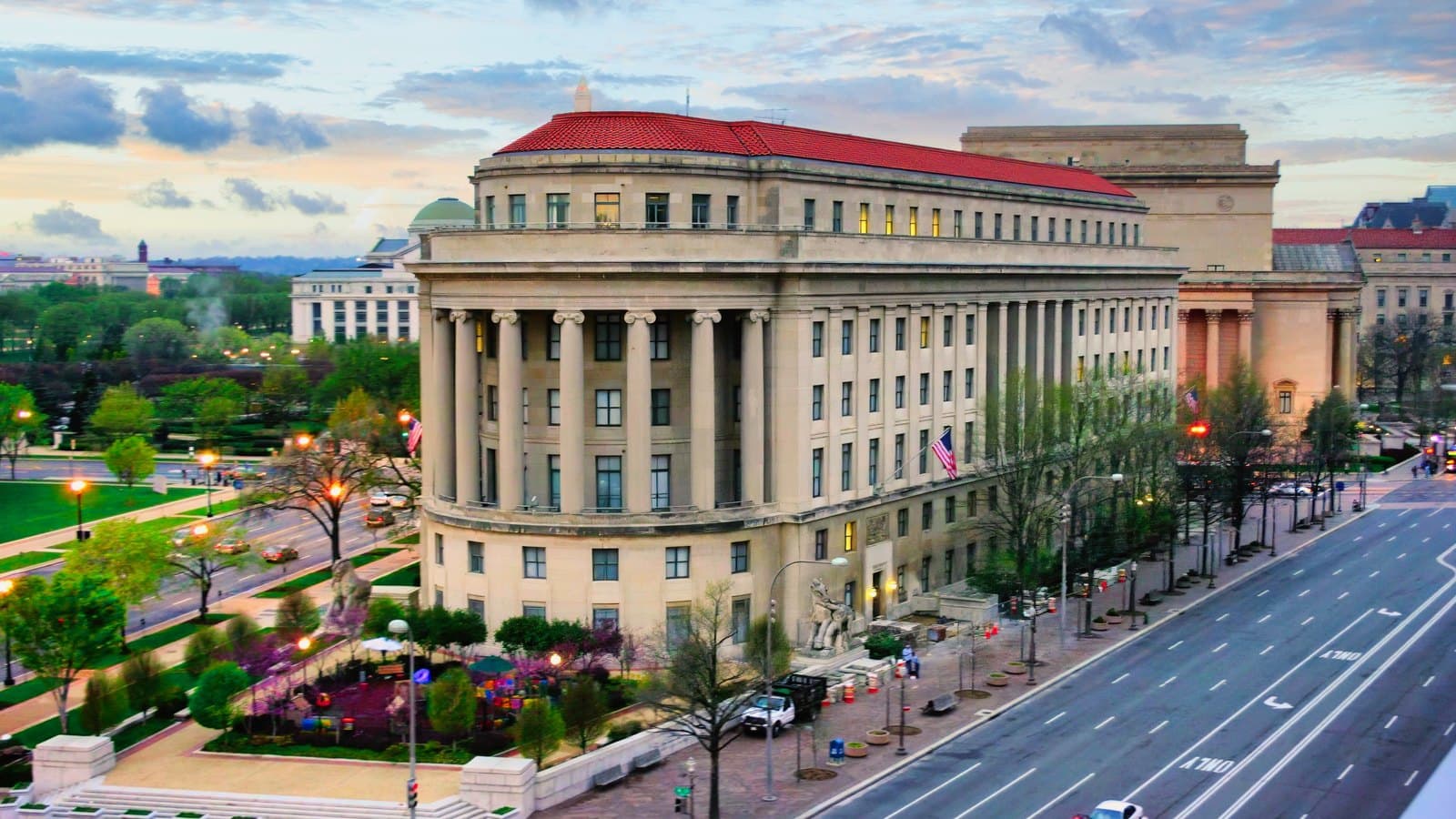
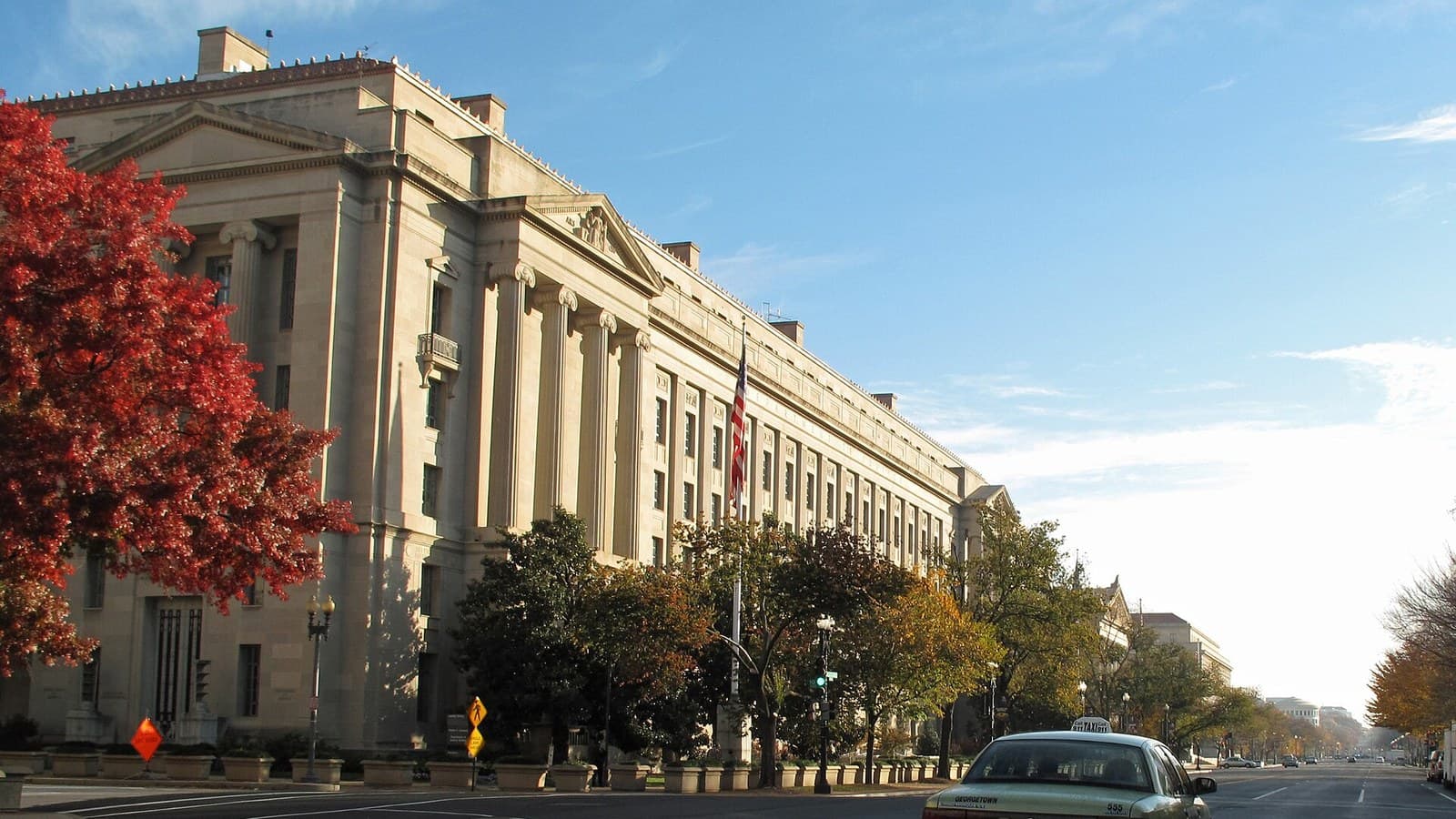
Cover image: the Robert F. Kennedy Department of Justice Building in Washington, DC, by Voice of America, public domain, via Wikimedia Commons.
Tags
Frequently asked questions
- Did the DOJ create a new crime for AI misuse?
- No. The Super Intelligence Task Force coordinates enforcement under existing statutes such as fraud, computer-crime, sanctions and national-security law. The memorandum does not create a new offense, penalty or agency.
- Who leads the DOJ Super Intelligence Task Force?
- Associate Attorney General Stanley Woodward and Associate Deputy Attorney General Stephen Weiss co-chair the task force. Attorney General Todd Blanche established it in a memorandum dated 13 October 2026.
- What happened to the earlier DOJ AI task force?
- The task force announced on 9 January 2026 ceased to operate as a separate body and was merged into the DOJ-SITF. Its matters, work product, personnel details and reporting obligations transferred to the new group.
- Is the DOJ task force the same as the White House Super Intelligence Force?
- No. The White House Super Intelligence Force is chaired by Jay Clayton. The DOJ task force is separate and is the Justice Department's principal point of contact with it.

TPW Editorial
Editorial Team
TechPastWeek's editorial team reports and edits every story we publish. We research each piece against primary and credible secondary sources, and a human editor reviews and signs off before it goes live.