Nvidia's $115.8 Billion Quarter Lands Without Jensen Huang
Nvidia reported $115.8 billion in quarterly revenue, up 103%, and guided to $130 billion next quarter in its first results since Jensen Huang resigned.

On this page
Key takeaways
- Nvidia reported revenue of $115.8 billion for the quarter ended 25 October 2026, up 103% from a year earlier and $7.8 billion above the middle of its own forecast.
- Data Center revenue reached $107.6 billion, or 93% of total sales, while Edge Computing brought in $8.2 billion.
- Nvidia guided to about $130 billion in revenue for the January quarter, above the $125.2 billion analysts expected, with gross margin falling to 71% to 72%.
- The results were the first since Jensen Huang resigned as chief executive on 12 November; Colette Kress is interim CEO.
- Nvidia's stock closed at $155.46 and rose about 2.5% after hours, after falling 24% in November.
Nvidia reported $115.8 billion in revenue for its fiscal third quarter on 17 November, a 103% increase from a year earlier, in the first earnings release since Jensen Huang resigned as chief executive. The company also guided to about $130 billion for the current quarter, above the $125.2 billion that analysts expected.
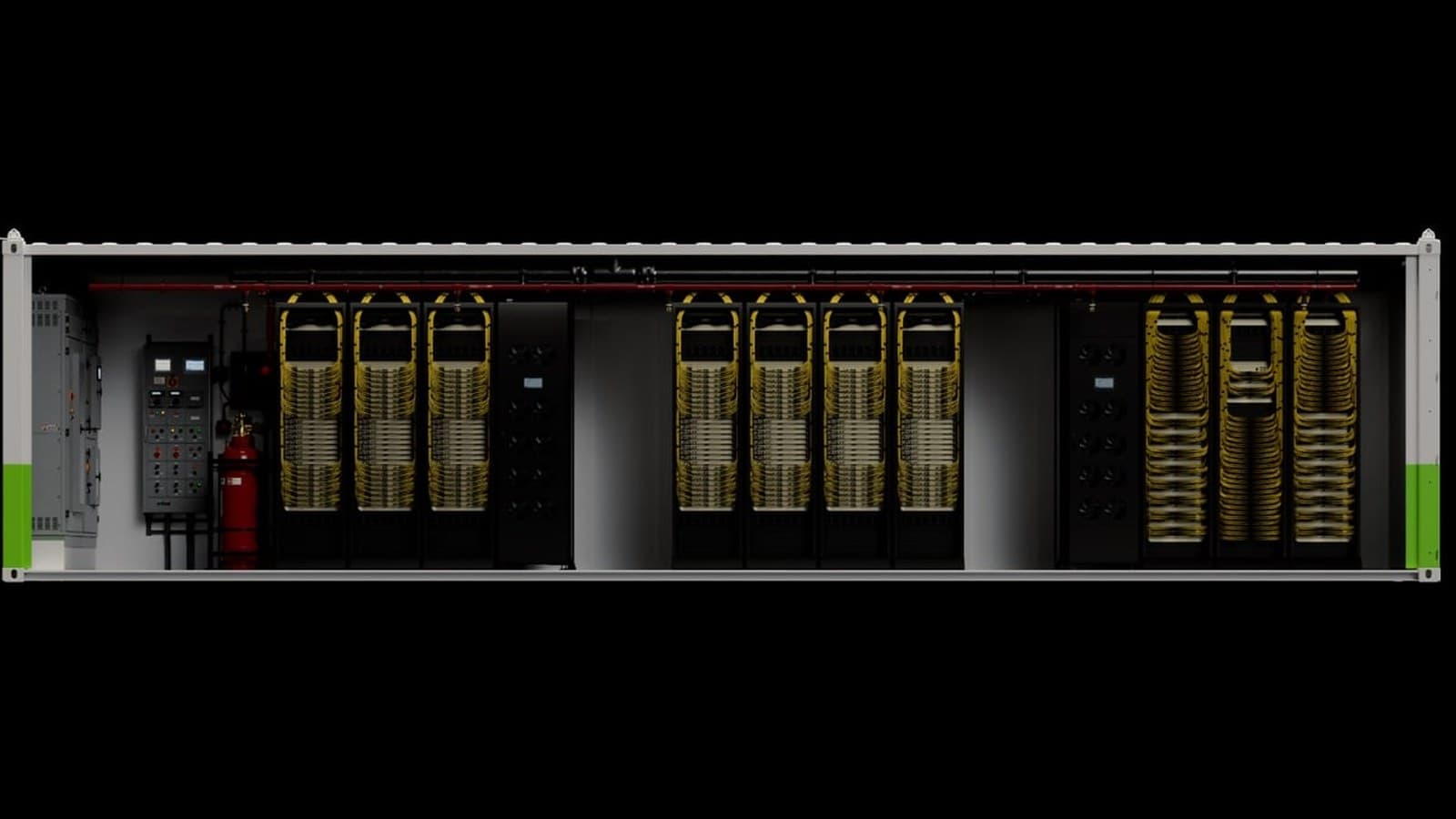
Related reading: Advanced Packaging: The New Battleground of the Semiconductor Industry · Nvidia's DSX POD Turns an AI Factory Into a Shipping Container.
The quarter ended 25 October. Revenue rose 20% from the previous three months. Data Center sales reached $107.6 billion, up 110% year on year, and accounted for 93% of the total. Nvidia's smaller Edge Computing segment, which covers graphics cards, workstations, cars and robots, brought in $8.2 billion, up 42%.
On standard accounting rules, Nvidia earned $2.70 a diluted share. Its adjusted figure was $2.68, against a consensus of about $2.48. Gross margin was 74.8%, down slightly from 75.0% in the second quarter.
Colette Kress, the finance chief who became interim CEO after Huang's exit, framed the quarter around the new platform. "Our momentum is real," she said in the release. "Vera Rubin is off to an explosive start, our roadmap is on track and our ambition has never been greater."
A forecast beaten by 7.3%
Nvidia has made a habit of beating its own guidance, and this quarter was no exception. In August it told investors to expect $108 billion, give or take 2%. The actual figure was $7.8 billion higher, a 7.3% gap that was wider than any of the four preceding quarters, according to an analysis of the filings by StockTitan.
The next forecast is larger again. Nvidia expects about $130 billion for the quarter through January, plus or minus 3%. The quarter has 14 weeks rather than the usual 13 because fiscal 2027 is a 53-week year. Even allowing for the extra week, the guide points to roughly 91% growth from the $68.1 billion reported a year earlier.
The margin forecast is less comfortable. Nvidia expects gross margin of 71% to 72% in the fourth quarter, down from 74.8%. Kress said in August that memory prices had risen, and the new guidance reflects that pressure. Operating expenses are expected to be about $11.0 billion on a GAAP basis.
Nvidia said it returned $28.1 billion to shareholders in the quarter through buybacks and dividends. The board approved a $150 billion increase to its repurchase authorisation in September, leaving $227.3 billion available at the end of the quarter. It will pay a quarterly dividend of $0.25 a share on 23 December.
Nvidia's guidance excludes Data Center compute revenue from China, an assumption it has kept all fiscal year. The company has not disclosed how much China business that removes, and its results do not break out the region.
Vera Rubin starts shipping
The commercial story of the quarter was the transition from Blackwell to Vera Rubin. Nvidia said it ramped production and began shipping the Vera Rubin NVL72 rack system, describing it as the fastest product ramp in company history. CoreWeave, Google Cloud, Microsoft Azure, Oracle Cloud Infrastructure and Nebius are among the first operators, and Nvidia said systems would come online soon at an operator it calls SpaceXSI.
The company used the quarter to spread the platform across its customer base. It announced general availability of Vera Rubin systems and Vera CPUs on Oracle Cloud Infrastructure, and of Google Cloud's Vera Rubin-powered A5X instances. It said Meta would expand its deployment of Vera Rubin, Vera CPUs, Spectrum-X networking and BlueField-4 to train and run its Muse models. It also announced a rack-scale Vera CPU platform for high-performance computing and a Rubin HPC GPU aimed at scientific simulation.
Nvidia's MLPerf results, released the day before earnings, gave the launch a benchmark narrative. The company said it swept every MLPerf Training v6.1 benchmark and led its first MLPerf Inference preview with Vera Rubin. Those results come from Nvidia and its partners, and they are the numbers customers and investors use to compare generations.
The quarter also included the September agreement to acquire Hugging Face for $12.93 billion, a deal that would give Nvidia control of the most widely used hub for open-weight models and datasets. Nvidia lists the acquisition among its third-quarter highlights; it has not said when the deal will close. CNBC reported the terms when the agreement was announced in September.
The China hole
The most consequential number in the release may be the one that is not there. Nvidia's forecast assumes no Data Center compute revenue from China. That has been true all fiscal year, but the policy environment has become harsher.
On 16 November, the Commerce Department's Bureau of Industry and Security published an interim final rule that requires a licence when a data centre anywhere provides more than 12 million aggregate total processing performance of compute to a company headquartered in Macau or a Country Group D:5 destination, or whose ultimate parent is headquartered there. The rule also covers linked data centres and broker access. TechPastWeek covered the published text when it appeared.
For Nvidia, the rule narrows the routes by which its chips can reach Chinese customers even when the hardware sits outside China. The company has argued that export controls reduce its ability to fund research and hand market share to domestic Chinese chipmakers. It has also warned that the restrictions are difficult to enforce consistently across third countries.
The leadership crisis has made the China question more delicate. Huang resigned after reports of an affair with a businesswoman alleged to be a Chinese spy, allegations he denies. The affair and the espionage claim are separate matters, and no court has made a finding on either. But the timing has put Nvidia's national-security posture under scrutiny at the same moment as its largest export market is closing.
The leadership question
Kress is the first person other than Huang to serve as chief executive since Nvidia was founded in 1993. She has been chief financial officer since 2013 and is closely associated with the financial architecture of the AI boom: the supply commitments, the customer prepayments and the buyback programme.
The board has given no timeline for a permanent appointment. Board chair Harvey Jones said the board is not considering reinstating Huang, according to Yahoo Finance. Several technology executives, including Elon Musk, have signed a petition calling for his return. The gap between the petition and the board's position is now part of the story investors are pricing.
The stock has reflected that uncertainty. Nvidia closed at $155.46 on 17 November, down 0.48% for the day, after falling 24% in November and posting its sixth consecutive weekly decline, the longest streak since 2012, according to CNBC. It rose about 2.5% after hours to roughly $159 following the release, a modest move for a company that had just beaten on revenue and earnings and raised its outlook.
Why the beat did not settle the market
The muted reaction says something about expectations. Nvidia's revenue has doubled year on year for several quarters, and investors have stopped treating that as a surprise. The question is now whether the growth is durable, and the answer depends on a small number of customers who are themselves spending borrowed money.
The concentration is extreme. Data Center is 93% of revenue. The largest buyers are cloud providers and AI labs, some of which have signed long-term capacity deals with Nvidia's partners and some of which are funded by Nvidia itself. That circularity does not make the revenue fake, but it makes the demand more fragile than a broad enterprise upgrade cycle would be.
The margin guide adds a second concern. Gross margin is still above 70%, a level most hardware companies never approach. But the direction is down, and the cause is memory, a component Nvidia does not control. If memory prices stay high, the company will have to choose between absorbing the cost and raising system prices, which would slow customers' build-outs.
The third concern is China. Nvidia is no longer assuming any Data Center compute revenue there. That is prudent, but it also means the guidance has no upside from a market that once supplied roughly a quarter of the company's data-centre sales. The new BIS rule makes a near-term reopening less likely.
What to watch
The January quarter will test whether the Vera Rubin ramp is supply-limited or demand-limited. Nvidia says its fiscal 2028 outlook is supply-constrained, with revenue growth of about 70%. If the company hits $130 billion in the current quarter, it will enter that year at an annualised run rate above $500 billion, a scale no semiconductor company has reached.
The Hugging Face deal is the other variable. If it closes, Nvidia will own the default distribution channel for open models, which strengthens its software position and invites more antitrust attention. If it stalls, the company still has the hardware franchise but less control over the layer above it.
And the CEO search matters more than usual. Kress has run the numbers well. The strategic questions, from China to custom silicon to the company's role as an investor in its own customers, will need a permanent leader with a mandate to answer them.
For now, Nvidia has shown that the machine can produce a record quarter without its founder. The next quarterly report, due in February, will be the first full test of Kress's forecasts without Huang in the room.
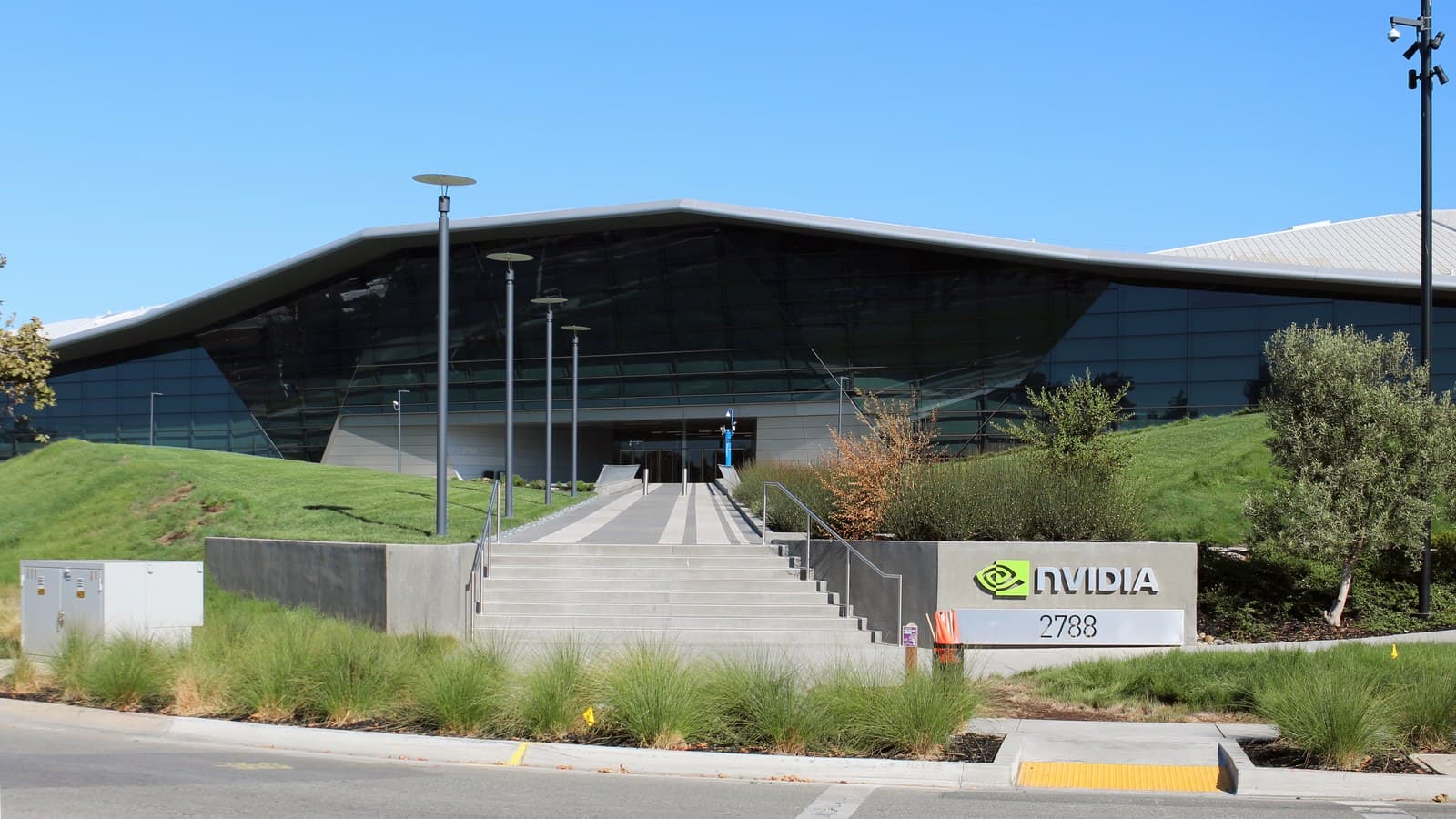
Cover: Nvidia headquarters in Santa Clara, California. Photo by Coolcaesar, CC BY-SA 4.0, via Wikimedia Commons.
Tags
Frequently asked questions
- How much revenue did Nvidia report for Q3 fiscal 2027?
- Nvidia reported $115.8 billion in revenue for the quarter ended 25 October 2026, up 103% from $57.0 billion a year earlier. Data Center revenue was $107.6 billion of that total.
- Who is Nvidia's CEO now?
- Colette Kress, the chief financial officer, is interim CEO. She took over after Jensen Huang resigned on 12 November 2026. CNBC reported that Nvidia's board is not considering bringing Huang back.
- What did Nvidia guide for the next quarter?
- Nvidia expects about $130 billion in revenue for the quarter ending in late January 2027, plus or minus 3%. The forecast assumes no Data Center compute revenue from China and a gross margin of 71% to 72%.
- Is Vera Rubin shipping?
- Yes. Nvidia said it began shipping the Vera Rubin NVL72 system in the quarter and called it the fastest product ramp in the company's history. CoreWeave, Google Cloud, Microsoft Azure, Oracle Cloud Infrastructure and Nebius are among the first operators.

TPW Editorial
Editorial Team
TechPastWeek's editorial team reports and edits every story we publish. We research each piece against primary and credible secondary sources, and a human editor reviews and signs off before it goes live.