Cerebras Beats on Core Revenue, Lands Microsoft and Raises Its 2026 Outlook
Cerebras reported $230.9 million in core revenue for Q3 2026, beat guidance and named Microsoft as a new cloud customer, sending shares higher on 13 November.


On this page
Key takeaways
- Cerebras reported core revenue of $230.9 million for Q3 2026, up 70% year on year and above the $214.7 million LSEG consensus.
- GAAP revenue was $210.8 million, up 55% but below the $214.93 million estimate, and the GAAP net loss widened to $161 million.
- The company named Microsoft as a new cloud customer, with revenue from the deal expected to begin in the first quarter of 2027.
- Cerebras raised its 2026 core revenue outlook to $940 million to $960 million and guided Q4 core revenue to $310 million to $330 million.
- Remaining performance obligations stood at $26.1 billion at 30 September 2026, with the OpenAI contract still the largest component.
Cerebras Systems reported third-quarter 2026 results after the close on 12 November and gave investors two different stories to read. The headline GAAP number missed Wall Street's revenue estimate. The adjusted core number beat it, guidance went up, and the company named Microsoft as a new cloud customer. The stock rose about 13% in extended trading and another 7% on Friday.
Related reading: Advanced Packaging: The New Battleground of the Semiconductor Industry · Nvidia's DSX POD Turns an AI Factory Into a Shipping Container.
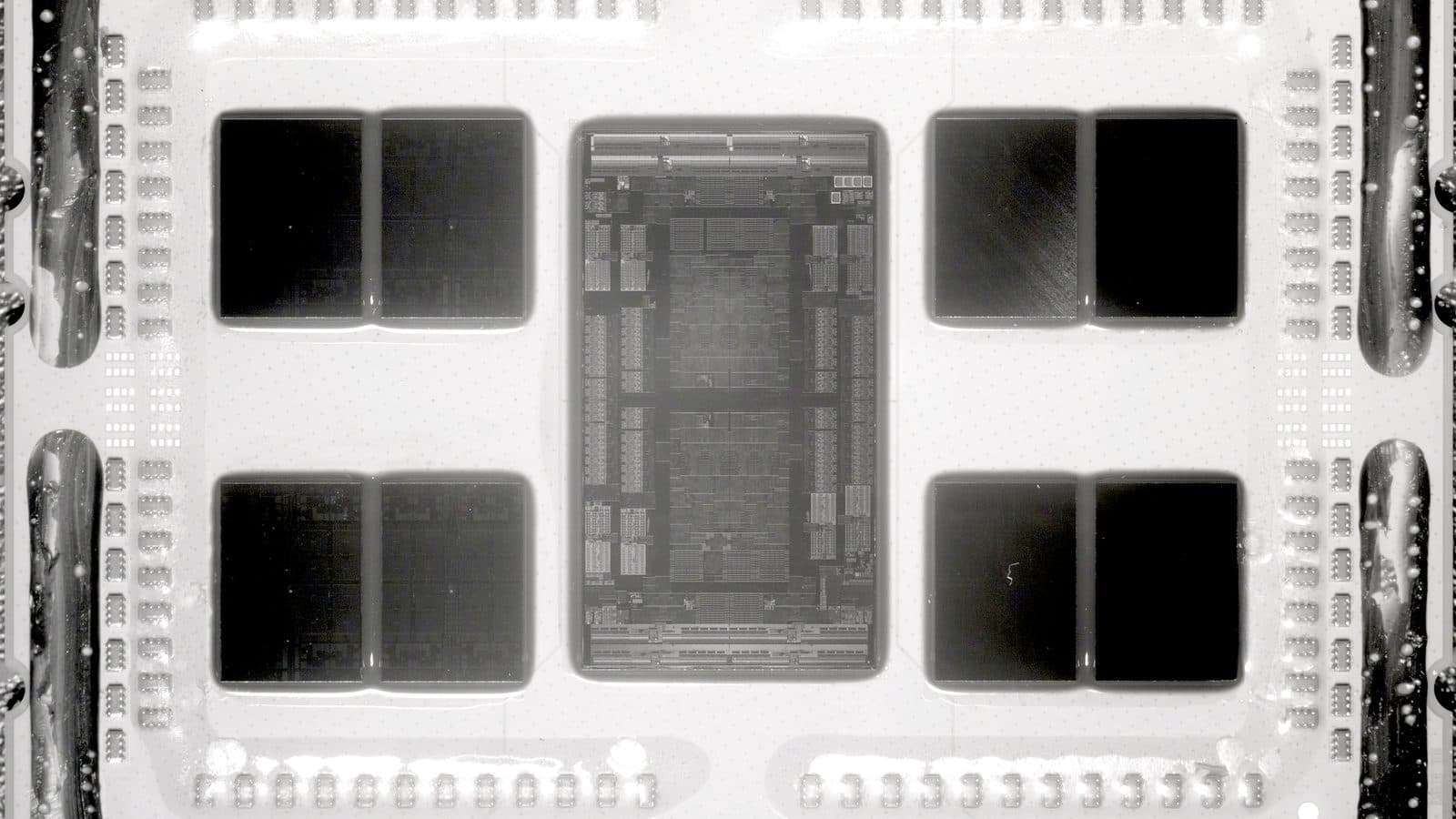
The split matters because Cerebras is not a conventional chip company. It sells wafer-scale systems and cloud capacity, and it reports a core revenue figure that excludes stock-based compensation, customer warrant amortisation and data-centre pass-through costs. The core number is the one management uses to describe the business. The GAAP number is the one accounting rules require. Both are real, and they point in different directions.
The quarter in numbers
Core revenue was $230.9 million, up 70% from $135.7 million a year earlier. The LSEG consensus was $214.7 million. Adjusted earnings were 12 cents per share against an expected loss of 14 cents.
GAAP revenue was $210.8 million, up 55% but below the $214.93 million estimate. GAAP gross margin was 20%, and the GAAP operating margin was negative 106%. The company reported a GAAP net loss of $161 million, or 67 cents per share, wider than the 14-cent loss analysts expected on that basis.
The gap between the two figures is mostly non-cash. Stock-based compensation and the amortisation of customer warrants are large enough to swing the result. Cerebras has argued that core revenue better reflects the cash economics of its cloud contracts. The counter-argument is that warrants and share awards are real costs to existing shareholders, even when they do not move cash in the quarter.
Cloud was the engine. GAAP cloud revenue reached $141.9 million, up 265%, and core cloud revenue was $144.9 million, up 272%. Hardware sales were weaker. That mix shift explains part of the margin pressure: cloud revenue carries data-centre pass-through costs that hardware sales do not.
The company ended the quarter with $7.8 billion in cash, equivalents, restricted cash and short-term investments, plus $850 million of unused debt capacity. It also said it had 700 megawatts of data-centre capacity under contract for delivery by the end of 2027.
Microsoft is the hyperscaler
Cerebras spent part of the quarter teasing a deal with a large cloud provider. On the earnings call, CEO Andrew Feldman named it: Microsoft. He told CNBC that Microsoft signed the agreement in October and that revenue from it should begin in the first quarter of 2027.
The company's press release described the customer only as a top-three hyperscaler and said more would be shared next year. The CNBC interview supplied the name. That distinction matters for how much detail is public: the contract value, duration, capacity and exclusivity are not disclosed.
Microsoft joins Amazon and Oracle as cloud partners. Cerebras announced an Oracle Cloud Infrastructure deal on 27 October, with availability planned for 2027. The Amazon relationship is older but has not yet produced the kind of revenue that shows up as a separate line.
The Microsoft deal is a validation signal more than a financial event in the quarter. Revenue starts in 2027, so it did not contribute to Q3. What it does is answer a question investors have asked since the IPO: whether a large cloud provider would route inference traffic to Cerebras rather than build exclusively on GPUs or its own silicon.
It also puts Cerebras inside the same customer base as Nvidia, at a moment when the GPU leader is dealing with the fallout from Jensen Huang's resignation. Cerebras has positioned itself as the high-speed inference alternative, not a general-purpose training chip. The Microsoft deal fits that story.
The backlog is still mostly OpenAI
Remaining performance obligations were $26.1 billion at 30 September 2026. That is contracted future revenue, not money in the bank, and it is heavily concentrated.
Cerebras has said the OpenAI contract accounts for the majority of the backlog. The agreement is a take-or-pay deal for 750 megawatts of capacity, filed with the company's S-1 before the IPO. OpenAI also has an option to buy additional capacity, which would take the total to 2 gigawatts by 2030.
Concentration is the central risk in the Cerebras story. A backlog built on one customer's multi-year commitment is worth less than a backlog spread across many customers, especially when that customer is also building its own infrastructure and negotiating with other chip suppliers. Management has said OpenAI's share will shrink as Amazon, Microsoft and Oracle ramp. That has not happened yet.
The Q3 backlog did not include deals signed after 30 September, including Oracle. So the $26.1 billion is already stale in one direction. It may also be optimistic in another: the OpenAI portion is an estimate of committed revenue, adjusted for expected delay credits, not a fixed invoice schedule.
Guidance and the 2027 promise
Cerebras raised its full-year 2026 core revenue outlook to $940 million to $960 million, from $880 million to $890 million. It guided fourth-quarter core revenue to $310 million to $330 million, against a $271 million consensus, and core gross margin to 47% to 49%, against an expected 42.1%.
The company also said it expects revenue to more than triple in 2027. That implies about $2.85 billion, just below the $2.92 billion LSEG consensus. The phrasing is aggressive but the number is not far from what analysts already had.
The margin guide is the more interesting part. A jump from the low 40s to 47% to 49% in one quarter assumes a better revenue mix and fuller utilisation of capacity. If the Microsoft and Oracle deals ramp on schedule, that is plausible. If they slip, the margin guide is the first thing to break.
Cerebras is also evaluating financing options to fund the buildout. It has $7.8 billion in cash and an $850 million revolver, but 700 megawatts of capacity is expensive, and the company is competing with hyperscalers that can fund construction from operating cash flow. Feldman said the company is looking at its options, without naming them.
Why the stock is still down
The results were good enough to lift the shares, but the longer trend is ugly. Cerebras priced its IPO at $185 in May, peaked above $386, and has fallen about 47% from its debut price. The 180-day insider lockup expired around 9 November, adding supply just before earnings.
The company also faces a short seller's claims about the durability of its advantage and law firm investigations that often follow a sharp stock decline. Those are not proof of a problem. They are part of the background against which the quarter was read.
The competitive pressure is real. Nvidia still dominates AI accelerators, and its own inference products have improved. Google's TPUs are available through Google Cloud. Microsoft has its own Maia silicon. Cerebras's argument is that wafer-scale integration gives it a latency and throughput advantage that general-purpose GPUs cannot match for certain inference workloads. That argument is strongest when capacity is scarce and GPU lead times are long, which is the current market.
What the numbers do not settle
What Cerebras has not disclosed
Cerebras has not published the value, duration or capacity of the Microsoft contract. It has not broken out revenue by customer, so the OpenAI share of the backlog is described but not quantified in the release. The $26.1 billion RPO is an estimate of committed revenue, not a cash balance. The 2027 triple is a company forecast. And the GAAP loss includes large non-cash charges that flatter the core result as a measure of cash generation.
The Microsoft name is a genuine win. It is also a single data point. A cloud provider can sign a capacity deal and route a small fraction of traffic to it. The size of the commitment will decide whether this is a strategic partnership or a hedge.
The OpenAI concentration is the larger issue. If OpenAI's compute plans change, or if it shifts more inference to Nvidia or its own silicon, Cerebras's backlog and growth story both weaken. Management's answer is diversification. The Q3 results show the first step, not the destination.
What to watch
The fourth quarter is the first clean test of the guidance. Core revenue of $310 million to $330 million would be a step up from $230.9 million, and the margin guide assumes the cloud mix improves. If either misses, the 2027 promise becomes harder to defend.
Then there is Microsoft. Revenue is supposed to start in Q1 2027. A capacity number, a contract term or a customer reference would turn the logo into a business. Without one of those, the deal remains a headline.
Financing may matter more than either. A 700-megawatt buildout requires capital, and Cerebras is evaluating its options. The terms of any raise will tell investors how much of the growth the company expects to fund itself, and how much it needs the market to believe the backlog.
Cerebras has proved it can grow core revenue and sign a hyperscaler. The next year will show whether it can do both without depending on one customer for most of its future revenue.
Cover image: a Cerebras engineer holding a wafer-scale engine, courtesy of Cerebras Systems.
Tags
Frequently asked questions
- What did Cerebras report for Q3 2026?
- Core revenue was $230.9 million, up 70% year on year. GAAP revenue was $210.8 million, up 55% but below the $214.93 million LSEG estimate. The company reported a GAAP net loss of $161 million and adjusted earnings of 12 cents per share.
- Who is Cerebras's new hyperscaler customer?
- Cerebras named Microsoft on its 12 November earnings call. CEO Andrew Feldman said Microsoft signed the cloud deal in October and that revenue from it should begin in the first quarter of 2027. Cerebras also counts Amazon and Oracle as cloud partners.
- How large is Cerebras's backlog?
- Remaining performance obligations were $26.1 billion at 30 September 2026. The company has said the OpenAI contract, a take-or-pay deal for 750 megawatts of capacity, accounts for the majority of that backlog.
- Why did Cerebras stock rise after the report?
- The company beat on core revenue and adjusted earnings, raised its full-year core revenue guidance and disclosed Microsoft as a customer. The stock had fallen about 47% since its May IPO, so the results gave investors a reason to reprice it.

TPW Editorial
Editorial Team
TechPastWeek's editorial team reports and edits every story we publish. We research each piece against primary and credible secondary sources, and a human editor reviews and signs off before it goes live.