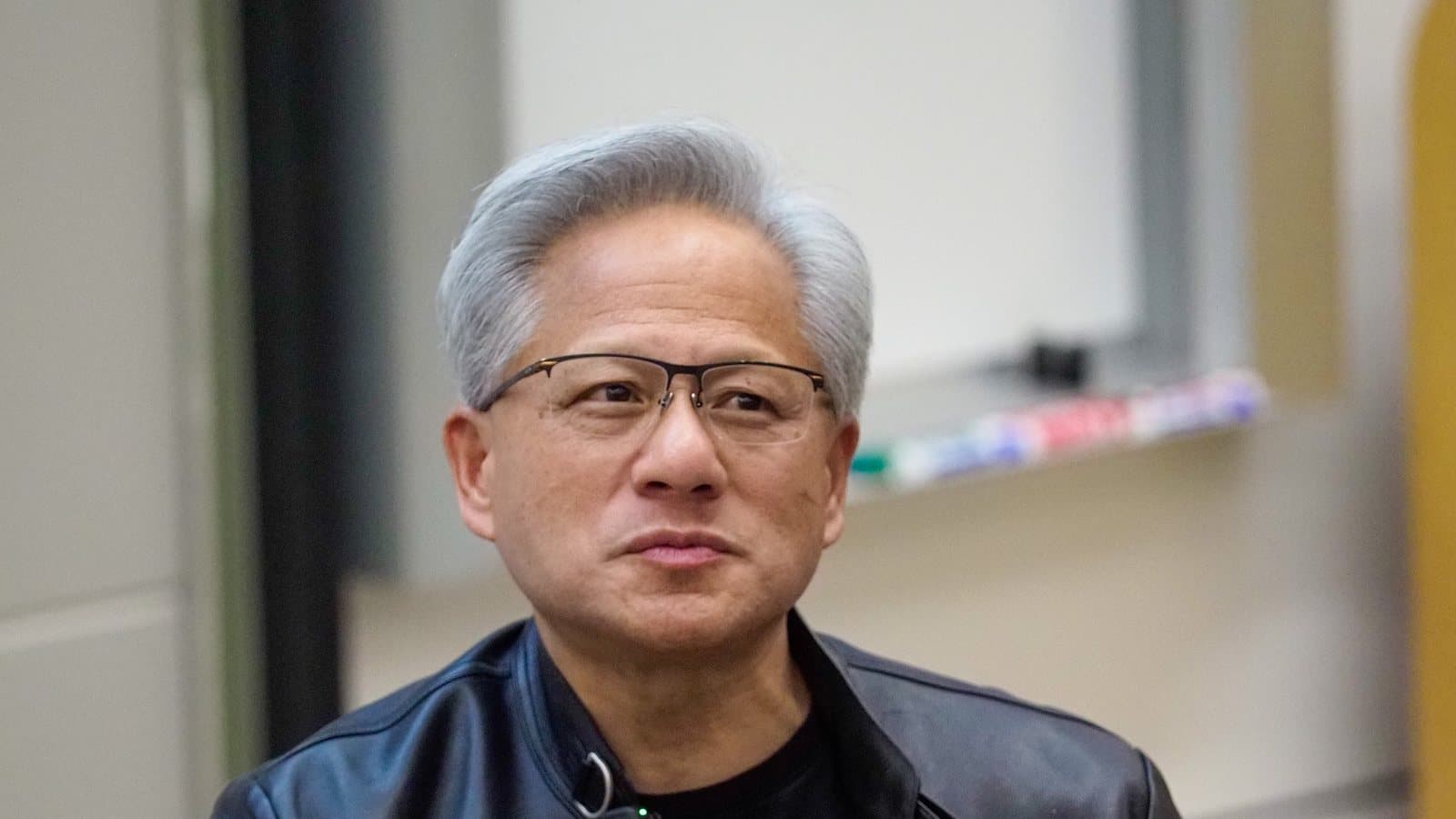
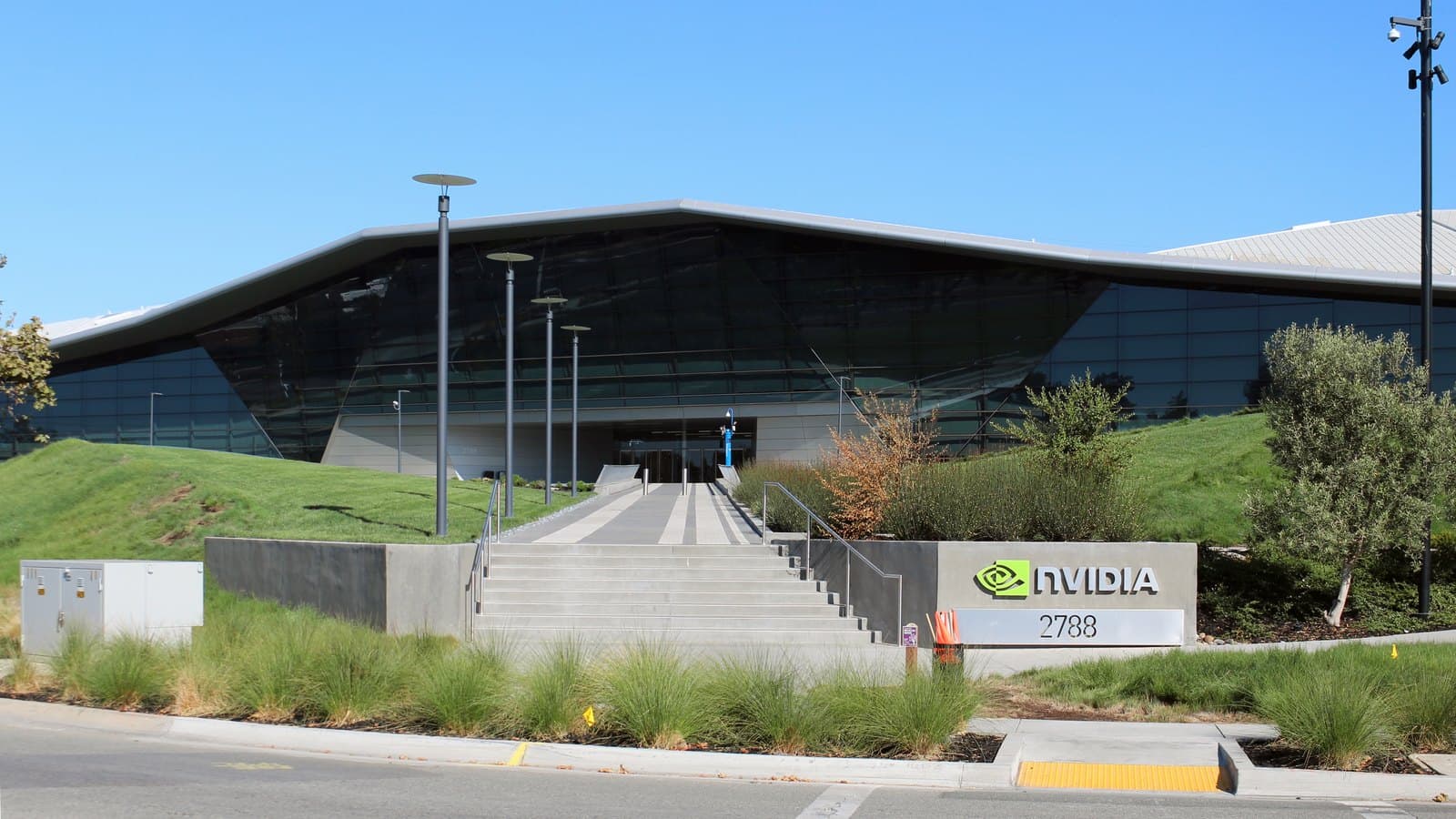
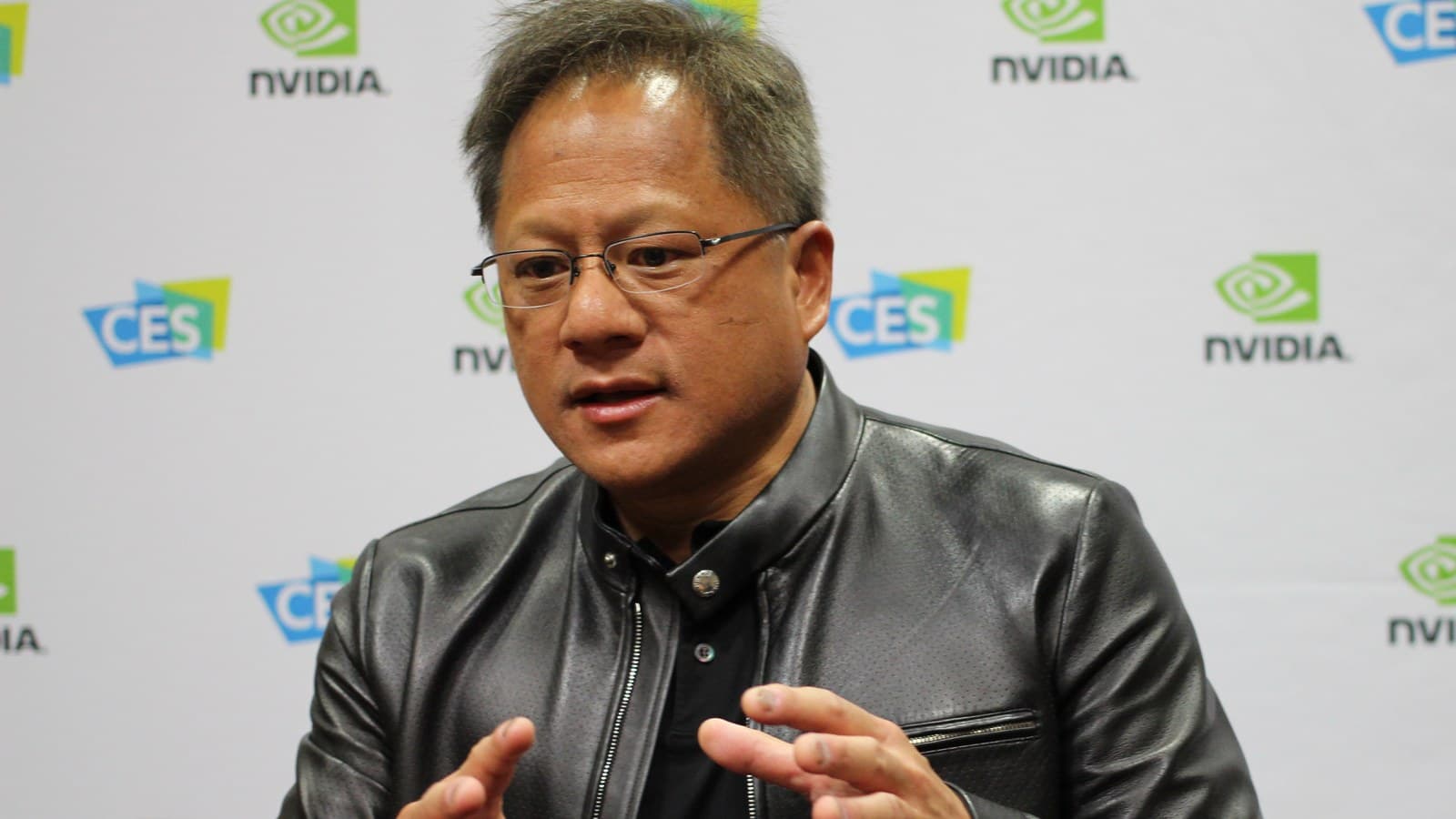
Jensen Huang Resigns as Nvidia CEO, Colette Kress Takes Over
Jensen Huang left Nvidia after 33 years as the board accepted his resignation. CFO Colette Kress is interim CEO and Harvey Jones is the first board chair.

On this page
Key takeaways
- Nvidia's board said on 12 November that Jensen Huang resigned as president, chief executive and director, effective immediately, after 33 years at the company.
- Chief financial officer Colette Kress became interim CEO while keeping her finance roles, and the board began a search for a permanent successor.
- Harvey C. Jones, a longtime director and former Synopsys chief executive, became Nvidia's first-ever chair of the board.
- Nvidia shares closed at $166.19 on 12 November, down 4.34%, after falling as much as 14% at the open and slipping below a $4 trillion market value.
- Nvidia said its third-quarter fiscal 2027 results will still be reported on 17 November as previously scheduled.
Nvidia's board said on 12 November that Jensen Huang had resigned as president, chief executive and a member of the board, effective immediately. The company named chief financial officer Colette Kress as interim CEO and appointed longtime director Harvey C. Jones as its first-ever chair, ending a leadership crisis that had been building for less than a week.
Related reading: Meta's Muse Agent Read Signal Messages and Surfaced Bank Balances Staff Never Shared · Nvidia's Board Opens a Spy Probe as Jensen Huang Admits an Affair.
The announcement was brief and gave no reason for the departure. It followed reports that Huang, who co-founded Nvidia in 1993 and turned it into the central supplier of the artificial intelligence boom, had two extramarital relationships. One was with Alice Huang, an executive at cloud provider Megaspeed whom U.S. intelligence officials reportedly assessed as a Chinese intelligence asset. The other was with Kimberly Powell, an Nvidia vice president, according to CNBC, citing the New York Times.
Huang has denied compromising national security or Nvidia secrets. China's government rejected the spying allegations. Nvidia's board had already opened an independent investigation, hired the law firm Wachtell Lipton and met on 11 November to decide his future, according to CNBC. The board accepted the resignation that day, Nvidia said in an 8-K filing, and announced it the next morning.
What the board said
The company's public statement focused on continuity. Jones, who spent more than 30 years as an entrepreneur and technology executive and was chief executive and executive chairman of Synopsys, said Kress had helped lead Nvidia through a period of extraordinary growth.
"The Board has full confidence in Colette and the leadership team, and we expect the company's operations, customer commitments and product roadmap to continue without interruption," Jones said in the release.
Kress, 59, has been Nvidia's chief financial officer since September 2013. Before that she spent nearly 25 years in finance roles at technology companies including Cisco and Microsoft, where she worked for 13 years and served four years as CFO of the Server and Tools division, according to the New York Post. She will keep both the CFO and interim CEO jobs until a permanent successor is named.
"Nvidia's strength has always come from its people, and together with our leadership team, I am committed to building on the extraordinary foundation Jensen created over the last 33 years," Kress said.
An interim arrangement, not a succession plan
Nvidia has not named a permanent CEO, given a timeline for the search or said whether it will consider only internal candidates. Jones is the first person to hold the board chair role at Nvidia, a structure the company did not have while Huang combined the CEO and board roles.
The week that ended a 33-year run
The sequence matters because Nvidia did not present the change as a firing. Huang resigned, and the board accepted it. But the pressure had been mounting in public.
On 8 November, Huang emailed staff admitting an affair and saying he supported the board's investigation. That day the board said it had opened an independent review into reporting that he had been the target of a foreign intelligence effort. The New York Times had reported that U.S. intelligence assessed China's Ministry of State Security had recruited Alice Huang to gather information about him. Nvidia's shares fell 9.5% across Monday and Tuesday, according to CNN.
On 10 November, the independent directors issued a separate statement. By 11 November, the board had met, and the Wall Street Journal reported it was preparing to remove him. Lawmakers had called for his resignation. President Donald Trump, who had built a close relationship with Huang during the AI policy debates of the past two years, said he believed in him, but the support did not stop the board.
The company's earlier coverage traced the affair admission and the first reports. The Megaspeed inquiry is a separate export-control case, but it added to the sense that Huang's outside relationships had become a governance problem rather than a private one.
The market reaction
Investors did not treat the news as routine. Nvidia shares fell as much as 14% at the open on 12 November, dropping below a $4 trillion market value for the first time since July 2025, before recovering. The stock closed at $166.19, down 4.34%, according to Yahoo Finance. It is down roughly 30% over the past month.
The wider market absorbed the shock without a broad rout. The S&P 500 and Nasdaq closed lower, but other megacap technology stocks were little changed, and Broadcom led S&P 500 gainers as investors looked for alternatives to Nvidia's leadership premium. The move is a single session, not a verdict on the business.
The selloff reflects two questions. The first is whether Nvidia can keep executing at the same pace without the founder who set its strategy, negotiated with governments and sold the AI story to investors. The second is whether the scandal changes the company's relationship with Washington at a moment when export controls and China policy are central to its business.
Richard Reyle, chief investment officer at Questar Capital Partners, told CNBC that Nvidia's lack of a succession plan made the stock "uninvestable" in the short term. That is one investor's view, not a consensus, but it captures the problem with an interim arrangement at a company this size. Kress knows the numbers and the supplier relationships. She has not run a product organization or set the technical roadmap in public.
Founder-led companies often struggle with this transition because the founder's authority is personal rather than procedural. Nvidia's board has tried to compensate by appointing a chair for the first time and by stressing that the leadership team remains in place. That is a governance improvement, but it does not answer the customer question: who signs off on the next architecture, and who carries the credibility of the roadmap when the founder is gone? The 17 November call is the first chance to answer it.
What Kress inherits
Nvidia is not a company in operational trouble. It is the dominant supplier of AI accelerators, its gross margins are unusually high for a hardware business, and demand still exceeds supply. The immediate test is the quarterly report on 17 November, which the company said remains on schedule. Analysts will want to hear the same guidance and the same customer commitments, and they will want Kress to explain who is now making product decisions.
The longer test is strategic. Nvidia's roadmap, including the Vera Rubin platform and its networking and software stack, was closely associated with Huang. The company has a deep bench, but the CEO transition removes the person who could commit to a multiyear architecture in a single keynote and make customers believe it.
There is also the political dimension. Huang had become a fixture in Washington and in capitals across Asia, arguing for open-source AI and for limited chip exports to China. A new CEO will have to rebuild those relationships. The Megaspeed case, which involves alleged diversion of Nvidia chips through Singapore and Malaysia, remains a live issue for the Justice Department and the Commerce Department.
What to watch next
Three dates matter. The 17 November earnings call will be the first public test of Kress as CEO. The board's search will determine whether Nvidia promotes from inside or hires an outsider with operational experience. And the independent investigation, which the board has not said it will publish, may yet produce findings that force another round of disclosure.
For now, the company is presenting a united front. Jones's statement, Kress's statement and the unchanged earnings date all say the same thing: the machine keeps running. The stock's 4% decline suggests investors will wait for the 17 November call before deciding whether that is true.
What is not established
Nvidia has not published the investigation's findings, has not said whether it paid Huang any severance and has not named a permanent successor. The spying assessment is attributed to U.S. intelligence officials through the New York Times and CNBC, not to a court record or a public Nvidia filing. Huang has denied the national-security allegations. The stock moves are a single session and the "uninvestable" comment is one investor's opinion.
Tags
Frequently asked questions
- Who is Nvidia's CEO now?
- Colette Kress is interim chief executive. She remains executive vice president and chief financial officer while the board searches for a permanent CEO. Nvidia said it will consider candidates from inside and outside the company.
- Why did Jensen Huang resign?
- Huang resigned after reports of extramarital relationships, including one with a Megaspeed executive whom U.S. intelligence officials reportedly assessed as a Chinese intelligence asset. Nvidia has not published the board's findings, and Huang has denied compromising national security or company secrets.
- What happens to Nvidia's earnings report?
- Nvidia said its third-quarter fiscal 2027 results will be released on 17 November at about 1:20 p.m. Pacific time, followed by an earnings call at 2 p.m. The schedule was unchanged by the leadership transition.
- Does Nvidia have a permanent replacement yet?
- No. The board has only begun its search. Harvey C. Jones, the new board chair, said the board has full confidence in Kress and the leadership team, and expects operations, customer commitments and the product roadmap to continue without interruption.

TPW Editorial
Editorial Team
TechPastWeek's editorial team reports and edits every story we publish. We research each piece against primary and credible secondary sources, and a human editor reviews and signs off before it goes live.