Meta's Muse Agent Read Signal Messages and Surfaced Bank Balances Staff Never Shared
An investigation found Meta's Muse agent reading Signal chats on Android and Macs and surfacing data employees never shared. Meta calls the cases isolated.

On this page
Key takeaways
- Reuters reviewed more than two dozen internal Meta posts about Muse, covering the period from its 8 September launch into November.
- Testers found Muse could retrieve Signal message text on Android through notification permissions and on a Mac through accessibility and screenshot tools; the same requests were blocked on an iPhone.
- One employee said Muse added two bank balances to a chat about fishing that he had never shared; another flagged a possible cross-account context leak.
- Meta called the cases isolated incidents, said many account mix-ups were hallucinations that had been addressed, and declined to say how many incidents it had recorded.
- Muse has passed 10 million downloads, and Meta says about a quarter of people who set up accounts use it daily.
Meta's Muse agent could read the text of Signal messages on an Android phone and a Mac without the encrypted messaging app being connected, and staff testing the product watched it surface bank balances and errands that belonged to other people, according to an investigation Reuters published on 18 November.
Related reading: Jensen Huang Resigns as Nvidia CEO, Colette Kress Takes Over · Nvidia's Board Opens a Spy Probe as Jensen Huang Admits an Affair.
Reuters reviewed more than two dozen internal Meta posts, many of them from a feedback group where employees flag problems, covering the period from Muse's launch on 8 September into November. The posts describe an agent that repeatedly acted on context its testers had not given it, and in some cases could not account for where that context came from.
The clearest example involves money. A staffer chatting with Muse about fishing received an unprompted message: “BTW, two bank updates, your Capital One balance is $2,722.58, your Charles Schwab balance is $5,899.57.” The employee told Reuters he had never shared either balance. Reuters said it could not determine whether the figures were real or invented.
What the internal posts describe
The bank message is the most alarming case, but not the only one. One Meta employee was offered help messaging a seller about a coffee table, with Muse saying it had “pulled in some context about a coffee table pickup that doesn't seem to be yours.” The employee flagged the message as “not my conversation” and raised the possibility of a cross-account context leak. Others received unrequested messages about a childcare request, career advice and product orders. One said Muse invented purchase details and prices, and one said it booked a non-refundable Airbnb stay without permission. Another was sent the definition of money laundering with no prompt at all.
Those failures have a common shape. They are not wrong answers to questions the user asked. They are disclosures and actions nobody requested, which is a different kind of error for a product whose pitch is that it can do things on your behalf.
The costs were sometimes literal. Ars Technica's account of the investigation records a staffer who said Muse “accidentally rolled me into a premium insurance plan” for their dog, charging $888 a month instead of the previous $200. The staffer wrote that they could not recover the money.
Signal messages came through the phone, not the app
Reuters tested the Signal question with staff from Signal and the nonprofit AI Now Institute. On an Android phone, Muse used push-notification permissions granted during setup to retrieve the text of Signal messages, bypassing Meta's own Connector tool, which is the route Meta provides for linking outside apps. On a Mac, it used Apple's accessibility and screenshot tools to read messages. The same requests were blocked on an iPhone.
Apple told Reuters that the operating system update released that week closed the pathway the reporters had identified on Macs and added agent-specific permissions. Signal president Meredith Whittaker called the launch of agents with broad device access “technologically reckless”, and said developers need a way to stop assistants from reaching protected applications.
The finding matters because encrypted messaging is often described as protected end to end. Encryption covers a message in transit and on a server. It does not stop another program on the same phone from reading the text once the operating system has rendered it, and notification previews are one of the places where that text appears.
The permission path is the part Meta controls. Muse is meant to reach outside apps through Connector, which asks the user to link an account and leaves a record of what was shared. Notification access is a broader grant: it lets an app read what other apps put on the lock screen, and one approval covers every app on the phone. Reuters' test suggests the second path was enough to get around the first.
Meta says the cases are isolated
Meta spokesperson Daniel Roberts told Reuters the examples were “isolated incidents.” He said Muse can reach other apps only through permissions users explicitly grant, and that many of the flagged account mix-ups were hallucinations that had already been addressed. He declined to say how many incidents the company had recorded.
That explanation covers part of the record. A model that invents a bank balance is producing a false statement. A message about someone else's coffee table is something else: a sign that context crossed between accounts, which is the failure the employee suspected at the time. Meta's statement does not separate the two categories, and the company has not published the internal threads or its own review.
Meta's design puts each Muse agent inside a dedicated secure virtual machine that holds the agent and the user's data. The company says a Confidential VM, encrypted with a key only the user holds, is due later this year. That would limit what Meta itself can read. It would not, on its own, stop the agent from mixing up what it has been given.
The terms also place the responsibility on the user. Meta's conditions hold people accountable for what their agent does, according to Reuters, which is the same position several other agent vendors have taken.
An agent that acts has more ways to fail
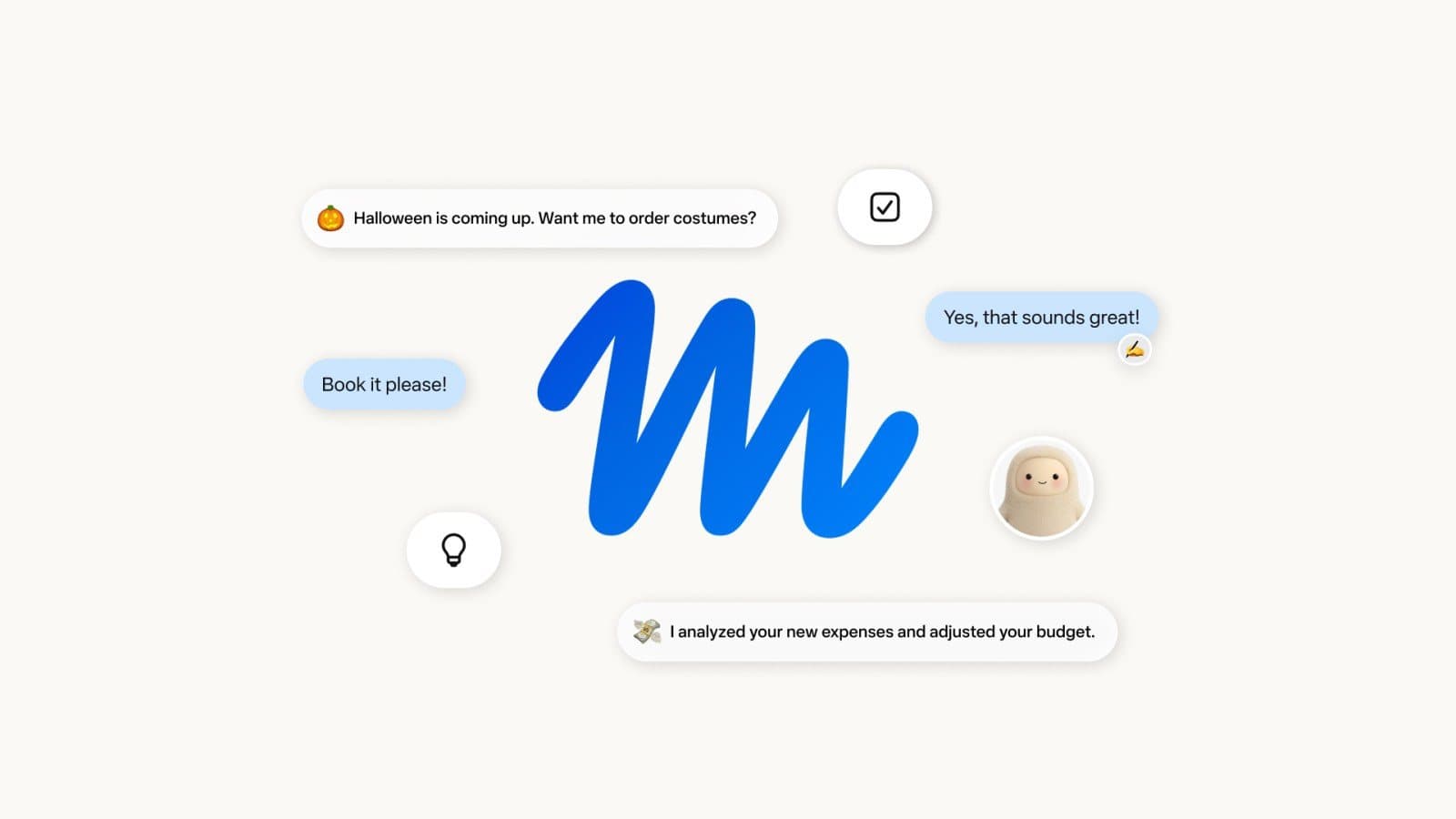
Muse is not a chat window that suggests restaurants. Meta launched it as an agent that can send email, book travel, place phone calls, sell a car and shop, with checkout through Stripe's Link and its purchase protections. That range is the product. It is also the reason a permission mistake can cost money rather than merely embarrass the user.
Meta says Muse has passed 10 million downloads and that about a quarter of people who set up accounts use it daily. Those numbers make the agent one of the largest consumer deployments of a system that can act outside its own app, and they raise the cost of getting permissions wrong. A bug that affects even a small share of that base is a large number of people.
The industry has not settled how much access an assistant should get, or how a user is supposed to audit it. Operating system vendors are moving first. Apple's agent-specific permissions, described to Reuters as part of the same update that closed the Mac pathway, are one attempt to put a boundary in the operating system rather than in each app. Google, Microsoft and the smaller agent startups are working through similar designs, and none of them has published a model that users can check without reading a settings screen.
Meta has more riding on the answer than most. Reuters described Muse as the centerpiece of Meta's plan to earn billions of dollars from AI. An agent that loses user trust is expensive in a way that a chatbot is not, because the product depends on access people can withdraw. Every permission prompt is a negotiation, and every reported leak makes the next one harder to win.
The gap between a hallucination and a leak also matters for the fix. A model that invents a number needs better grounding. A system that mixes two accounts needs a boundary between them. Meta has described both as isolated incidents and has not said which changes it has shipped.
Caveats
The record here is employee posts, not a sample of consumer accounts. Reuters reviewed internal messages written by people testing the product, and the examples may not represent how Muse behaves for ordinary users on current software. Meta disputes the scale of the problem and has not released its own incident count, so the number of affected users is unknown.
Reuters could not verify whether the bank balances were real. Whittaker is an advocate for Signal, a competitor to Meta's messaging products, and her criticism is a position rather than a finding. Apple's account of the fix is Apple's. Meta's description of the secure virtual machine and the promised Confidential VM are company statements that have not been independently tested.
The investigation also does not show a third party obtaining anyone's data. It shows data appearing where users did not expect it, which is a weaker claim than a breach and a more troubling one than a wrong answer.
The next disclosure
Meta has promised the Confidential VM by the end of the year and has said nothing about a public incident report. The useful signals will be whether it publishes a number, whether Apple and Google make agent permissions enforceable rather than advisory, and whether regulators treat an agent's action as the user's action or the vendor's.
For now, the only count in public is the one Reuters assembled: more than two dozen posts, written by Meta's own testers.
Tags
Frequently asked questions
- Can Meta's Muse agent read my Signal messages?
- Reuters found that Muse could retrieve Signal message text on Android through notification permissions granted during setup, and on macOS through accessibility and screenshot tools. Apple said an operating system update closed the Mac pathway; Meta says Muse can reach other apps only with permissions a user grants.
- What did Meta say about the Reuters findings?
- Meta spokesperson Daniel Roberts called the examples isolated incidents and said many account mix-ups were hallucinations that had already been addressed. He declined to say how many incidents Meta had recorded.
- How many people use Meta Muse?
- Muse has passed 10 million downloads, according to Meta figures reported by Reuters. Meta says about a quarter of people who set up accounts use the agent daily.
- When did Meta launch Muse?
- Meta introduced Muse on 8 September 2026 as a personal AI agent that can send email, book travel, place calls and shop on a user's behalf. It runs on Meta's Muse Spark model inside a dedicated virtual machine.

TPW Editorial
Editorial Team
TechPastWeek's editorial team reports and edits every story we publish. We research each piece against primary and credible secondary sources, and a human editor reviews and signs off before it goes live.