1Password Says a Stolen GitHub Account Led to a Backend Breach
1Password says an attacker used an employee's GitHub account to push malicious code into backend systems and copy names and emails for a subset of customers.

On this page
Key takeaways
- 1Password said on 25 November 2026 that an attacker reached its backend systems through an employee's corporate GitHub account and copied account records for a subset of customers.
- The records include names, sign-in email addresses, account identifiers, creation and last sign-in times, public keys and Secure Remote Password parameters; vault contents were not available to the attacker.
- The attacker also copied source code from private repositories, gained access to 1Password's CI/CD system and obtained tokens from some invitation and recovery emails.
- 1Password has not said how many customers are affected or how the GitHub account was compromised; it says it found no evidence of account takeovers.
- 1Password rotated internal credentials and lengthened invitation and recovery codes from six digits to ten alphanumeric characters.
1Password disclosed on 25 November that an attacker had reached its backend systems through an employee's corporate GitHub account and copied account records for a subset of customers, including names and the email addresses they use to sign in. The company said customer vaults and the keys that protect them were not available to the attacker, and that it had found no evidence of account takeovers.
Related reading: Todoist Says a Stolen Developer Credential Led to a Breach Affecting 6% of Users · CISA Flags Active Exploitation of the MailAssure Flaw N-able Found During Its Breach.
The disclosure came six days after 1Password began investigating. The Toronto company, which says more than 200,000 businesses and millions of people use its password manager, has not said how many customers are in the affected subset or how the GitHub account was compromised. It published the incident notice on 25 November; TechCrunch and The Verge reported the disclosure the same day.
The shape of the incident is familiar from the past two weeks. A development credential became a way into production, and the data that left was administrative rather than the encrypted contents customers care most about. What makes this one different is the target. 1Password sells the promise that a breach of its servers cannot expose a customer's passwords, and the company is now asking customers to judge that promise against a real intrusion.
What the attacker copied
1Password lists the stolen records in some detail. They include names, email addresses, account and user identifiers, account creation times and last sign-in times. They also include public keys, which the company says are public by design; Secure Remote Password protocol parameters, which it says cannot be used to access an account; and other non-secret metadata such as internal version and file identifiers.
The attacker also copied source code from private repositories and gained access to the company's CI/CD system. That system holds infrastructure-related secrets the product needs in order to run. 1Password said it rotated or revoked every internal credential that may have been exposed and found no impact on its services, availability or product security.
The most sensitive item is a set of tokens present in some emailed invitation, provisioning and account-recovery links. A token can complete an invitation or recovery only when combined with a single sign-on method or a code sent to the user's registered email address, 1Password said. A small number of users were in that state and were specifically notified. The company has lengthened the codes from six digits to ten alphanumeric characters to make guessing impractical.
That detail matters more than the raw data list. The records are not enough to open a vault, but they are enough to write a convincing message. A name, an email address and the knowledge that someone uses 1Password are the raw material for a phishing campaign that looks like an account recovery notice.
The vault design held, and that is the point
1Password's architecture is built so that a breach of its servers does not expose vault contents. The company does not store an account password or the Secret Key that is generated when an account is created. The two are combined on the user's device to derive the keys that unlock the vault. 1Password says the attacker never had vault data, vault keys, account recovery keys, apps or browser extensions.
For customers, that is the claim that matters. The stolen records describe who has an account and when they last used it. They do not contain the material needed to decrypt what is inside. The company's security whitepaper has described the design since 2015, and the incident notice repeats it.
The design also sets the limit of what an attacker can do with the data. A stolen email address can be used to target the person behind it. The vault itself stays shut unless the attacker also gets the account password and the Secret Key, or finds a weakness in the recovery flow.
The recovery path is the part to watch
In a password manager, the login flow and the recovery flow are separate doors. 1Password's invitation and recovery tokens cannot open an account on their own, but they shorten the distance for anyone who also has the email address or can intercept a code. Lengthening the codes from six digits to ten alphanumeric characters is a recognition that the margin matters.
The company says it validated that it had no internal evidence of account takeovers or compromise using the exposed tokens. That is a statement about what its logs show so far. The investigation began on 19 November and 1Password has not published a forensic timeline, named the independent experts it brought in, or said whether the tokens were used in any attempt that failed.
There is also a timing question. 1Password says it began investigating on 19 November and disclosed on 25 November. Under the GDPR, a company that becomes aware of a personal-data breach must notify the relevant regulator within 72 hours unless the breach is unlikely to result in a risk to people's rights and freedoms. 1Password has not said whether it notified a regulator, and the company has not said whether the affected customers include people in the European Union.
A GitHub account is now a production credential
The path from an employee's GitHub account to customer records ran through code. 1Password says the attacker used the account to reach source code and push malicious code into backend services, which then downloaded administrative data. That is a supply-chain-shaped attack against a security company, and it will worry enterprise customers more than the stolen email addresses.
GitHub credentials have been a live target all month. Earlier in November, researchers documented a campaign that used thousands of compromised GitHub accounts to probe tens of thousands of repositories for write access and steal CI secrets. TechPastWeek covered that campaign on 13 November. 1Password has not said whether its employee account was phished, taken over through a stolen token or infected with malware, and a spokesperson did not answer TechCrunch's questions about the initial access.
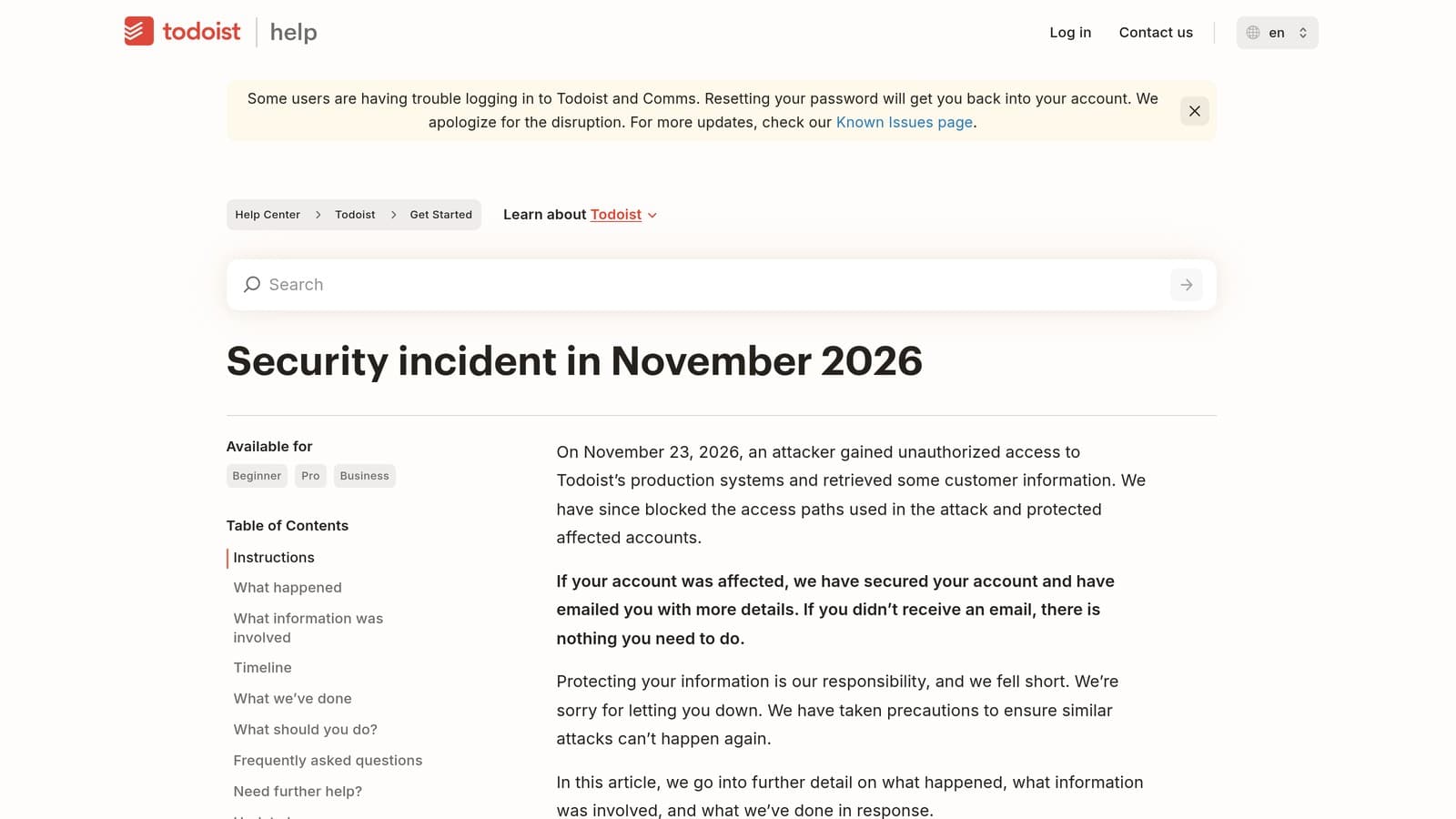
The same pattern appeared in the Todoist breach this week. Todoist said a stolen credential for its version-control system was used to modify automated workflows in three repositories, which led to production access and the theft of data for about 6% of its users. That incident also involved a developer credential rather than a flaw in the product customers use.
The common thread is that the build pipeline is part of the security perimeter. A company can encrypt its vaults and still lose control of the systems that deploy the service. 1Password's decision to rotate every credential that may have been exposed, tighten GitHub, CI/CD and endpoint controls and add detections for this kind of attack follows from that.
What 1Password has not said
The open questions are the ones that usually decide how bad an incident becomes.
- How the GitHub account was compromised. The notice begins with the account and does not explain how the attacker got it. That determines whether this was a targeted intrusion, a stolen session token, a phishing email or a compromised device.
- How many customers are affected. 1Password says a subset. It has not given a number or a percentage, and it has not said whether every customer in the subset was notified.
- Whether a regulator was told. The company has not said whether it filed with a data-protection authority in the EU, the UK or Canada.
- Whether the CI/CD access led anywhere else. 1Password says it rotated the credentials and found no impact on its services. It has not said whether any of those secrets were used against third-party systems before rotation.
- Whether there was an extortion demand. The notice does not mention one, and 1Password has not said whether the attacker made contact.
The company did answer some of the obvious questions. It said apps and services are working normally, that customers do not need to update anything in their accounts, and that it brought in independent cybersecurity experts to validate its containment and remediation.
Why password managers get hit at the edges
Password managers concentrate risk, which is why they are attacked. The vault is designed to survive a server breach. The employee accounts, build pipelines and recovery flows around it are ordinary corporate infrastructure, and they are where the intruder got in.
1Password has been here before. In 2023, an intrusion into Okta's customer support system reached 1Password's Okta tenant. The company said at the time that no user data was accessed and that the affected system was separate from its production service. The 2026 incident is more serious because the attacker reached backend services that held customer records, but the entry point was still an identity and development layer rather than the vault itself.
That is the lesson the industry keeps relearning. The encryption is not usually the weak part. The weak part is the chain of people, tokens and machines that are allowed to touch the systems around it.
What customers should do
1Password's advice is narrow. It says customers do not need to change anything in their accounts, and it asks them to be cautious about unexpected emails, texts or calls that mention 1Password, invitations or account recovery. The company says it will never ask for an account password or Secret Key, and that those should only be entered in the official app or on the official website.
Anyone who receives an unexpected recovery or invitation email should treat it as hostile and reach support through the official site rather than through the message. Enterprise administrators have a separate job: review which GitHub accounts and personal access tokens can reach build systems, rotate anything that touched the 1Password environment, and check whether CI secrets were stored somewhere the incident could have exposed.
The company has also said it expanded the recovery codes to ten alphanumeric characters. That change affects new invitations and recovery links, not existing vault contents.
Caveats
The account of what was taken, what was not and what the attacker could do comes from 1Password. No forensic firm has published an independent description, the number of affected customers is undisclosed, and the initial access is unexplained. "No evidence" of account takeovers describes the company's logs at the time of writing, not a permanent finding. The stolen email addresses can still be used for phishing whether or not any account was taken over. The 72-hour GDPR reference describes the general rule; 1Password has not said whether it applied or whether a notification was made.
What to watch
1Password says it will keep the blog post current. The next useful signals are a timeline for the GitHub compromise, a customer count, any regulator filing, and whether the CI/CD secrets were used beyond the company's own systems. For customers, the practical test is whether a convincing 1Password-themed phishing email arrives in the next few weeks.
The company has not said when it will publish another update.
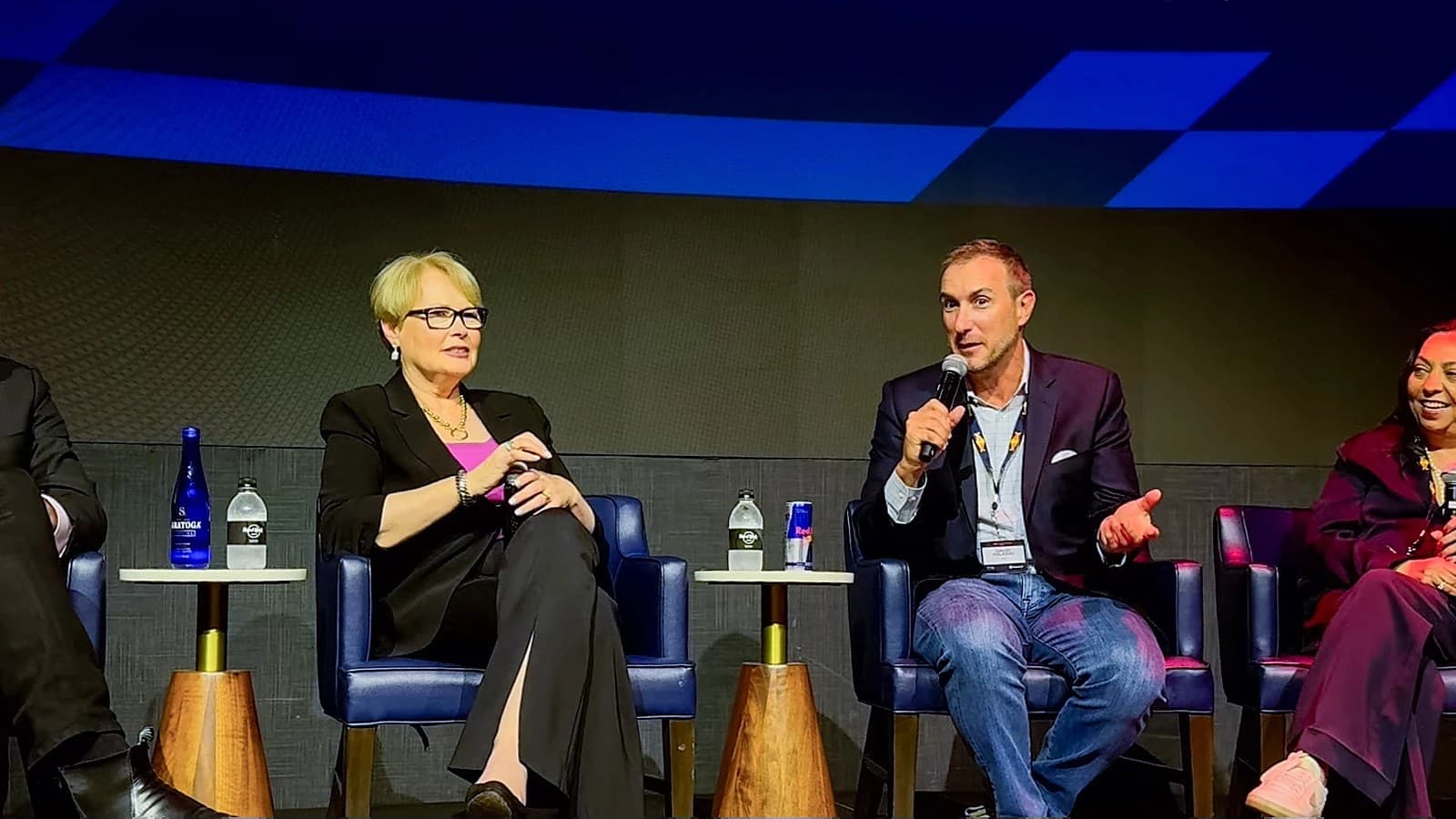
Cover credit: 1Password chief executive David Faugno speaking at an event, in an image from the company's press kit. Courtesy of 1Password. Cropped to 16:9.
Tags
Frequently asked questions
- Were my 1Password passwords or vault items stolen?
- 1Password says no. The attacker copied account records, but vault contents and the keys that protect them were not available. 1Password does not store customers' account passwords or Secret Keys, so a breach of its servers does not hand over the material needed to decrypt a vault.
- Do I need to change anything in my 1Password account?
- The company says no. It has not asked customers to change their account password, Secret Key or vault items. It does recommend caution with unexpected emails, texts or calls about 1Password invitations or account recovery.
- How many customers were affected?
- 1Password has not disclosed a number. It describes the affected group as a subset of customers and says it specifically notified a small number of users whose invitation or recovery links were exposed. The company says more than 200,000 businesses and millions of people use its products.
- Is this the same incident as the 2023 Okta breach?
- No. The 2023 incident ran through Okta's customer support system and 1Password said no user data was accessed. The November 2026 incident began with an employee's corporate GitHub account and reached backend services that stored customer account records.

TPW Editorial
Editorial Team
TechPastWeek's editorial team reports and edits every story we publish. We research each piece against primary and credible secondary sources, and a human editor reviews and signs off before it goes live.