Nintendo Puts SmileBASIC 4 Back on the eShop After Patching a Switch 2 Jailbreak
Nintendo returned SmileBASIC 4 to the eShop on 20 November, updated to 4.4.10, after the programming tool was used to jailbreak Switch 2 consoles in October.

On this page
Key takeaways
- SmileBASIC 4 returned to the Nintendo eShop on 20 November 2026, updated from version 4.4.9 to 4.4.10, after being delisted in late October.
- Nintendo removed the programming tool after researchers used it as the entry point for ns2jb, a software-only partial jailbreak of the Switch 2.
- The exploit's author, Sammy Hajhamid, said he used OpenAI's Codex with a custom test harness for about two weeks to find an integer overflow in the SmileBASIC interpreter.
- Nintendo shipped Switch 2 firmware 23.5.0 on 10 November, 19 days after the jailbreak became public, and reports say it closed the hole.
- The jailbreak gave userland access, not full control of the console, and there is no public evidence that it enabled pirated games.
SmileBASIC 4 is back on the Nintendo eShop. The programming tool returned on 20 November, updated from version 4.4.9 to 4.4.10, about four weeks after Nintendo pulled it because hackers had used it to break into the Switch 2.
Related reading: Valve Ends Steam Machine Waitlists as Memory Costs Bite · PlayStation 5 Passes 100 Million Units, and It Is Still Behind the PS4.
The delisting was one of the more unusual defensive moves in recent console history. SmileBASIC 4 is a Switch 1 title, a language and interpreter that lets players write their own small programs. It was also the required purchase for ns2jb, a software-only exploit that gave a researcher userland access to the Switch 2, enough to run homebrew, back up saves and mod games.
Nintendo has not explained the delisting or the patch. The sequence is documented by the community: the exploit went public on 22 October, the game disappeared from the eShop within a day, the console firmware was updated on 10 November, and the game came back on 20 November with a new version number.
What changed on 20 November
The return was first reported by GoNintendo, which had tracked the delisting, and by GamesRadar. The full game is on sale again. Its demo, which could also be used to trigger the exploit, was updated but had not been relisted at the time of those reports.
The version bump is the important detail. An unpatched binary back on sale would have restored the route, so the 4.4.10 update is the part the community reports as closing the hole. One Jailbreak reported the 4.4.9 to 4.4.10 change on the same day.
That leaves two patches in play: the console firmware, which closed the route at the system level, and the application, which closed it at the source. Either one would be enough to stop the published exploit on an updated console. Having both means an owner who skipped the firmware update still faces a patched game.
How the exploit worked
The technical account comes from the researcher who built it. Sammy Hajhamid, who publishes as Pepsipu, wrote up the exploit and released it on GitLab. His blog post describes a search that was partly automated.
Hajhamid said he used OpenAI's Codex to probe the SmileBASIC language interpreter. He built a harness that could send USB commands to the console, capture the screen over HDMI, and power-cycle the machine through a Bluetooth light switch flipping device. After about two weeks, the harness found a 32-bit integer overflow that occurs when items are removed from an array in SmileBASIC. The bug exposed an array pointer, which gave read and write access to parts of system memory.
From there he looked for a way into the Switch 2's internal sysmodules. He found a buffer overflow in the console's FileSystem service that exposed a cached data pointer, which allowed arbitrary read and write. That was enough to perform privileged filesystem actions and eventually run native code through a faked filesystem process.
The result was userland access, not a kernel exploit. It runs inside a sandbox, which is why it could mod characters into Mario Kart World but could not take full control of the hardware. The hack is also tethered: it needs a macOS or Linux PC on the same network running a Node.js package.
"Jailbreak" covers a wide range of access. The original Switch's 2018 exploit was a hardware flaw that could not be patched in software and eventually forced a console redesign. ns2jb is a software bug in one application, on one firmware version, with a PC attached. Nintendo's response reflects that difference.
The patch took 19 days
The exploit became public on 22 October, when Hajhamid posted it and others began showing modded characters and developer tools. At the time it worked on firmware 23.0.1, then the current release.
Nintendo delisted SmileBASIC 4 almost immediately. Ars Technica reported that the game had already been removed from the Switch eShop worldwide, while a Japanese demo that might work the same way was still accessible. The 3DS version of SmileBASIC had been pulled in 2016 for the same reason, after the smilehax exploit.
Firmware 23.5.0 shipped on 10 November, 19 days after the exploit went public. Nintendo has not said what the update fixed, and the company has not said whether the work was already under way when ns2jb was released.
Nineteen days is fast for a console maker and slow for a live exploit. In that window, the console was patched at the system level but the game remained available to anyone who had already bought it. Delisting stops new buyers. It does not reach the people who already own the tool, which is why the application patch mattered.
Delisting is a blunt instrument
Removing a game from a store is a visible move, and it has limits that the SmileBASIC case makes plain.
The first is that ownership survives. Anyone who bought SmileBASIC 4 before 22 October kept it in their library and could keep using it on an unpatched console. The second is that the exploit did not depend on SmileBASIC alone. Reports at the time pointed to other possible entry points, including Civilization VII on cartridge, which a store delisting cannot touch because the game runs from the card.
The third is collateral. SmileBASIC 4 is a programming environment used by people who never touched the exploit. Pulling it removed a tool from paying customers for a month, and the demo is still missing. Nintendo has not said whether it will return.
None of that makes the delisting irrational. It raised the cost of the exploit for new users during the window before the firmware shipped. It just did not solve the problem on its own, and the company has not said what it will do about cartridge-based routes.
Why a partial jailbreak still matters
A userland exploit is a long way from the hardware flaw that made the original Switch permanently hackable in 2018. That one could not be fixed in software, and Nintendo ended up revising the hardware. ns2jb runs in a sandbox, needs a helper PC, and stops working when the console or the game is updated.
It is still a problem for Nintendo, for two reasons. The first is what it showed. Alongside the release, other researchers posted demonstrations of a full Vulkan GPU driver running in userland and early developer tools, which suggests the ceiling of the exploit was higher than the first proof of concept implied. The second is the pattern. A console that gets a software-only entry point in its first year is a console whose attack surface is being read closely, and the tools that make it easier to read, including AI coding agents, are now cheap.
Nintendo's commercial interest is in the online services and the store. The published exploit does not unlock either. It runs on a firmware version that Nintendo can supersede, and keeping it means keeping the console off the current release.
What it means for Switch 2 owners
For most owners, nothing changes. A console on firmware 23.5.0 or later, with the patched SmileBASIC 4, is not exposed to the published ns2jb chain. Nintendo recommends the current firmware, and the console nags until it is installed.
For the modding scene, the interesting question is what comes next. Hajhamid's writeup is a map of where to look: the SmileBASIC interpreter, the FileSystem service, and the interfaces between applications and sysmodules. Others were already teasing similar work in October. A patched application does not remove the class of bug, only this instance of it.
For Nintendo, the episode is a reminder that its store is part of its security perimeter. A 2016 3DS delisting did not stop homebrew on that platform, and the Switch 2 has now had a software-only jailbreak in its first year. The company's answer so far has been to patch the console, patch the game, and put the game back.
Caveats
Nintendo has not confirmed the exploit, the delisting rationale, the firmware fix or the 4.4.10 changes. The technical account is Hajhamid's own, and Ars Technica's October report is based on his writeup and public demonstrations. The 19-day gap is the community tracker's calculation from public dates, not a Nintendo figure.
There is no public evidence that ns2jb enabled pirated games, and the exploit's userland sandbox is a real limit. Reports that Civilization VII could serve as an alternative entry point have not been confirmed by Nintendo or demonstrated publicly as a working chain. The demo's status is as reported on 20 November; it may have returned since.
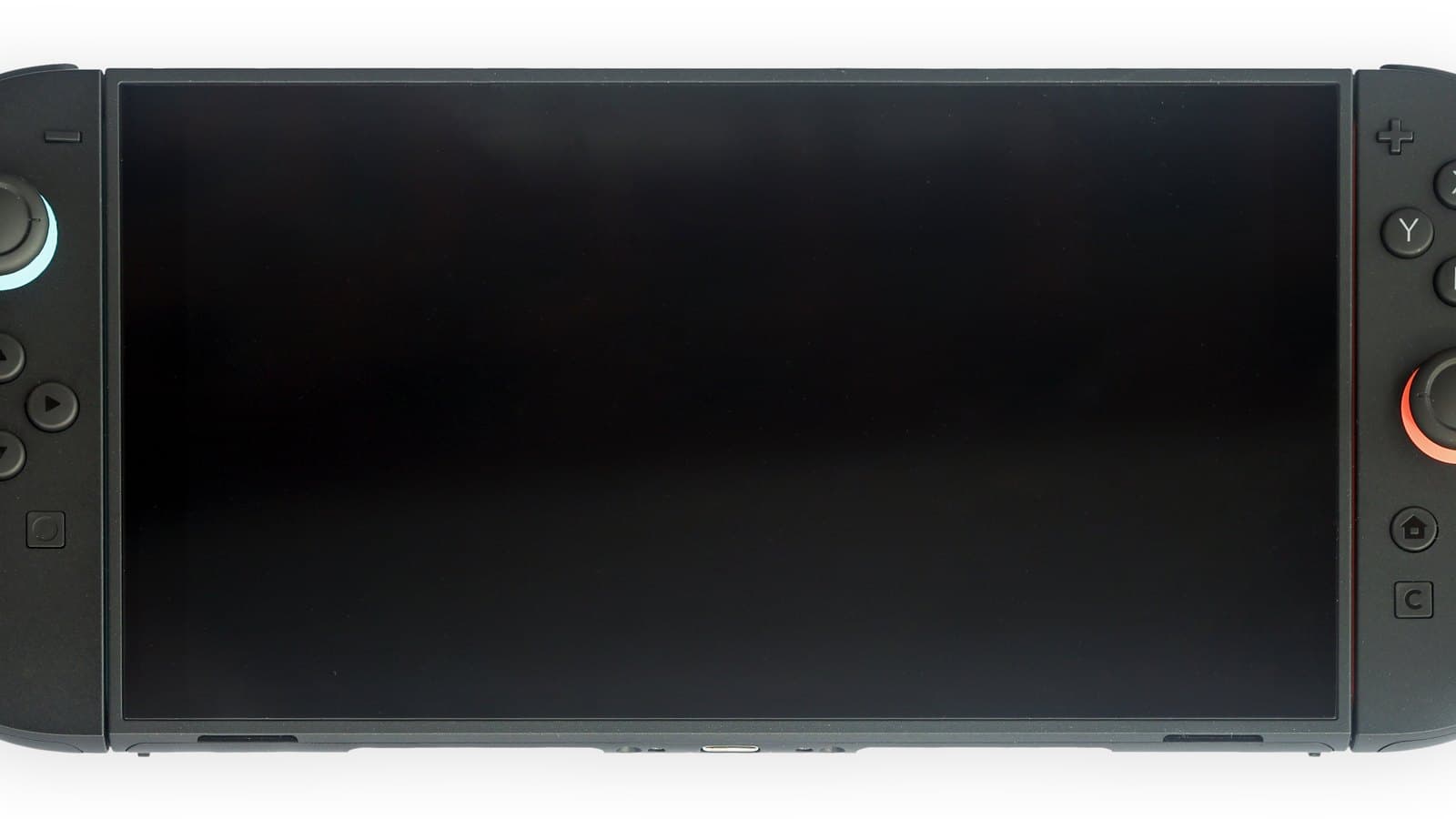
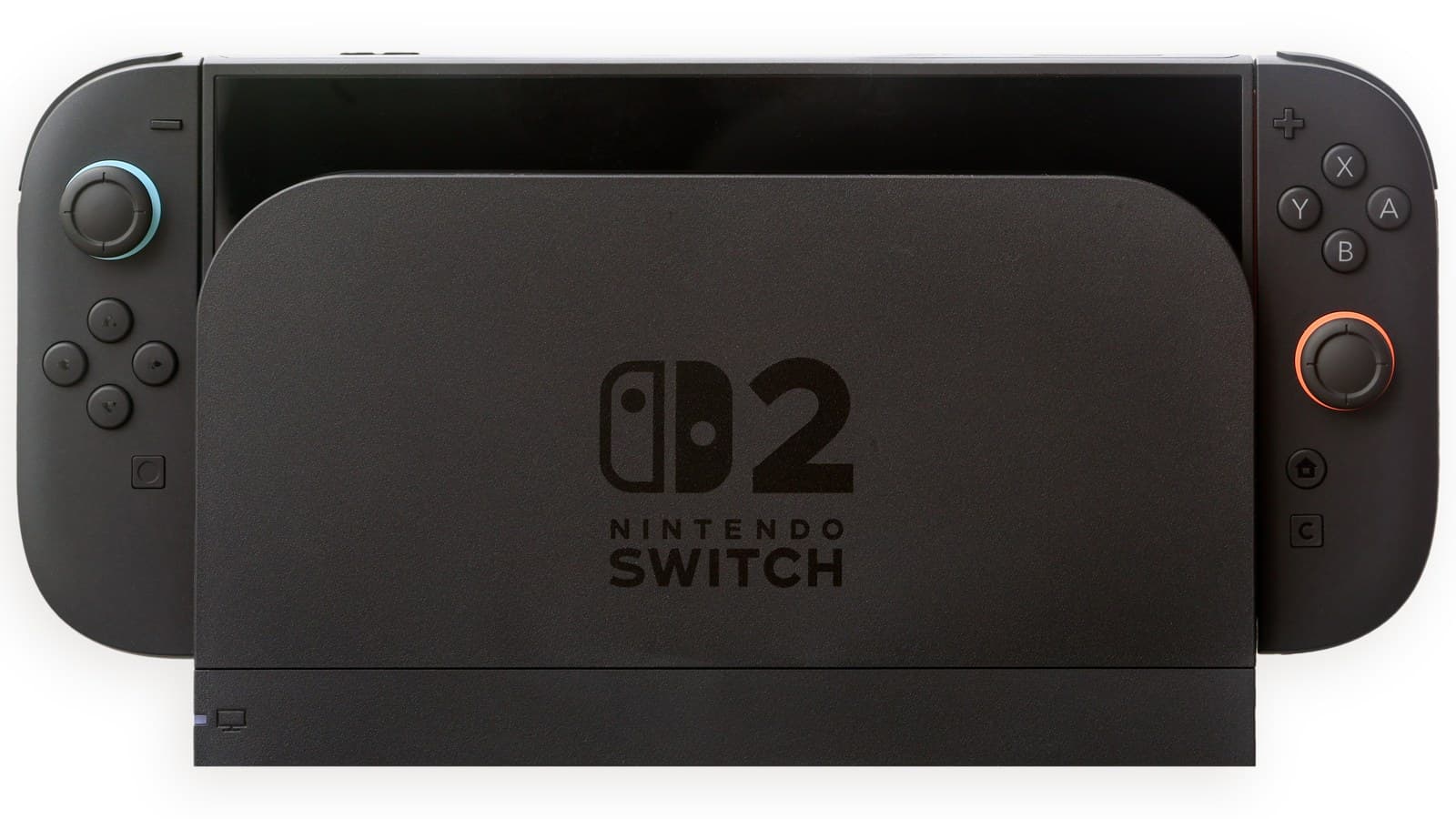
The cover image shows a retail Switch 2 in its dock, not a modified console. It is a real photograph, not a render.
Cover image: A Nintendo Switch 2 console in its dock. Photo by Crisco 1492, CC BY-SA 4.0, via Wikimedia Commons.
Tags
Frequently asked questions
- Why was SmileBASIC 4 removed from the eShop?
- Nintendo delisted it in late October 2026 after a researcher used the Switch version of SmileBASIC 4 as the entry point for a software-only jailbreak of the Switch 2. The tool was restored on 20 November after being patched.
- Does the Switch 2 jailbreak let people play pirated games?
- There is no public evidence that it does. The exploit gave userland access, which is enough for homebrew, save backups and some mods, but not the kernel-level control that would allow a full crack. It also required a PC on the same network.
- Is the Switch 2 jailbreak still usable?
- Reports say no on current firmware. Nintendo shipped Switch 2 firmware 23.5.0 on 10 November 2026, which reportedly closed the SmileBASIC route, and SmileBASIC 4 itself was updated to 4.4.10 before returning to the eShop.
- Can other games be used to jailbreak the Switch 2?
- Reports in October pointed to other candidates, including Civilization VII on cartridge, which a delisting cannot remove. Nintendo has not confirmed any of those routes, and no second working exploit has been published.

TPW Editorial
Editorial Team
TechPastWeek's editorial team reports and edits every story we publish. We research each piece against primary and credible secondary sources, and a human editor reviews and signs off before it goes live.