Anthropic's IPO Terms: 825 Million Shares at $70 to $78, Valued Up to $1.45 Trillion
Anthropic's amended S-1 sets terms for 825 million shares at $70 to $78, a fully diluted value of $1.3 trillion to $1.45 trillion, and a $26 billion side deal.

On this page
Key takeaways
- Anthropic's amended S-1, filed on 10 November 2026, sets terms for 825 million shares at $70 to $78 each, for gross proceeds of up to $64.35 billion.
- On a fully diluted basis the filing implies a valuation of roughly $1.3 trillion to $1.45 trillion, below the $2 trillion discussed in early October and above the $965 billion private mark from May 2026.
- Nvidia, Microsoft, Google, TSMC, Broadcom, AMD and Micron are buying $26 billion of nonvoting Class N shares at the public price, without the usual six-month lockup.
- Revenue grew 1,206% to $33.2 billion in the first nine months of 2026, and third-quarter revenue of $16.96 billion grew 47% sequentially, down from 144% in the second quarter.
- Anthropic plans to list on Nasdaq under the ticker ANT, and the Wall Street Journal reported that trading is expected to begin on 19 or 20 November 2026.
Anthropic's initial public offering now has a price range. The amended S-1 filed with the SEC on 10 November 2026 sets terms for the first time: 825 million shares at $70 to $78 each, the filing says. At the top of the range the offering would raise $64.35 billion in gross proceeds, before underwriting fees. On a fully diluted basis, including employee stock options and other securities, the company could be valued at roughly $1.3 trillion to $1.45 trillion. It plans to list on Nasdaq under the ticker ANT.
Related reading: Intuit Sells Mailchimp to Bending Spoons for $3.68 Billion · Anthropic Prices Its IPO at $83 and Raises $81.3 Billion.
The Wall Street Journal reported that the shares are expected to begin trading on Thursday 19 November or Friday 20 November 2026. That timing is the newspaper's reporting, not a commitment in the document.
A range is not a sale. It is the opening ask that Anthropic and its bankers will test with investors during the roadshow, and it can move up or down before allocations are set.
What the range actually prices
The arithmetic at the ends is easy. 825 million shares at $70 comes to $57.75 billion. The same count at $78 comes to $64.35 billion, the figure in the filing. Both are gross: underwriting fees and expenses come out before the company sees the money.
The valuation takes more care. The $1.3 trillion to $1.45 trillion range is fully diluted, so it counts shares that are not yet ordinary stock, including options held by employees. It describes what the whole company would be worth if every claim on it were settled. It is not the market value of the 825 million shares on their own, which at the top of the range would be $64.35 billion.
Two valuations, one filing
The $1.3 trillion to $1.45 trillion figure is fully diluted and includes employee options and other securities. The 825 million shares sold in the offering are worth $57.75 billion to $64.35 billion at the range. Both numbers come from the same document, and they answer different questions.
A company can be described as a $1.4 trillion business while selling a slice worth a small fraction of that. Both statements can be true.
How the number was set
Three data points bracket the range.
- May 2026: a Series H round valued Anthropic at $965 billion, its last private mark.
- Early October 2026: press reports put expectations as high as $2 trillion.
- The selloff before the filing: prospective buyers discussed $1.2 trillion to $1.3 trillion, with some considering as low as $1.1 trillion, Bloomberg reported.
The filed range values Anthropic at $1.3 trillion to $1.45 trillion on a fully diluted basis. That sits below October's $2 trillion talk and above May's $965 billion private mark.
The filed range therefore lands above the private mark and below the October talk. It is closer to what buyers were saying in the selloff than to what investors hoped for in the summer. The Nasdaq 100 fell 14% in that stretch, according to Investing.com, which gives the range a defensive shape. A company pricing shares into a falling market usually leaves room for the first day of trading instead of squeezing the last dollar out of the book.
The width of the range says something too. Eight dollars between floor and ceiling is a little over 11% of the low end, enough room for the final price to move without the deal looking repriced. The filing does not say what happens if demand lands below $70.
SpaceX sets the scale. Its IPO earlier in 2026 raised $85.7 billion and the company now has a market capitalisation of $1.9 trillion, according to the Leverage Shares IPO tracker. Anthropic's top-end $64.35 billion raise would be smaller, even though the valuation attached to it is in the same league. A raise is cash into the company; a valuation is a price for the whole equity, and coverage of large listings often runs the two together.
The $26 billion side deal
Alongside the public offering, Anthropic is raising an extra $26 billion from seven companies: Nvidia, Microsoft, Google, TSMC, Broadcom, AMD and Micron. They are buying nonvoting Class N shares at the same price public investors pay, Yahoo Finance reported. Because the transaction is private, those buyers do not face the six-month lockup that normally applies to insiders after a debut.
Add the two together and the company would take in up to $90.35 billion before fees: $64.35 billion from the public offering and $26 billion from the seven companies.
More consequential is the lockup. Company insiders and early shareholders are typically barred from selling for months after a debut. The seven strategic buyers are not on that schedule, so a block of shares sits outside the usual lockup. That does not mean they will sell on the first day, and the filing does not say they will. It does mean the standard lockup cannot tell anyone when every share in the deal becomes tradable. The first real test comes months later, when the standard lockup expires and the market finds out how much of the rest of the stock wants to move.
The other effects are smaller. That demand is already arranged, so it does not have to be found in the public book during the roadshow. The shares are nonvoting, which keeps control where it was before the transaction.
None of this proves public demand. It is a private placement to companies with their own reasons to want Anthropic to succeed. Several of them sell it chips or cloud capacity. Their willingness to buy at the public price is a signal, and an expensive one, but it is not an order book from fund managers.
The structure also raises a question that has followed AI infrastructure deals all year: how much of the demand is commercial, and how much is partners supporting a company they depend on. The filing does not answer it. It records the purchase, the share class and the price, and leaves the motive with the buyers.
What the numbers say about the price
The filing also carries the operating numbers the price has to justify.
- Revenue grew 1,206% to $33.2 billion in the first nine months of 2026.
- Third-quarter revenue was $16.96 billion, up from $11.56 billion in the second quarter, according to Investing.com's reading of the amended S-1. That is 47% sequential growth, down from 144% in the second quarter.
- Anthropic disclosed $895.4 billion in aggregate committed spend, mostly for compute and infrastructure.
The quarterly figure is close to the $16.8 billion Anthropic told investors at a private meeting in October, reported at the time. The document's safety disclosures are covered separately.
Growth of 47% in a quarter is still extraordinary. The 144% quarter before it sets a comparison the next one cannot match, and what the filing shows is revenue still climbing quickly while the rate of climb falls. Investors pricing a $1.4 trillion valuation will argue about which of those matters more.
The $895.4 billion commitment is the other half of the picture. It is a pledge of future spending, mostly on compute, not cash already paid out. Committed spend of that size is how a frontier lab secures capacity years ahead. It is also a fixed obligation that has to be met from revenue that has not arrived yet, and the filing does not say how the payments are scheduled.
Set the $1.3 trillion floor against the $33.2 billion booked in nine months and the price is roughly 39 times sales for that period. Annualise the revenue and the multiple drops, though one quarter is a thin base for a forecast. Neither calculation settles whether the price is high.
Profit gets less attention than growth. Earlier reporting on the first amended S-1, filed on 2 November, put the operating loss at $567 million for the third quarter. That is under 4% of the revenue in the filing, and it is still a loss. The valuation has to account for it as well as for the growth.
What the filing does not settle
- The price is not final. The range is set before the roadshow and the final price is fixed after it. The offering can be repriced or postponed if the market moves again.
- The valuation is fully diluted. It includes options and other securities, so it is not a simple market capitalisation.
- Proceeds are gross. Underwriting fees and expenses come out before the company banks the money.
- The side deal is private. The $26 billion is for nonvoting shares and its buyers skip the usual lockup. It says something about strategic interest, not about demand from public investors.
- The date is reported. The 19 and 20 November trading start comes from the Wall Street Journal, not from Anthropic.
- The revenue is unaudited and company-reported. So is the $895.4 billion commitment, which is a pledge rather than money spent.
That is a long list for a document meant to inform investors. It is also normal. A prospectus is written before the sale, and the sale is where most of the uncertainty gets resolved.
What to watch
The roadshow is the next real test. Yahoo Finance reported that the listing targets a November debut, and the price talk from investor meetings will show whether the range holds, moves up or gets cut.
Then comes the first day of trading, which the Journal puts on 19 or 20 November. A debut above the range would suggest the AI selloff did not break demand for the largest names. A debut below it would revive the argument that private valuations outran what public markets will pay. The first day's move is a rough gauge at best. It measures how the shares were priced against demand on one morning, not what the company will be worth in a year.
For Anthropic, two numbers matter after the listing: whether revenue keeps growing fast enough to shrink the multiple, and how quickly the $895.4 billion commitment turns into cash out the door. For the rest of the AI sector, the debut supplies a public comparison that private rounds could not. That comparison will hold until the next large listing, or until the market changes its mind about what these companies are worth.
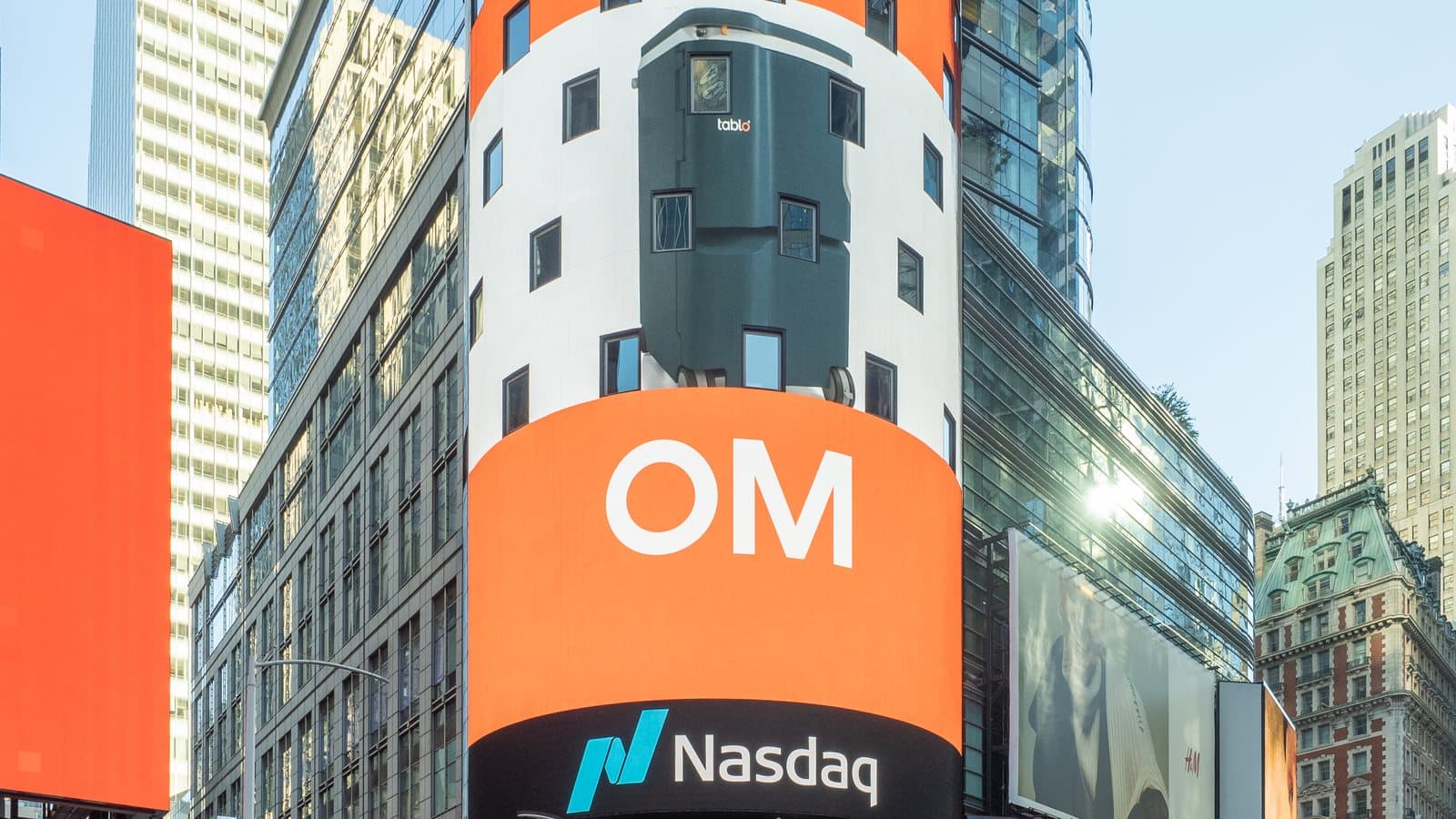
Cover image: the Nasdaq MarketSite in Times Square, New York, by ajay_suresh, CC BY 2.0, via Wikimedia Commons.
Tags
Frequently asked questions
- How much is Anthropic's IPO raising?
- Anthropic plans to sell 825 million shares at $70 to $78 each. At the top of the range that is $64.35 billion in gross proceeds, before underwriting fees and expenses.
- What is Anthropic's valuation in the IPO?
- The filing implies a fully diluted valuation of roughly $1.3 trillion to $1.45 trillion, including employee stock options and other securities. It is not a simple market capitalisation of the shares being sold.
- Why is Anthropic's IPO valued below the $2 trillion figure reported in October?
- Early October press talk reached as high as $2 trillion, but the AI selloff changed the mood. After it, prospective buyers discussed $1.2 trillion to $1.3 trillion, with some considering as low as $1.1 trillion, according to Bloomberg. The filed range sits between that talk and Anthropic's $965 billion private mark from May 2026.
- What is the $26 billion side deal in Anthropic's IPO?
- Nvidia, Microsoft, Google, TSMC, Broadcom, AMD and Micron are buying $26 billion of nonvoting Class N shares at the same price public investors pay. The deal is private, so those buyers do not face the standard six-month lockup.

TPW Editorial
Editorial Team
TechPastWeek's editorial team reports and edits every story we publish. We research each piece against primary and credible secondary sources, and a human editor reviews and signs off before it goes live.