Anthropic Files for a Nasdaq IPO With $16.3 Billion in First-Half Revenue and an $80.7 Billion Loss
Anthropic filed its S-1 on 26 October 2026 with $16.3 billion in first-half revenue, an $80.7 billion net loss driven by accounting, and founder control.

On this page
Key takeaways
- Anthropic filed its S-1 with the US SEC on 26 October 2026 for a Nasdaq listing under the ticker ANT, without disclosing a raise size or a price range.
- First-half 2026 revenue was $16.3 billion, up from about $1.2 billion a year earlier, while the operating loss narrowed to $693 million from $2.1 billion.
- The $80.7 billion net loss is mostly noncash: about $72 billion comes from a rise in the fair value of convertible bonds, according to Reuters.
- Anthropic spent nearly $9 billion on compute and infrastructure in the first half and has committed at least $518 billion over a decade, per Reuters.
- A Founder LLC of seven co-founders will control 50.1% of voting power after the IPO, and the Long-Term Benefit Trust will appoint most of the board.
Anthropic filed its S-1 registration statement with the US Securities and Exchange Commission on Monday, 26 October 2026, making public the prospectus for a listing on Nasdaq under the ticker ANT. It is the first version of the company's accounts that carries legal weight, and it replaces a year of numbers that had been delivered to private investors in rooms rather than on paper.
Related reading: Anthropic Told Investors It Reached $16.8 Billion in Quarterly Revenue Ahead of a November IPO · Anthropic's $2 Trillion IPO Would Be the Largest Ever: If the Market Agrees.
The filing reports $16.3 billion of revenue in the first half of 2026, an operating loss of $693 million and a net loss of $80.7 billion. Anthropic did not disclose how much it hopes to raise, how many shares it will sell or what they might cost.
This is the document our 15 October article on the private investor meeting was waiting for. That piece covered what Anthropic told prospective shareholders at its San Francisco headquarters: $16.8 billion of third-quarter revenue, profitability on an adjusted basis and positive cash flow, none of it published. The S-1 does not restate those claims in the same form, because a prospectus has to survive an audit and a securities lawyer. What it does is let the private numbers be checked against the public ones, line by line.
The numbers that were private now carry a signature
Start with the top line. TechCrunch reported that first-half revenue reached $16.3 billion, against about $1.2 billion in the same six months of 2025. Reuters and Al Jazeera put the prior-year figure at $1.1 billion. The gap between the two estimates is small next to the growth it measures: on either number, revenue rose more than tenfold in a year.
The operating loss went the other way, narrowing to $693 million from $2.1 billion a year earlier, per TechCrunch. That is the measure closest to how the business trades: it counts what it costs to sell and run the product.
Customer counts in the filing itself show where the revenue comes from. At the end of September 2026, more than 11,900 customers were spending at least $100,000 a year, 1,900 were spending at least $1 million, and about 250 were spending at least $10 million. The bottom tier alone implies at least $1.19 billion of annual revenue. That is a floor: the filing gives counts and thresholds, not what each account pays.
The filing also lets the October meeting be tested. Anthropic told investors on 14 October that third-quarter revenue reached $16.8 billion, up about 45% from the second quarter, and that it was profitable on an adjusted basis. Those figures came from attendees, not from a document.
First-half revenue of $16.3 billion matches the $4.7 billion booked in the first quarter plus the $11.6 billion booked in the second, as reported at the time. So the single quarter that followed, at $16.8 billion, was slightly larger than the entire first six months.
The growth rate is the part investors will argue about. Second-quarter revenue more than doubled the first quarter. The third quarter grew 45% on the second. That is still fast for a company of this size. It is also a deceleration, and public markets price the level and the change in it.
Private investors had already begun to price it. Reuters reported on 15 October that investors were weighing a valuation of about $1.5 trillion, down from roughly $2 trillion earlier, after the growth slowed. The S-1 contains no valuation, no share count and no price range. Anyone quoting a number is quoting a reporter's source, not the prospectus.
An $80.7 billion loss that is mostly an accounting entry
The net loss is the number that will travel furthest, and it is the one most likely to be misread. Anthropic lost $80.7 billion in the first half of 2026, against $13 billion a year earlier, according to Reuters. About $72 billion of it is noncash.
The mechanism is the convertible bonds Anthropic sold while private. As the company's implied value climbed, the fair value of the conversion right climbed with it, and accounting rules push that change through the income statement. Reuters attributed the bulk of the loss to "a rise in the fair value of bonds convertible into shares". No money left the company to produce it.
That does not make the figure meaningless, and it does not make the operating loss clean either. The $693 million is also an accounting number, shaped by depreciation schedules and by how Anthropic books its multi-year compute contracts. But the two figures answer different questions. One records what the company's capital structure did as its valuation rose. The other records what the business did.
The cash side is easier to picture. In the same six months, Anthropic spent nearly $9 billion on compute and infrastructure, up from $2.3 billion a year earlier, per Reuters. That is real cash for real equipment. The $72 billion is not.
Three numbers, three different questions
Revenue of $16.3 billion says how much Anthropic sold. The operating loss of $693 million says what was left after the cost of running the business. The net loss of $80.7 billion says what the balance sheet did once convertible bond valuations were marked to market. Reporting any one of them as "Anthropic's loss" or "Anthropic's profit" without the other two will mislead.
The compute bills are larger than the revenue
Anthropic's cost base is unusual in one respect: most of it is contracted years ahead. The filing sets out commitments that total at least $518 billion over a decade, per Reuters, split across four suppliers.
- SpaceX: about $3.1 billion a month for Nvidia GPUs once all planned capacity is delivered, up to $120.5 billion by 2029.
- Microsoft: $44.9 billion through 2033.
- Google: at least $114.5 billion through 2033.
- Amazon: $110 billion over the next ten years.
These are contractual totals, not cash spent this year. A ten-year commitment of $110 billion averages $11 billion a year, which is a very different burden from $110 billion due in 2027. But the totals set a floor under future spending, and the floor is more than thirty times the $16.3 billion Anthropic booked in the first half.
The SpaceX figure works differently. It is a per-month rate for GPU capacity that scales with delivery, so if growth stalls while the capacity arrives, the bill keeps coming. Anthropic also said it plans to expand its own infrastructure overseas as it meets local opposition to data centres in the United States.
Seven founders, 50.1% of the votes, and a trust
Public shareholders will own the economics of Anthropic and very little of the control. A Founder LLC made up of the seven co-founders will hold 50.1% of shareholder voting power after the IPO, according to TechCrunch and The Verge. The members are Dario Amodei, Daniela Amodei, Tom Brown, Jack Clark, Jared Kaplan, Sam McCandlish and Christopher Olah.
The Long-Term Benefit Trust, created in 2023, will have authority to appoint most of the board. Anthropic is a public benefit corporation, a US structure that obliges directors to weigh a stated mission alongside shareholder returns. The three arrangements stack: a founder bloc with a voting majority, a trust that picks the board, and a charter that lets the board weigh mission against profit.
Pay sits in the same document. Dario Amodei's 2025 compensation was nearly $18 million, mostly stock and options, and Daniela Amodei's was $16.4 million. The company paid $2.75 million for Dario Amodei's personal security and $1.29 million for his sister's, and booked $97,055 for his personal use of a private jet. The filing says the company is "highly dependent on the continued service" of the two, who "are critical" to its mission.
What the filing warns could go wrong
The risk factors are where this prospectus stops resembling a normal technology listing. Anthropic warns that its systems could cause "catastrophic" harm of a kind the insurance industry could not underwrite in aggregate, that Claude or another system could possess or develop "forms of sentience", and that its models "may behave in unintended, misaligned, or autonomous ways", per The Verge.
"Systems may behave in unintended, misaligned, or autonomous ways." — Anthropic, S-1 risk factors, filed 26 October 2026
A company asking the public for capital is required to describe the worst case it can foresee. Anthropic's stated worst case is one in which the product works. That language sits a few pages from the revenue table, and the same document that reports $16.3 billion of demand also tells buyers the thing they are buying into might not be containable.
The competitive section is narrower than the risk section. Anthropic names only two direct competitors, OpenAI and Google. Whether that reflects the company's honest view or a choice about which comparisons help a valuation is not something the filing answers.
Caveats
- The $80.7 billion net loss is a GAAP figure dominated by a noncash convertible bond charge. It is not the cash Anthropic burned, and it should not be quoted without the $693 million operating loss beside it.
- Revenue growth slowed sequentially. The third quarter rose 45% on the second, after the second more than doubled the first. Public investors may price that change before they price the level.
- The S-1 has no price range, share count or raise size. The $1.5 trillion valuation is press reporting from Reuters, not a filed number.
- The compute commitments are long-dated contractual totals. The $518 billion figure spans a decade and says little about what Anthropic pays in any single year.
- Prior-year revenue is given as $1.1 billion by Reuters and Al Jazeera and $1.2 billion by TechCrunch. The difference does not change the growth story, but the two should not be blended.
What to watch
- The next filing. A price range and share count will arrive in an amendment before the roadshow, and they will be set against these numbers rather than the ones from the 14 October meeting.
- Fourth-quarter revenue. It is the first quarter that has to be reported under the discipline of a public company, and the first test of whether 45% sequential growth holds as the base grows.
- The compute schedule. How much of the $518 billion falls due in the next two years matters, and so does how much depends on capacity that has not been delivered.
- The roadshow. Founder control at 50.1% limits what public shareholders can change, and institutional investors sometimes price that in through the discount they demand.
The filing answers the question the private meetings left open: what the numbers look like when someone has to sign them. It says nothing about what the shares will cost. That number arrives in an amendment, set by bankers and buyers, after the roadshow.
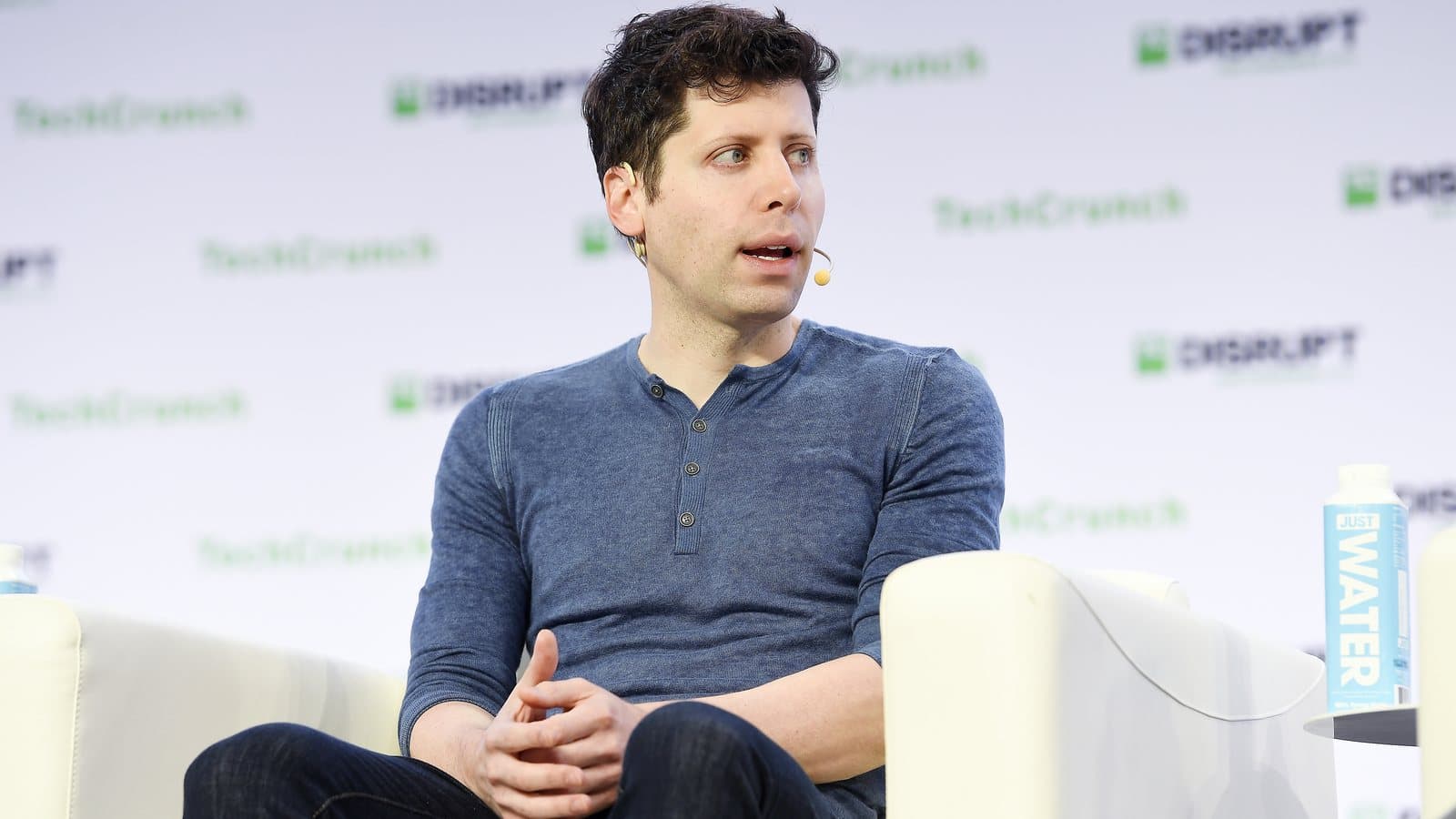
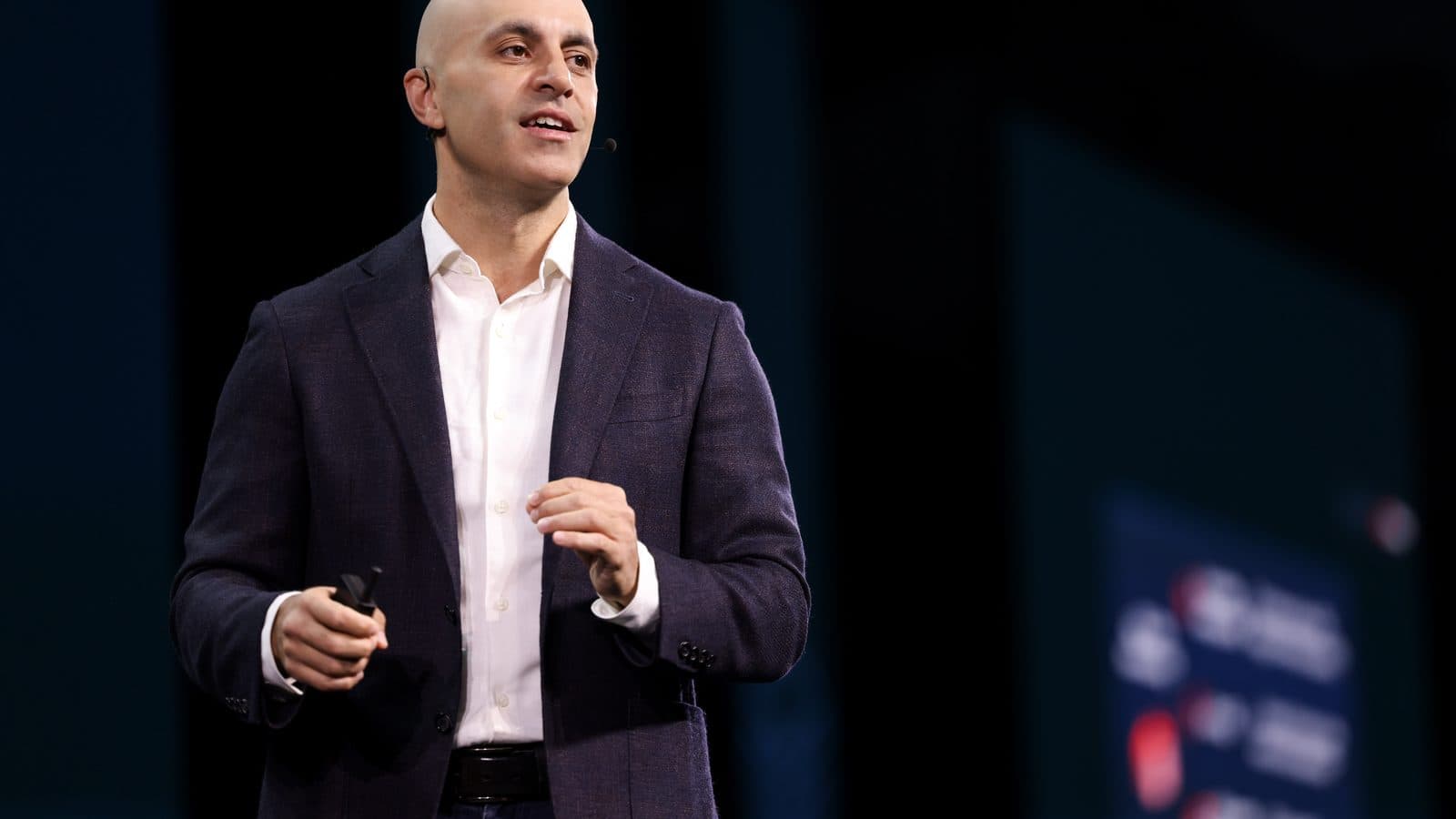
Cover image: "Dario Amodei at TechCrunch Disrupt 2023" by TechCrunch, CC BY 2.0, via Wikimedia Commons (the photo predates the 2026 filing).
Tags
Frequently asked questions
- How much revenue did Anthropic report in its S-1?
- Anthropic reported $16.3 billion of revenue for the first half of 2026, up from about $1.2 billion in the same period a year earlier according to TechCrunch, which cited the filing. Reuters and Al Jazeera put the prior-year figure at $1.1 billion. The $16.8 billion third-quarter figure from the 14 October investor meeting is not in the filing.
- Why is Anthropic's net loss $80.7 billion?
- Most of the loss is an accounting charge rather than cash. About $72 billion of the $80.7 billion comes from a rise in the fair value of bonds convertible into Anthropic shares, Reuters reported. The operating loss, which excludes that charge, was $693 million for the first half.
- Who controls Anthropic after the IPO?
- A Founder LLC made up of the seven co-founders will hold 50.1% of shareholder voting power after the listing, according to the filing. The Long-Term Benefit Trust, set up in 2023, will have authority to appoint most of the board. Anthropic is also a public benefit corporation.
- When will Anthropic go public and at what valuation?
- The S-1 says Anthropic plans to list on Nasdaq under the ticker ANT, but it gives no date, share count, price range or raise size. Reuters reported on 15 October 2026 that investors were weighing a valuation of about $1.5 trillion, down from roughly $2 trillion earlier. That is press reporting, not a filed number.

TPW Editorial
Editorial Team
TechPastWeek's editorial team reports and edits every story we publish. We research each piece against primary and credible secondary sources, and a human editor reviews and signs off before it goes live.