Databricks Raised $5B at a $190B Valuation, and Still Won't IPO
Databricks closed a $5 billion round at a $190 billion valuation, six months after a $134 billion mark, as it defers an IPO and bets on enterprise AI.

On this page
Databricks closed a $5 billion funding round at a $190 billion valuation on August 13, the company's second raise this year and a fresh marker for how aggressively private capital is still chasing enterprise AI.
Related reading: DeepSeek Reportedly Raises $15 Billion at a $74 Billion Valuation, Two Days After a US Federal Order · OpenAI Nears a $30 Billion Round at $1.25 Trillion, $150 Billion Below Its Earlier Target.
The round was led by existing investor Coatue, with Blackstone, MGX, accounts advised by T. Rowe Price, and new investor Sixth Street Growth joining, according to the company's announcement. Roughly two dozen investors participated in total. It comes six months after Databricks raised $5 billion in equity plus $2 billion in debt capacity at a valuation of about $134 billion, meaning the company's paper value rose by more than 40% in half a year, on top of a funding event that was itself enormous.
The company also disclosed that it had crossed a $7 billion revenue run-rate and grew more than 80% year over year in its second quarter. Those are the kinds of numbers that make an IPO question urgent. Databricks is answering it anyway: not yet.
The round, and the demand behind it
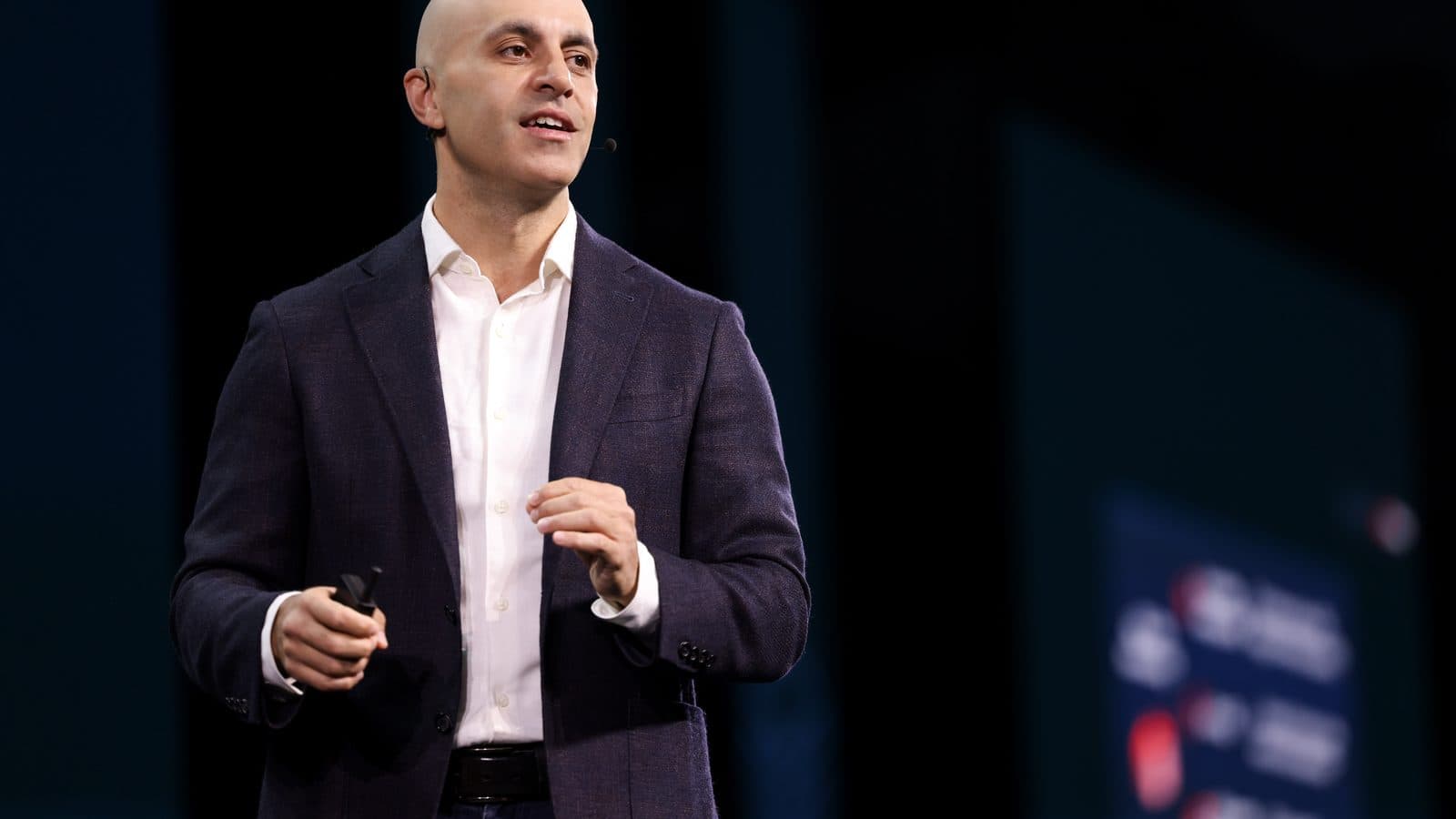
The most revealing detail of the week was not the money raised but the money that was turned away. Databricks co-founder and CEO Ali Ghodsi told TechCrunch that the company had wanted to raise around $1 billion, while investors wanted to put in roughly $15 billion, a fifteen-fold oversubscription. The company settled on $5 billion.
That dynamic explains an oddity in the timeline. In July, Databricks sent out a press release announcing it had closed a round at a $188 billion valuation without saying how much it had raised. Only on August 13 did it disclose the $5 billion figure and confirm the valuation had ticked up to $190 billion. When demand is that far ahead of supply, even the terms get negotiated in public.
Who's in
Lead: Coatue. Participants included Blackstone, MGX, accounts advised by T. Rowe Price and new investor Sixth Street Growth (the firm founded by former Goldman Sachs CIO Alan Waxman), alongside BOND, Clearlake Capital, Point72, Premji Invest, TPG, Andreessen Horowitz, Dragoneer, Fidelity, Franklin Templeton, GIC, Goldman Sachs Alternatives, Insight Partners, J.P. Morgan Private Capital, Morgan Stanley Investment Management, NEA, Ontario Teachers' Pension Plan, Temasek, Thrive Capital and WCM.
Databricks did not need the money in any immediate sense. The round is best understood as a strategic move to lock in a valuation and a cap table before public markets get a vote, and to give long-term backers more of the company while it is still private.
What the money is for
Databricks is directing the capital toward three products that map onto the current enterprise-AI obsession: context, governance and cost control.
- Lakebase, its serverless Postgres database built for AI agents, has already surpassed a $100 million revenue run-rate.
- Genie, described as an "AI coworker" that turns business data into answers and actions, is the company's play for making data accessible without a data team in the loop.
- Unity AI Gateway is a governance and cost-control layer for companies running multiple models, the "multi-AI" problem that enterprises run into the moment they stop using one vendor.
Token costs are the new cloud bill
Databricks is betting that the hard part of enterprise AI is no longer getting a model to work, but running many models cheaply and accountably. Ghodsi has described AI token costs and agent infrastructure as the real bottlenecks. That is a sensible pitch, but it also puts Databricks in competition with cloud providers that want to own the same governance layer.
The IPO that keeps not happening
The striking part of the Databricks story is not the raise; it is the wait. The company is now worth $190 billion and growing revenue faster than almost any software business at its scale, and it is choosing to stay private.
Ghodsi told Forbes the company is "very unlikely" to go public before Anthropic or OpenAI do. Pinning an IPO to two of the most valuable private companies in history is a convenient way of saying "not soon", and it is a view shared across the sector. CNBC noted that Databricks joins a growing group of companies opting to sit out the IPO market for longer.
Why stay private? The answer is mostly that public markets impose a discipline private capital currently does not. As long as investors are willing to fund a company at a higher valuation than the public market might assign, and as long as employees can be compensated in stock with a plausible path to liquidity, there is little upside to an IPO beyond vanity. There is also a deterrent effect: a disappointing debut would reset the valuation narrative for the entire enterprise-AI cohort.
Staying private is no longer a sign that a company cannot go public. For the biggest AI names, it is a sign that it does not have to.
The cost of that choice is opacity. Shareholders outside the company cannot see Databricks' full financials, and the $190 billion number is a price set by a small group of sophisticated investors rather than a market of millions. That is not inherently wrong, but it does mean the valuation should be treated as a negotiated opinion, not a measurement.
Enterprise AI's mega-round era
Databricks is the clearest example of a broader pattern: enterprise AI has become the most reliable place to deploy large amounts of private capital. The spending is not speculative in the way consumer AI bets can be; enterprises are buying software that plugs into data they already own, and the contracts are large and recurring.
That has created a two-tier funding market. Consumer-facing AI startups fight over attention and ad models, while enterprise AI companies raise nine- and ten-figure rounds on the strength of revenue. Databricks, with a $7 billion run-rate, sits at the top of that tier.
It also raises a question about the shape of the market. If the dominant enterprise-AI companies stay private for years, the public market's exposure to the AI boom is concentrated in a handful of hyperscalers and chipmakers. The AI trade that ordinary investors can actually access looks very different from the one institutions are funding.
The math behind a $190 billion sticker
It is worth doing the arithmetic, because the numbers are more defensible than the sticker price first suggests, and also more demanding.
At a $7 billion revenue run-rate, a $190 billion valuation implies roughly 27 times forward revenue. That is rich for a mature software company, but not absurd for one growing more than 80% year over year. High-growth software companies have traded at similar multiples in strong markets, and Databricks is applying an unusually large share of its revenue back into growth. The bull case is straightforward: if the company can grow into the multiple over the next several years, today's price looks reasonable in hindsight.
The bear case is just as simple. Multiples compress when growth slows, and 80% growth at this scale cannot last indefinitely. A business at $7 billion in run-rate revenue is subject to the law of large numbers; the same percentage gains require vastly more absolute revenue each year. If growth decelerates toward, say, 30%, the valuation math requires a very different story about profitability, and Databricks, like most high-growth software companies, has not optimized for near-term profit.
There is also the comparison problem. Databricks is frequently measured against Snowflake, Oracle and the hyperscalers, but its closest private comparable is OpenAI, which operates at a completely different scale of both valuation and cash burn. Databricks sits in an awkward middle: too large to be valued like a startup, too private to be valued by the market. The $190 billion figure is best read as the price a specific set of investors agreed to pay for exposure to that position, not as a verdict the broader market has rendered.
The AGI claim
Ghodsi also made a claim that drew attention: he said artificial general intelligence has already arrived, and that the real constraints on enterprise value are now context, token costs and agent infrastructure rather than raw model capability.
That is a deliberately provocative framing, and it is worth separating the useful part from the rhetorical part. The useful part is the operational claim underneath it: for many enterprise tasks, today's models are already capable enough, and the bottleneck is everything around them, retrieval, permissions, evaluation, cost and reliability. Companies that treat those as afterthoughts will not capture much value from more capable models.
The rhetorical part (declaring AGI arrived) is not something Databricks can substantiate, and it is the kind of statement a CEO makes when the product message is "stop waiting for a better model and fix your data." Take the strategy seriously; treat the definition as marketing.
Caveats and what to watch
Three cautions stand out.
First, the valuation is only as solid as the next round. Private marks are sticky until they are not, and a single down round at a peer can reset sentiment across the category. Databricks' engineering and revenue trajectory look strong, but the price is a function of capital abundance as much as company performance.
Second, competition is closing in from both sides. Snowflake competes directly on data analytics, while the hyperscalers (Microsoft, Google and Amazon) sell overlapping AI platforms and would prefer enterprises to buy their governance and agent tooling rather than Databricks'. The company's independence is a selling point for customers who fear lock-in, and a vulnerability for a company that has to build every layer itself.
Third, the $190 billion figure assumes continued hyper-growth. An 80% growth rate at a $7 billion run-rate is exceptional; sustaining it gets harder with every quarter, and the eventual deceleration will test whether private investors priced in a soft landing or a cliff.
What to watch next is the IPO window. If Anthropic or OpenAI files, the door Databricks is waiting on may open, or the resulting scrutiny may make staying private look even more attractive. For now, the company has raised enough capital to wait out the public market for as long as it likes, which is precisely the luxury a $190 billion valuation buys.
Tags

TPW Editorial
Editorial Team
TechPastWeek's editorial team reports and edits every story we publish. We research each piece against primary and credible secondary sources, and a human editor reviews and signs off before it goes live.