Hang Ten Systems Raises $53 Million Second Seed, Bringing Sikka's Startup to $85 Million
Vishal Sikka's Hang Ten Systems closed a $53 million second seed led by Temasek-backed Xora, taking total funding to $85 million five weeks after launch.

On this page
Key takeaways
- Hang Ten Systems announced an additional $53 million in seed funding on September 16, 2026, bringing total funding to $85 million.
- Xora, a Temasek-backed fund, led the round; Mayfield and Aramco Ventures returned from the $32 million first seed that closed five weeks earlier.
- Intel CEO Lip-Bu Tan, Micron chairman and CEO Sanjay Mehrotra and Yahoo co-founder Jerry Yang invested, and Yang joined the board.
- Hang Ten says it works with 21 major enterprises, has signed multiple seven-figure contracts and is pursuing eight-figure deals, with customers including Fresenius Kabi, Saudi Aramco and Siemens Energy.
- The four-month-old company employs about 20 to 25 people and declined to disclose its valuation, though founder Vishal Sikka said the second round was a bump up.
Hang Ten Systems, the enterprise AI services company founded by former Infosys chief executive Vishal Sikka, has raised an additional $53 million in seed funding. The Menlo Park, California company announced the round on September 16, 2026, bringing total funding to $85 million.
Related reading: Factory Raises $200M at a $5B Valuation, Tripling Its Worth Since April · Temporal Raises $550 Million at a $12.55 Billion Valuation as AI Agents Drive Demand.
The second seed closed about five weeks after a $32 million first round led by Mayfield, which was announced on June 24, 2026. Xora, the early-stage investment platform backed by Singapore state investor Temasek, led the new round. Mayfield and Aramco Ventures both returned.
Individual investors include Intel CEO Lip-Bu Tan, Micron chairman and CEO Sanjay Mehrotra and Yahoo co-founder Jerry Yang, a founding partner of AME Cloud Ventures. Yang has joined Hang Ten's board of directors, according to the company's press release, distributed through Business Wire.
What Hang Ten sells
Hang Ten describes itself as an enterprise AI services company. It advises large enterprises on AI strategy and then helps them build, modernize and run software, using what it calls a native-AI delivery model built on agentic code generation, a reusable skills library and domain experts. Its work spans software development, finance and finance analytics, enterprise migrations and human resources.
The pitch is aimed at the market traditional IT services firms have dominated for decades. Hang Ten positions itself as a faster, cheaper alternative to systems integrators such as Infosys, Tata Consultancy Services and Wipro.
At the center of the delivery model is an in-house framework called Hobie. Co-founder and chief design officer Sanjay Rajagopalan told TechCrunch that Hobie packages reusable AI "skills" for regulated industries and complex enterprise projects. He said teams of two to four people can handle work that once took about 30, with customers or third parties still performing final quality checks and certification. Hang Ten promises a tenfold improvement in cost, speed or both, Rajagopalan said.
"We are actually delivering production software," Rajagopalan told TechCrunch. "It's not like we are doing some kind of PoC."
Sikka's framing is that AI is moving software development away from writing code and toward defining requirements and validating whether a system does what it should. "The build part itself has basically become close to zero marginal cost, close to zero time," he told TechCrunch. If that is broadly true, then the value in enterprise software shifts from the labor of construction to judgment, domain knowledge and accountability for outcomes, which is precisely the ground the large services firms occupy.
A four-month-old company with 21 enterprise prospects
Hang Ten was founded in May 2026 and launched publicly in June, when it emerged from stealth with the $32 million Mayfield round. It now works with 21 major enterprises that are either customers or late-stage prospects, Sikka told TechCrunch, with some in the proposal or contract-negotiation stage.
Customers include Fresenius Kabi, Saudi Aramco and Siemens Energy, according to TechCrunch. The company's own September release names Siemens Gamesa Renewable Energy, which it says widened its work with Hang Ten after an initial project, and says Hang Ten is working with Aramco on applications supporting its operations across several functions. The first-round release named Siemens Gamesa and Fresenius. The naming differs between documents, but the substance is a small set of large industrial and healthcare names rather than a broad customer base.
Hang Ten says it has signed several multi-million-dollar contracts across advisory and development engagements, with delivery underway on several projects and finished on a few. Sikka said one customer signed a multimillion-dollar contract to build a mission-critical system within 25 days of a first meeting, a pace he said he had not seen in enterprise deals before.
The company has about 20 to 25 employees across the United States, the Middle East and Australia, and expects to hire in Europe and India. It declined to disclose its valuation, but Sikka said the second seed was "a bump up" from the first.
Xora approached Hang Ten about investing after the early customer wins, Sikka said, and saw a chance to introduce the startup to other companies in Temasek's portfolio. Xora invests across AI infrastructure, applied AI and deep tech, and leans on Temasek's network.
Xora is the early-stage platform backed by Temasek, Singapore's state investment company. Its stated focus spans AI infrastructure, applied AI and deep tech, and its anchor relationship with Temasek is the network it uses to connect portfolio companies to large enterprises.
Why Xora and the angels wrote checks
The bottleneck in enterprise AI is not model quality but implementation, according to Xora. That is the gap Hang Ten says it fills.
The bottleneck is implementation: deploying it securely, economically and at speed.
That was Phil Inagaki, managing partner and chief investment officer at Xora, in the funding announcement. He added that Hang Ten's team had built and operated enterprise systems "from the inside" and that its early results were already "holding up in production."
The individual investor list is itself a signal. Tan runs Intel, Mehrotra runs Micron, and Yang co-founded Yahoo and now leads AME Cloud Ventures. Their involvement, alongside strategic checks from Aramco Ventures and Temasek's Xora, suggests investors are backing a team and a delivery model rather than a new foundation model. Veteran operators with reputations to protect rarely attach their names to seed rounds casually.
The $53 million is also a bet on timing. A four-month-old company raising $85 million before it has published audited revenue is unusual even in a hot market, and the speed reflects how much capital is chasing a small number of founders with credible enterprise pedigrees.
Sikka's second act
Sikka, 59, was chief executive and managing director of Infosys from August 2014 to August 2017, the first outsider to lead the Bengaluru-based company. Before that he spent about 12 years at SAP, where he was the company's first chief technology officer and later joined its executive board.
After leaving Infosys he founded VianAI in 2019. It raised a $50 million seed and a $140 million round led by SoftBank Vision Fund 2 in 2021, for more than $190 million in total. He left VianAI in April 2026, according to his LinkedIn profile, and told TechCrunch that VianAI is "going through a transaction," declining to elaborate.
Hang Ten takes its name from the surfing maneuver in which a rider stands with all ten toes over the front of the board. For Sikka it is a nod to the AI wave he has called "probably the biggest wave of our lives."
The crowded field
Hang Ten is entering a market where AI labs and incumbents are converging. OpenAI and Anthropic are expanding their enterprise offerings, and consulting and IT services firms are embedding generative AI into their own delivery.
Sikka's argument is that enterprises still want partners independent of any single model provider. "There will always be room for companies like us," he told TechCrunch. Many of Hang Ten's engagements replace incumbent providers, he said, though more than half of its current opportunities are new projects companies had previously postponed rather than work taken from an existing vendor.
He also said Hang Ten has received serious acquisition offers from "very big companies," which it turned down to focus on growth. He did not identify the buyers. That claim is worth treating as an assertion rather than a fact, since no prospective buyer has confirmed it.
Caveats and what to watch
Most of the commercial numbers are company-reported. Hang Ten has not published audited revenue, contract values or a customer-by-customer breakdown, and it did not disclose the valuation. The tenfold improvement claim comes from its own co-founder and has not been independently verified.
Details differ across accounts. TechCrunch describes the company as Palo Alto-headquartered, while the September 16 release carries a Menlo Park, California dateline; the two cities are adjacent. Customer names also vary between the June and September releases, from Fresenius to Fresenius Kabi and from Siemens Gamesa to Siemens Energy. The round is described by the company and TechCrunch as a second seed, though other databases may classify it differently.
The central question is whether a services business that leans on a founder's reputation and a small bench of domain experts scales. Hang Ten's answer is Hobie and the skills library, which turn repeated enterprise work into reusable components that newer engineers can deploy. If that works, the company competes with the integrators on cost and speed. If it does not, the business looks like high-end consulting with an AI story.
Three things would show which path it is on. The first is whether Hang Ten converts its 21 enterprise prospects into disclosed, durable contracts rather than one-off advisory engagements. The second is whether it publishes metrics that would validate a tenfold cost claim to customers and investors. The third is whether Temasek's network turns into revenue in Singapore and Southeast Asia, where Xora says it sees the same urgency as elsewhere.
For now, Hang Ten has capital, a marquee investor list and a claim that the economics of building enterprise software have changed. The next year will test whether the delivery model, rather than the résumé behind it, is what enterprises are buying.
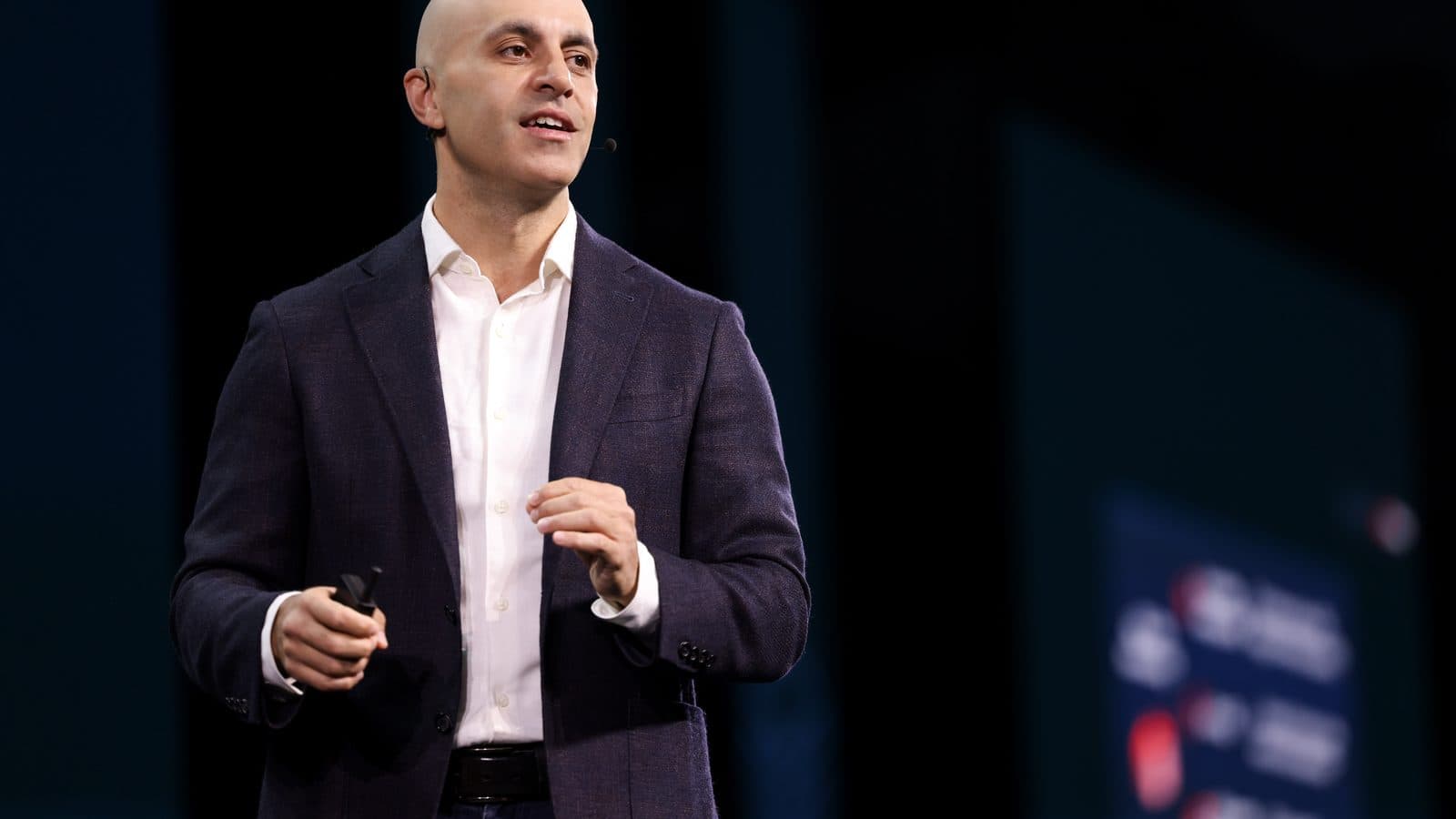
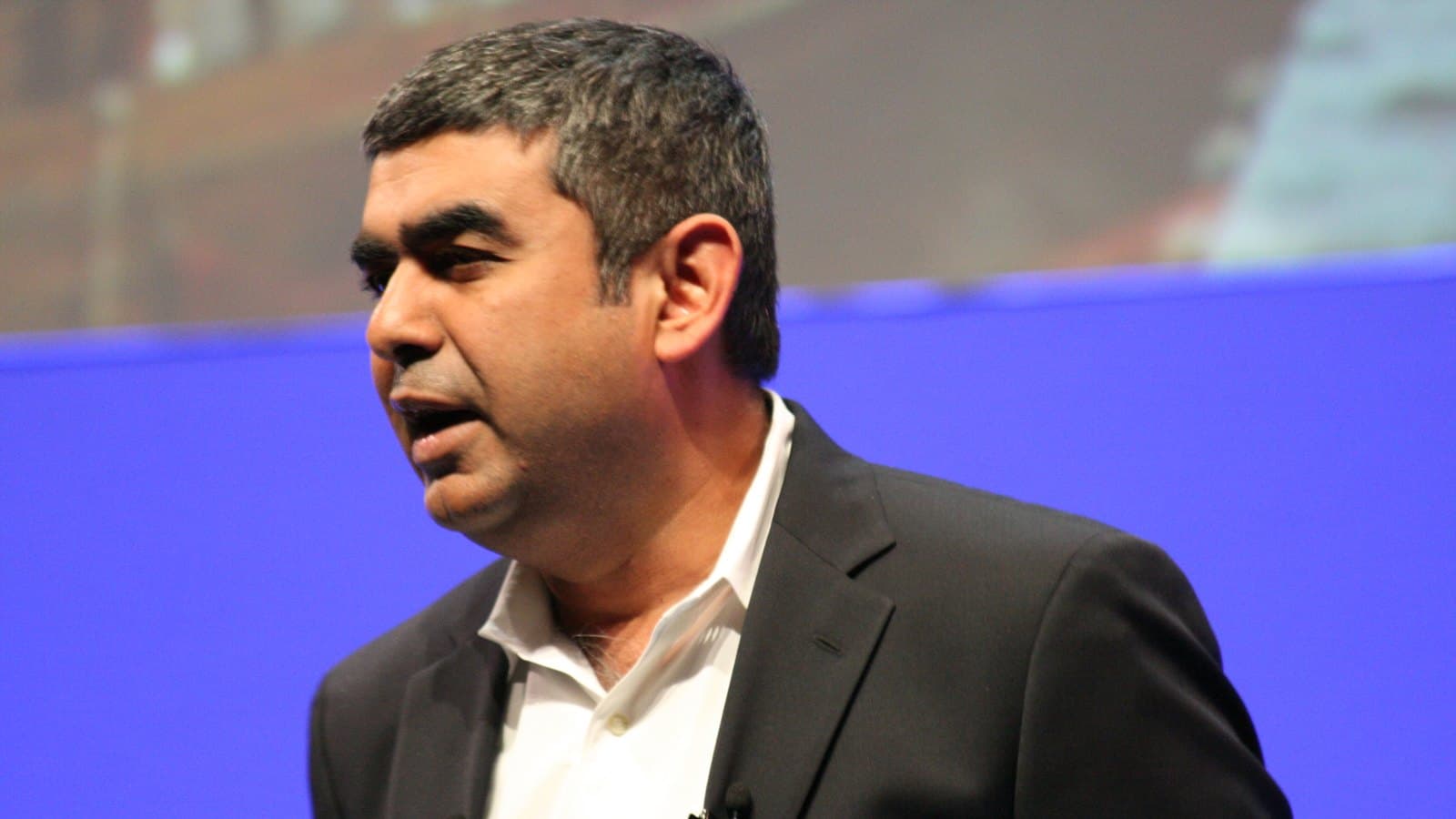
Cover: Vishal Sikka, founder and CEO of Hang Ten Systems, speaking at SAPPHIRE Orlando, by Gregor Wolf (CC BY-SA 2.0) via Wikimedia Commons.
Tags
Frequently asked questions
- What is Hang Ten Systems?
- Hang Ten Systems is an enterprise AI services company founded in May 2026 by former Infosys chief executive Vishal Sikka. It advises large companies on AI strategy and helps build, change and run enterprise software using agentic code generation, a reusable skills library and domain experts.
- How much has Hang Ten Systems raised?
- Hang Ten Systems has raised $85 million in total: a $32 million first seed led by Mayfield that was announced on June 24, 2026, and a $53 million second seed led by Xora that was announced on September 16, 2026.
- Who led Hang Ten's $53 million round?
- Xora, the early-stage investment platform backed by Singapore's Temasek, led the round. Mayfield and Aramco Ventures returned, alongside individual investors Lip-Bu Tan, Sanjay Mehrotra and Jerry Yang.
- What is the Hobie framework?
- Hobie is Hang Ten's in-house framework that packages reusable AI skills for regulated industries and complex enterprise software projects. Co-founder and chief design officer Sanjay Rajagopalan told TechCrunch that Hang Ten's engineers use it to deliver production software rather than proofs of concept.

TPW Editorial
Editorial Team
TechPastWeek's editorial team reports and edits every story we publish. We research each piece against primary and credible secondary sources, and a human editor reviews and signs off before it goes live.