Manus Seeks a $4 Billion Valuation and Weighs a Hong Kong IPO After Its Meta Breakup
Manus is in talks to raise about $500 million at a $4 billion valuation, the Wall Street Journal reported, doubling its mark as it considers a Hong Kong listing.

On this page
Key takeaways
- Manus is in talks to raise about $500 million at a valuation of roughly $4 billion, the Wall Street Journal reported on September 18, 2026, citing people familiar with the matter.
- The reported round would be the startup's first since it separated from Meta and would about double the roughly $2 billion valuation attached to the buyback of Meta's stake.
- Potential investors include IDG Capital, Boyu Capital and battery maker CATL, alongside existing backers Tencent, HSG and ZhenFund, according to the Journal and TechCrunch.
- Manus is also reported to be considering a restructuring to prepare for an initial public offering in Hong Kong.
- The company relocated to Singapore, agreed to a $2 billion sale to Meta in December 2025, and had that deal blocked by Chinese authorities in April 2026 before resuming independent operations this month.
Manus, the Chinese-founded AI agent startup that spent the first half of 2026 unwinding a $2 billion acquisition by Meta, is in talks to raise about $500 million at a valuation of roughly $4 billion. The Wall Street Journal reported the discussions on September 18, 2026, citing people familiar with the matter, and said the company is also weighing a restructuring to prepare for a listing in Hong Kong.
Related reading: Factory Raises $200M at a $5B Valuation, Tripling Its Worth Since April · Hang Ten Systems Raises $53 Million Second Seed, Bringing Sikka's Startup to $85 Million.
The round would be Manus's first since it separated from Meta and would about double the $2 billion valuation it carried when its founders and early backers bought Meta's stake back. TechCrunch and Quartz reported the talks the same day, and Bloomberg reported the plan on September 17.
The deal on the table
According to the Journal, potential investors in the new round include IDG Capital, Boyu Capital and the battery maker Contemporary Amperex Technology, known as CATL, alongside existing backers Tencent, HSG and ZhenFund. TechCrunch listed the same names. None of those investors has publicly confirmed a participation, and Manus did not respond to a request for comment from TechCrunch.
Reported, not confirmed: the $500 million figure, the $4 billion valuation and the investor list come from unnamed sources cited by the Wall Street Journal and repeated by other outlets. Manus has not confirmed the round, and terms can change before a deal closes.
The reported valuation would make Manus the most valuable startup in China's AI agent sector, according to 36Kr, a Chinese business publication. Its closest comparable, the report said, is Yanyu Technology, the maker of the Lovart design agent, which is reported to be valued at about $3 billion.
The Meta deal that was blocked
Manus went viral in 2025 with a demo of an AI agent that could carry out multi-step tasks with limited supervision. The company moved its staff to Singapore in mid-2025 and, in December of that year, agreed to a sale to Meta for more than $2 billion. At the time, Manus was reported to be generating annual recurring revenue of more than $100 million.
The deal did not survive Chinese regulatory scrutiny. In April 2026, Beijing blocked the acquisition after a months-long probe, citing potential violations of export controls and foreign-investment rules. The decision fit a broader pattern of Chinese authorities intervening to keep advanced AI engineering and talent inside the country.
Manus then untangled itself from Meta. Its early investors and backers helped the company buy Meta's stake back at about the same $2 billion valuation, and Tencent became the largest outside shareholder after taking over the stake that Benchmark had held. By May, Manus and Meta had completed an operational separation. In August, the company told users they would need to export and back up their own data because it had to delete information generated after Meta's acquisition to comply with regulations in certain jurisdictions. This month, Manus said it had resumed independent operations under its founding team.
Why the valuation doubled
The reported jump from $2 billion to $4 billion rests on a simple argument: the same business that a strategic buyer valued at $2 billion a year ago is now worth more to financial investors than it was to Meta. Manus has grown. 36Kr reported that its annual recurring revenue moved from near zero to about $100 million in eight months, an unusually fast climb for a company selling a productivity product rather than infrastructure.
A higher standalone valuation also reflects the alternatives. Inside Meta, Manus would have been one product in a portfolio that already includes a large AI assistant and a model lab. As an independent company, it is a pure bet on the agent layer, the software that sits between a foundation model and a finished task. Investors who want exposure to that layer without buying a model developer have few large private targets to choose from.
The presence of CATL on the reported investor list is its own signal. A battery manufacturer is not an obvious backer of an AI agent startup, but large Chinese industrial companies have been placing strategic bets across the AI stack, and a corporate investor can bring manufacturing and energy customers as well as capital.
The Hong Kong IPO question
The Journal reported that Manus is considering a restructuring to prepare for a Hong Kong listing. That would put it alongside other Chinese AI companies that have chosen Hong Kong as their route to public markets, including the model developer Moonshot, according to Bloomberg's account.
Hong Kong has become the default listing venue for mainland technology companies that cannot easily list in New York. The exchange has worked to attract AI and advanced-technology issuers, and a high-profile agent company would be a notable addition. For Manus, the appeal is practical: a listing would give early investors liquidity and give the company a public currency for hiring and acquisitions.
A restructuring ahead of a listing is routine but not trivial. Manus is a Singapore-headquartered company with Chinese roots and a workforce and user base split across regions. A structure that satisfies Hong Kong listing rules, Chinese regulators and foreign shareholders is a negotiation in itself. No filing has been confirmed.
What Manus actually sells
Manus makes AI products that sit close to what OpenAI, Replit and Lovable offer. It provides a chatbot and vibe-coding tools that let a user build apps and websites, create designs and presentations, generate video, and hand off multi-step tasks to an agent. The company does not train its own foundation models, which means its value depends on how well it orchestrates models built by others.
That position is both the pitch and the risk. A company that only orchestrates other companies' models can move quickly and stay model-agnostic, and it can capture value from customers who want results rather than a particular provider. But the same foundation models are getting better at exactly the general desktop tasks that agents perform, and the labs behind them sell directly to the same customers.
Manus's answer has been to lean on context engineering, multi-tool scheduling and task orchestration, the layer above raw model capability. Whether that layer stays defensible as the underlying models improve is the central question for the company and for its reported valuation.
The China AI capital wave
The reported round lands in a strong moment for Chinese AI financing. Z.ai, the model developer formerly known as Zhipu AI, completed a $5 billion funding round on September 16, and the model and agent sectors have attracted a wave of capital as domestic companies position for global competition. Manus is one of the highest-profile names in that wave because its product reached international users before it reached a public market.
The Meta episode also gave Manus something that is hard to buy: evidence that its technology was valuable enough for a major American buyer to attempt an acquisition and for Beijing to stop it. Whatever else the valuation reflects, it reflects a scarcity value attached to a company that regulators have already decided matters.
Caveats and what to watch
The central facts of this story are reported, not confirmed. The round size, the valuation, the investor list and the Hong Kong plan all trace back to unnamed sources. Manus has not commented, and private financing talks routinely change or collapse.
The financial numbers are also thin. The $100 million annual recurring revenue figure has been reported previously but has not been verified by the company in this round, and annual recurring revenue is a measure of contracted or run-rate revenue rather than audited income. Manus does not publish financial statements.
Three things would clarify the picture. The first is whether the round closes and at what valuation, which would turn a reported figure into a fact. The second is whether Manus files a listing document in Hong Kong, which would force a level of disclosure the company has so far avoided. The third is the competitive one: whether agent companies can keep charging for orchestration as the model developers absorb more of that work.
For now, Manus has what every startup in a hot sector wants, which is leverage. It is negotiating from a position where investors are competing for a stake and a public listing is plausible. The question the next year will answer is whether that leverage came from a durable business or from a moment.
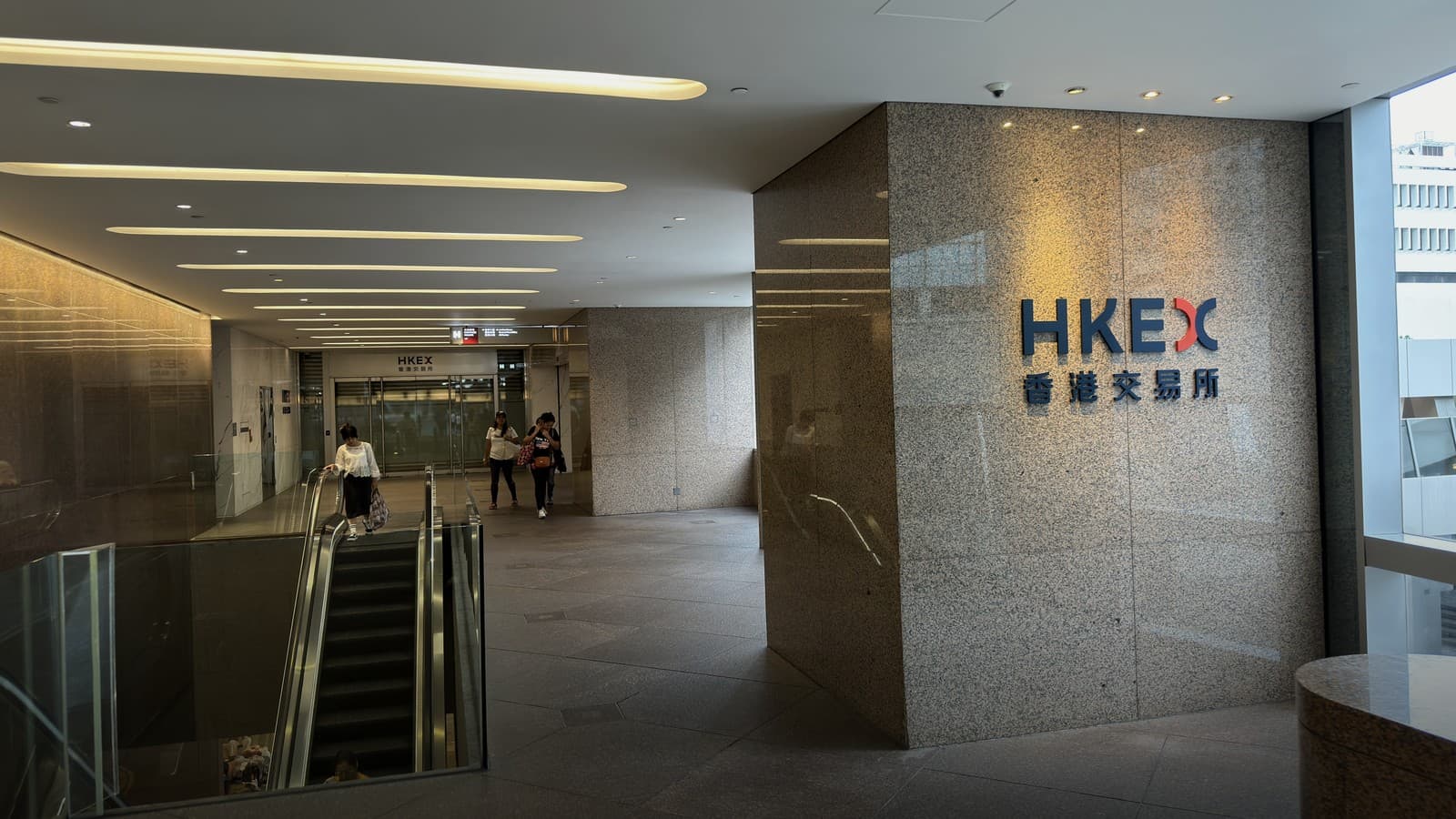
Cover: The HKEX Hong Kong Exchanges and Clearing sign in Central, Hong Kong, by LN9267 (CC BY-SA 4.0) via Wikimedia Commons, cropped 16:9.
Tags
Frequently asked questions
- How much is Manus worth?
- Manus is in talks to raise about $500 million at a valuation of around $4 billion, the Wall Street Journal reported on September 18, 2026. That is a reported figure from unnamed sources, not a confirmed closing price, and the company has not commented.
- Why did Meta not buy Manus?
- Meta agreed in December 2025 to acquire Manus for more than $2 billion, but Chinese authorities blocked the deal in April 2026, reportedly citing export-control and foreign-investment rules. The founders and existing investors then bought Meta's stake back at about a $2 billion valuation.
- Is Manus going public?
- Manus is reportedly considering a restructuring that would prepare it for an initial public offering in Hong Kong. No filing has been confirmed, and the company has not announced a listing plan.
- Who invests in Manus?
- Existing backers include Tencent, HSG and ZhenFund. The reported new round could bring in IDG Capital, Boyu Capital and CATL, according to the Wall Street Journal and TechCrunch. The reported investors have not confirmed their participation.

TPW Editorial
Editorial Team
TechPastWeek's editorial team reports and edits every story we publish. We research each piece against primary and credible secondary sources, and a human editor reviews and signs off before it goes live.