OpenAI Nears a $30 Billion Round at $1.25 Trillion, $150 Billion Below Its Earlier Target
OpenAI is close to a round of up to $30 billion at a $1.25 trillion pre-money valuation, led by UAE investors and Coatue, $150 billion below its earlier target.

On this page
Key takeaways
- OpenAI is close to finalizing a funding round of up to $30 billion at a $1.25 trillion pre-money valuation, CNBC reported on 22 October 2026.
- Investors from the United Arab Emirates and the venture firm Coatue are leading the round, and OpenAI told investors on 22 October 2026 that it wanted signatures by the end of the week beginning 26 October.
- The $1.25 trillion figure is $150 billion below the valuation above $1.4 trillion that Reuters reported OpenAI was seeking earlier in October 2026.
- OpenAI confidentially filed its IPO prospectus with the SEC in June 2026, and CFO Sarah Friar told employees in August 2026 that the company will be a public company in 2027.
- OpenAI told investors in February 2026 that it targets roughly $600 billion in total compute spend by 2030, and it is separately negotiating more computing capacity from the UAE.
OpenAI is close to finalizing a funding round of up to $30 billion at a $1.25 trillion pre-money valuation, CNBC reported on 22 October 2026. Investors from the United Arab Emirates and the venture firm Coatue are leading the deal, which the company has pitched to backers as an "opportunistic" bridge ahead of a possible initial public offering.
Related reading: DeepSeek Reportedly Raises $15 Billion at a $74 Billion Valuation, Two Days After a US Federal Order · The Boring Company Raises $3 Billion at a $23 Billion Valuation, Led by the UAE.
The timing is tight. OpenAI told investors on Thursday 22 October that it wants signatures by the end of the following week, and the final size is still being worked out. The figures come from people familiar with the deal, not from the company. No term sheet has been published, OpenAI has not confirmed the round, and nobody has said when the money would land.
The $30 billion is the smaller number in the story. The $1.25 trillion is the one that carries the news, and it sits $150 billion below the valuation above $1.4 trillion that Reuters reported OpenAI was chasing earlier in October. A company that had been trying to raise at one price is now, days later, raising at a lower one.
A bridge round, priced in private
A bridge round is money raised between financing events. For a company that has already filed to go public, it does two jobs at once: it funds the business until the listing, and it avoids setting the price that public investors will eventually pay. CNBC's description of the raise as "opportunistic" points at the second job more than the first.
The Information reported that the round was set to close soon, with UAE investors and Coatue leading. That matches the CNBC account, and neither outlet published terms.
Every dollar raised now adds a claim on the company ahead of ordinary shares, and the terms of that priority are not public. In a conventional preferred round, late investors usually receive liquidation preferences and protections that ordinary shareholders do not. Whether this round carries them, and at what multiple, is unknown. What is known is that buyers are being asked to commit before a public market has priced the same business.
The arithmetic is modest against the headline. If the full $30 billion is raised on a $1.25 trillion pre-money valuation, the new money buys roughly 2.3% of the company on a post-money basis. That is a small slice for a large check, and it fits the bridge description: the round tops up the balance sheet without redrawing ownership.
Why $150 billion came off the ask
The earlier number was not a signed offer. Reuters reported on 20 October that OpenAI was accelerating talks to raise about $30 billion at a valuation above $1.4 trillion, approaching existing investors including SoftBank and MGX. Gizmodo's account of that report framed the urgency around Anthropic's IPO preparations. Two days later, CNBC's sources put the valuation $150 billion lower, and 24/7 Wall St read the change as a cut to the target.
The Financial Times reported that some investors resisted the higher price, according to a summary of its reporting carried by Business Standard. That resistance is the cleanest explanation on offer for the gap, and it is still only a report. A second explanation is mechanical: the $1.4 trillion was a target, and targets in private fundraising are opening positions. Companies test a price, watch the response and move. Neither account has been confirmed by OpenAI.
In percentage terms the cut is about 10.7% of the earlier target, or $150 billion.
The comparison with Anthropic hangs over both. Anthropic confidentially filed in June 2026 and has been meeting investors; Reuters reported it is seeking a valuation between $1.5 trillion and $2 trillion, after closing a $65 billion round at a $965 billion valuation in May 2026. On those reported numbers, Anthropic is asking public investors for a higher price than OpenAI is asking private ones.
Abu Dhabi is buying two things at once
The UAE connection goes beyond equity. Alongside the round, OpenAI is negotiating a separate commercial deal to secure more computing capacity from the UAE, according to one person familiar with the matter. That deal is unsigned, undisclosed and not part of the equity round. Keeping the two apart matters: one is a share sale, the other a supply contract, and only one of them would appear on a cap table.
Compute is the reason both exist. OpenAI told investors in February 2026 that it targets roughly $600 billion in total compute spend by 2030. A number that size is hard to meet from a single country's grid, which is why Gulf capital keeps appearing next to Gulf electricity. For the UAE, the appeal runs the other way: a sovereign investor gets a stake in a leading American lab, and the country gets a role hosting the infrastructure that lab needs.
Two deals, one counterparty
The equity round and the compute talks involve the same region but are separate transactions. The compute deal is reported by one person, has no announced terms and has not been signed. Treating it as part of the $30 billion would overstate what is known about both.
The pattern is familiar by now. American labs raise from American investors and rent capacity from American cloud providers. The newer deals add a sovereign fund that wants both a stake and a domestic footprint, and a lab willing to site capacity wherever the power and the permits are. That creates a dependency regulators are likely to notice: a US lab whose compute base is partly hosted in the Gulf is a policy question as much as a business one.
What a private mark is worth
$1.25 trillion is a private valuation, not a market capitalization. It has not been tested by public buyers, it is not audited the way a listed company's figures are, and it can be revised in the next round. The number is also pre-money, which means it excludes the $30 billion being raised. If the full amount closes, the post-money figure would be about $1.28 trillion.
It helps to put the mark in sequence. OpenAI's last widely reported valuation was $852 billion post-money on 31 March 2026, a figure from secondary sources rather than a company announcement. Against that, $1.25 trillion is a large step up. Against the $1.4 trillion target reported on 20 October, it is a step down. Both statements are true, and the difference between them is the difference between a company's own expectations and what buyers will pay.
That distinction matters for anyone reading the headline as a verdict on AI. A lower private mark before an IPO does not mean OpenAI is worth less than it was in March. It means the price of new money has fallen relative to the company's plan. That is a reading on the marginal buyer, not on the whole business.
The IPO is filed, the date is not
OpenAI confidentially filed its IPO prospectus with the SEC in June 2026 and has not disclosed a date. A confidential filing lets a company prepare a listing, answer regulator comments and adjust its story without publishing financials. It is a step toward going public, not a commitment to a timetable.
The public signals point in different directions. CFO Sarah Friar told employees in August 2026 that the company "will be a public company in 2027," CNBC reported. A month later, chief executive Sam Altman described the present as a bad time to list.
“Right now would be an ill-advised moment to go public.” — Sam Altman, OpenAI chief executive, September 2026, via CNBC.
Both statements can hold. "In 2027" covers twelve months, and a chief executive who thinks October 2026 is a poor moment can still plan for the second half of next year. What the pair does not support is the idea that a listing is imminent. The bridge round buys time, and time is what a company needs if it wants to list after the market has settled.
There is a competitive clock as well. Anthropic's filing and its reported $1.5 trillion to $2 trillion target mean the first of the two labs to list will set a public benchmark the other has to answer. That gives OpenAI a reason to keep its options open without fixing a number that a rival's debut could undercut.
What would settle it
Three events would move this from reported to known: a closing announcement with a final size and investor list; a signed, disclosed compute agreement with the UAE; and a public prospectus. None has happened. The first could come quickly if the signature target holds, which points at the week beginning 26 October 2026.
The report contains no financial detail. CNBC's account carries no revenue, burn or margin figures, so there is no way to test $1.25 trillion against earnings. The public spending picture runs through the February compute target of about $600 billion by 2030. That is not enough to price a company, and CNBC did not supply the missing detail. A public prospectus would fill part of it and would also expose the preference stack this round adds, which is the part public investors tend to price first.
What to watch is the structure rather than the headline. Watch whether the round closes at $30 billion or below it, because the size was still being decided when the news broke. Watch whether the UAE compute deal is signed and disclosed separately, because that would confirm the capital-plus-capacity model rather than merely suggest it. And watch Anthropic's filing, because the first public price for a frontier lab will reprice every private mark behind it.
The round has not closed. The price is reported, not set.
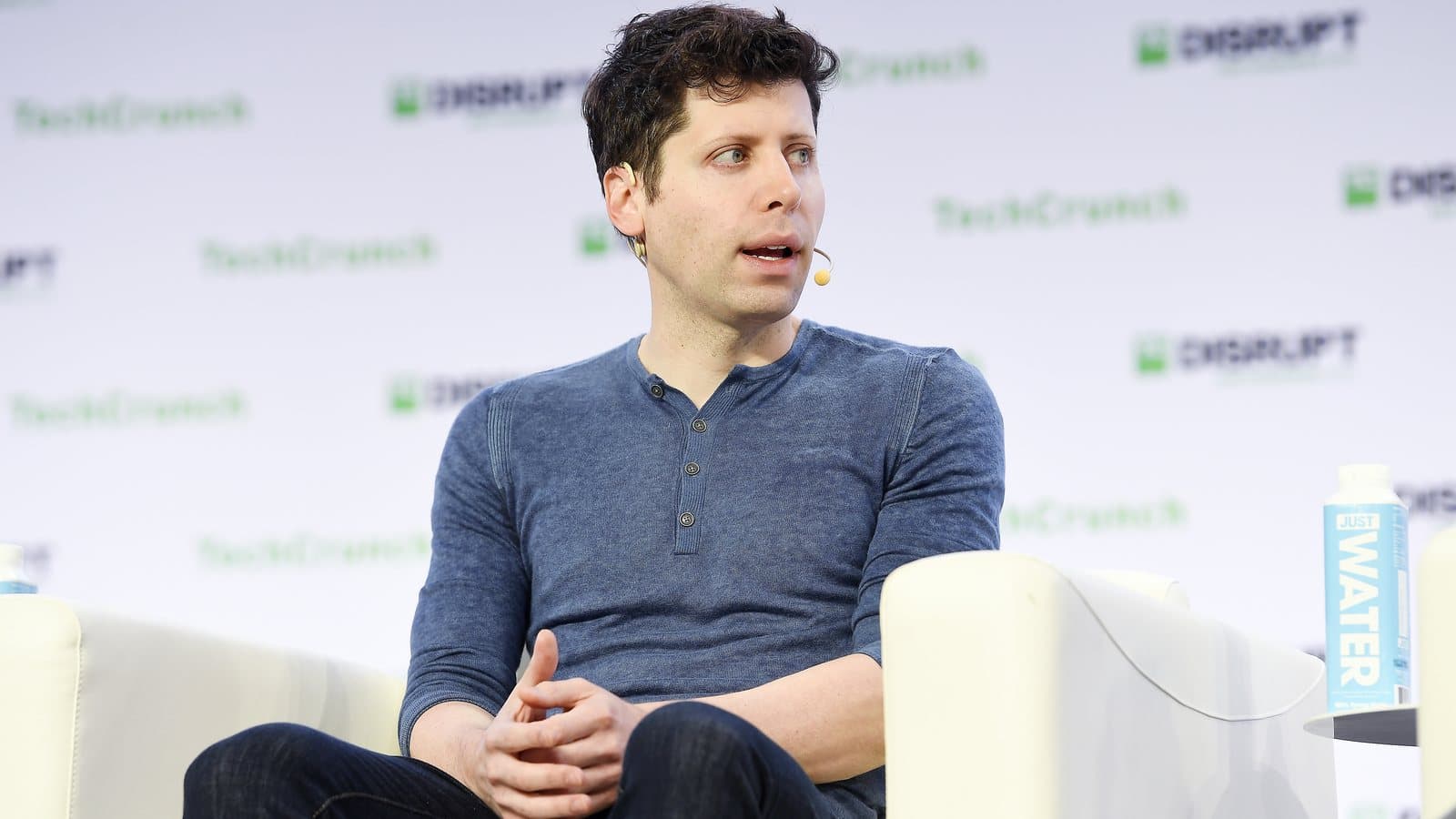
Cover image: Sam Altman at TechCrunch Disrupt San Francisco in October 2019. Photo by Steve Jennings/Getty Images for TechCrunch, CC BY 2.0, via Wikimedia Commons. The photograph is from October 2019 and does not show the 2026 funding round.
Tags
Frequently asked questions
- Has OpenAI closed its $30 billion funding round?
- No. CNBC reported on 22 October 2026 that OpenAI was close to finalizing a round of up to $30 billion and wanted signatures by the end of the following week. The final size was still being decided, and OpenAI has not confirmed the terms.
- Who is leading OpenAI's new funding round?
- Investors from the United Arab Emirates and the venture firm Coatue are leading the round, according to CNBC. OpenAI has not published an investor list, so the final participants and the split between them are not known.
- What does a $1.25 trillion pre-money valuation mean?
- It is the value of OpenAI before the new money is added, so it excludes the up to $30 billion being raised. If the full amount closed at that price, the post-money valuation would be about $1.28 trillion. The figure is a private mark, not a market capitalization.
- When will OpenAI go public?
- OpenAI confidentially filed its IPO prospectus with the SEC in June 2026 but has not disclosed a date. CFO Sarah Friar told employees in August 2026 that the company will be a public company in 2027, while chief executive Sam Altman said in September 2026 that right now would be an ill-advised moment to go public.

TPW Editorial
Editorial Team
TechPastWeek's editorial team reports and edits every story we publish. We research each piece against primary and credible secondary sources, and a human editor reviews and signs off before it goes live.