The Boring Company Raises $3 Billion at a $23 Billion Valuation, Led by the UAE
The Boring Company, Elon Musk's tunnelling startup, raised $3 billion at a $23 billion valuation in a UAE-led round to build 150 km of tunnels in the Gulf.

On this page
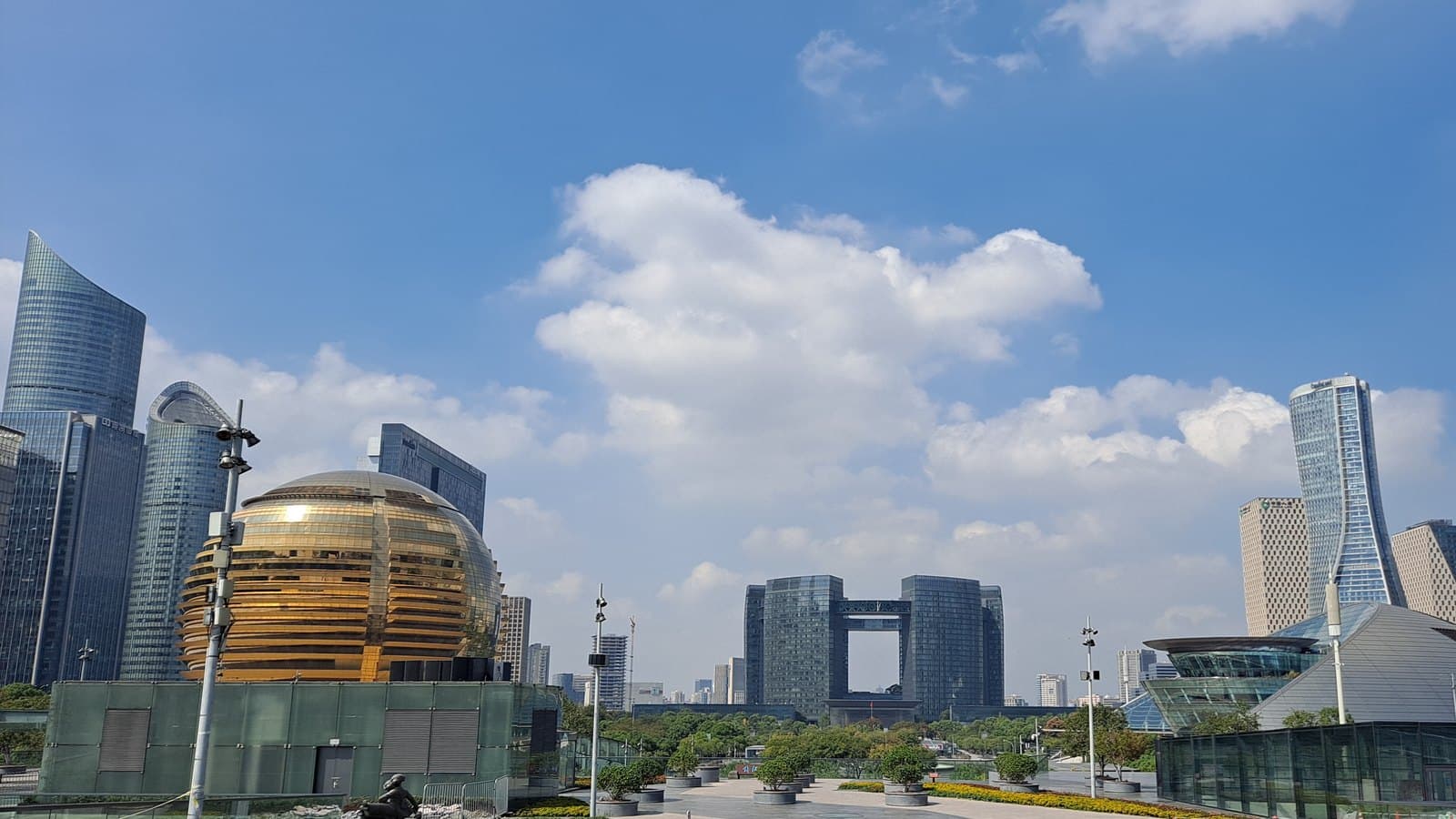
The Boring Company, Elon Musk's tunnel-construction startup, said on September 9 that it raised $3 billion in a new Series D round at a $23 billion valuation, with the United Arab Emirates and affiliated investment entities leading. The money will fund an expanded partnership to build more than 150 kilometres (about 93 miles) of underground infrastructure across the UAE, on top of the Dubai Loop project the company had already been awarded.
Related reading: OpenAI Nears a $30 Billion Round at $1.25 Trillion, $150 Billion Below Its Earlier Target · DeepSeek Reportedly Raises $15 Billion at a $74 Billion Valuation, Two Days After a US Federal Order.
The round roughly quadruples Boring's last private mark. The company was valued at $5.675 billion in April 2022, after a $675 million Series C led by Vy Capital and Sequoia Capital, as Reuters reported at the time. Investors in the new round include Human Capital, Vy Capital, Valor Equity Partners, Sequoia Capital, Andreessen Horowitz, Temasek, Shamal Holding and Baron Capital, according to Reuters. Bloomberg put the same valuation figure at $23 billion.
The investor list is largely a reunion. Many of the funds have backed Musk's other companies, including Tesla, SpaceX and his 2022 buyout of Twitter, and several appear across more than one of his ventures. The proceeds will fund hiring in engineering, production and operations, scale Loop projects in Las Vegas, Nashville and Dubai, and speed up development of the Prufrock boring machine, TechCrunch reported.
Musk marked the raise with a familiar flourish. “Defeating traffic is the ultimate boss battle,” he wrote. “Even the most powerful humans in the world cannot defeat traffic.”
The round in one line
$3 billion raised, at a $23 billion valuation, led by the UAE and affiliated entities. The previous mark was $5.675 billion in 2022, so this is a roughly four-fold increase in a little over four years.
From a tweet to the Vegas Loop
Musk floated the idea in December 2016, posting that traffic was “driving me nuts” and that he was going to build a tunnelling machine and “just start digging”. The company was registered inside SpaceX in January 2017 and spun out as a standalone firm in 2018. Its first machine, Godot, bored a 1.14-mile test tunnel under Hawthorne, California, between 2016 and 2018, according to the company's history.
Most of the hype since has rested on Prufrock, the custom machine Boring says it designed to dig faster and cheaper than conventional tunnel-boring equipment. The company states on its site that Prufrock targets more than a mile per week and an all-in cost under $8 million per mile for a Loop transportation tunnel, figures that conventional transit projects rarely approach.
Its only operating passenger service is in Las Vegas. The Las Vegas Convention Center Loop, a pair of tunnels linking the convention centre's halls, opened in 2021 and moves people in human-driven Tesla vehicles. The wider Vegas Loop has carried more than four million passengers across 11 stations, the company says, and Clark County has approved entitlements for a network of up to 68 miles and 104 stations. In Nashville, where the Music City Loop broke ground in February 2026, Boring is cutting through hard limestone, its first such project.
The company has long framed its tunnels as a way to cut the cost and time of urban transit, with projects promised in weeks rather than years. Those promises have outrun the record. The 29-mile Vegas Loop that Clark County approved in 2021 is still being built out, and its tunnels carry road vehicles rather than the high-speed electric skates Musk showed in early concept videos.
Funding had been quiet until now. Boring raised about $112.5 million in 2018, roughly $120 million in 2019 and the $675 million Series C in 2022, and it had not announced a major new round since. For four years the private valuation sat still while the company kept announcing projects that did not get built.
Why the Gulf is writing the cheque
Sovereign capital from the Gulf has spent years buying into Western technology, and infrastructure a government both funds and commissions is an unusually tight fit. The UAE is not only investing in Boring; it is also the customer for the largest block of work the money is meant to finance. Dubai's Roads and Transport Authority signed a preliminary agreement for the Dubai Loop in February 2025 and a construction contract for the pilot in February 2026: a 6.4-kilometre route with four stations linking the Dubai International Financial Centre and the Dubai Mall, at a cost of about AED565 million ($154 million), The National reported. The full Dubai Loop is planned to reach 22 kilometres and 19 stations.
That overlap is the point. For the UAE, the tunnels convert hydrocarbon wealth into visible, fixed infrastructure and a position in underground transport technology. For Boring, sovereign money arrives without the planning fights, environmental reviews and community opposition that have stalled or killed its American projects. Electrek's Fred Lambert captured the trade-off in his analysis: the UAE, he wrote, is probably a better investor and project partner for the company than the cities that have turned it away. Governments that control permitting can move a tunnel project faster than a city council can hold a hearing about it.
The scale claim deserves care. The 150-kilometre figure is an ambition attached to the partnership, not a signed programme. Only the 6.4-kilometre pilot is contracted, and reporting by Meed notes that the bulk of the wider network has yet to be tendered, designed or awarded, with no timeframe attached. The country leading the round is also the customer for the work the round is meant to fund, which makes the arrangement less a pure financial bet than a state-backed development programme with an equity component.
The economics, and the doubts
Boring's case rests on making tunnels small and cheap enough to build as a network rather than as marquee megaprojects. That argument leans heavily on tunnel diameter, and therefore on capacity. A Loop moves a handful of passengers per vehicle through a bore about 3.6 metres wide. A conventional metro moves tens of thousands of people per hour through a tunnel several times wider. The company says the completed Vegas Loop could eventually carry up to 90,000 passengers per hour, but it has not published the simulations that would show how a fleet of cars in narrow tunnels compares with rail on throughput or energy use.
Cost is where the model is hardest to judge from outside. Subway construction in the United States has recently run into the hundreds of millions of dollars per mile; Boring's stated target is a small fraction of that, achieved by shrinking the tunnel and standardising the machine. The savings are real where they are measured, but the same design choice that cuts cost also cuts capacity, so the figures cannot be compared directly with a metro that moves far more people per hour.
The delivery record is the other half of the doubt. Since 2017, Boring has announced roughly a dozen city projects, and Las Vegas is the only one carrying passengers today. The Chicago O'Hare express was unveiled with a roughly $1 billion price tag and died without financing or a signed contract. A Washington-to-Baltimore Loop won conditional permits and then disappeared from the company's own website. A $45 million airport connector in Ontario, California, swelled toward $500 million before Boring withdrew. San Antonio's transit agency selected the company for a nine-mile system and later said it stopped hearing back.
There are operating concerns as well. ProPublica documented hundreds of environmental violations tied to the Las Vegas project, and the company has drawn workplace-safety citations in Texas. A proposed Nashville network drew a Vanderbilt University survey in which most residents said they did not want the tunnels, though ground was broken anyway.
The number nobody outside the company can check
Boring is private, and it discloses almost no financial detail. There is no independent revenue figure, no audited accounts and no breakdown behind the $23 billion mark. The valuation is set by the same investors who supplied the money, and the company has not said what the round implies about its revenue or its burn rate. The Dubai pilot's cost and schedule come from the RTA and the company. The 150-kilometre plan has no tendered contracts, no published budget and no completion date.
That matters for reading the headline. A four-fold jump in value, on a company whose only live public operation is a pair of tunnels under a convention centre, is a bet on execution in a country where that execution has not yet begun. Precast production for the Dubai pilot is under way, but no passenger tunnel is open in the UAE, and the first phase is not expected to begin operating until around 2028.
The context around the round matters, too. CNBC reported the raise alongside SpaceX's record initial public offering and Tesla's rollout of driverless Cybercabs in Austin, episodes that have lifted the profile and the perceived value of Musk's wider portfolio. The same cast of investors appears across those ventures, which makes it hard to separate confidence in Boring from confidence in Musk.
Boring is now one of the last large Musk companies not folded into a bigger one. SpaceX absorbed xAI in an all-stock deal in February 2026, then listed in June 2026 in the largest initial public offering on record. That combination turned much of Musk's private empire into a public-market story and gave investors a fresh benchmark for pricing the ventures that remain private. Boring, alongside Neuralink, is among the few still outside the consolidation.
What to watch
- Whether the 150-kilometre plan becomes contracts. Ambitions are cheap; tenders are not. Watch for awarded phases, pricing and a budget from the UAE side.
- Whether the Dubai pilot opens on schedule. The first phase is meant to carry around 13,000 passengers a day, rising to roughly 30,000 across the full route, with completion targeted within about three years.
- Prufrock's hard-rock performance. Nashville is the first limestone test. If the speed and cost claims hold there, they travel more easily to the geology and the budget of the UAE expansion.
- How the money is spent. Boring says the cash funds hiring, Loop projects and machine research. A private company has no obligation to publish revenue, and this round gives it little reason to start.
- Whether the Gulf model spreads. A state that both funds and buys is a different kind of investor from a venture fund seeking a return. If the arrangement works, it could become a template for Western infrastructure startups that cannot get built at home.
For now, the round is best read as the price of a promise in a place willing to underwrite it. Boring has spent a decade arguing that tunnels can be dug faster and cheaper than the transit industry believes. It now has $3 billion, a sovereign backer and a customer in the same government. What it still lacks is a passenger tunnel in the country paying the bill, and any financial disclosure that would let an outsider judge the bet.
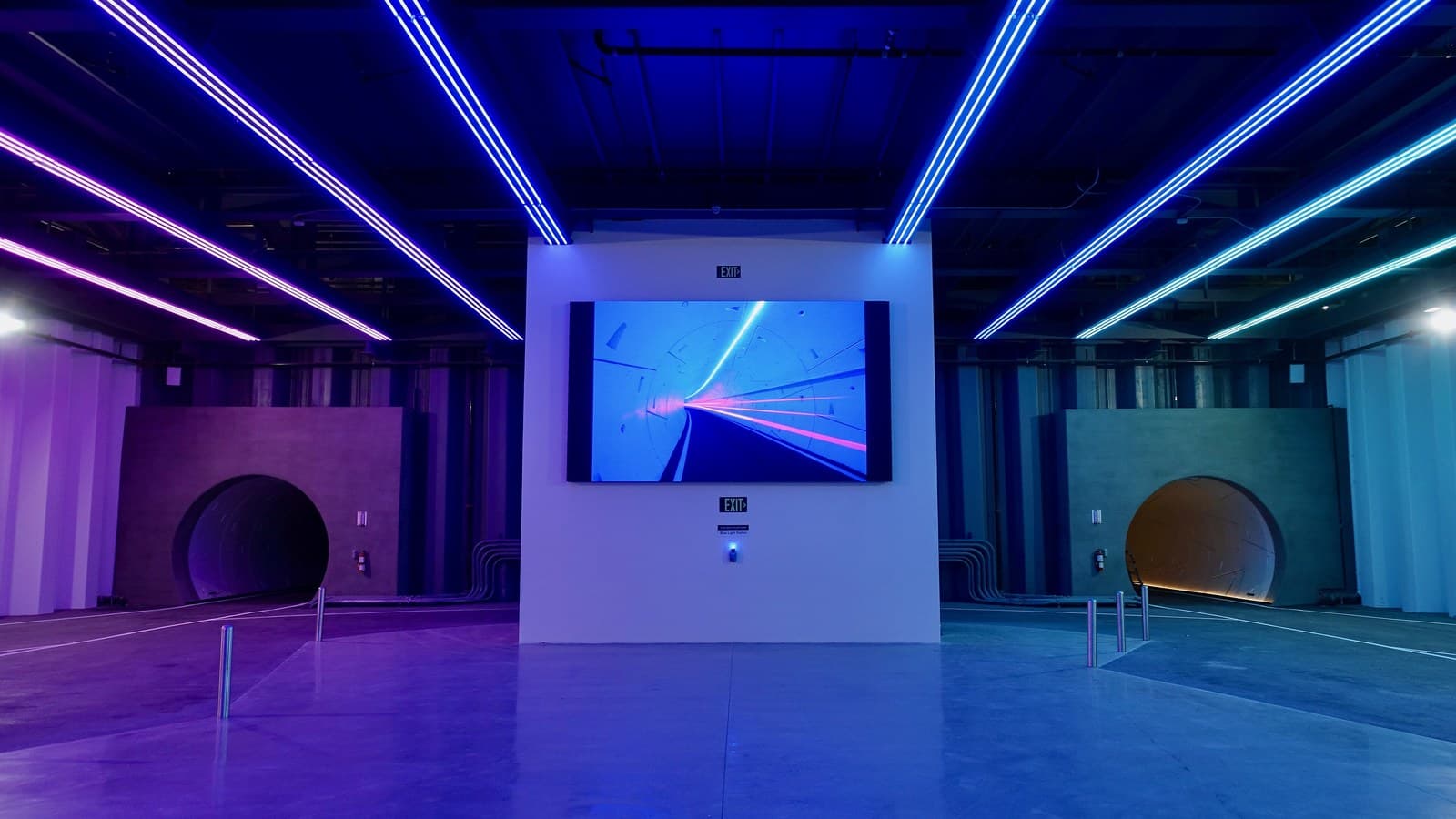
Cover image: “Las Vegas Convention Center Loop” by Daniel (Dschwen), Wikimedia Commons, CC BY 2.0.
Tags

TPW Editorial
Editorial Team
TechPastWeek's editorial team reports and edits every story we publish. We research each piece against primary and credible secondary sources, and a human editor reviews and signs off before it goes live.