Discovery Loop, Weeks Old, Is Reported to Seek a $50 Billion Valuation
Jeff Dean's weeks-old AI startup Discovery Loop is reported to seek a $50 billion valuation, up from about $10 billion in August. The round is not confirmed.


On this page
A startup founded just over five weeks ago is reportedly in talks to be worth around $50 billion. On Friday, September 11, Business Insider reported that Discovery Loop (the company launched in August by four of Google's most senior AI scientists) is raising again, this time seeking a valuation of roughly $50 billion, according to people familiar with the matter. Reuters wrote it up the same day. Discovery Loop declined to comment, and its co-founder and chief executive, Jeff Dean, did not respond to a request for comment. Terms could change, and there is no guarantee the company closes a round at that number.
Related reading: Q3 2026 Venture Funding Fell to $159B as Billion-Dollar Rounds Set a Record · Factory Raises $200M at a $5B Valuation, Tripling Its Worth Since April.
The report lands barely five weeks after the same outlet described the company very differently. In early August, Business Insider reported that Discovery Loop was in discussions to raise about $1 billion at a valuation of around $10 billion. The new figure is roughly five times that, for a company that has not shipped a product and has said relatively little in public about what it will sell.
What Discovery Loop actually is
The company announced its launch on August 5, 2026. Its four founders (Dean, Sanjay Ghemawat, Quoc Le and Oriol Vinyals) are an unusually decorated group even by the standards of the current AI boom. Dean spent 27 years at Google, joined as roughly its 30th employee, co-founded the Google Brain team and served as chief scientist before resigning. He also co-led the technical side of Gemini. Ghemawat is a founding figure in Google's distributed-computing infrastructure. Le was a founding member of Google Brain. Vinyals was a leading researcher at Google DeepMind whose work spans sequence modelling and reinforcement learning.
Discovery Loop was set up as a Delaware public benefit corporation, according to the law firm Wilson Sonsini, which advised on the launch and the initial financing. Its stated mission is to automate "complete experimental loops" (the propose, implement, run and evaluate cycle of scientific work) using frontier AI models and large-scale computation. The company says the approach allows the "parallel execution of thousands of experiments," compressing the time each iteration takes.
The first target is not medicine or materials but machine learning itself. The founders have said Discovery Loop will be its own first customer, using the loops to improve its own models before generalising to other fields. The longer-term goal is to take on the U.S. National Academy of Engineering's Grand Challenges, a set of 14 problems that range from engineering better medicines to securing cyberspace and preventing nuclear terror. Business Insider's earlier explainer noted the company hopes to tackle parts of that list.
Discovery Loop describes its purpose in deliberately sweeping terms. "Our goal is to build AI that acts as a genuinely positive, empowering force for humanity: not just a tool, but a partner in solving the problems that matter most," the company says on its careers page. Dean, in a talk last month, gave the mission a sharper edge. He said he and his co-founders "might make decisions that are not in the company's financial interest but are in the broader societal good."
The company also chose a structure that matches that language: a public benefit corporation, a legal form that requires directors to weigh a stated public benefit alongside shareholder returns. It is a signal about intent, and it is the same form some other safety-oriented labs have adopted. It does not, by itself, change how investors value the business.
That ambition is why investors are engaged. It is also why the numbers are moving so quickly.
The first investors, and the argument for the price
The initial funding round, announced alongside the launch, was co-led by Radical Ventures and Khosla Ventures, with participation from Lightspeed, Kleiner Perkins and Doerr Capital. Alphabet is a founding investor as well as the company's cloud and compute partner. Google CEO Sundar Pichai said publicly that the search giant would continue to work with Discovery Loop as a founding investor and Cloud partner.
Vinod Khosla, the veteran venture capitalist whose firm co-led the round, put the case to WIRED in unusually direct terms: "With this team, I wouldn't need to know what they were doing before I backed them," he said. The bet, as he framed it, is not on a product but on the idea that "AI is the researcher."
The departure was costly for Google, which lost two of its earliest and most influential engineers at once, along with two of its most cited AI researchers. WIRED described Alphabet's move to take a stake and supply compute as an attempt to keep a relationship with a team it could not keep on the payroll. Vinyals summed up the motivation for leaving: "We want to build something different." For investors, that same scarcity is the investment case, the founders are valuable precisely because few people can do what they do, and because Google could not retain them.
Priced on people, not revenue
There is no revenue figure to anchor this valuation and no shipped product to point to. Discovery Loop was hiring a single role as of the earlier report. Investors are, in effect, pricing a founding team: four people who helped build infrastructure and models that much of the industry now depends on.
That is the crux of the story. Discovery Loop is being valued, at least in part, on the pedigree of its founders rather than on customers or shipped software. In a field where a single elite researcher can command tens of millions of dollars in compensation, four people widely described as belonging to the top tier are the asset.
Why the price is climbing so fast
Three forces are pushing valuations like this upward.
- Talent scarcity. Frontier labs compete for a small pool of researchers who can lead large-scale model work. WIRED has reported that some companies have offered tens or even hundreds of millions of dollars to land one prominent AI scientist. When a founding team has co-written core Google infrastructure and shipped products from Search to Gemini, investors treat the team itself as the thing worth buying.
- The cost of compute. Building a frontier lab is capital-intensive well before it earns anything. Business Insider framed the dynamic plainly: investors' appetite for top AI talent is matched "only by the enormous expense of building an AI lab." A cloud and compute partnership with Alphabet softens that cost, but it does not remove it.
- A white-hot funding market. The reported $50 billion figure is extreme but not isolated. Data-centre developer Crusoe raised more than $3 billion at a roughly $30 billion valuation in early September, Bloomberg reported. French lab Mistral's valuation moved above €21 billion, about $24 billion, after a €3 billion round reported on September 8. And Mira Murati's Thinking Machines Lab was reported to be in talks to raise at a pre-money valuation of at least $40 billion, per The Information.
Discovery Loop is unusual within that group because it is younger than all of them and has far less to show. That is precisely the pattern the market is rewarding: pay early for a team believed to be irreplaceable, and accept that the product will come later.
A reported round is not a closed round
Every number in the new story comes from unnamed people, and the framing matters. Business Insider attributed the $50 billion figure to "people familiar with the matter." Discovery Loop declined to comment on the record. Dean did not respond. The report itself says terms could change and that there is no guarantee the company will raise at that valuation.
There is recent precedent for prudence. Thinking Machines reportedly sought a $50 billion to $60 billion valuation in late 2025; those talks collapsed, and its next reported round was pitched at least 20% lower. A target is not a transaction.
Treat the $50 billion figure as a reported target, not a completed financing. Nothing has been confirmed by the company, no filing has been published, and the reported jump from about $10 billion in August is exactly the kind of move that can reverse before a round is signed.
What to watch
- Whether the round closes, and at what price. The single most important fact to track is a confirmed financing, not another reported target. A close below $50 billion (or no close) would say as much about this market as a close at the number.
- The first product or demonstration. Discovery Loop has described automated experiment loops in the abstract. The credibility of a $50 billion mark depends on evidence that the loops work on real problems.
- Hiring. The company was advertising one open role at the earlier report. How fast it builds a research and engineering team will indicate how quickly it intends to spend the new capital.
- Compute arrangements. The Alphabet partnership is a structural advantage and a dependency. Watch whether Discovery Loop secures additional compute and whether that capacity is enough for "thousands of experiments."
- The wider market. Crusoe, Mistral and Thinking Machines show that Discovery Loop is not raising in a vacuum. If any of those rounds reprices lower, the same scrutiny will reach this one.
The remarkable thing is not that a five-week-old company might be worth $50 billion. It is that the market appears willing to fund a company whose entire case rests on four names. Discovery Loop has assembled one of the strongest founding teams in the industry. Whether that team turns into a business (and whether a $50 billion valuation looks reasonable or reckless in a year) is the question the next round of reporting will have to answer.
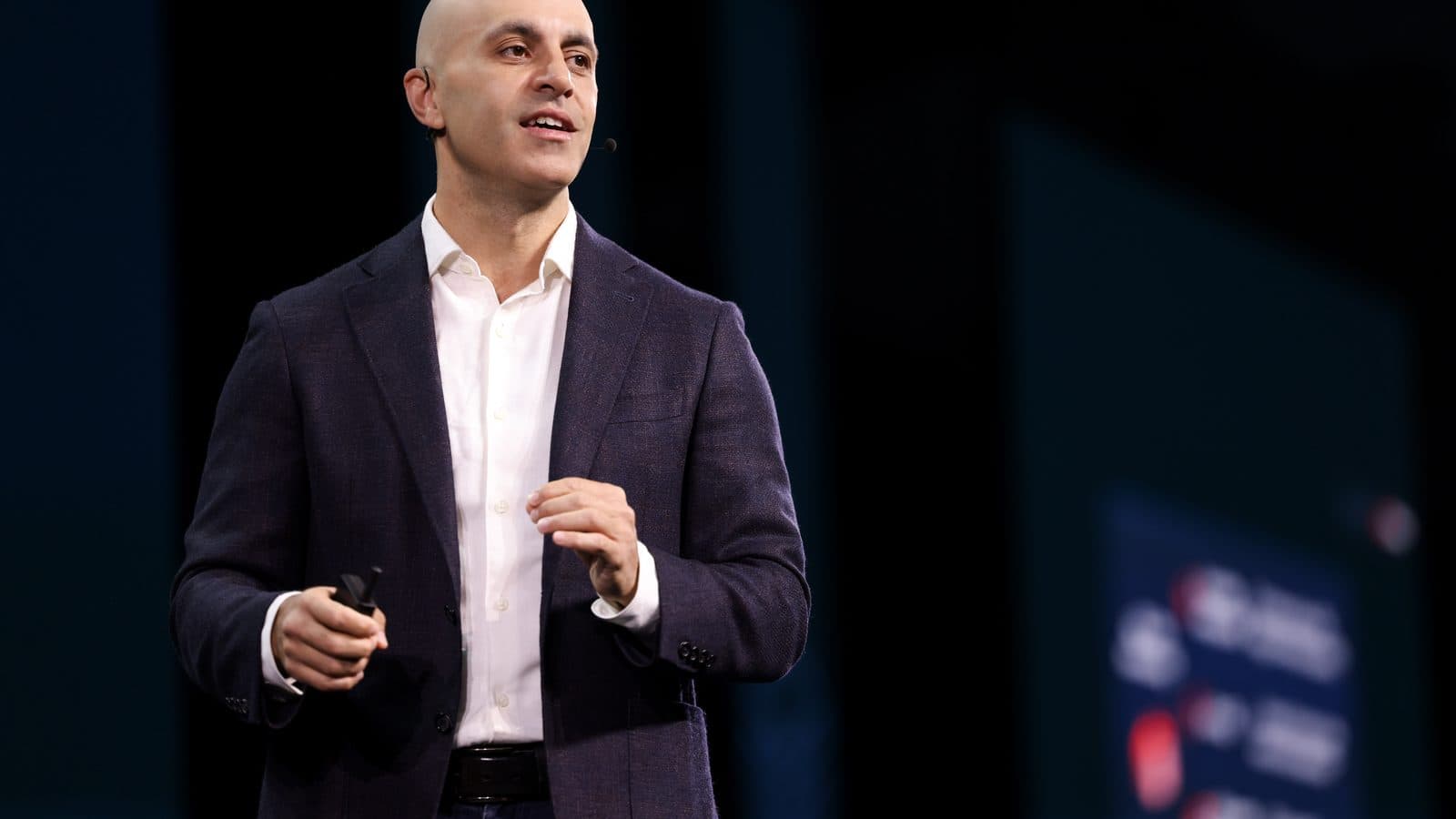
Lead image: Jeff Dean in 2025. Photo by Cmichel67, via Wikimedia Commons, CC BY-SA 4.0.
Tags

TPW Editorial
Editorial Team
TechPastWeek's editorial team reports and edits every story we publish. We research each piece against primary and credible secondary sources, and a human editor reviews and signs off before it goes live.