D-Robotics Raises $400 Million to Put a Chinese Chip Under the Robot Boom
D-Robotics closed a $400 million Series C on September 17, 2026 to expand its Sunrise robot chips and software as embodied AI enters mass production.

On this page
Key takeaways
- D-Robotics, a Shenzhen company spun out of Horizon Robotics in 2024, said on September 17, 2026 that it closed a US$400 million Series C.
- The company's own release did not name individual investors; Chinese reporting identified Mirae Asset as the lead, with Meituan, Hefei state capital and existing backers including GL Ventures and 5Y Capital taking part.
- D-Robotics said its first-half 2026 revenue grew several times year over year and that cumulative shipments of its Sunrise chips passed 8 million units.
- The Sunrise S600, launched in November 2025, has been adopted by more than 20 embodied-AI customers, the company said, including UBTECH, FOURIER, Astribot, TARS, Spirit AI and X Square Robot.
- Dealroom called it the largest Series C robotics round in China in four years and said venture funding for humanoid robotics reached $8.7 billion in 2026 so far, already double 2025's full-year record.
D-Robotics, a Shenzhen company that sells the compute and software layer for robots, said it closed a US$400 million Series C round. The company announced the deal from Hong Kong on September 17, 2026, saying the money would expand its Sunrise family of robot processors across all performance tiers and fund a software platform that spans the full chain of robot development.
Related reading: Q3 2026 Venture Funding Fell to $159B as Billion-Dollar Rounds Set a Record · Hubble Network Raised $200 Million to Put Bluetooth in Orbit.
The round's size stands out even in a crowded Chinese robotics market. Dealroom, which tracks venture deals, called it the largest Series C robotics round in China in four years, placing it in the top 1 percent by amount among 52 comparable deals. The firm also noted that venture investment into humanoid robotics reached $8.7 billion in 2026 so far, already double 2025's full-year record.
D-Robotics is not building a humanoid or a robot dog. It is selling the chips and developer kits that other companies use to build them, a position its backers describe as the picks-and-shovels play for physical AI.
A picks-and-shovels bet on robots
The company was spun out of Horizon Robotics, the Hong Kong-listed autonomous-driving chip company, in early 2024 and is led by chief executive Wang Cong, according to Dealroom's company profile. It designs the Sunrise family of system-on-chip processors and the RDK line of all-in-one robotics developer kits, together with the operating system and application software that run on them.
The product line spans a wide performance range. The RDK X3 uses a 5 TOPS edge chip and is positioned as an affordable entry board. The RDK X5 steps up to 10 TOPS. The RDK S100, the newest and most capable, combines perception inference with real-time motion control, which is the kind of workload a walking or rolling robot needs to sense its surroundings and act on them without splitting the job across two chips. D-Robotics says its in-house AI accelerator, the BPU, scales from 5 to 128 TOPS across the portfolio, and that the platform ships with more than 200 open-source algorithms and applications.
That breadth is the point. A company that only serviced humanoids would rise and fall with one product category. D-Robotics says its chips and kits are used across humanoid robots, quadruped robot dogs, home-service robots, companion robots and logistics autonomous mobile robots. Its published case studies include consumer devices such as the Enabot EBO X home guardian robot, which suggests the platform is aimed as much at volume consumer hardware as at research labs.
What the round funds
The company said the new capital will do two things. The first is to broaden the Sunrise chip portfolio "across all computing levels," which reads as an effort to cover more of the market from low-cost edge boards to high-performance embodied-AI modules. The second is to build a software platform that runs from data collection and model training through simulation, verification and inference deployment.
Together, D-Robotics describes those as an integrated hardware and software infrastructure for AI robots. The framing echoes Nvidia's pitch for its Jetson platform and its Isaac robotics stack: sell the chip, then make it sticky with the tools, libraries and simulation environment that developers build on top.
The company also operates the D-Robotics Gravity Program, an incubator-style effort it says has backed more than 500 robotics innovators across 10 categories, including open-source humanoids and embodied-AI models. It says more than 500 universities and 100,000 developers across 20 or more countries have built robots on its platform. Those developer and startup numbers are company-reported, but they are the kind of ecosystem metric that supports a platform strategy rather than a single-product one.
Who put in the money
The investor list is where the announcement gets less clear. D-Robotics's press release said only that the round drew "strategic investment from a leading global internet company," along with top-tier investment institutions and continued follow-on investments from existing shareholders. It named no one.
Secondary reporting filled in the gap, with some variation. Tech Startups, which tracks daily funding rounds, stated plainly that the company's release omitted individual investors and that Chinese reporting identified Mirae Asset as the lead, with Meituan, Hefei State-owned Capital Investment and Nanshan Zhixin Investment among the participants. CiVL, another deal outlet, gave the same lead and added existing investors GL Ventures and 5Y Capital. Dealroom recorded the lead as Future Asset, a discrepancy that may reflect a translation or data-entry error in the Korean investor's name, since Mirae means "future" in Korean.
The safe reading is that a large Chinese internet company, widely presumed to be Meituan, is involved, that state-linked capital from Hefei is participating, and that Korea's Mirae Asset is the reported lead. None of that has been confirmed on the record by D-Robotics.
D-Robotics described the round as "oversubscribed" in style if not in word, noting strategic, institutional and returning investors. The company did not disclose its valuation in the round.
The numbers behind the raise
D-Robotics made a series of commercial claims that help explain why investors wrote a check this size. It said first-half 2026 revenue grew several times year over year, that cumulative shipments of its Sunrise chips passed 8 million units, and that its embodied-AI business has entered mass production.
The most concrete figure concerns the Sunrise S600, an embodied-AI computing chip launched in November 2025. According to the company, the S600 has been adopted by more than 20 leading embodied-AI customers within six months. The named partners include TARS, Spirit AI, X Square Robot, UBTECH, PaXini Tech, Astribot, FOURIER and Booster Robotics. Those names span humanoid robots, industrial wheeled robots, flexible consumer-electronics manufacturing, embodied foundation models and omni-modal perception. The company said most of them are already in mass production.
That last claim is the one that matters for the valuation. A robotics-chip startup that has shipped millions of units and has blue-chip robot makers designing around its silicon looks very different from one with a demo and a pitch deck. If D-Robotics is genuinely in mass production with 20-plus customers, the round is financing a ramp rather than research.
The figures remain company-reported. D-Robotics has not published audited revenue or a customer-by-customer breakdown, and the "several times year over year" growth rate starts from a small base. The 8 million figure counts cumulative shipments since the product line began, not current quarterly volume.
The boom it is riding
The round lands in the middle of a global surge in robotics investment, and China is a large part of it. Humanoid startups in the United States such as Figure and Agility have raised at billion-dollar-plus valuations, and Chinese humanoid and embodied-AI companies have drawn a wave of state and private capital. Meituan, whose investment arms have backed Unitree, Galbot and X Square Robot, has become one of the most active corporate investors in Chinese robotics, according to Yicai Global.
D-Robotics benefits from a specific dynamic inside that boom. Because its chips are designed and fabricated for the domestic market, it can supply robot makers who either cannot easily buy Nvidia's latest embedded compute or prefer not to depend on it. The company's pitch, as Value Add VC framed it, is to be the Nvidia-equivalent picks-and-shovels layer for Chinese and emerging-market robotics builders. The same week, Huawei accelerated its own AI chip roadmap, a reminder that the domestic-compute lane is contested.
Competition and what could go wrong
The clearest competitive threat is Nvidia. Its Jetson line and Isaac software stack occupy the same position for robotics developers worldwide, and Nvidia has spent years cultivating that ecosystem. In raw developer count D-Robotics claims parity, with 100,000 developers, though per-chip compute is a different comparison. Nvidia's brand and its dominance in AI training give it an edge with companies that want one vendor from silicon to simulation.
Closer to home, D-Robotics competes with other Chinese embedded-AI chipmakers and with the in-house efforts of the larger robot manufacturers. A customer that designs its own silicon can drop a supplier quickly once volumes justify it.
Then there are the risks common to any China-based semiconductor company. Export controls, foundry capacity and the cost of advanced manufacturing all sit outside D-Robotics's control. The company does not disclose which process node or foundry its Sunrise chips use, so it is difficult to assess how exposed it is to capacity constraints or to restrictions on advanced equipment.
The commercial risk is concentration. A handful of anchor customers can make a startup's numbers, and can also walk. The company's stated strategy, broadening from one product category to many and wrapping the chips in software, is designed to reduce that exposure.
What to watch
Three things would show whether the round buys a durable position or a temporary lead. The first is whether D-Robotics converts its design wins into recurring revenue and publishes numbers that show the S600 ramping through 2027. The second is whether the software platform it is now funding attracts developers on its own merits, rather than because it comes bundled with cheap hardware. The third is whether the reported lead investor, Mirae Asset, and the state capital from Hefei signal a path toward a public listing, as Horizon Robotics took before it.
The $400 million is a bet that the robot boom will be won at the chip-and-software layer, not by whichever humanoid maker gets the most attention. D-Robotics has positioned itself as the layer underneath all of them, and now has the capital to try to prove that the position is defensible.
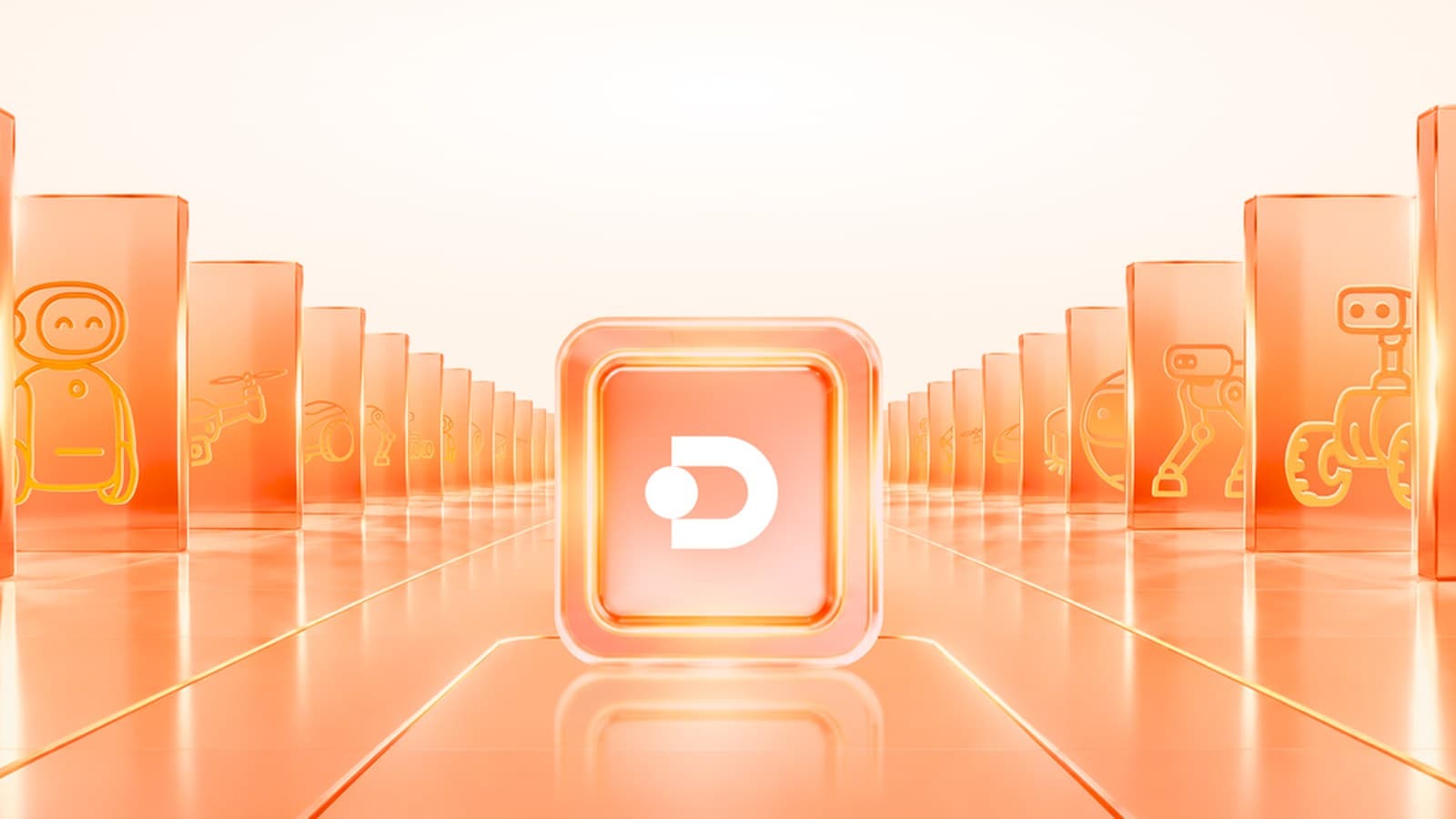
Cover: D-Robotics Series C announcement artwork, an official image from the company's newsroom (company-distributed asset).
Tags
Frequently asked questions
- What does D-Robotics make?
- D-Robotics sells the computing and development layer for robots. Its products include the Sunrise family of system-on-chip processors and the RDK family of developer kits (RDK X3, X5 and S100), plus the operating system and application software to run embodied-AI workloads on them.
- Who led the $400 million round?
- The company did not say. Its press release referred only to a strategic investment from a global internet company, top-tier institutions and existing shareholders. Chinese reporting, including coverage summarized by Tech Startups and CiVL, identified Korea's Mirae Asset as the lead, with Meituan, Hefei state capital and existing investors such as GL Ventures and 5Y Capital participating. Treat the lead-investor detail as reported rather than confirmed.
- Why is a chip and software supplier raising so much?
- D-Robotics sells the compute layer beneath many robot categories rather than betting on one robot maker. That lets investors gain exposure to the whole embodied-AI market, but it also exposes the company to competition from Nvidia's Jetson platform and from other Chinese robotics-chip makers.

TPW Editorial
Editorial Team
TechPastWeek's editorial team reports and edits every story we publish. We research each piece against primary and credible secondary sources, and a human editor reviews and signs off before it goes live.