
Moore Threads Teases a 64GB Gaming GPU. The Capacity Is Still a Guess.
A Moore Threads manager says the next Lushan card will top every consumer GPU's VRAM. A fourfold jump over the S80 implies 64GB, but that is unconfirmed.

On this page
Key takeaways
- A Moore Threads product manager said on 18 November 2026 that the next Lushan gaming GPU will have more video memory than any consumer graphics card on sale.
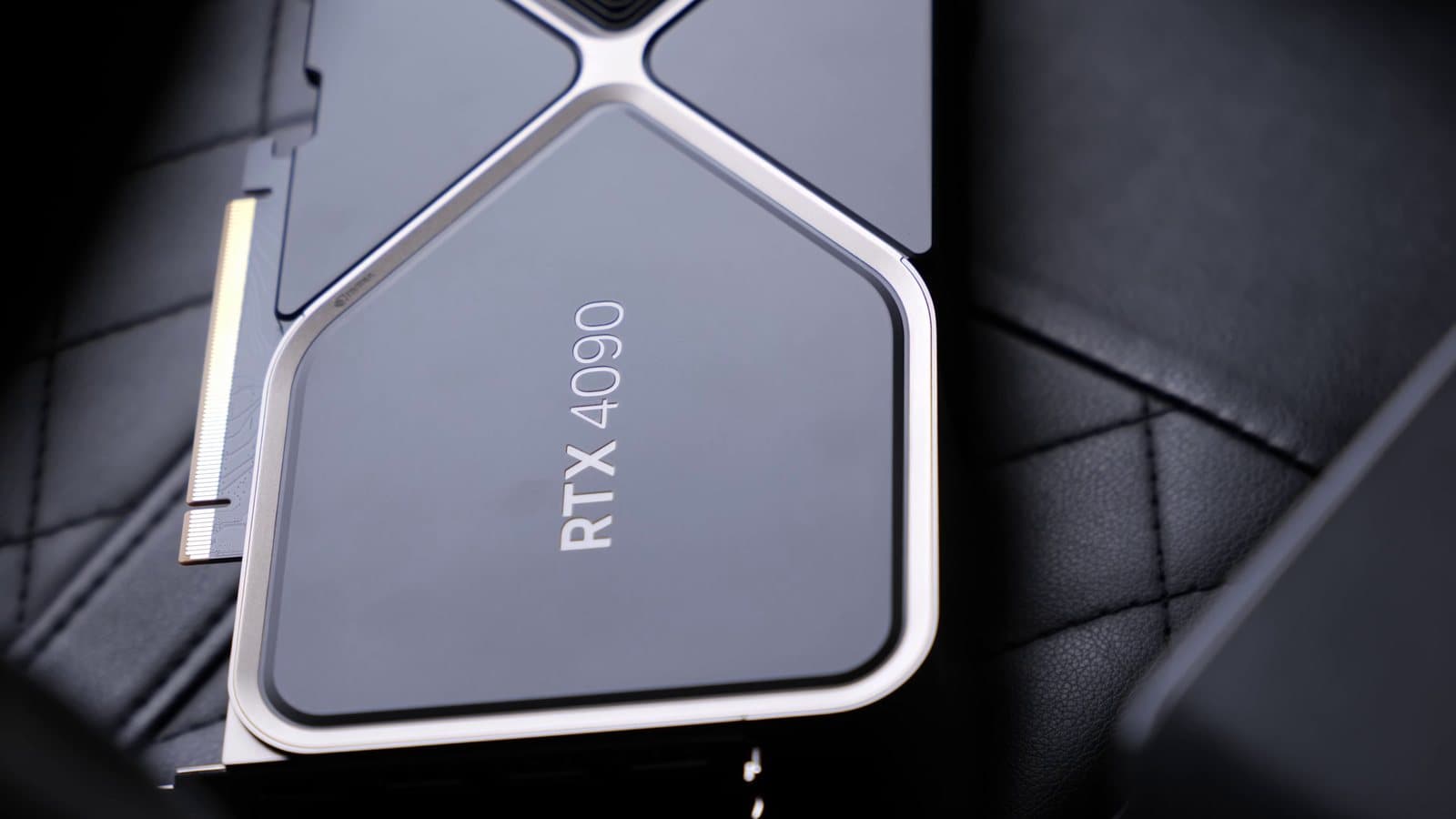
- The claim implies more than the RTX 5090's 32GB; Moore Threads previously said Lushan would carry four times the MTT S80's 16GB, which points to 64GB, but the company has not confirmed the figure.
- Moore Threads will show Lushan at its MUSA Developer Conference in Beijing on 29 December 2026; the teaser also claims 64x AI compute, a new UNITE rendering architecture and hardware ray tracing.
- The current MTT S80 has 16GB of GDDR6, 4,096 MUSA cores, 14.7 TFLOPS and a 255W board power, but its real-world gaming performance has lagged its specifications.
- Moore Threads has been on the US Entity List since October 2023, which bars it from partnering with TSMC and shapes the supply chain for any Lushan product.
Moore Threads has spent the week teasing a graphics card it has not shown. A product manager for the company's MTT S80 wrote on 18 November that the next Lushan gaming GPU would have more video memory than any consumer graphics card currently available. The post did not give a number. It did not give a price, a specification sheet or a benchmark.
Related reading: Nintendo Puts SmileBASIC 4 Back on the eShop After Patching a Switch 2 Jailbreak · Valve Ends Steam Machine Waitlists as Memory Costs Bite.
The number that followed came from arithmetic and reporting. Nvidia's RTX 5090 has 32GB, so "more than any consumer card" means more than 32GB. Moore Threads had previously said Lushan would carry four times the 16GB in the MTT S80. That points to 64GB. Tom's Hardware and VideoCardz both reported the 64GB figure as an implication, not a confirmed specification.
The difference matters because the 64GB figure is already circulating as if it were a specification. A 64GB consumer GPU would be a notable product for gamers and for anyone running large language models on a desktop. A teaser that implies 64GB is a marketing move ahead of a developer conference. Moore Threads has promised the former and, so far, delivered the latter.
What Moore Threads actually said
The teaser came from a social-media post by the MTT S80 product manager, who uses the handle AIR_FORCE. It was amplified by Moore Threads ahead of MDC 2026, the company's MUSA Developer Conference, which runs on 29 and 30 December at the Zhongguancun International Innovation Center in Beijing.
The poster shows a graphics card under a black cloth on a mountainside and puts the Lushan name in the title. Moore Threads has used the Lushan codename since at least December 2025, when it outlined a next-generation gaming architecture with claims of 15 times the gaming performance and 50 times the ray-tracing performance of the MTT S80.
The new teaser adds a different set of claims. According to WCCFtech, the translated post says AI computing performance is improved by 64 times and that the card carries a new UNITE rendering architecture, a new self-developed hardware ray-tracing engine and support for AI generative rendering. The company positions the card for both AAA gaming and local AI inference.
None of those figures has been independently tested. The 15x and 50x claims date from an architecture presentation, not a shipping product. The 64x AI claim comes from a teaser. The 64GB capacity is an inference from two earlier statements, not a line in a specification table.
Why 64GB is the number that matters
For gamers, 64GB of video memory is mostly headroom. Most games at 4K use far less, and the cards that benefit most are the ones pushing 8K or heavy ray tracing. A 64GB card would be unusual, but it would not by itself make a game run faster.
For AI users, the number is more consequential. A local language model has to fit in memory, and quantised versions of mid-sized models can need 27GB to 30GB. WCCFtech cites Qwen3.8-27B as an example: an 8-bit version needs roughly 27GB to 30GB of video memory. An RTX 5090 at 32GB can just fit such a model. A 64GB card would leave room for a larger model, a longer context or a batch of requests.
That is why the teaser has travelled beyond gaming circles. In China, access to high-end Nvidia cards is restricted by US export controls, and the cost of memory has been rising. A domestic card with a large frame buffer would find buyers even if its gaming performance were modest. Tom's Hardware has separately reported modified RTX 5090 cards with 96GB of memory appearing on Alibaba for under $4,000, which shows how much demand there is for video memory in the Chinese market.
A 64GB card would not need to beat an RTX 5090 in games to be useful. It would need to run the models people want to run, at a price and power draw they can accept.
The S80 is the cautionary tale
Moore Threads' current consumer card is the MTT S80. It launched in late 2022 with 4,096 MUSA cores, a 1.8GHz clock, 14.7 TFLOPS of FP32 compute, 16GB of GDDR6 on a 256-bit bus, 448GB/s of bandwidth, a PCIe Gen 5 x16 interface and a 255W board power. On paper, it looked like a mid-range card from a new entrant.
Launch reviews were less kind. Tom's Hardware found the S80's gaming performance far below what its specifications suggested, with frame rates closer to an entry-level display adapter than to the mid-range cards its core count implied. The card's drivers and game compatibility were limited, and many titles ran poorly or not at all.
That history matters for the Lushan claims. A new architecture can close a performance gap, and Moore Threads has had four years to improve its drivers. But a teaser is not a driver stack, and a specification sheet is not a frame-time graph. The S80 is a reminder that the hard part of a GPU is not the memory capacity. It is the software that turns the hardware into something games and applications can use.
What Lushan is supposed to be
Moore Threads has described Lushan as a gaming GPU built on a new architecture, with a new rendering pipeline and a hardware ray-tracing engine. The company's broader business is in data-centre accelerators, where it sells MTT S-series cards for AI and high-performance computing. A consumer gaming card is a smaller market for Moore Threads, but it is a visible one.
The company has said Lushan products would arrive before the end of the year. The 29 December conference is the most likely venue for a full reveal, though a developer conference is not a retail launch. A reveal can come with a specification sheet, a demo and a price. It can also come with a target date and no product.
The teaser's 64x AI performance claim is the one to treat with most caution. "AI computing performance" can mean a specific benchmark, a specific data type, a specific model or a comparison with a four-year-old card. Without a defined test, the multiplier is a marketing number.
The export-control backdrop
Moore Threads was added to the US Entity List in October 2023, alongside Biren Technology and other Chinese chip companies. The designation restricts exports of US technology to the company and, as Reuters reported in 2025, bars it from partnering with TSMC.
That shapes the supply chain for any Lushan card. Moore Threads cannot rely on the most advanced TSMC processes or on US electronic design automation tools in the same way as its competitors. It has to rely on domestic manufacturing and its own software stack.
The timing is pointed. The same week that Moore Threads teased the card, Washington's new export rule began to slow TSMC's shipments of 16nm and 14nm chips to Chinese designers. The rule is aimed at advanced AI compute, but its foundry presumption reaches mature nodes. A Chinese GPU company that wants to build a consumer card now faces both a restricted supply chain and a more restrictive export regime.
The software problem
The biggest unknown is not memory. It is software. Nvidia's advantage in gaming is built on years of driver work, developer relationships and tools such as DLSS. Moore Threads has its own MUSA platform and a compatibility layer for some existing applications, but the ecosystem is much smaller.
A card with 64GB of memory and weak drivers would be a niche AI inference device, not a gaming card. A card with 64GB of memory and good drivers would be a genuine alternative for people who cannot buy an Nvidia card. The difference between those outcomes is measured in years of engineering, not in a teaser.
The same applies to AI. Large-model inference depends on memory bandwidth as well as capacity. A 64GB card on a narrow bus could hold a model but run it slowly. Moore Threads has not published the memory type, bus width or bandwidth for Lushan. Those numbers will matter more than the capacity for anyone who wants to run a model at a usable speed.
Caveats
The 64GB figure is an inference, not a confirmed specification. Moore Threads has not published the memory type, bus width, bandwidth, board power, price or a shipping date for Lushan. The 15x, 50x and 64x multipliers are vendor claims from an architecture presentation and a teaser, not results from an independent test.
It would prove that a Chinese GPU designer can put a large frame buffer on a consumer board and sell it. That is a real achievement in a market where memory capacity is constrained by cost and supply.
It would not prove that the card is competitive with Nvidia or AMD in games. It would not prove that the software stack is ready. It would not prove that the card is available outside China, or that it is affordable.
The most useful comparison is the previous Moore Threads card, not the RTX 5090. If Lushan doubles the memory and fixes the S80's software problems, it will be a step forward. If it doubles the memory and repeats the S80's problems, it will be a card for a narrow set of AI workloads.
The 29 December conference is the first checkpoint. A specification sheet with memory type, bandwidth, board power and price would turn the teaser into a product. A demo running a named game and a named language model would be more useful than another multiplier.
The second checkpoint is independent testing. Moore Threads' claims have so far been vendor claims. Reviewers outside China may have difficulty getting a card, and the company's drivers may vary by region. A benchmark from a reputable outlet would settle more than a press release.
The third is the export regime. If the new US rule slows TSMC's shipments of mature-node chips to Chinese designers, Moore Threads' domestic supply chain becomes more important, not less. The company's ability to ship Lushan at scale may depend as much on Chinese foundry capacity as on its own design.
For now, Moore Threads has confirmed neither the capacity nor a shipping date. The 29 December conference is the next point at which either could become public.
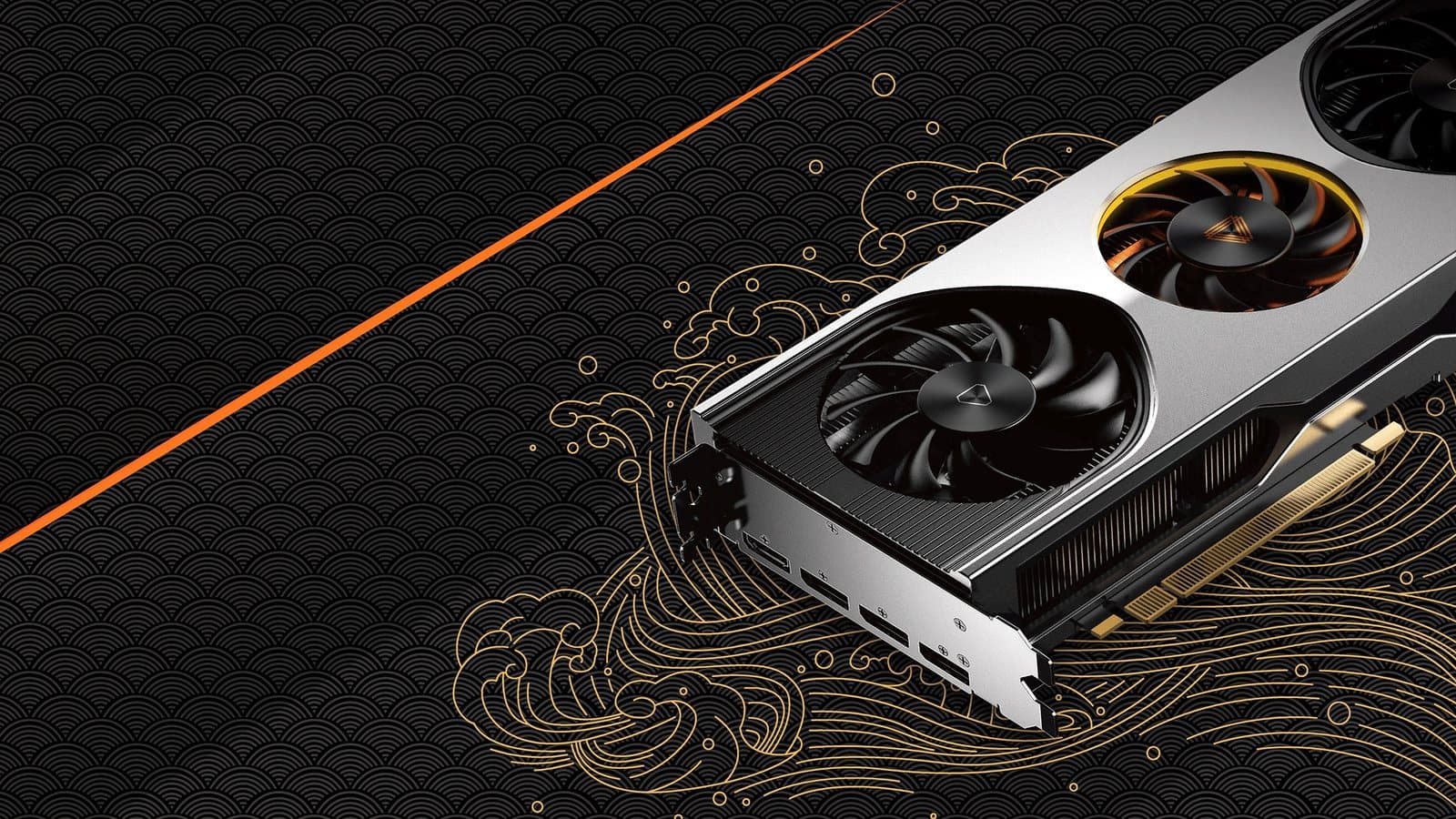
Cover credit: Moore Threads' MTT S80 graphics card, official product image courtesy of Moore Threads.
Tags
Frequently asked questions
- Is the Lushan GPU 64GB?
- Moore Threads has not confirmed it. The 64GB figure is an inference from the company's earlier promise of four times the S80's 16GB and its claim to beat the RTX 5090's 32GB. The product manager did not give a number in the 18 November post.
- When will Moore Threads reveal Lushan?
- The full unveiling is scheduled for 29 December 2026 at the MUSA Developer Conference in Beijing. Moore Threads has said Lushan products would arrive before the end of the year, but the conference is not necessarily a retail launch.
- What is Moore Threads?
- A Beijing-based GPU designer founded in October 2020 by Zhang Jianzhong, a former head of Nvidia's China business. It makes the MTT S80 and S90 graphics cards and data-centre accelerators built on its MUSA architecture.
- Will the Lushan card be sold outside China?
- Moore Threads has not said. Its consumer cards are sold mainly in China, and its place on the US Entity List limits its access to American technology and to TSMC manufacturing.

TPW Editorial
Editorial Team
TechPastWeek's editorial team reports and edits every story we publish. We research each piece against primary and credible secondary sources, and a human editor reviews and signs off before it goes live.