Palit and Sapphire Turn to Character Art to Sell Mid-Range Graphics Cards
Palit's first RiTONA-branded RTX 5060 Ti and Sapphire's Valor Mortis RX 9070 XT show how board partners are using themed editions to stand out.

On this page
Key takeaways
- Palit announced the GeForce RTX 5060 Ti 8GB RiTONA OC on September 18, the company's first retail graphics card built around its anime-style mascot.
- Sapphire prepared a NITRO+ Radeon RX 9070 XT OC Valor Mortis edition tied to the October 13 game launch, with a bundled copy of the title.
- Both cards keep reference-class performance, so the themed shroud, magnetic backplate and ARGB lighting are the differentiators, not the silicon.
- Neither company has announced pricing or a firm release date for the special editions.
- The releases extend a 2026 pattern of character-branded and game-bundled GPUs aimed at collectors and mid-range buyers.
Palit used September 18 to launch the GeForce RTX 5060 Ti 8GB RiTONA OC, a special edition built around RiTONA, an anime-style character the company first introduced in Japan in 2022 and has now redesigned for a global audience. Two weeks earlier, at least in planning terms, Sapphire readied its own themed card, a NITRO+ Radeon RX 9070 XT OC Valor Mortis edition tied to a game that does not come out until October 13.
Related reading: Nvidia says DLSS 5 is coming to RTX 40-series GPUs after a modding-fueled reversal · Valve Prices the Steam Frame at $1,059, Betting PC Players Will Pay for Wireless VR.
Neither launch is a technical milestone. Both cards reuse the same GPU, memory configuration and factory overclocks as their standard siblings. What they represent is a maturing strategy among graphics-card board partners: when the underlying silicon is fixed and prices are high, the argument for one card over another increasingly comes down to how it looks on a shelf and what software comes in the box.
The RiTONA card, in detail
The Palit card is the more notable of the two because it is the first retail graphics card Palit has built directly around its own mascot. RiTONA is the company's digital brand ambassador, a character with mint-green hair and a cape inspired by Palit's flagship GameRock series, accompanied by a cat-slime companion called Gelo. Until now she lived in wallpapers, marketing campaigns and merchandise. Now she is on a backplate.
The hardware underneath is familiar. The GeForce RTX 5060 Ti 8GB runs 4,608 CUDA cores at a 2,587MHz boost clock, with 8GB of GDDR7 memory at 28Gbps on a 128-bit interface and a 180W board power rating. It draws power from a single 8-pin connector and offers three DisplayPort 2.1b outputs and one HDMI 2.1b port. Palit's version uses a white dual-fan cooler with two 102mm fans, ARGB lighting along the side of the shroud, a metal backplate with a full-colour illustration of RiTONA, a 0-dB fan mode that stops the fans at idle, and a compact 233.9mm length aimed at smaller cases. Each card ships with a waterproof RiTONA sticker set.
What Palit has not announced is price or availability. That silence is common at the announcement stage and matters more than usual here, because the RTX 5060 Ti's appeal is already decided by its memory configuration. The 8GB model has drawn criticism for how it handles modern titles at higher settings, while a 16GB version of the same GPU exists. A collectible design can sell a card, but it does not change what the card can do.
Sapphire's game-bundle play
Sapphire's Valor Mortis edition takes a different route. Rather than a mascot, it borrows the identity of an upcoming game. The NITRO+ Radeon RX 9070 XT OC Valor Mortis is a collaboration with developer One More Level and publisher Lyrical Games, whose first-person Soulslike launches on October 13. The card has a custom logo on its fans and a magnetic backplate decorated with game artwork, and it ships with a copy of the game.
Sapphire has not published specifications, but the card is expected to match the company's earlier NITRO+ RX 9070 XT OC Crimson Desert edition: up to a 3,060MHz boost clock, 4,096 stream processors, 16GB of GDDR6 on a 256-bit bus running at 20Gbps, and a 330W board power. As with the Palit card, pricing and an exact release date are missing. The working assumption is that the card appears around the game's launch, because a themed bundle that arrives after players have finished the game misses its purpose.
The move is not new for Sapphire. The Crimson Desert edition followed the same template, and themed AMD cards have become a recurring part of the company's line-up. What has changed is the frequency. Board partners used to reserve special editions for flagship GPUs, where the margins could absorb custom tooling and packaging. Now the treatment is reaching the mid-range and the upper-mid-range, where competition is fiercest.
Why board partners are doing this
The economics of the graphics-card market explain the trend. Nvidia and AMD set the reference specification and the recommended pricing, and the chips they sell to partners are largely identical. Board partners differentiate through cooling, factory overclocks, warranty and support, but the performance gaps between a good card and a great one are often a few percent. In a market where the silicon is the same and the price band is narrow, aesthetics and bundles become a legitimate way to ask for a premium.
There is also a collector dynamic at work. Character-branded hardware has a long history in Japan, where PC component makers have sold anime-themed cases, coolers and peripherals for years. Globalising that approach is a bet that the audience for gaming hardware now overlaps heavily with the audience for anime, streaming and creator culture. Palit's decision to give RiTONA a global debut, rather than keeping her a regional mascot, is a direct expression of that bet.
The risk is fragmentation. A buyer walking into a store now has to parse reference cards, factory-overclocked cards, white builds, low-profile models, themed editions and bundle variants, all sharing similar names. The RTX 5060 Ti alone exists in 8GB and 16GB versions across numerous partner designs. Themed cards add another layer to that decision, and they can obscure the one specification that actually matters.
The price pressure underneath
All of this is happening against a backdrop of high and volatile graphics-card pricing. Component costs, memory supply and demand from AI data centres have combined to keep GPU prices elevated through 2026, and the mid-range has been hit hardest relative to its performance. A themed edition that carries a premium is easier to justify when the base card is already expensive, but it also raises the question of what buyers are paying for.
The more useful way to read the two launches is as a signal about where board partners think growth is. The high-end is dominated by buyers who already know what they want and by supply constraints. The mid-range is where volume lives, and volume needs a reason to choose one brand over another. Character art, a bundled game and a magnetic backplate are cheap to add relative to the cost of designing a new cooler, and they travel well on social media. That combination, rather than any advance in thermal engineering, is what these cards are selling.
The specification question the artwork cannot answer
The RiTONA card's most consequential detail is one it shares with every other RTX 5060 Ti 8GB: the memory capacity. Modern games routinely allocate more than 8GB of video memory at 1440p and above, especially with high-resolution textures, ray tracing or frame generation enabled. When a card runs out of memory, performance falls off sharply rather than degrading gracefully, which is why the 16GB version of the same GPU has been the more widely recommended buy since launch.
That does not make the 8GB card useless. At 1080p, and at 1440p with moderate settings, it is a capable mid-range option, and its 180W power draw and single 8-pin connector make it easy to install in older systems. The point is that a themed edition does not change the trade-off. A buyer choosing the RiTONA card over a 16GB model of a comparable GPU is choosing looks over headroom, and that is a decision worth making deliberately rather than by accident.
The same logic applies to the Sapphire card. An RX 9070 XT with 16GB is a genuine upper-mid-range GPU, and the Valor Mortis edition should perform identically to the standard NITRO+ model. The bundle makes it better value for someone who intended to buy the game anyway, and worse value for someone who did not. Themed hardware is not inherently bad value. It is value that has to be calculated rather than assumed.
What to watch
Three things will determine whether the themed-GPU strategy pays off. First, the pricing: a RiTONA card that lands at or near the standard model's price will sell, while a large premium will limit it to collectors. Second, the bundle terms: if Sapphire's Valor Mortis edition includes only the standard game, the value proposition is thinner than it looks. Third, whether the approach spreads to the flagship tier, where enthusiasts have historically been the most willing to pay for distinctive designs.
For now, the two cards are a snapshot of a maturing mid-range. The silicon is settled, the cooling is more than adequate, and the fight is over identity. Buyers who want a graphics card that matches a themed build have more options than ever. Buyers who want the most frames per dollar should look past the artwork and compare the memory, the clock speed and the price.
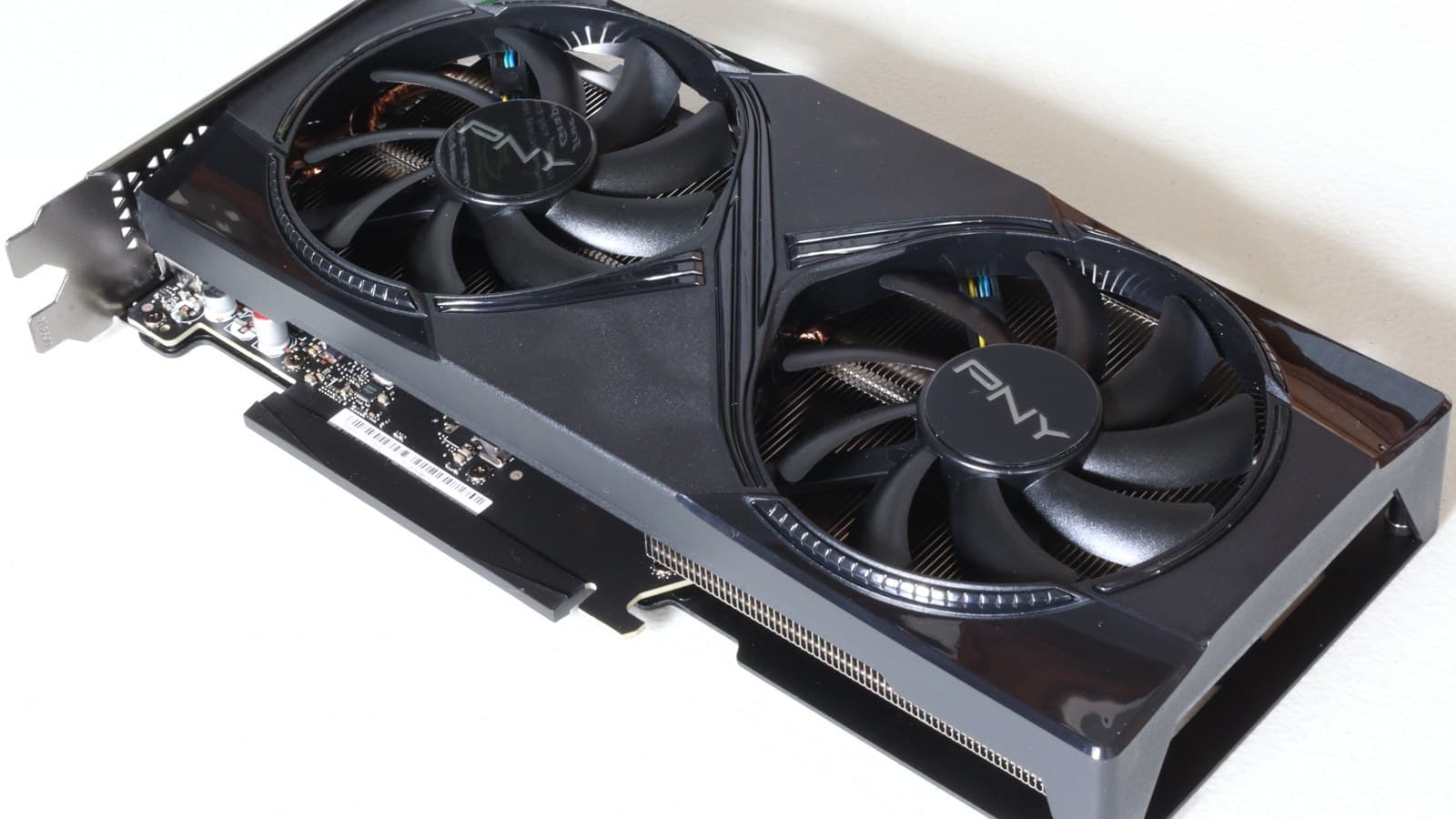
Cover: a PNY GeForce RTX 5060 Ti 16GB dual-fan card photographed from the front, by FreeMediaKid! (CC BY-SA 4.0) via Wikimedia Commons, cropped 16:9.
Tags
Frequently asked questions
- What is the Palit GeForce RTX 5060 Ti RiTONA OC?
- It is a special-edition version of Palit's GeForce RTX 5060 Ti 8GB card built around RiTONA, the company's digital brand ambassador. It has a white dual-fan cooler with 102mm fans, ARGB side lighting, a metal backplate with full-colour character art and a 2,587MHz boost clock. Pricing and availability have not been announced.
- What are the specs of the Sapphire NITRO+ RX 9070 XT Valor Mortis edition?
- Sapphire has not published a full spec sheet, but the card is expected to match the Nitro+ RX 9070 XT OC Crimson Desert edition: up to 3,060MHz boost clock, 4,096 stream processors, 16GB of GDDR6 on a 256-bit bus and a 330W board power. The distinguishing features are a magnetic backplate with game artwork and a bundled copy of Valor Mortis.
- Do themed graphics cards perform better than standard models?
- No. Themed editions such as the RiTONA card and the Valor Mortis variant reuse the same GPU, memory and factory overclock as the standard models. The differences are cosmetic, plus in some cases a game bundle or collector packaging.
- What is Valor Mortis?
- Valor Mortis is a first-person Soulslike action game from developer One More Level and publisher Lyrical Games, scheduled for release on October 13, 2026. Sapphire's themed graphics card is timed to the game's launch and includes a copy of it.

TPW Editorial
Editorial Team
TechPastWeek's editorial team reports and edits every story we publish. We research each piece against primary and credible secondary sources, and a human editor reviews and signs off before it goes live.