ARC X1 Gaming Handheld Launches in India on Snapdragon G2 Gen 2 and OwlOS
ARC launched the X1, its first gaming handheld, on September 18, 2026: Snapdragon G2 Gen 2, 7-inch 120Hz screen and a 9,300mAh battery, from INR 29,500.

On this page
Key takeaways
- ARC launched the X1, its first gaming handheld, on September 18, 2026, built on Qualcomm’s Snapdragon G2 Gen 2 platform and ARC’s own controller-first OwlOS.
- The X1 pairs an octa-core Kryo CPU and Adreno A22 GPU with 8GB of LPDDR5X memory, 128GB of UFS 3.1 storage and a 7-inch 1920x1080 120Hz LCD.
- ARC prices the X1 at INR 29,500 for waitlist members in an early-access batch that opens on October 2, 2026, and INR 33,500 at regular retail.
- The handheld carries a 9,300mAh battery with 27W USB-PD charging and an 80% charge limit; ARC claims more than eight hours of play in Silent Mode.
- ARC announced its Qualcomm partnership on August 31, 2026, and says it developed the X1 over roughly 16 months with input from a community beta.
ARC, an Indian gaming-hardware company, launched the X1 on September 18, 2026, its first product and its first handheld. The X1 runs Qualcomm’s Snapdragon G2 Gen 2 Gaming Platform and a controller-first version of Android that ARC calls OwlOS. It pairs a 7-inch 1920x1080 panel running at 120Hz with a 9,300mAh battery, dedicated controls and active cooling, and it sells first to the company’s own waitlist.
Related reading: Sony Brings Back See-Through Plastic With the Prism PS5 Collection · PS5 Sales Rose 22% in September as the Rest of the US Market Fell.
The opening price is INR 29,500, available to waitlist members in an early-access batch from October 2. ARC says regular retail pricing will be INR 33,500. India is the only announced market. For a first-time hardware maker, that is a narrow launch, and the X1 is best read as a test of a specific thesis: that an efficient Android handheld built for local buyers can compete on battery life and price rather than on raw power.
A first product, built in public
ARC started talking about the X1 well before the launch. The company announced a Qualcomm partnership on August 31, 2026, keeping the chip a secret at the time. In July it opened a pre-launch beta, giving selected waitlist members units to test and asking them to report back on performance, controls, software, ergonomics and battery life. Phase one drew from the existing waitlist; from August 1, new sign-ups could be considered for phase two.
ARC frames the process as building alongside its community. Co-founder Kaustubh K. Jadhav told IGN India that the company wanted to share the project openly: “From the very beginning, we’ve believed in building in public by sharing our journey openly with the community.” ARC says the finished X1 came out of roughly 16 months of work.
The pitch that ties the hardware together comes from co-founder Jobin Joseph, who said in the August partnership announcement that “performance-per-watt is key to delivering portability, battery life, and accessibility” for markets like India. That sentence explains most of the X1’s spec sheet. Nothing here targets enthusiasts who want the fastest handheld on the shelf. The design targets long sessions, a low thermal ceiling and a price that undercuts imported hardware.
Snapdragon G2 Gen 2 is the entry tier, not the flagship
Qualcomm’s Snapdragon G-series splits into tiers, and the X1 sits at the bottom of the dedicated handheld family. The G2 Gen 2 is a 4nm platform with an eight-core Kryo CPU and an Adreno A22 GPU. Qualcomm’s product brief lists the CPU as one prime core, four performance cores and three efficiency cores, and it markets the platform for mobile and cloud games across major ecosystems.
That is a deliberate step down from the G3x Gen 2 used in devices such as the AYANEO Pocket S Mini, which carries a faster Kryo Prime Ultra CPU and a higher-tier Adreno A32 GPU. Qualcomm’s brief also points to features such as Snapdragon Game Super Resolution and the Adreno Frame Motion Engine 2.0, and claims cloud gaming at up to 144 frames per second. Those are platform capabilities, not promises about how a specific device performs.
ARC pairs the chip with 8GB of LPDDR5X memory running at 8,533 MT/s and 128GB of UFS 3.1 storage, expandable to 1TB through a microSDXC card. The connectivity list is Wi-Fi 6E and Bluetooth 5.4, a step below the Wi-Fi 7 that Qualcomm’s brief specifies for the platform. A USB-C 3.1 port handles charging, data, USB OTG peripherals and DisplayPort output, and there is a 3.5mm headphone jack. The device weighs between 450 and 500 grams.
ARC X1 key specifications
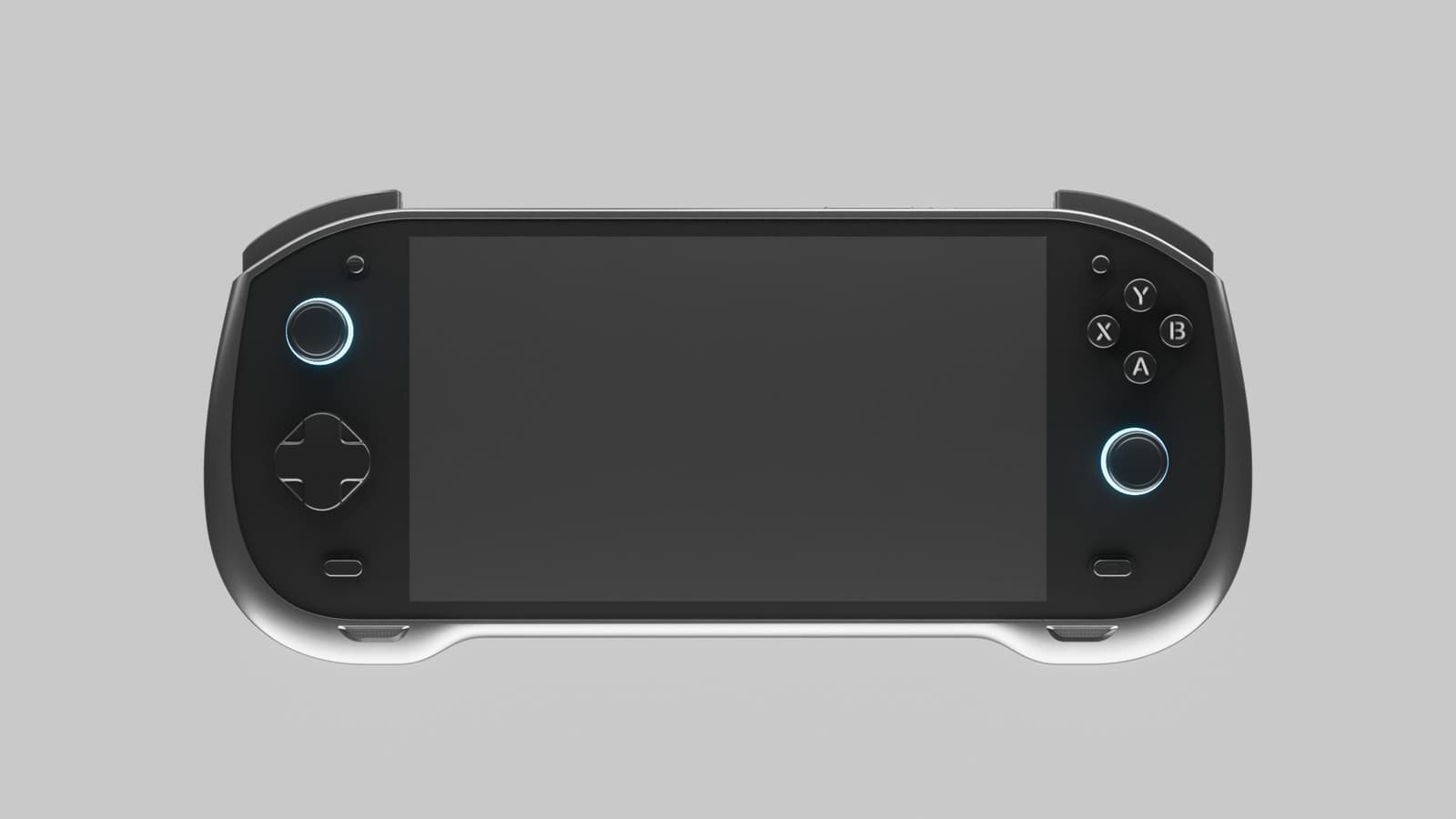
7-inch 1920x1080 LTPS LCD at 120Hz, 500 nits and Corning Gorilla Glass 3. Snapdragon G2 Gen 2 (4nm) with octa-core Kryo CPU and Adreno A22 GPU. 8GB LPDDR5X at 8,533 MT/s. 128GB UFS 3.1, microSDXC to 1TB. Active cooling with a centrifugal fan, rear intake and top exhaust. Zero-drift TMR analog sticks, Hall-effect triggers, microswitch ABXY and D-pad, two programmable rear buttons, dual Linear Resonant Actuators. 9,300mAh battery, 27W USB-PD, 80% charge limit. Wi-Fi 6E, Bluetooth 5.4, USB-C 3.1 with DisplayPort out, 3.5mm jack. 450–500 grams. OwlOS on AOSP.
The controls and repairability carry the story
Handheld reviews rarely hinge on a chip alone, and ARC has spent unusual attention on inputs and serviceability. The analog sticks use tunnel magnetoresistance sensors, which ARC describes as zero-drift, and the company says the stick modules are replaceable. The triggers use Hall-effect sensing with mechanical trigger locks. The face buttons and D-pad are microswitch parts, and there are two programmable rear-grip buttons plus built-in stick calibration and per-game remapping.
Haptics come from dual Linear Resonant Actuators rather than the eccentric rotating mass motors common in cheaper handhelds. LRAs drive a mass along a fixed axis, which tends to produce tighter and more controllable feedback, and they are the same class of part used in consoles and phones.
Cooling is active, not passive. A centrifugal fan pulls air through rear intake vents and pushes it out the top, and OwlOS exposes fan curves so a player can trade noise for thermals. That matters because the G2 Gen 2 will not brute-force demanding titles. Sustained clocks, not peak numbers, will decide whether the X1 feels consistent after an hour.
The battery is the headline number. At 9,300mAh, it is larger than most Android handhelds in this class, and ARC claims more than eight hours of play in Silent Mode, its lowest-power profile, with the usual caveat that brightness, volume and the game will move that figure. Charging runs at 27W over USB Power Delivery, which is modest, and there is an 80% charge limiter for buyers who want to slow long-term battery wear. A user-serviceable battery and modular daughterboards round out a design that leans into repair rather than replacement.
OwlOS is Android reshaped around a controller
The software is where ARC is trying to differentiate as much as the hardware. OwlOS is built on the Android Open Source Project but designed for controller navigation from the start, rather than adapting a touch-first phone interface to a handheld. It merges native Android games, emulators and cloud-streaming services into one game library and launcher.
Per-game profiles let players tune performance, controls, fan behaviour and resolution scaling title by title, and a frame-rate overlay shows what the device is actually doing. Quick Resume suspends and restarts sessions. None of these ideas is new on its own, but the combination is the part of the X1 that cannot be judged from a spec sheet. Custom Android forks live or die on update cadence, app compatibility and how well the launcher handles the long tail of emulators.
Price, and why India only
The X1 launches in an early-access batch at INR 29,500 for waitlist members, with a token payment of INR 999 to reserve a unit, and moves to INR 33,500 for later batches. That sits in a gap in the current market. Imported Windows handhelds cost far more in India once duties and taxes are added, and grey-market imports of the X1 itself have already been spotted at inflated prices, with commenters on GSMArena citing a reseller listing many times the domestic price.
ARC has not published plans for the United States, Europe or any other region. Keeping the X1 to one market limits the volume but also limits the support burden for a first-time maker, and it keeps the company close to the beta community that shaped the device. Whether India alone can sustain the product is the central business question the launch leaves open.
Where the X1 sits against its rivals
The comparison set is crowded and uneven. Valve’s Steam Deck, Asus’s ROG Ally, Lenovo’s Legion Go and AYANEO’s Windows machines all run x86 chips and PC game libraries, and most start well above the X1’s price. Retroid and AYN sell Android handhelds, but they lean on phone silicon, older chips and smaller batteries. The X1’s closest argument is against that Android tier: a purpose-built platform, a big battery, active cooling and a software layer designed for the form factor.
The broader backdrop is cost. Memory and storage prices have climbed through 2026 as AI data centers absorb supply, a squeeze the industry nicknamed RAMageddon. Valve raised Steam Deck OLED prices by as much as $300 in May, with the 512GB model moving from $549 to $789. AYN raised prices and switched some handhelds to slower UFS 3.1 storage in April after saying UFS 4.0 was no longer available at a sustainable level. Qualcomm itself has reportedly told clients to expect double-digit price increases on chips shipping after September 1.
Against that, the X1’s 8GB of memory and 128GB of UFS 3.1 storage read as a deliberate floor for a device designed to hit a specific price. The 9,300mAh battery and repairable design are the features ARC can offer without chasing premium silicon. It is a strategy built around compromise, and the compromises are visible in the spec sheet.
What to watch
ARC’s claims are all first-party for now. There are no independent benchmarks of the X1, no measured sustained performance figures, and no third-party battery test of the eight-hour Silent Mode claim. The community beta generated feedback, but ARC has not published what testers found or what changed as a result.
The first checkpoints are the early-access batch on October 2 and the first reviews that follow. Independent testing of sustained clocks, thermals and real battery life will show whether the performance-per-watt pitch holds up outside ARC’s own material. A second question is OwlOS: how quickly it updates, how well its library handles emulators, and whether per-game profiles work consistently.
A third is reach. If the X1 stays India-only, it remains a regional experiment with a small audience. If ARC later names other emerging markets, the company will have to prove the model travels. For now the X1 is a credible first draft from a new entrant, aimed at buyers who value endurance and repairability over frame rates.
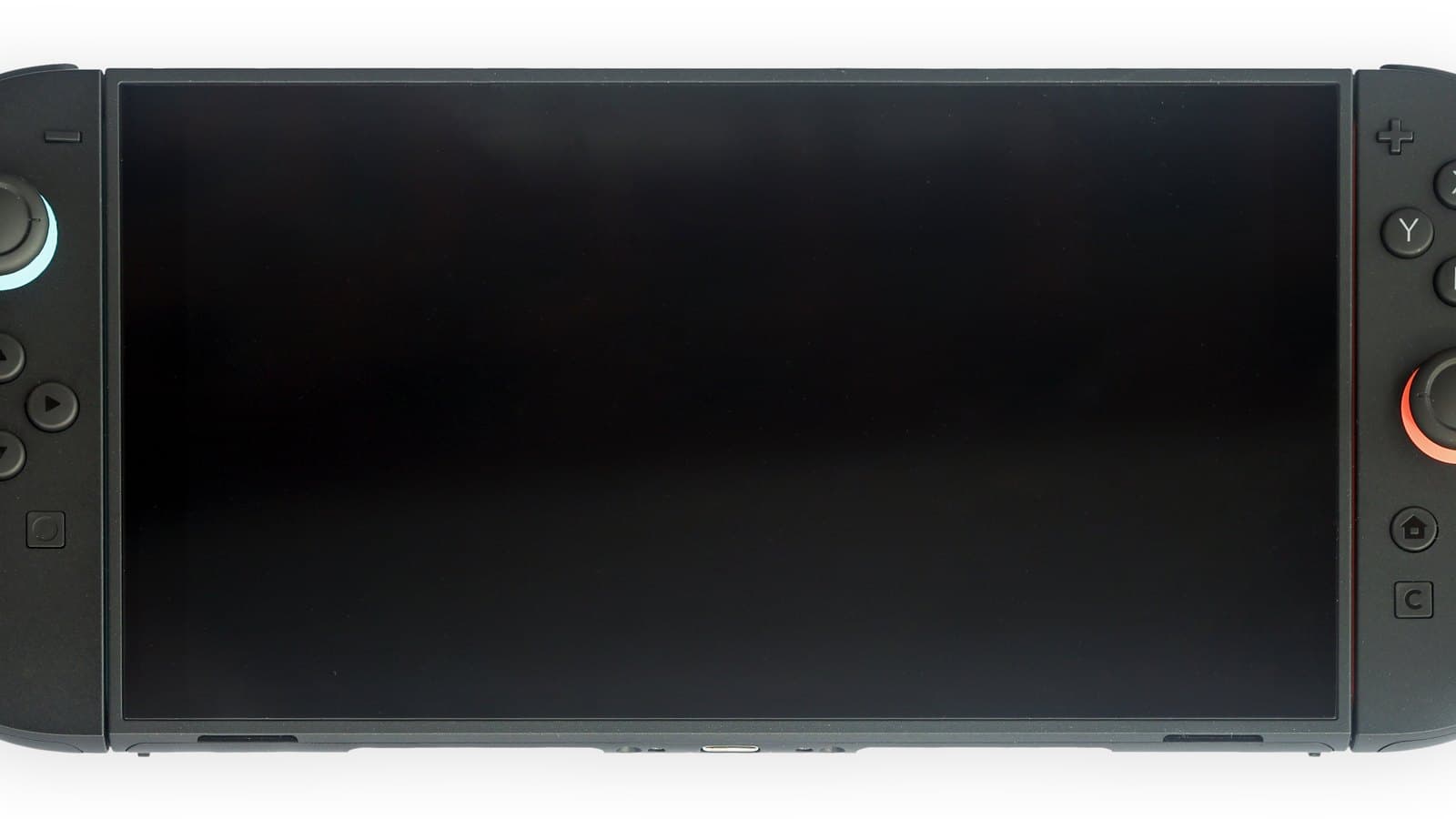
Image: ARC / playarc.gg (official ARC X1 product render).
Tags
Frequently asked questions
- How much does the ARC X1 cost in India?
- The ARC X1 is priced at INR 29,500 for members of ARC’s waitlist community in an early-access batch that opens on October 2, 2026. Every later batch sells at the regular retail price of INR 33,500.
- Where can you buy the ARC X1?
- ARC has announced India as the only market for the X1, with no pricing, release date or distribution plan for the United States, Europe or other regions as of September 20, 2026. Early access is tied to the playarc.gg waitlist.
- What chip powers the ARC X1?
- The X1 runs Qualcomm’s Snapdragon G2 Gen 2 Gaming Platform, a 4nm part with an octa-core Kryo CPU and an Adreno A22 GPU. It is Qualcomm’s entry-tier dedicated handheld gaming platform, below the flagship G3x Gen 2.
- Does the ARC X1 play Windows or Steam games?
- No. The X1 runs OwlOS, which is built on Android and the Android Open Source Project. It plays native Android titles, emulators and cloud-streaming services, and it does not run Windows games locally the way a Steam Deck or ROG Ally does.

TPW Editorial
Editorial Team
TechPastWeek's editorial team reports and edits every story we publish. We research each piece against primary and credible secondary sources, and a human editor reviews and signs off before it goes live.