Nvidia says DLSS 5 is coming to RTX 40-series GPUs after a modding-fueled reversal
Nvidia launched DLSS 5 on 3 September as an RTX 50-series exclusive, then confirmed within a day that RTX 40-series Ada cards will get it too, with no date yet.

On this page
Nvidia's newest AI rendering feature was framed as a reason to buy a new graphics card. Less than a day after it shipped, the company said it will support the previous generation too, without saying exactly when, or how much of the feature will make the trip.
Related reading: Palit and Sapphire Turn to Character Art to Sell Mid-Range Graphics Cards · Valve Prices the Steam Frame at $1,059, Betting PC Players Will Pay for Wireless VR.
Nvidia confirmed on 4 September that it is working to bring DLSS 5 to GeForce RTX 40-series GPUs, reversing a launch position under which the technology was exclusive to the current RTX 50-series "Blackwell" family. A company spokesperson, Rajal Maharaj, confirmed the change to The Verge. The company's only timing guidance is that RTX 40 support will follow once RTX 50 performance has been fully tuned, "later this fall." There is no date, and Nvidia has not said which parts of DLSS 5 will run on the older cards.
The reversal arrived after the PC modding community demonstrated (unofficially and often badly) that the technology could run on hardware Nvidia had left out. It is a small but telling episode about how Nvidia's most expensive graphics features are staged, and about how a memory market in crisis is making every GPU decision more complicated.
What Nvidia actually launched
DLSS 5 introduces what Nvidia calls 3D-Guided Neural Rendering. Where earlier DLSS versions reconstructed an image to raise resolution, add frames or clean up ray-traced lighting, DLSS 5 runs a diffusion-style model as the final stage of the graphics pipeline, generating lighting and material detail that real-time rendering would otherwise have to drop.
It went live on 3 September at 9 p.m. Pacific, in a single game: NBA 2K27, developed by Visual Concepts and published by 2K. At launch it was supported only on RTX 50-series desktop and laptop GPUs, and on GeForce NOW Ultimate, which streams the game from RTX 5080 rigs in Nvidia's data centres.
That is a narrower debut than Nvidia had signalled. As The Verge reported before launch, Nvidia had at one point named as many as 16 games that would support DLSS 5. By launch, NBA 2K27 stood alone. Asked later whether titles such as Assassin's Creed Shadows, Hogwarts Legacy, Starfield and Resident Evil Requiem were still committed, Nvidia would say only that "More games are on the way. Many developers are actively integrating DLSS 5, and we'll share updates on upcoming titles as partners finalize their integrations."
Two details about the feature matter for everyone who does not own a new card. First, in the official build, gamers get almost no control: Nvidia says DLSS 5 is, for them, "a simple on-or-off toggle." The knobs (model selection, structure and tone intensity, and per-pixel masking) sit with developers. Second, DLSS 5 is expensive. Nvidia describes it as "our most computationally demanding model to date," and has said it achieved a 5x performance gain since announcing the technology in March. That gain is what moved the demo from two RTX 5090s to one.
Even so, the cost on an RTX 5090 is steep. In PCMag's own testing of NBA 2K27, enabling DLSS 5 cut frame rates from roughly 140 to about 70 despite the game running on the flagship Blackwell card. Multiple outlets put the penalty at roughly 50% to 60%.
The 24-hour reversal
The RTX 40 question had been a sore point from the moment DLSS 5 was announced. Ada Lovelace cards, led by the RTX 4090, were still among the fastest gaming GPUs in service, and owners saw the exclusion as artificial. Reddit threads accused Nvidia of locking the feature to the new generation on purpose.
Then, in the final days of August, a pre-release build of NBA 2K27 leaked containing the DLSS 5 neural-rendering library. Modders on the RenoDX Discord pulled it out, patched around the CUDA binaries that tied it to Blackwell, and got it running on RTX 40 cards, then RTX 30, then RTX 20.
The results were sometimes spectacular and often unusable. On an RTX 4090 running Control, one modder recorded a frame-rate drop of roughly 36%. On an RTX 3080 running Deep Rock Galactic, the community developer known as Flourek showed the game collapsing from about 138 frames per second to 4 frames per second, a 97% loss, with frame times ballooning from 7–8 milliseconds to about 260. Reports collected by Tom's Hardware ranged from single digits to about 40 fps on high-end Ampere cards, almost always with visual compromises.
The distinction Nvidia is likely to lean on is technical. Ada Lovelace has fourth-generation Tensor cores with FP8 support, the numeric format DLSS 5's model leans on. RTX 30-series Ampere and RTX 20-series Turing lack FP8 and need an FP16 fallback, which is part of why the modded results on those cards are so much worse than on Ada.
Nvidia's statement, given to The Verge and repeated by TechPowerUp and PCMag, is carefully staged: "Our current focus is on optimizing performance for the GeForce RTX 50 Series with model updates expected later this fall. Once RTX 50 Series performance is more fully tuned, we plan to work on expanding official support to the GeForce RTX 40 Series." On RTX 30 and 20, Maharaj was blunter: "Right now the focus is of course on 50-series. One step at a time."
If the pattern feels familiar, that is because it is. Nvidia gated DLSS 3 Frame Generation to RTX 40 cards when that feature arrived, despite the RTX 30 generation being technically close behind, and modders later demonstrated multi-frame generation running on Ada and Ampere. The company has consistently treated new DLSS capabilities as a reason to upgrade at the exact moment a new architecture ships. What is unusual this time is the speed of the correction: 48 hours, not a product cycle.
What the mods proved, and what they did not
The modding scene has moved past a single patched DLL. The "DLSS Unlocked" project, from a developer known as ShyVox, bundles two community tools into one installer and aims to combine DLSS 5 with multi-frame generation across RTX 20, 30 and 40 cards. On RTX 20 and 30, and for part of the RTX 40 path, it interpolates frames through AMD's FSR 3.1 rather than Nvidia's own pipeline, reaching reported multipliers up to 6x. Tom's Hardware, which covered the release, notes the obvious catch: none of this should be used in multiplayer games, because anti-cheat systems can treat it as a threat and ban the account.
These results are impressive as demonstrations and useless as buying advice. A modded port of a leaked DLL running on unsupported hardware is not the same thing as a tuned, officially supported build, and none of the numbers above should be read as a prediction of how DLSS 5 will eventually perform on an RTX 4070 or 3080. Nvidia has not said how it will adapt the model for Ada, whether it will trim features, or whether frame generation will be part of the package.
Nvidia has confirmed only two things: that DLSS 5 will come to RTX 40-series GPUs, and that it will happen after RTX 50-series optimisation, "later this fall." No date, no feature list, no performance target. Treat every modded benchmark as a lab experiment, not a review.
Why the memory market makes this messier
There is a reason Nvidia's staged rollout lands differently in 2026 than a console-style feature unlock would. The graphics memory market is in open crisis, and DLSS 5 adds pressure to it.
According to TrendForce, citing Chosun Biz and DRAMeXchange data, GDDR6 prices have roughly tripled from $2.80 to $8.40 per 8 Gb module since late October 2025. Nvidia's own technical materials show that running DLSS 5 at 4K on an RTX 5090 requires about 731 MB of additional GPU memory, which nudges demand toward cards with 16 GB of VRAM or more. Samsung and SK hynix are reported to be upgrading their graphics DRAM specs for the feature. Nvidia has raised graphics-card supply prices three times this year, and RTX 5090 street pricing has detached entirely from its $1,999 launch MSRP, with the cheapest cards now listing at around $5,000.
That context turns the RTX 40 support question into a business one. Every RTX 40 owner who gets DLSS 5 is a customer who might not buy an RTX 50 card this cycle. At the same time, with new cards priced out of reach for many buyers and memory costs climbing, keeping the large installed base of Ada cards engaged is worth something to the platform. Nvidia is not framing the decision that way, but the market arithmetic is hard to ignore.
What RTX 40 owners should expect
Not a switch that doubles your frame rate. The likeliest shape of official Ada support is a reduced version of DLSS 5, arriving after further RTX 50 optimisation, with a meaningful performance cost, more like a high-end option for people with headroom at 1440p than a default setting. Nvidia has not committed even to that much, and it has said nothing about RTX 30 or 20, where the FP8 gap is a real architectural obstacle.
What to watch
- A firm date and a feature list for DLSS 5 on RTX 40. "Later this fall" is the only guidance so far.
- Whether Nvidia confirms the 16 originally announced games, or quietly lets the roster shrink. Its non-answer on the launch line-up is a signal in itself.
- Whether official Ada support includes any form of the developer controls, or ships as the same on/off toggle.
- How the next DLSS 5 model update lands on RTX 50. That release is the precondition for RTX 40 work, so its reception sets the tone.
- Whether memory pricing eases. If GDDR6 and GDDR7 stay elevated, the case for a cheaper path to DLSS 5 (including supporting older cards) gets stronger.
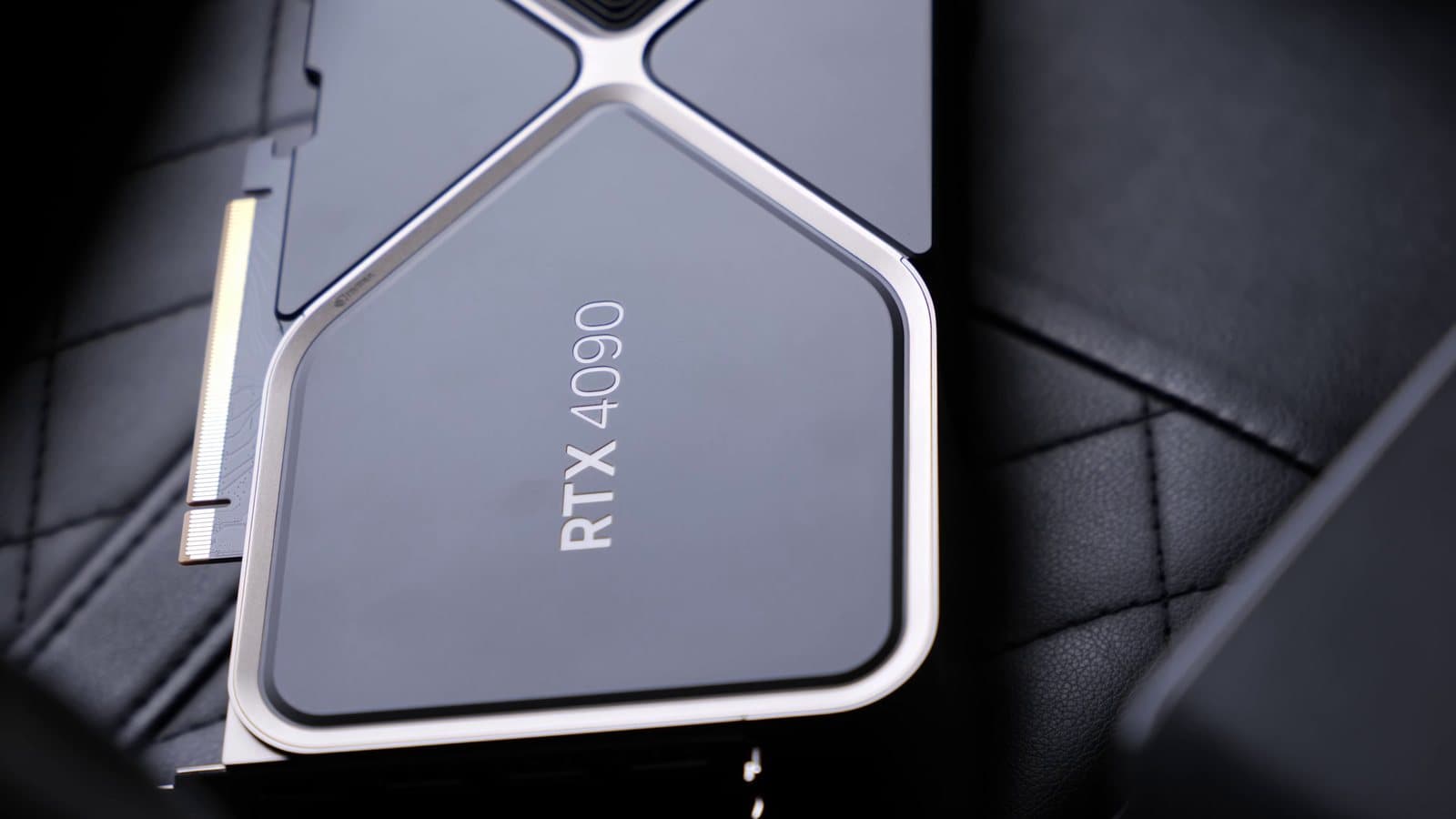
Lead image: an Nvidia GeForce RTX 4090 Founders Edition. Photo by ZMASLO, via Wikimedia Commons, CC BY 3.0; used for news coverage of the product.
Tags

TPW Editorial
Editorial Team
TechPastWeek's editorial team reports and edits every story we publish. We research each piece against primary and credible secondary sources, and a human editor reviews and signs off before it goes live.