South Korea's Education Minister Resigns After an AI Cheating Scandal Upended the Suneung
Choi Kyo-jin quit after last-minute anti-AI-cheating rules caused chaos at South Korea's national college entrance exam, where 111 devices were caught.

On this page
Key takeaways
- Education Minister Choi Kyo-jin offered his resignation on 22 November 2026 and President Lee Jae Myung accepted it about an hour later, Yonhap reported.
- The Suneung was held on 20 November at 1,312 centres, with more than half a million candidates sitting the eight-hour exam.
- The education ministry said 111 candidates were caught with unauthorised electronic devices, and nearly half were found through three nationwide emergency alerts.
- The rules were announced days before the exam after the top scorer in the national tax accountant exam admitted using a microcamera, a phone and AI to cheat.
- Choi, 72, had told parliament he was not confident he could detect AI-assisted cheating, citing his age, and teachers' unions called the government response belated.
South Korea's education minister resigned on Sunday, three days after the national college entrance exam, saying he could not escape blame for the confusion caused by anti-cheating rules announced at the last minute. President Lee Jae Myung accepted Choi Kyo-jin's resignation about an hour after the minister offered it, according to the presidential office.
Related reading: FCC Tells California to Stop Blocking AT&T's Copper Retirement · California Subpoenas Nvidia Over Whether Its Chips Reached China.
The exam, known as the Suneung, is the most consequential date on the country's calendar. It was held on Thursday at 1,312 centres, with more than half a million candidates sitting an eight-hour test that shapes university admission and, in practice, career prospects. This year it arrived under rules written in a rush, after a cheating confession turned AI-assisted exam fraud into a national story.
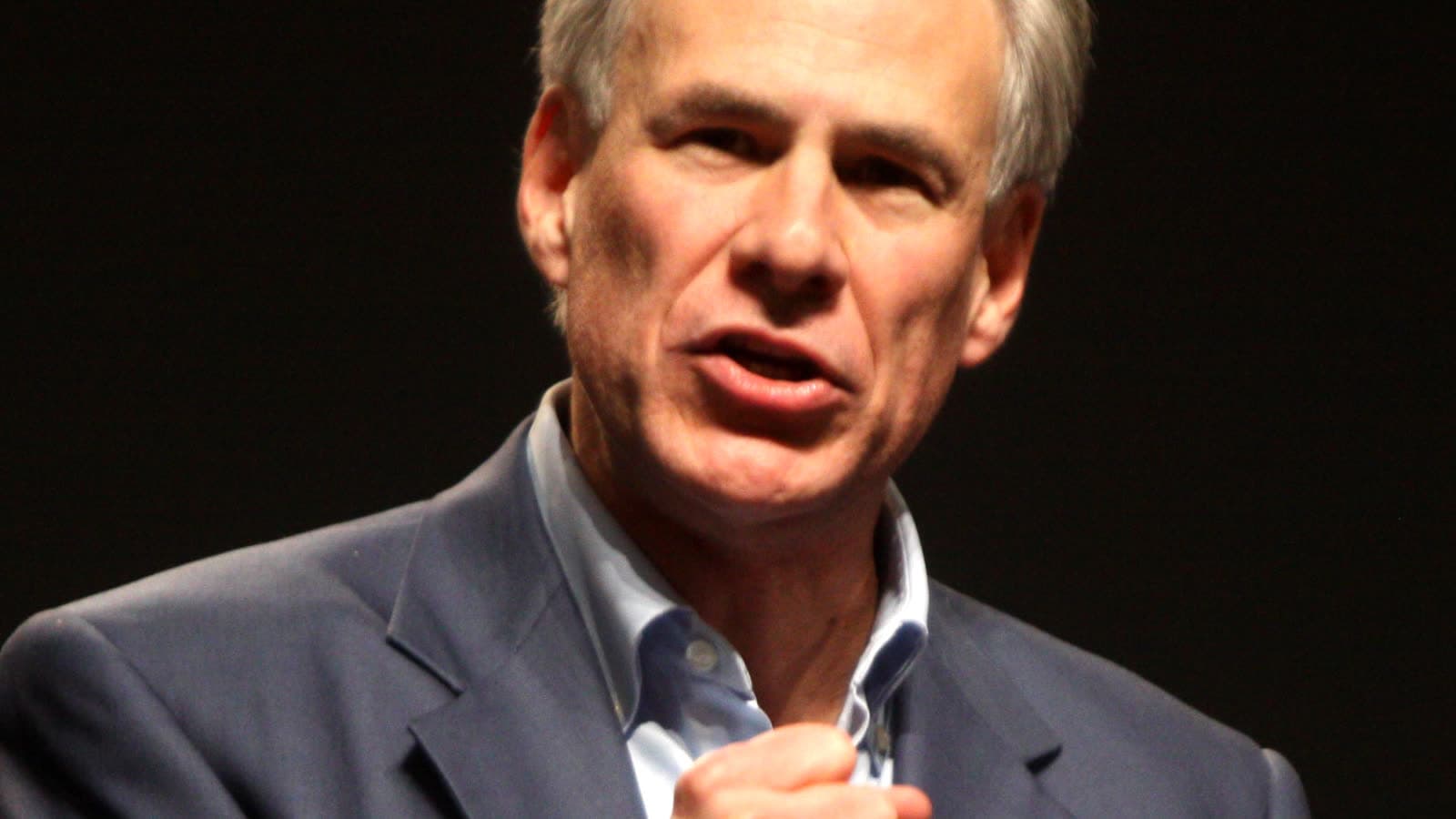
Choi, 72, had been in the job through the scramble. His statement, released by the ministry and carried by Yonhap, did not dispute the criticism. "As the minister in charge, I believe I cannot escape criticism that we failed to prepare in advance," he said. "Now that the exam has concluded, I feel a deep sense of responsibility and am offering my resignation."
The resignation, in his own words
The wording matters because it defines what the government is conceding. Choi did not say the exam was compromised. He said the preparation was inadequate and that the inconvenience fell on the public, including test takers. The presidential spokesperson, Kang Yu-jung, said the process to nominate a successor would follow due procedure, without naming a candidate.
The Suneung is a single-day exam, but it is not a single event. Aircraft take-offs and landings are rescheduled around the 25-minute English listening paper, artillery and tank movements are suspended, the stock market opens an hour late, and cars are stopped 200 metres from every centre. Extra trains run from 6am, police drive latecomers to their halls, and offices are asked to open at 10am.
That choreography is why the last-minute changes landed so hard. Candidates and teachers had days, not months, to absorb rules that touched what they could carry into the room, what they could wear, and whether their phones would scream during the exam.
How a tax exam became a national panic
The trigger came a week before the Suneung. The top scorer in the national tax accountant exam, held in April, admitted on 15 November that he had cheated. In a video posted to his lawyer's YouTube channel, he said he had photographed the questions with a concealed microcamera, sent them to an AI system and read the answers from a smartphone. He got one question wrong out of 160.
The confession was unusual for its detail, and it arrived with a warning. "To anyone thinking of cheating as I did: I am going to tell the investigators everything, so please don't think, 'I won't get caught,'" he said, according to The Guardian. His lawyer handed a camera, a laptop and a phone to police. No charges had been brought as of 18 November, and the prime minister, Han Seong-sook, ordered procedures to void his result and bar him from the exam for five years.
Han called AI-assisted cheating a "social evil" that the government would "root out," and told a cabinet meeting that the education ministry and other agencies should approach the problem "as if staking their jobs on it." That set the tone for the week: visible enforcement, announced quickly.
The rules landed days before the test
The measures were sweeping by the standards of any exam. Candidates had to turn off and hand in smart devices. Bags left in corridors were checked for devices still switched on. Invigilators inspected glasses and watches, then collars, sleeves and buttons for concealed cameras. Some candidates were told to cover the buttons on their shirts and jackets with stickers.
Schools were to switch off wifi inside exam centres and public wifi nearby. Personal hotspots, which cannot be blocked, would be traced through connection records. More invigilators were deployed, with at least one dedicated official in each centre. Smart glasses had been banned since the end of June, and wearing a pair counted as using one even when switched off.
The most visible measure was the emergency alert. Three times during the exam, at points between 08:00 and 15:00 local time, phones across South Korea sounded at full volume, including handsets on silent and those held by tourists on roaming. It was the first time the national disaster alert system had been used to catch exam cheaters, the BBC reported. The alerts did not sound on phones that were switched off or in airplane mode.
Radio-frequency detection was considered and rejected for this year. The education ministry concluded that conditions varied too much between venues, so the checks would rest on visual inspection. Choi had told parliament that authorities could screen out the smart glasses already on sale, but not newer variants.
What the exam actually caught
The education ministry said on Friday that 111 candidates had been caught with unauthorised electronic devices. Nearly half of those cases were detected through the emergency alerts, according to The Guardian.
That number is the only hard measure of whether the crackdown worked, and it cuts both ways. It shows the alerts found devices that bag checks and visual inspection missed. It also shows that roughly half the detections came from a method that depends on a phone being present and powered on, which is exactly the condition a determined cheater would try to avoid.
The ministry has not published a breakdown of what the devices were, whether any candidate was found with smart glasses, or how many results will be invalidated. Those decisions now sit with a ministry whose minister has just resigned.
Why the crackdown spread more anxiety than confidence
The measures were meant to reassure. In practice they produced a second problem: honest candidates could not tell whether they would be treated as suspects.
The Korean Teachers and Education Workers Union surveyed 2,716 secondary school teachers last month. Of those, 82.3% said they could not tell whether a candidate was wearing smart glasses under the existing procedure; 3.5% said they could. Some candidates switched to contact lenses to avoid having their glasses questioned, and an optician in Suwon told the Guardian that students who had never worn contacts were asking how to put them in.
Choi's own comments made it worse. Asked at a parliamentary hearing whether he was fully confident that AI-assisted cheating could be detected, he replied that he did not think he could, "because of my age." The line travelled. It also fit a pattern: the minister did not appear at the press conferences where the measures were announced, leaving a vice minister to present them.
"Now that the exam has concluded, I feel a deep sense of responsibility and am offering my resignation." — Choi Kyo-jin, South Korea's education minister, 22 November 2026
There is a harder fact in the background. Yonhap reported that a man who earned a perfect score on the Legal Education Eligibility Test, the national law school entrance exam, was found dead on Thursday after facing allegations of cheating. Police said they would continue investigating the allegations. The article does not connect that case to the Suneung, and officials have not done so either.
A national ritual under a new kind of pressure
South Korea has spent years tightening exam security, and the technology has moved faster than the inspection regime. Smart glasses were banned outright in June. In October, several candidates were caught with them during university-run admissions exams. The Suneung added the emergency alert because officials could not find a reliable way to scan for the devices themselves.
The result is a system that now asks 500,000 teenagers to prove, in public, that they are not cheating. Phones blaring in lecture halls and strangers inspecting collars are not neutral acts. They change the mood of a day the country already treats as a civic event.
Lee has said he wants to overhaul the exam system, and the resignation gives him an opening to argue that the problem is structural rather than personal. But the immediate questions are narrower. Who replaces Choi, whether the 111 cases produce invalidations, and whether the ministry publishes the evidence behind its numbers.
What happens to the results and the ministry
The ministry has not said how many of the 111 cases will lead to invalidated results. The tax accountant's score is the subject of a separate procedure, ordered by the prime minister, that would void his result and bar him for five years.
Choi's departure removes the minister who presided over the rollout, not the rules themselves. The next minister inherits a system with more inspection powers, a new use of the national alert network, and a public that has now seen both the cheating and the enforcement up close.
Caveats
The resignation and the president's acceptance are confirmed by Yonhap, the BBC, The Guardian and The New York Times. The 111 figure is the education ministry's own, announced on Friday, and it covers suspected cases involving electronic devices rather than proven cheating. The ministry has not published how many cases led to invalidated results.
Candidate numbers vary by outlet: the BBC says about 500,000, while The Guardian and The New York Times say more than half a million. Exam duration also varies in coverage, with The Guardian describing an eight-hour test and the BBC up to nine hours. The tax accountant's confession is public, but the five-year bar and the voiding of his result were ordered procedures, not a court ruling, at the time of the Guardian's report. The LEET candidate's death is reported by Yonhap, which did not give a cause; police said the cheating allegations remain under investigation.
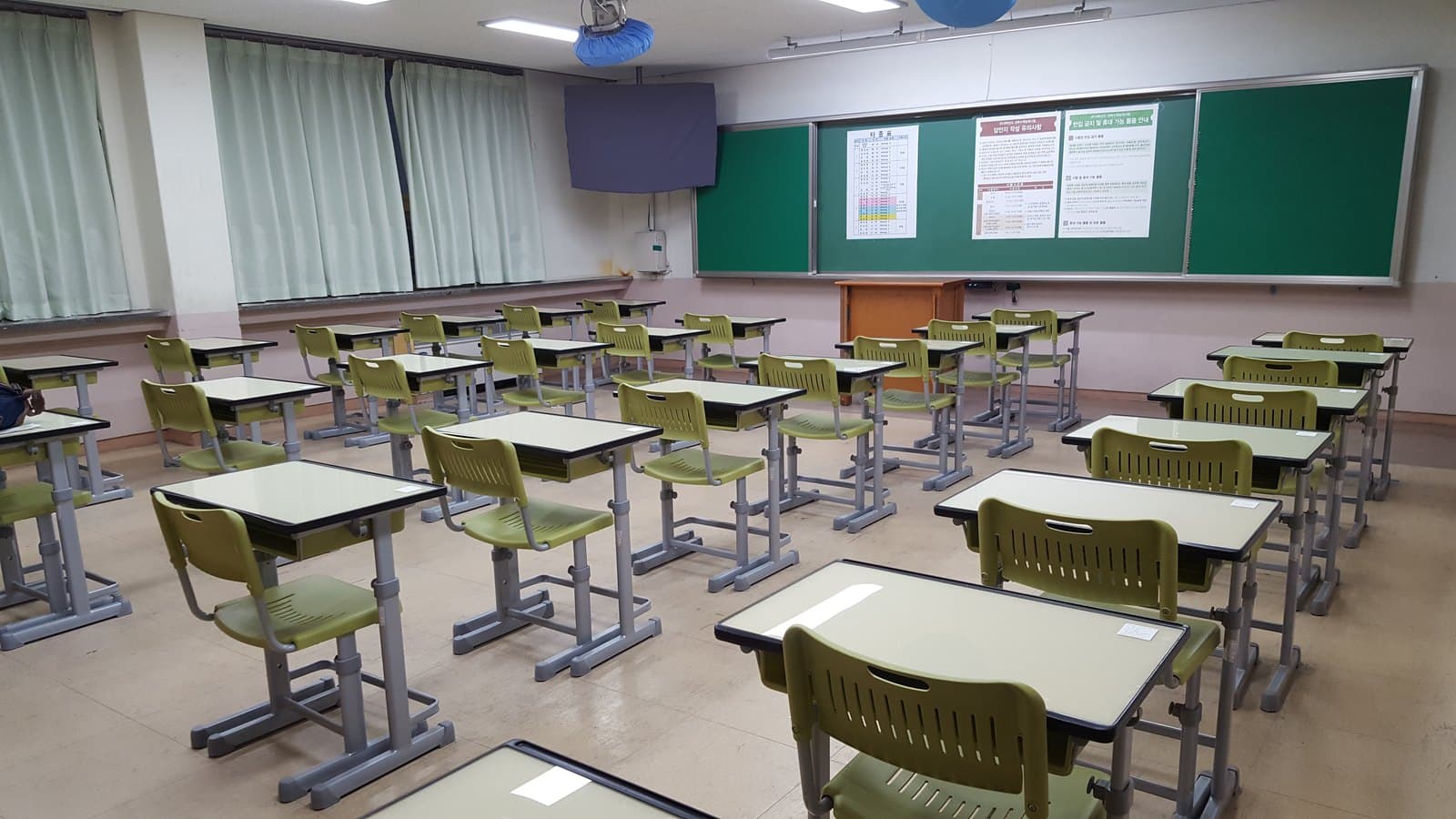
Cover image: An exam room at Puhung High School in Gyeonggi Province, South Korea, used as a test centre for the College Scholastic Ability Test. Photo by 고려, CC BY 4.0, via Wikimedia Commons.
Tags
Frequently asked questions
- Why did South Korea's education minister resign?
- Choi Kyo-jin said he could not escape criticism that the government failed to prepare in advance for the Suneung, after anti-cheating rules announced at the last minute caused confusion for candidates and teachers. President Lee Jae Myung accepted the resignation on 22 November 2026.
- How many students were caught cheating on the Suneung?
- The education ministry said 111 candidates were detected with unauthorised electronic devices during the 20 November exam. Nearly half of those cases were found after emergency alerts sounded on phones across the country.
- What started the AI cheating scandal in South Korea?
- The top scorer in the national tax accountant exam admitted on 15 November that he had photographed questions with a concealed microcamera, sent them to an AI system and read answers from a smartphone. He got one question wrong out of 160.
- Is the Suneung cancelled or postponed?
- No. The exam went ahead on 20 November 2026 as scheduled. The education ministry had ruled out postponing it, and officials say the exam concluded without major incidents.

TPW Editorial
Editorial Team
TechPastWeek's editorial team reports and edits every story we publish. We research each piece against primary and credible secondary sources, and a human editor reviews and signs off before it goes live.