
Microsoft Declares Code Red After Its Worst Exchange Online Outage
Internal memos reviewed by Reuters show Microsoft declared a Code Red after the 12-13 November Microsoft 365 outage and set a one-hour recovery target.

On this page
Key takeaways
- Microsoft declared an internal Code Red after the 12-13 November outage that took Exchange Online, Outlook, Teams and Copilot down for about 24 hours, Reuters reported on 24 November.
- Jason Henderson, president of M365 Core, told staff it was the most customer-impacting incident in Exchange Online's history and that Code Red made the recovery work the team's highest priority.
- Engineers sent more than 11,000 messages across 11 Teams chats during the response and struggled to keep one shared picture of hypotheses and decisions, according to a memo from corporate vice president Amanda Silver.
- Microsoft set a target of resolving future worldwide incidents within an hour and named five workstreams, including load shedding, regional traffic partitioning and faster recovery.
- A separate memo from earlier in November said an urgent production fix took five to six days to reach worldwide saturation, against a new goal of one hour from detection to safe deployment.
Microsoft declared an internal “Code Red” after the Microsoft 365 outage of 12-13 November, according to memos reviewed by Reuters, and told staff the 24-hour failure was the most customer-impacting incident in Exchange Online's history. The declaration, reported on 24 November, makes the recovery programme a company-wide priority and sets a target of resolving any future global incident within an hour.
Related reading: Meta Opens Muse to UK Shoppers as Four Regulators Watch · Nvidia Reinstates Jensen Huang as CEO After Washington Signals No Security Risk.
The outage itself is not new. It began on 12 November, knocked out Exchange Online, Outlook, Teams, Copilot and other Microsoft 365 products, and lasted roughly a day. TechPastWeek covered the first afternoon, when Microsoft said servers were failing their own health checks and had no evidence of an attack. The new material is what happened inside Microsoft after the service came back.
Reuters reviewed internal memos from two Microsoft executives. Jason Henderson, president of M365 Core, wrote to staff on Friday 20 November. Amanda Silver, a corporate vice president overseeing M365 Core and Work IQ, wrote on Monday 23 November. Charles Lamanna, executive vice president for Copilot, Agents and Platform, spoke at a Code Red review. Their accounts describe an organisation that knew it had a reliability problem, could not coordinate its response quickly enough, and is now trying to turn that failure into a different operating model.
What Microsoft told staff
Henderson's memo is the clearest statement of scale. He called the incident the most customer-impacting in Exchange Online's history and said that never before had so many customers gone without email for so long. “Code Red means that this is the highest priority work for our team,” he wrote.
That phrase carries weight inside Microsoft. Reuters describes Code Red as a high-priority mobilisation reserved for critical crises, an internal alarm that redirects staff and management attention. Henderson said he would hold daily meetings with the leadership team of Substrate, the engineering group responsible for the underlying Microsoft 365 services, and weekly reviews to track the actions that come out of the outage.
Silver's memo describes the response itself. Engineers worked through a “fog of war”, she wrote. Responders exchanged more than 11,000 messages across 11 Teams chats. Diagnostic data sat in separate internal tracking systems, which made it hard to keep one shared picture of the theories and decisions being tested.
The fragmented telemetry has a cost. In a long incident, it is measured in hours. Engineers repeat work, pursue theories that a colleague has already ruled out, and lose track of which mitigation has been tried in which region. Microsoft's own account suggests the response was staffed heavily but coordinated thinly.
Lamanna gave the review a number that helps explain the failure's reach. The affected component had experienced “roughly ten years' worth of acceptable failures”, according to Silver's memo. A defect that stays inside its expected failure budget for a decade can still be catastrophic when the conditions that expose it arrive together.
The outage the memos describe
Microsoft's preliminary post-incident report, published to customers on 15 November, traced the failure to a July update for its network gateway servers. The update passed load testing and ran worldwide without obvious problems. It contained a latent defect that caused lock contention inside an internal Windows process, which in turn exhausted a server's CPU and memory.
The testing missed it because the load tests focused on weaker hardware with fewer cores, according to The Next Web's account of the report. The contention was worse on newer machines with more cores.
Two other conditions turned a latent bug into a global outage. Teams failed over to the gateway that also carried Exchange Online, raising the load. An unrelated issue from the day before had already taken nearly 14% of the gateway's server capacity out of service. When one server stopped responding, traffic moved to the next healthy one, which then hit the same bug. Within two hours, more than 80% of the servers were unresponsive at the lowest point.
Microsoft has said the incident was not related to cyber activity or AI agents. It blamed an undetected Windows scalability defect introduced in July, and chief executive Satya Nadella apologised publicly. More than 1,000 engineers and other staff joined outage calls, according to Bloomberg's reporting at the time.
Recovery was slow for a structural reason. Microsoft's normal rollback, flighting and feature flags could not quickly revert a change that had been dormant for months. Engineers wrote an update that returned the Windows code path to its previous state and applied it in groups. Teams, OneDrive, SharePoint and the Office apps could move off the faulty gateways. Exchange Online could not, for scale reasons, which is why Outlook stayed down longest.
What the memos establish, and what they do not
The memos establish that Microsoft declared a Code Red, set a one-hour recovery target, and acknowledged that its incident response and patch deployment were too slow. They do not include a user count, a full root-cause analysis or an independent audit. The “most customer-impacting” description is Henderson's characterisation, not a published ranking. Microsoft did not release the memos; Reuters reviewed them and the company gave a general statement.
Five workstreams and a one-hour target
Silver's memo names five workstreams under the Code Red. They cover load shedding, geographic traffic partitioning and faster recovery mechanisms. The other two are not detailed in the Reuters account, but the direction is clear: Microsoft wants to isolate failures by region, shed non-essential load before the system collapses, and restore service in stages that do not immediately overwhelm the servers coming back.
The headline commitment is a target of worldwide resolution within an hour during future incidents. Microsoft also plans to deploy AI agents to help engineers diagnose system health data more quickly.
Both ideas are reasonable, and both are harder than they sound. Regional partitioning reduces blast radius, but it also requires traffic management that can distinguish a local failure from a global one without making the wrong call at speed. Load shedding protects the core service by degrading something else, which means someone has to decide which customers and features lose service first.
An hour is also a different kind of promise from an availability target. It measures the time from detection to recovery across every affected region, not the percentage of minutes a service is up over a month. For a product with Exchange Online's scale and dependency graph, that is an ambitious ceiling. It is best read as a design constraint for the recovery system, not a guarantee customers can hold the company to today.
The AI agents add a practical layer. Incident responders spend hours reading dashboards, logs and health signals that live in different systems. An agent that can summarise those signals and point to anomalies could shorten the diagnosis phase. It could also add a new source of error if its output is trusted before it has been checked. Microsoft has not said how it will validate the agents or whether their recommendations will be auditable.
The patch problem behind the promise
The most revealing memo may be the one Henderson wrote earlier in November, before the Code Red. Urgent patches to M365 Core services were taking too long to reach users worldwide, he said. In a separate recent incident, an urgent production fix took five to six days to reach worldwide saturation.
“For our most urgent security issues, we need to get from detection to safe worldwide deployment in an hour,” he wrote. “Needless to say, we aren't here yet.”
That admission is more concrete than the one-hour recovery target. A recovery target governs how fast Microsoft can restore a service that has already failed. A deployment target governs how fast it can change code across a fleet that is still running. The second is often the harder problem, because a global rollout has to clear regional validation, customer impact, rollback planning and the risk that the fix itself causes the next outage.
The two targets are connected. If a bad update can be contained in an hour, the damage from a defective patch is bounded. If a good update takes six days to reach everyone, customers remain exposed to a known problem for most of a week. Microsoft's Code Red is trying to shorten both ends of that pipeline at once.
“Unfortunately, all the work we have done over the years was not sufficient to protect us on Thursday.”
The trade-off in faster deployment
Speed and safety pull against each other in production engineering. Microsoft's existing staged rollout exists because a change that works in one region can fail in another. A one-hour deployment target will require more automation, better canaries and faster rollback, not simply a decision to ship sooner. The memos describe the goal; they do not describe the mechanism.
Why a Code Red is a management tool, not a fix
The label matters because it changes behaviour inside a large company. A Code Red can move a project up the queue, free headcount and make a reliability problem visible to executives who otherwise see it as an operating cost. Henderson's daily meetings and Silver's workstreams are the machinery of that attention.
The label does not, by itself, change the architecture that failed. The July defect was able to spread because gateway capacity was shared, health checks and failover moved traffic into the same fault, and Exchange Online could not be shifted away from the affected path. Those are design and operational choices. A mobilisation can fund their repair; it cannot substitute for it.
There is also a transparency question. Microsoft has published a preliminary post-incident report, but the memos that describe the internal response reached the public through Reuters rather than through the company. Customers still do not have a user count, a complete timeline of the response or an explanation of why the diagnostics were fragmented. The company has not said which of its new milestones it will publish, or on what schedule.
The commercial context makes that distinction matter. Microsoft 365 is one of the few software products with a global blast radius. A single incident can stop email at banks, hospitals, schools and governments at the same time. Many organisations treat cloud email as reliable enough to need no local fallback. The 12 November outage tested that assumption for a day, and the Code Red is Microsoft's answer to the question customers will ask next: what changed?
Nadella has also said that AI-found bugs will make outages more likely, a remark that sits awkwardly beside the plan to put AI agents into incident diagnosis. The two can coexist: AI can find more defects and help engineers triage them faster. But the net effect on reliability depends on which capability improves faster, and Microsoft has not published a way to measure that.
What customers should ask for
Enterprise customers can ask for three things without waiting for the next outage. The first is the final post-incident report, with a timeline that covers detection, diagnosis, mitigation and full restoration in each region. The second is a description of the five workstreams and the milestones Microsoft will use to judge them. The third is a clear statement of which services can fail over independently, so customers can design their own fallbacks around the real dependency graph rather than the marketing one.
Procurement teams may also want to revisit the assumption that a single productivity suite is a single risk. Multi-vendor email is expensive and unpopular with users, and switching costs are real. A credible exit plan does not have to be executed to be useful; it changes the conversation about service credits and incident transparency.
Microsoft can declare a Code Red without changing anything. The next major incident will show whether the response timeline is different. The memos set a one-hour target and a one-hour deployment goal. The company now has to show progress against both, in public, before customers are asked to trust the label.
What to watch
Three signals will show whether the programme is real. The first is whether Microsoft publishes the final post-incident report and updates it with the Code Red milestones. The second is whether the patch pipeline shortens in a measurable way, since Henderson's five-to-six-day example is the clearest benchmark in the memos. The third is whether the AI diagnostic agents are described in enough detail for customers to audit them.
Microsoft has not said when it will publish the final post-incident report, or how it will measure the one-hour target.
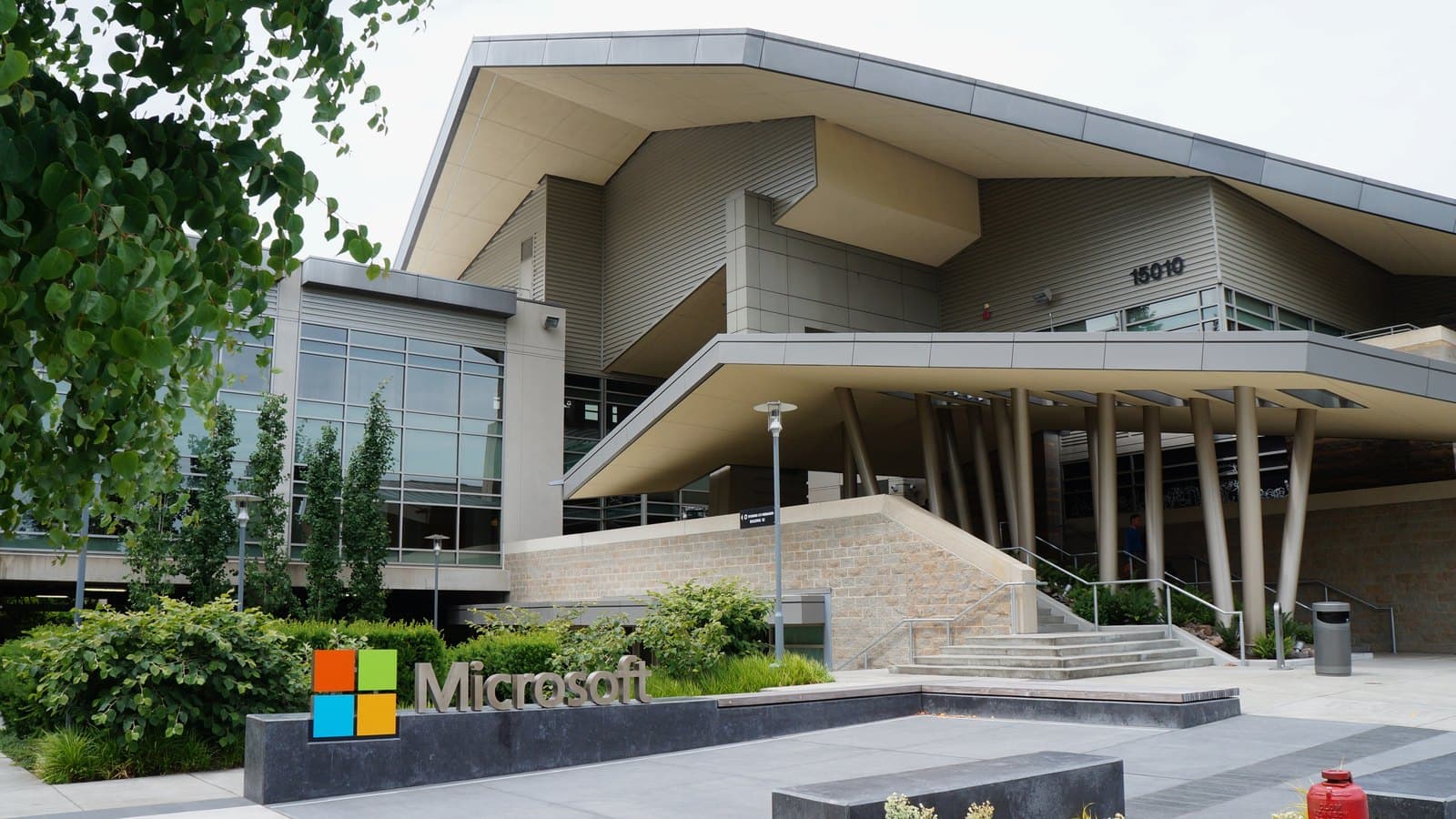
Cover credit: the Microsoft logo sign outside Building 92 on the company's Redmond campus, photo by Coolcaesar, CC BY-SA 4.0, via Wikimedia Commons. Cropped to 16:9.
Tags
Frequently asked questions
- What does Code Red mean at Microsoft?
- In the memos reviewed by Reuters, Code Red describes a high-priority mobilization reserved for critical crises. Jason Henderson, president of M365 Core, told staff it meant the recovery work was the team's highest priority.
- How long did the Microsoft 365 outage last?
- About 24 hours. The incident began on 12 November and affected Exchange Online, Outlook, Teams, Copilot and other Microsoft 365 services. Microsoft applied a fix from 07:20 UTC on 13 November and sent its final customer update at 04:15 UTC on 14 November.
- What caused the Microsoft 365 outage?
- Microsoft blamed a latent defect in a July update for its network gateway servers. The bug caused lock contention inside a Windows process, and it spread when Teams traffic failed over to the same gateways while an unrelated issue had already removed about 14% of capacity.
- Is Microsoft 365 back to normal?
- Microsoft says service has been restored and that it has published a preliminary post-incident report. The company has not published a user count for the outage. Its Code Red workstreams are aimed at preventing a repeat and shortening future recoveries.

TPW Editorial
Editorial Team
TechPastWeek's editorial team reports and edits every story we publish. We research each piece against primary and credible secondary sources, and a human editor reviews and signs off before it goes live.