N-able Pulled N-central Offline After a Researcher Dumped 33 Zero-Days
N-able took its hosted N-central platform offline on 9 November 2026 after a researcher published 33 alleged zero-days and working exploits for the RMM tool.

On this page
Key takeaways
- Security researcher Sean Bales published 33 alleged N-central zero-days with proof-of-concept exploits on 8 November 2026.
- N-able took hosted N-central offline across the Americas, Europe and Asia-Pacific on 9 November and told on-premises customers to shut down.
- N-able released hotfix 2026.4 HF2 on 10 November, fixing seven CVEs, and said all hosted servers had been upgraded by 11 November.
- Censys counted 1,728 internet-exposed N-central instances, and watchTowr reported exploitation attempts against honeypots overnight.
- N-able said it had seen scanning but no confirmed successful exploitation in a customer environment.
N-able took its hosted N-central platform offline on 9 November 2026 after an independent researcher published more than 30 alleged zero-day vulnerabilities in the remote monitoring and management product, along with working proof-of-concept code. The disclosure forced a global cloud shutdown at a vendor whose software sits inside thousands of managed service providers, and it turned a routine patch cycle into an emergency.
Related reading: AI Agents Found a Zero-Day in MONAI Label and Rooted a University Server · China-Linked Hackers Exploited a vCenter Zero-Day Weeks Before the Patch.
The researcher, Sean Bales, published the material in a GitHub repository called Able2Shell late on Sunday 8 November. He said he tested the exploits against N-central Appliance 2026.4.0.31, a pre-release build, and that most or all of the flaws likely affect earlier versions. He also said AI assistance played a part in finding the weaknesses.
N-able called the release "non-responsible communication" of critical vulnerabilities. It took hosted N-central offline in the Americas, Europe and Asia-Pacific, and advised customers running the software on their own servers to switch them off until further notice.
What was disclosed
The Able2Shell repository describes a chain of flaws rather than a single bug. The categories include credential disclosure, arbitrary file writes, directory traversal, cross-site scripting, XML external entity injection and remote code execution. Bales described chains involving support-token theft, unsigned package execution, XSS-to-OGNL injection and authenticated reverse shells. One native stack overflow in the GenericTCP service was described as a route to root command execution.
The practical impact, if the chains work as described, is administrative control of the N-central management interface and command execution as root on the appliance. For an MSP, that is close to the worst outcome available: N-central is the console used to manage endpoints, push patches, run scripts and hold credentials for customer networks.
N-able validated enough of the report to issue a hotfix on 10 November. Build 2026.4.1.26, labelled 2026.4 HF2, addresses seven CVEs:
- CVE-2026-125883, multiple XXE vulnerabilities.
- CVE-2026-125878, multiple OGNL injection vulnerabilities.
- CVE-2026-125879, local privilege escalation to root through a writable syslog-ng configuration.
- CVE-2026-125880, stored XSS through MMS3 patch metadata in an admin context.
- CVE-2026-125881, schema-hint server-side request forgery through service import validation.
- CVE-2026-125882, remote code execution through a file repository upload path traversal, credited to Nate Fair of Sprocket Security.
- CVE-2026-91000, insecure IPC channels leading to local privilege escalation.
The count is smaller than the 33 alleged flaws because N-able grouped some issues and has not accepted every claim. A follow-up hotfix is planned to cover further security updates.
Why N-central matters more than a normal RMM bug
N-central is used by managed service providers to run IT for other companies. A compromised N-central server can be a doorway into every customer the MSP manages, which is why security researchers treat RMM platforms as supply-chain targets rather than ordinary enterprise software.
That risk is not theoretical. The GitHub wfx-loot campaign showed how quickly stolen CI credentials can spread across thousands of repositories. The OpenSSH SSHole flaw showed how fast exploitation can follow disclosure. An RMM compromise is a different mechanism with a similar multiplier: one weak console can expose many downstream networks.
Censys counted 1,728 internet-exposed N-central instances. Not all of them are hosted by N-able, and not all are unpatched, but the number gives a sense of the attack surface. Many MSPs run N-central on-premises because they need control over the server, which also means they own the patching.
The timing compounded the problem. The disclosure landed on a Sunday, the hotfix on a Tuesday, and the hosted service came back region by region. Managed service providers had to decide whether to keep customer endpoints unmanaged for a day or bring the console back before every agent and probe had been upgraded.
The vendor response
N-able's first move was containment. Hosted N-central went offline on 9 November, and on-premises customers were told to shut down. The company said its security, engineering and operations teams were working on remediation and that it had not observed active exploitation.
By 11 November, N-able said all hosted N-central servers across all global regions had been upgraded to the new release. Access was restored as each region completed the upgrade and validation. The company told hosted customers they still needed to upgrade their own agents and probes, because the hotfix changes how the two communicate.
The on-premises path is slower. Customers must apply the hotfix, upgrade agents first and then probes, and keep the server offline until the upgrade is complete. N-able's guidance says an upgraded probe cannot communicate with agents that have not been upgraded, which makes the order matter.
The company also confirmed that it was seeing scanning activity associated with the published proof-of-concept code. It maintained that there was no evidence of successful exploitation in any customer environment. That is a statement about what N-able has observed in its own telemetry, not a guarantee that no customer was compromised.
Exploitation attempts and the exposure window
Third-party security firms moved quickly. watchTowr said it observed exploitation attempts against N-able N-central honeypots overnight after the zero-days were published. Defused Cyber said it detected probing of N-central, including anonymous agent sessions, configuration pulls and requests to the remote control endpoint without authentication. Previdian reported 68 exploitation attempts against one of its honeypots from a single IP address within about 18 hours of publication.
Those are honeypot observations. They show that attackers were testing the published code, not that they succeeded against production systems. The distinction matters for readers trying to judge their own exposure, and it is the reason Huntress urged customers to review login and authentication activity from 8 November onward rather than rely on the absence of an alert.
The exposure window is the part that will take time to assess. Hosted customers lost access for roughly a day to two days depending on region. On-premises customers may have kept servers offline longer. Any attacker who had already established access before the shutdown could still be present after the service returned.
The disclosure fight
Bales published without coordinating with N-able, and the vendor's response made its view clear. The dispute is familiar: a researcher argues that vendors delay and downplay, while a vendor argues that publishing working exploits before a patch endangers customers.
The wrinkle here is AI. Bales said AI assistance helped find the weaknesses, which fits a broader pattern of researchers using models to scan large codebases faster. That does not make the findings wrong, and it does not make the disclosure safe. It does mean the economics of vulnerability discovery are changing: one researcher with a model can generate more candidates in a weekend than a small vendor can triage in the same time.
N-able's decision to take the cloud offline was the conservative choice. It protected hosted customers at the cost of service availability, and it avoided the worse outcome of leaving a compromised console online while patches were validated. The company has not said whether it considered a staged shutdown or whether customer pressure influenced the timing.
What is still unknown
What has not been established
N-able has not confirmed that every one of the 33 alleged flaws is real or exploitable. It has not named a compromised customer, published a full affected-version list or said whether any data was accessed during the outage. The honeypot reports describe attempts, not successful intrusions. And the 1,728 exposed instances are a census of internet-facing servers, not a count of vulnerable ones.
The affected-version range is the most important gap for defenders. Bales tested a pre-release build and said earlier versions were likely affected. N-able's advisory lists fixed versions but has not published a complete matrix of every build that needs the patch. An MSP running an older release has to assume it is exposed until the vendor says otherwise.
The forensic gap matters too. N-able says it saw no successful exploitation. It has not published indicators of compromise beyond the generic advice to review authentication logs. Without those indicators, an MSP cannot easily tell whether a quiet login was legitimate or the residue of an attack.
What to watch
The follow-up hotfix is the next milestone. N-able said more security updates are coming, which suggests the first patch did not close everything. Customers should treat the current release as a mitigation, not a clean bill of health.
A confirmed MSP breach would change the story from attempted exploitation to supply-chain damage. RMM compromises often surface through downstream customers rather than the platform vendor, so the absence of a disclosure in the first week is not proof that none happened.
Disclosure practice is the longer question. If more researchers publish AI-assisted zero-day dumps without coordination, vendors will face the same choice N-able did: shut down, patch fast and accept the service hit, or keep running and hope the exploits do not work. The N-central case shows how much a single weekend disclosure can cost.
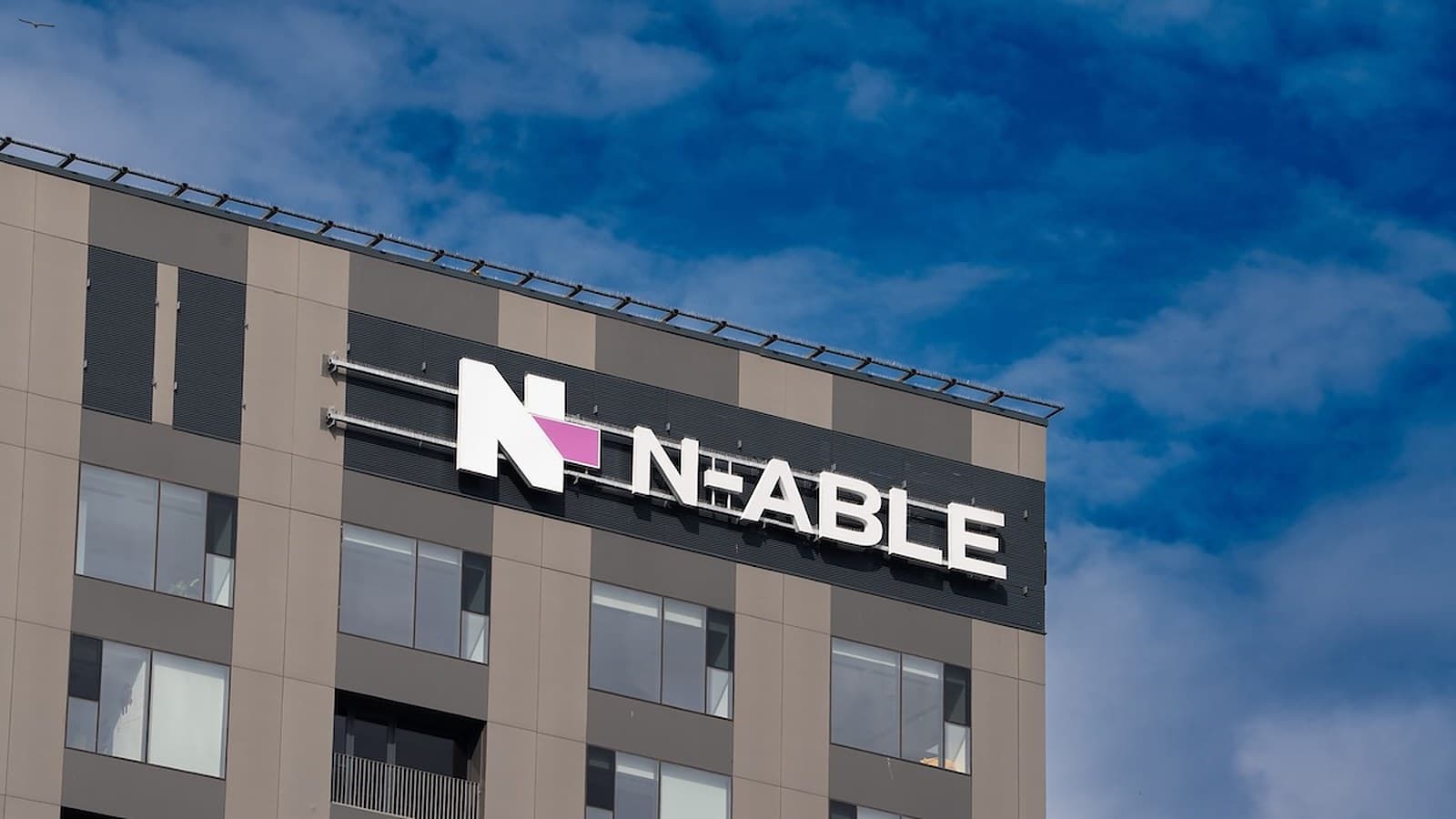
Cover image: the N-able office building, photo courtesy of N-able via SecurityWeek.
Tags
Frequently asked questions
- What is the N-able N-central vulnerability?
- A researcher published more than 30 alleged zero-days in N-able's N-central remote monitoring and management platform, including chains that could allow credential theft, administrator creation and remote code execution as root. N-able fixed seven of them in hotfix 2026.4 HF2.
- Was N-central exploited in the wild?
- N-able said it observed scanning activity tied to the published proof-of-concept code but no evidence of successful exploitation in a customer environment as of 10 November. watchTowr and Defused Cyber reported exploitation attempts and probing against honeypots, which is not the same as a confirmed customer breach.
- Is N-central back online?
- N-able upgraded all hosted N-central servers across its regions by 11 November and restored access as each region completed validation. On-premises customers must apply the hotfix and upgrade their agents and probes before bringing servers back online.
- Who published the N-central zero-days?
- Independent security researcher Sean Bales published the exploits in a GitHub repository called Able2Shell. He said he tested them against N-central Appliance 2026.4.0.31, a pre-release build, and that most or all may affect earlier versions.

TPW Editorial
Editorial Team
TechPastWeek's editorial team reports and edits every story we publish. We research each piece against primary and credible secondary sources, and a human editor reviews and signs off before it goes live.