SpaceX Catches a Starship Upper Stage for the First Time
SpaceX caught Ship 42 with the Starbase launch tower on 14 November, the first recovery of a Starship upper stage, but the Super Heavy booster was lost.

On this page
Key takeaways
- SpaceX caught Ship 42 with the launch tower at Starbase, Texas, on 14 November 2026, about 22 hours after it lifted off.
- It was the first time a Starship upper stage returned from orbit and was recovered at the launch site.
- The Super Heavy booster missed its own catch after a guidance fault and was destroyed over the Gulf of Mexico.
- Ship 42 completed 14 orbits, reached about 265 kilometres, and deployed 26 Starlink V3 satellites.
- SpaceX still has to inspect the vehicle and show that either stage can fly again before the reusability claim is proven.
SpaceX caught the upper stage of its Starship rocket with the launch tower at Starbase, Texas, on 14 November 2026, the first time the company has recovered a Starship spacecraft returning from orbit. Ship 42 settled into the tower's mechanical arms at about 4:20 p.m. ET (21:20 UTC), roughly 22 hours after it lifted off on Flight 15.
Related reading: NASA Asks Industry Whether Commercial Spacecraft Could Boost or Retire Hubble · Japan Launches MMX to Bring Back a Piece of Phobos.
The catch was the ending SpaceX had spent the flight working toward. It was also a partial victory: the Super Heavy booster that carried Ship 42 off the pad failed to return for its own catch and was destroyed over the Gulf of Mexico. SpaceX had hoped to recover both stages on the same flight. It recovered one, and the harder one.
What happened on Flight 15
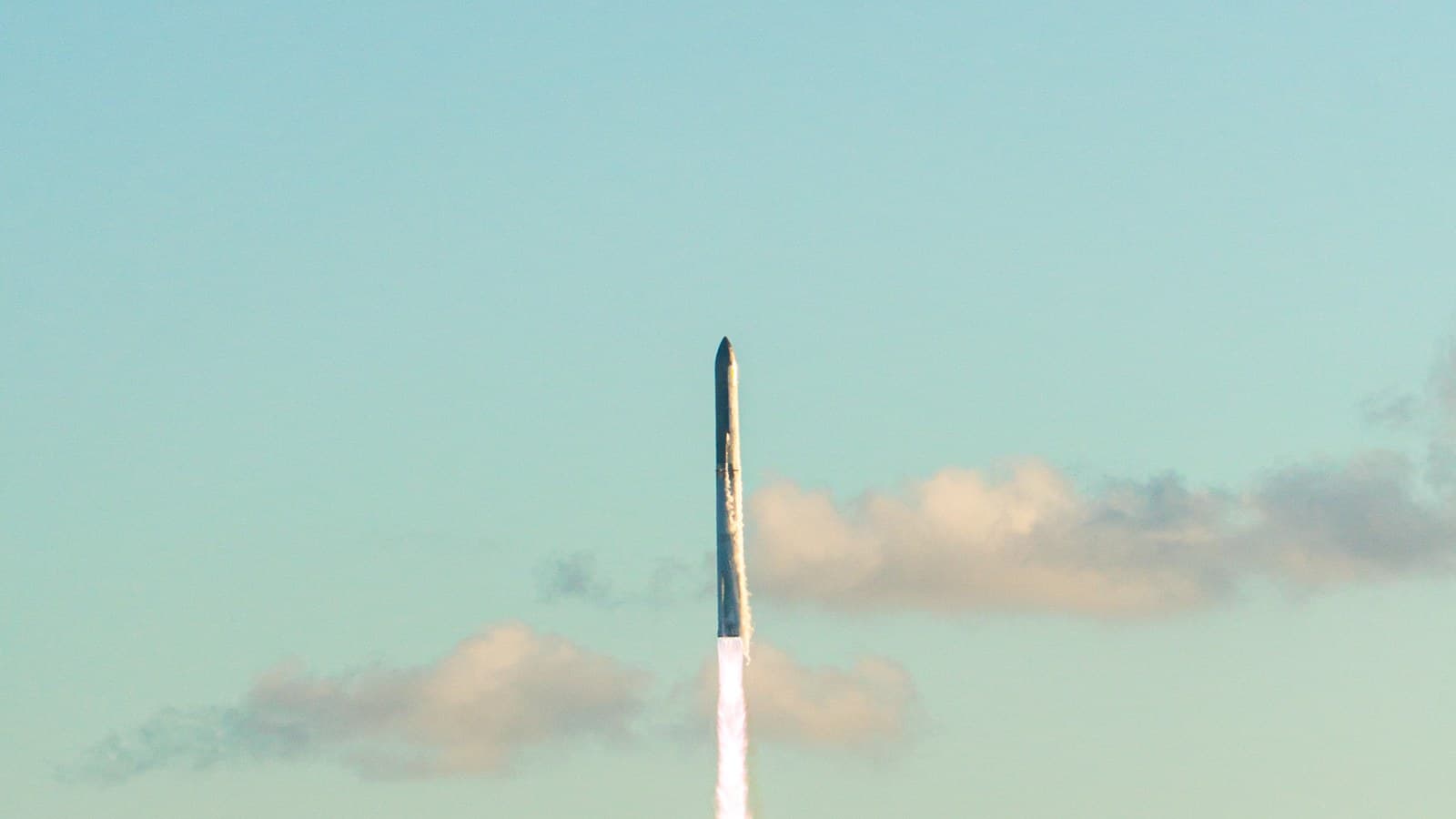
Flight 15 lifted off from Orbital Launch Pad 2 at Starbase at 5:47 p.m. ET on Friday 13 November (22:47 UTC). The stack was the first Block 3 Starship and Super Heavy combination to attempt a double return, with Booster 22 below and Ship 42 above.
The launch and staging went as planned. Ship 42 reached a low Earth orbit at about 265 kilometres (165 miles), released 26 Starlink V3 satellites, and circled the planet 14 times. Three of the satellites carried cameras aimed at the ship's heat shield. SpaceX said the images showed the shield was in good enough condition to proceed with a catch rather than a contingency splashdown.
The booster did not get the same chance. SpaceX called an automatic abort during the coast phase after the vehicle detected a guidance, navigation and control fault. The booster diverted away from the tower and came down over the Gulf, where its flight termination system destroyed it. SpaceX's Kate Tice said the booster's engines stopped firing too soon on the way back down, and the guidance system concluded it was not in the right position for a catch. The company is still investigating.
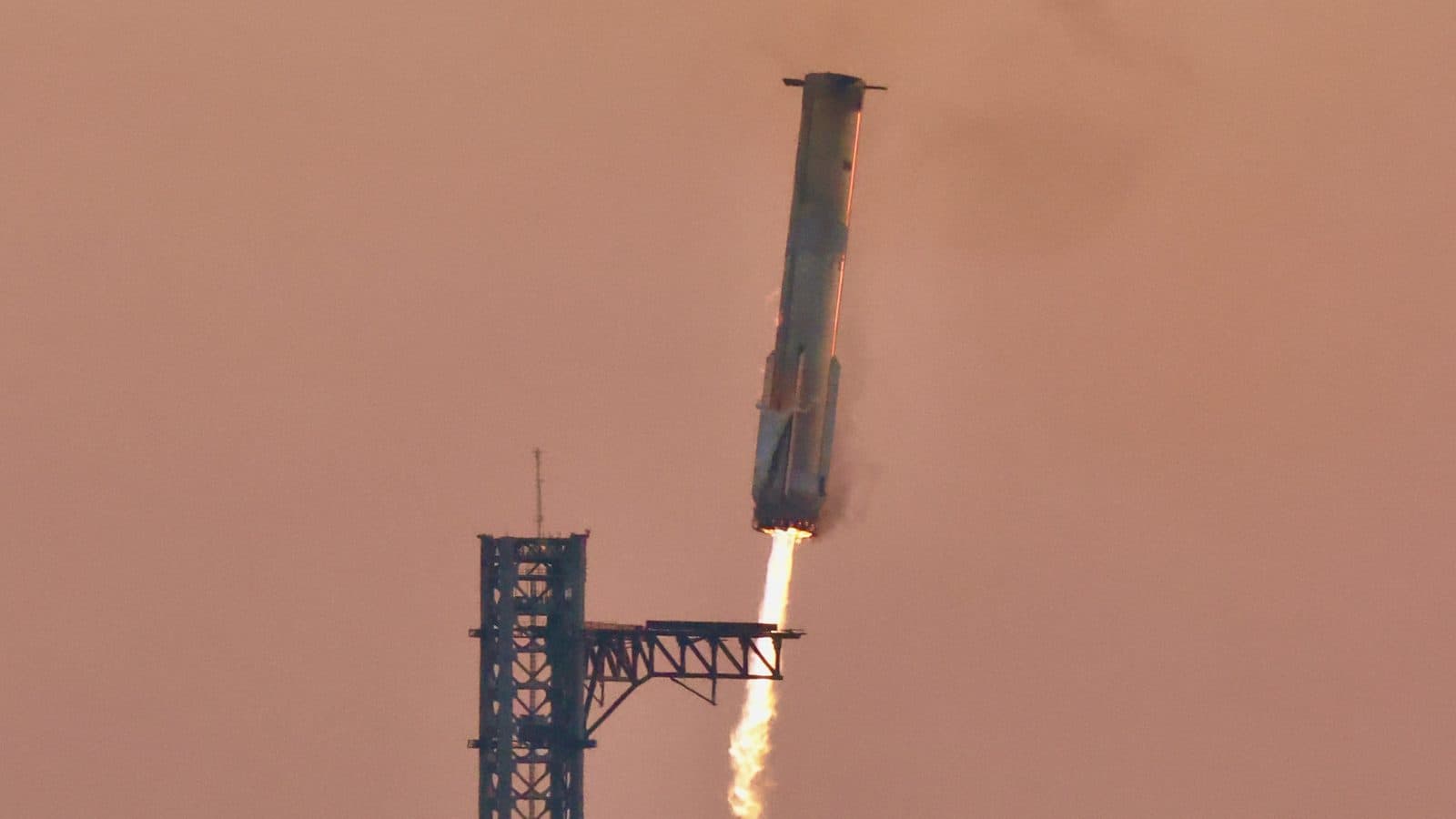
The ship kept flying. On Saturday afternoon it fired its engines to leave orbit, reentered, and descended through the clouds toward the tower. Live video showed the stainless steel vehicle hanging above the ground between the chopstick arms, engines still glowing, before the tower took its weight.
Why the ship is the harder catch
SpaceX has caught a Super Heavy booster three times, on Flights 5, 7 and 8. Those catches are difficult, but the booster separates at a lower speed and follows a short arc back to the pad. The ship goes much farther. On Flight 15 it spent a day in orbit, then had to survive reentry at orbital velocity, manage its heat shield, and arrive at the tower slowly enough for the arms to close.
The approach also has less margin for error. SpaceX had a list of conditions that had to be met before it would attempt the catch, including the health of the vehicle's flight controls, landing burn and tower approach. If any of those looked wrong, the ship would have splashed down instead. The company kept a backup splashdown option open overnight while it reviewed the heat shield images.
The flight was only the second time a Starship upper stage had reached orbit. Flight 14, in September 2026, got there for the first time and deployed 26 Starlink V3 satellites, but its ship ended in the ocean. Flight 15 was the first realistic attempt to bring one back.
Starship is 124 metres (407 feet) tall when fully stacked. Flight 15 was the 15th full-scale Starship test flight since 2023 and the second to reach orbit.
The booster miss is still a failure
The catch of Ship 42 does not erase the booster failure. SpaceX wants both stages to be reusable, and the booster is the part it has recovered before. Losing Booster 22 means the company still has not demonstrated a complete orbital launch system that returns both stages to the pad.
The failure mode also matters. The booster was not destroyed by a structural break-up or an engine explosion on ascent. It aborted because its own guidance system decided it could not make the catch. That is the safety system working as designed, but it leaves SpaceX with an investigation rather than a recovered booster. The wreckage stayed in the Gulf, cordoned off by buoys, while the company worked through the data.
SpaceX has not said whether the fault was in the booster's hardware, its software, or the way the vehicle handled the transition from ascent to return. Until it does, the booster catch record remains three successes and one abort on the flights where a catch was attempted, plus this failure on a flight where the company had planned a double catch.
What reusability would change
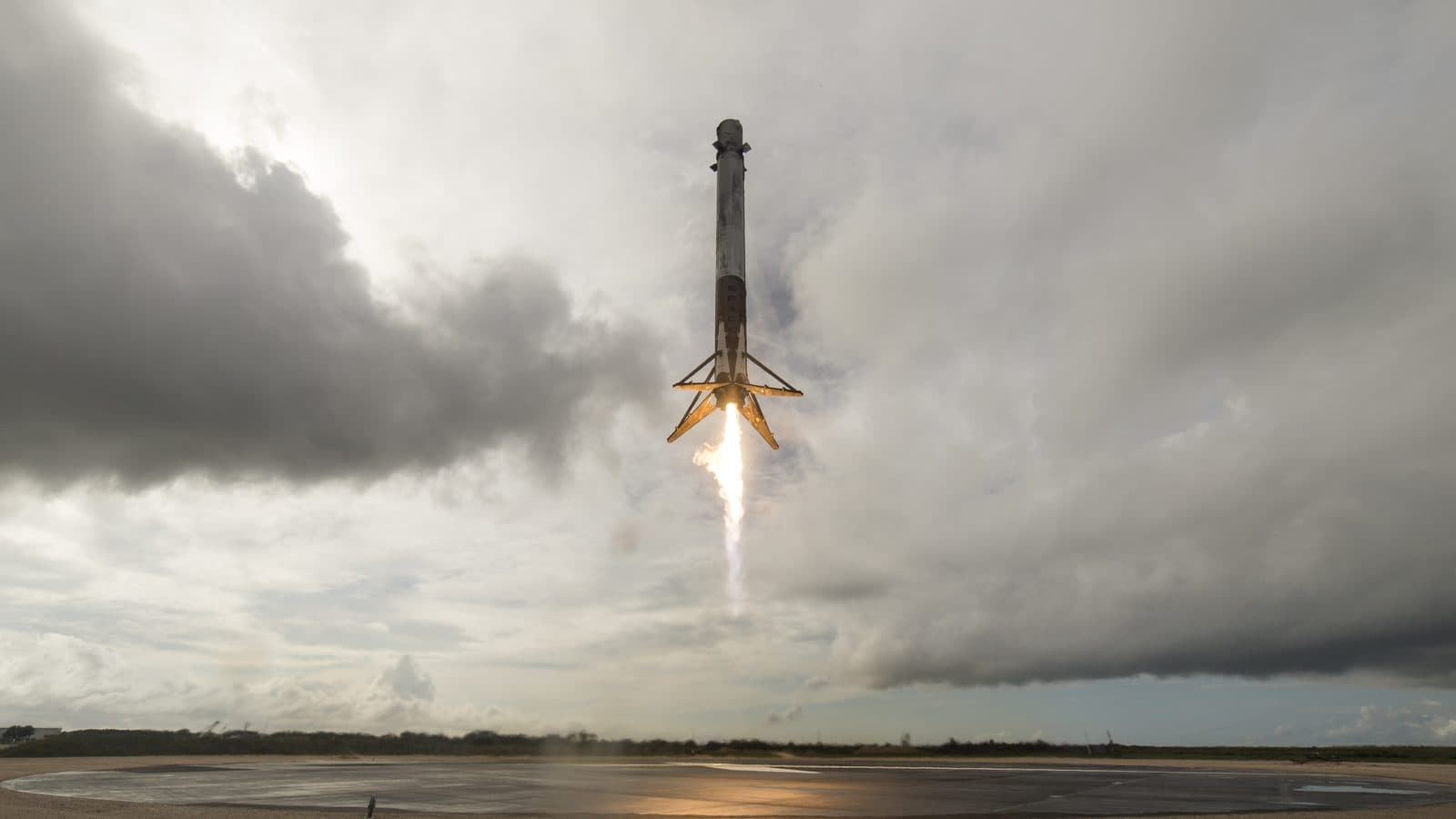
The case for catching the ship is cost and cadence. An expendable upper stage is thrown away on every flight. A recovered one can, in principle, be inspected, refurbished and flown again. That is the model SpaceX used to bring down the cost of Falcon 9, where the first stage now lands routinely and the fairings are recovered from the sea.
Starship is much larger and more complex. It has to carry a heat shield that can survive orbital reentry, and its engines have to restart in space and again for the landing burn. Getting the vehicle back is the first step. Turning it around quickly is the second, and SpaceX has not yet shown that it can do that with a ship.
The company says the catch demonstrates the full reusability of Starship. That is a claim about the architecture, not a demonstrated turnaround time. A vehicle that is caught once and then inspected for months is not yet a rapidly reusable one. The next test is whether Ship 42, or another recovered ship, flies again and how long the refurbishment takes.
The stakes go beyond the commercial case. NASA is paying SpaceX to use Starship as a human landing system for the Artemis programme. The agency's plan calls for astronauts to practise docking with a Starship in Earth orbit on Artemis III before a lunar landing on Artemis IV, which NASA targets for as soon as 2028. A reusable ship would make that cadence easier to sustain. An expendable one would make every mission more expensive.
NASA Administrator Jared Isaacman welcomed the catch on X, calling it "almost magic" and saying it made "more believers by the day." The agency has not published a revised schedule for the Artemis landings.
The next flight
SpaceX has not announced a date for Flight 16 or said whether Ship 42 will be the vehicle that flies it. The company has said it expects to begin launching Starships from Kennedy Space Center in Florida within the next few months, which would give it a second site and a second tower. That matters for cadence: a single pad at Starbase limits how often the company can fly, and a catch damages or occupies the tower.
The company also has to keep deploying Starlink V3 satellites. Flight 15 carried 26 of them, the same batch size as Flight 14. A ship that returns can be inspected for heat shield and engine wear, which is useful data for the next design. A ship that is thrown away cannot.
There is a regulatory layer as well. The Federal Aviation Administration licenses Starship launches and has to close the airspace and maritime exclusion zones around Starbase. A higher flight rate will require the agency to process more licences and the company to show that each flight stays within its approved footprint. The booster's offshore destruction is the kind of event that regulators will examine, even though SpaceX said the vehicle came down inside the closed zone.
Caveats
The catch is a single success, and SpaceX has not published a full technical account of the ship's condition. The company said the heat shield looked good in the images it reviewed, but it has not released the inspection results from the recovered vehicle. "Full reusability" is SpaceX's description of what the catch demonstrates, not an independently verified turnaround record.
The booster failure remains unexplained. SpaceX has not said whether the guidance fault was a one-off or a design issue, and it has not published the telemetry that led to the abort. The destruction of the booster over the Gulf is being reviewed by the company and the FAA.
The 22-hour flight time and 14 orbits come from SpaceX's timeline and AP's reporting. The altitude of about 265 kilometres is the figure AP published; SpaceX has not given a precise orbital altitude. The 26 Starlink V3 satellites are the company's count.
What to watch
The first question is what SpaceX finds when it inspects Ship 42. A heat shield that needs little work and engines that can be reused would support the company's cadence claims. A long refurbishment would not.
The second is the booster. SpaceX needs a clean catch on Flight 16 to show that the Block 3 booster is as recoverable as the earlier version. The company has caught boosters before, but not this one, and not after a guidance abort.
The third is the Florida pad. A second launch site would let SpaceX fly more often, which is the point of reusability. The company has said launches from Kennedy Space Center are a few months away. It has not given a date.
For now, SpaceX has the first catch of a Starship upper stage and a booster at the bottom of the Gulf. Both are part of the same test programme, and the company will need more of the first and fewer of the second before the reusability argument is settled.
Cover image: a Super Heavy booster returns to the launch tower at Starbase during an earlier flight test. Photo by Steve Jurvetson, CC BY 2.0, via Wikimedia Commons.
Tags
Frequently asked questions
- Did SpaceX catch the Starship upper stage?
- Yes. The launch tower's mechanical arms caught Ship 42 at Starbase on 14 November 2026, after a flight of about 22 hours. It was the first catch of a Starship upper stage.
- Did the Super Heavy booster land as well?
- No. The booster aborted its return after a guidance issue, diverted over the Gulf of Mexico, and was destroyed. SpaceX had caught a Super Heavy booster three times before.
- Why is catching the upper stage harder than catching the booster?
- The ship returns from orbit at orbital velocity, so it has to survive reentry heating before it can slow down and line up with the tower. The booster only flies a short suborbital arc.
- When will Starship fly again?
- SpaceX has not announced a date for Flight 16. The company says it wants to inspect Ship 42 and has said it expects to begin launches from Kennedy Space Center in Florida within a few months.

TPW Editorial
Editorial Team
TechPastWeek's editorial team reports and edits every story we publish. We research each piece against primary and credible secondary sources, and a human editor reviews and signs off before it goes live.