SpaceX's Starship Reaches Orbit for the First Time on Flight 14
SpaceX's Starship reached orbit for the first time on Flight 14 on September 28, 2026, deployed 26 Starlink V3 satellites, then splashed down in the Pacific.


On this page
Key takeaways
- SpaceX's Starship reached orbit for the first time on September 28, 2026, on Flight 14 from Starbase's Pad 2 in South Texas, about 170 miles (275 kilometres) above Earth.
- The Ship deployed 26 Starlink V3 satellites starting at T+34 minutes; SpaceX says the batch adds about 26 terabits per second of capacity, roughly 10 times a Falcon 9 launch of V2 Mini satellites.
- The Super Heavy booster splashed down in the Gulf of Mexico and the Ship splashed down in the Pacific Ocean; SpaceX caught neither stage.
- Flight 14 was the 14th Starship integrated test flight, the third Starship launch of 2026 and the third flight of the Starship V3 vehicle.
- The mission ended about three hours after liftoff instead of the planned nine hours and 50 minutes, though the orbital insertion and satellite deployment both succeeded.
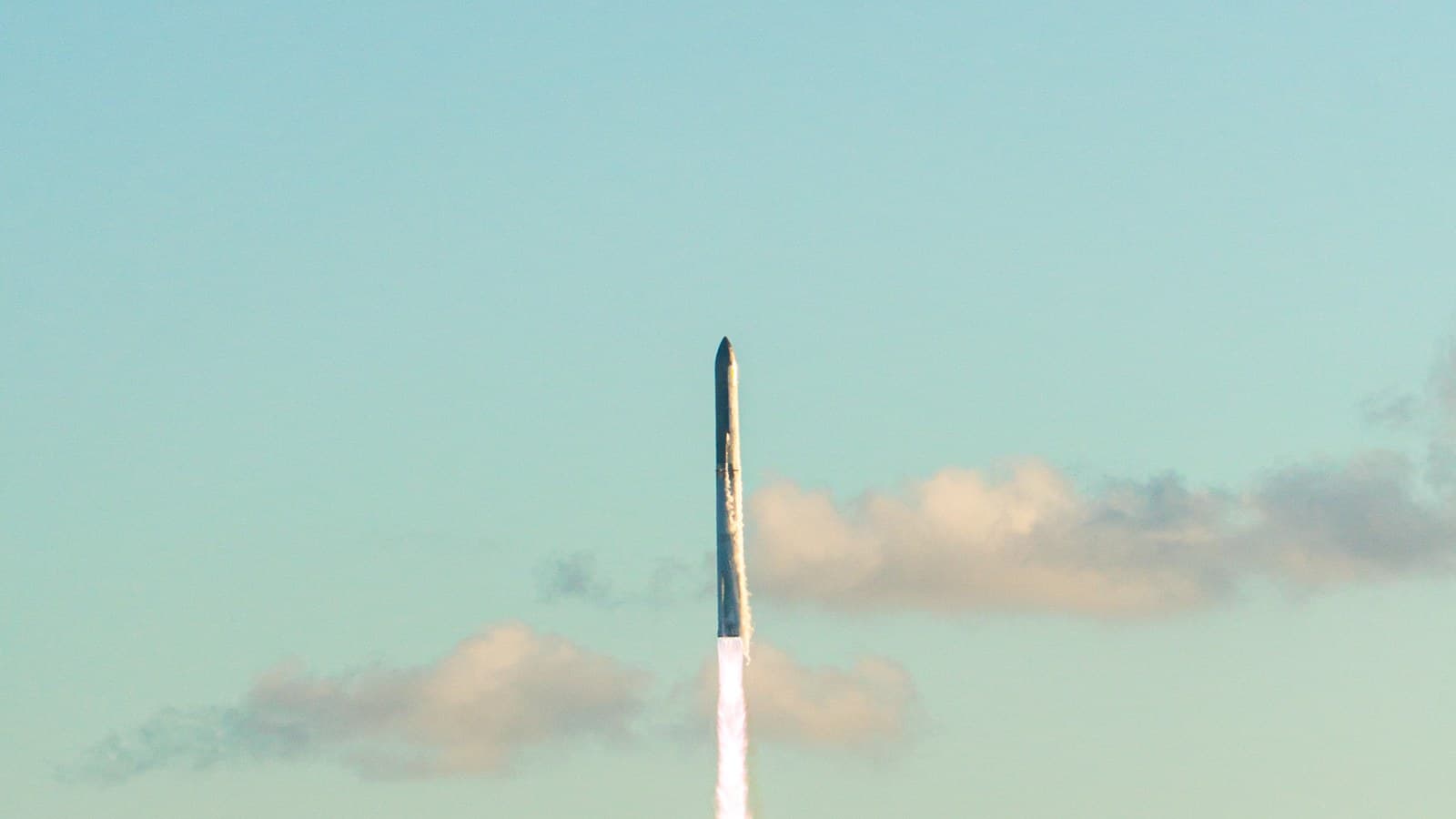
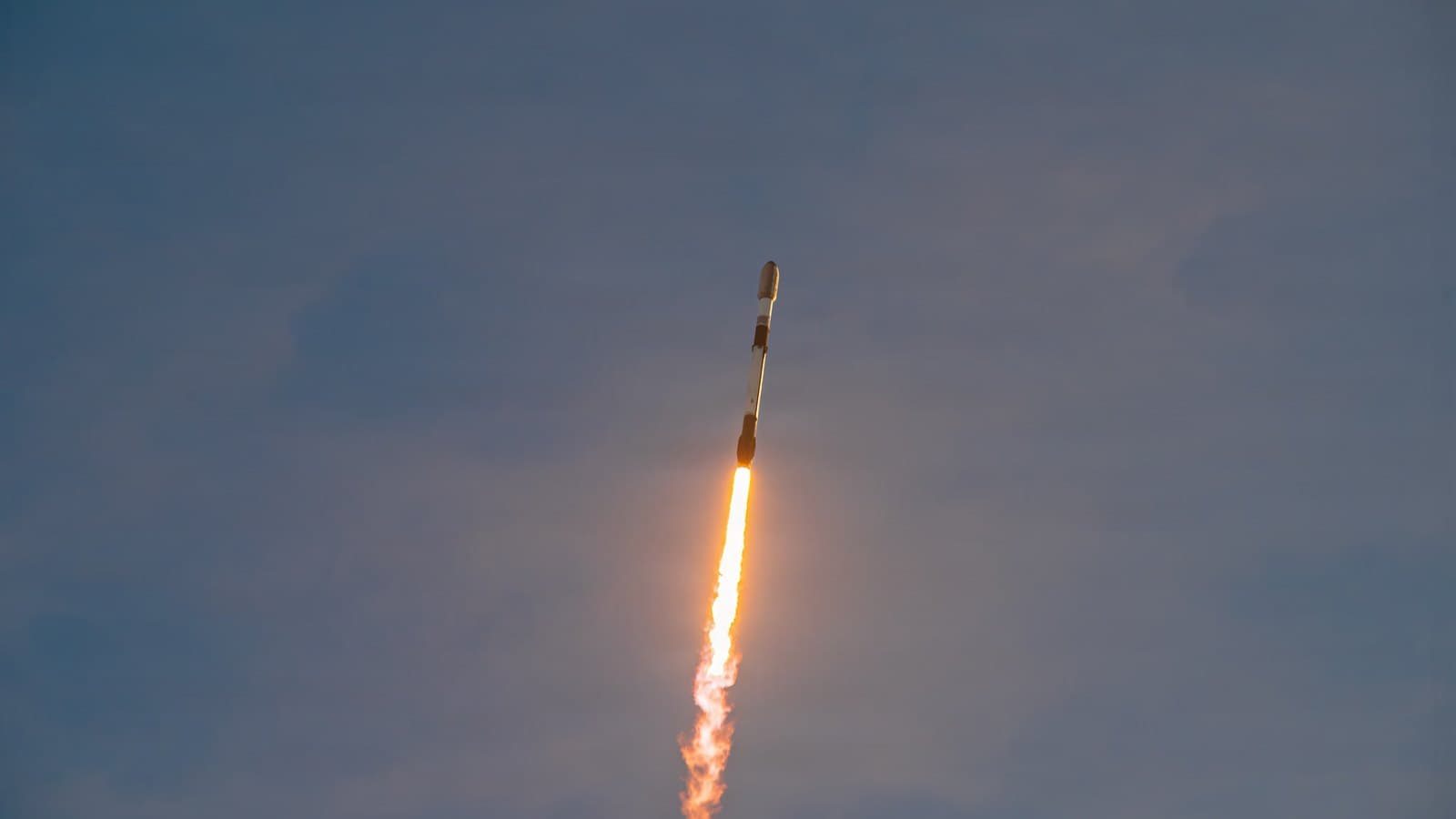
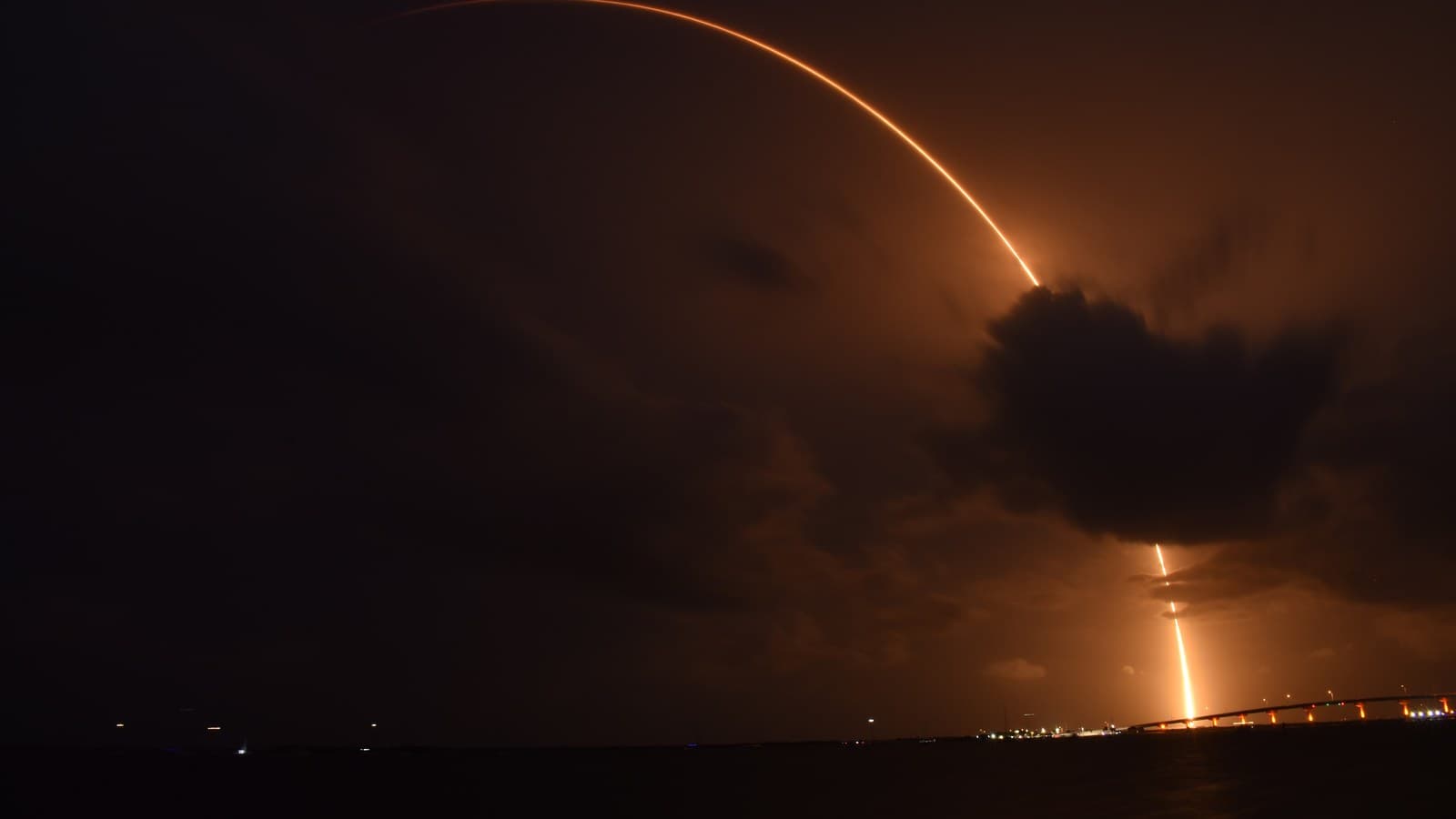
SpaceX's Starship reached orbit for the first time on Monday, September 28, 2026, a step the program had spent 13 suborbital flights building toward. The vehicle lifted off from Pad 2 at SpaceX's Starbase site on the Boca Chica peninsula in South Texas at about 8:50 a.m. EDT (12:50 GMT), close to the 8:48 a.m. EDT (12:48 GMT) target SpaceX and Space.com had listed, inside a 75-minute window that opened at 8:15 a.m. EDT (12:15 GMT). The Ship inserted itself into an orbit roughly 170 miles (275 kilometres) above Earth, deployed 26 next-generation Starlink V3 satellites, and came back down in the Pacific Ocean.
Related reading: SpaceX Sets September 22 for Starship's First Orbital Flight and Its First Paying Payload · SpaceX Wants 80,000 Cell Sites, the Ground Half of a Fourth US Carrier.
The flight was the 14th Starship integrated test, the third Starship launch of 2026 and the third flight of the upgraded Starship V3 vehicle. It was also the first time a Starship upper stage carried satellites into a closed orbit rather than falling back to the atmosphere on a ballistic path, and the first operational payload delivery for a rocket SpaceX still describes as in development.
The ascent did not go cleanly. A Raptor engine failed during the climb, and flight controllers initially called off the orbit attempt before reversing that decision a few minutes later after judging the failure not to threaten the mission, as Forbes reported. SpaceX spokesperson Dan Huot told viewers "We are not giving up yet" as controllers reviewed the data, and the go-ahead to proceed followed shortly afterward, according to Space.com. Mission control then confirmed the result: "Starship is orbital."
A risky ascent and a late call to proceed
The drama sat at the start of the flight. A Super Heavy booster with 33 Raptor engines has margin against a single loss, and the Ship can still reach orbit if it loses one of its six, provided the remaining engines deliver the velocity the mission needs. Coverage differed on which stage lost an engine, with Space.com placing the shutdown on the Ship and Forbes describing one of the 33 Raptors. The decision to press on was made in flight, not on the pad, which is the kind of judgment call that a test campaign exists to rehearse.
The timing was tight in a different way. SpaceX had a 75-minute launch window, and the company held a target of 8:48 a.m. EDT that depended on weather, the range and a final flight-readiness review. Coverage noted two backup days, September 29 and September 30, had the attempt been scrubbed. It was not.
Once the Ship reached space, the milestone was not the altitude alone. Reaching orbit means the vehicle can stay up, and staying up means it can come back down on command.
The mission profile, and where it stopped early
The plan SpaceX published was its most ambitious to date. After hot-staging separation, the Ship was to complete about six orbits across a mission of just under ten hours (nine hours and 50 minutes), deploy its satellites, perform a deorbit burn with a single Raptor engine and splash down in the Pacific Ocean off the coast of Chile. Every earlier Ship had come down in the Indian Ocean, so both the flight duration and the landing zone were new.
The flight did not run that long. Starship deployed its satellites but splashed down in the Pacific roughly three hours after launch, Forbes reported, and Space.com put the splashdown at three hours and eight minutes after liftoff. Mission controllers cut nearly seven hours from the scheduled duration. The Ship toppled over and broke apart after hitting the water, which is how several earlier test articles ended.
The sequence, in order:
- Liftoff at about 8:50 a.m. EDT (12:50 GMT) from Pad 2 at Starbase, from where the booster and Ship separated by hot-staging.
- Orbital insertion on a single-Raptor burn that began about 25 minutes after liftoff and lasted 19 seconds.
- Satellite deployment from a dispenser, starting at T+34:07 and completing around T+1:04:39, a sequence of roughly half an hour.
- Booster splashdown in the Gulf of Mexico about seven minutes after liftoff. SpaceX did not attempt to catch it with the launch tower's arms.
- Ship reentry about two hours and 40 minutes after launch, going subsonic 26 minutes after that, then a Pacific splashdown at three hours and eight minutes.
The duration was itself an objective. Earlier Starship flights lasted about an hour, which gave the vehicle only a brief window to operate in the space environment. The planned near-ten-hour profile was meant to change that, exposing the Ship to thermal cycling, steady power draw and the vacuum for long enough to gather data a hop to the edge of space cannot provide.
The booster's performance is the part that will read as routine, because it was meant to. The early termination is the anomaly the company will now examine.
Why orbit is the line the program crossed
Starship's first 13 flights were deliberately kept below orbital velocity. SpaceX's mission overview says those flights were "intentionally flown passively safe suborbital trajectories to maximize public safety while allowing for maximum learning." A suborbital Ship re-enters on the arc gravity gives it. An orbital Ship has to be steered down.
That difference is technical, not cosmetic. An orbital vehicle has to relight an engine in the vacuum of space and hold the burn long enough to drop its perigee into the atmosphere. If that relight fails, the vehicle stays in orbit and becomes a hazard rather than a test article. SpaceX has said it confirms redundancy on the deorbit hardware before committing to the insertion burn, which is why reaching orbit is a statement about engine restart reliability as much as about raw performance.
The mission overview framed the shift directly: "By going to orbit, the next phase of developing Starship to be fully and rapidly reusable can begin." Reuse, orbital refuelling and lunar missions all sit behind the ability to operate in orbit rather than to touch the edge of space and fall back.
TechPastWeek previewed the mission when SpaceX set the date in September, framing it as the point where the program would move from proving the vehicle could fly to proving it could be used. Reaching orbit is the first half of that. Recovering both stages, and doing it repeatedly, is the rest.
Twenty-six satellites and roughly 26 terabits per second
The payload is where Flight 14 turns from a demonstration into something closer to operations. The Ship carried 26 Starlink V3 satellites, the larger generation designed around Starship's payload bay. SpaceX says each V3 adds about 1 terabit per second of capacity, for about 26 terabits per second on this flight, which it estimates is roughly 10 times the capacity of a single Falcon 9 launch of Starlink V2 Mini satellites.
Three of the 26 satellites carried cameras pointed at the Ship to observe its heat shield. The imagery is meant to inform the thermal protection work that has shaped recent flights, and it is a neat inversion of the usual arrangement: the payload watched the rocket on the way to work.
Reaching orbit with satellites is the point of a generation that a smaller rocket cannot carry in volume. Flight 13 in July deployed V3 satellites too, but on a suborbital trajectory, so they soon re-entered the atmosphere. This time the satellites had somewhere to stay.
The numbers behind that shift are why SpaceX keeps tying Starlink to Starship. Falcon 9 remains the workhorse that launched 165 times in 2025, but the V3 spacecraft are sized for Starship's bay, and the build-out of the constellation depends on a vehicle that can lift them in batches. A single flight that adds more capacity than several Falcon 9 missions is the economic argument for the whole program, stated as a payload.
Eighteen years to the day
The milestone landed on a date with its own symmetry inside SpaceX's history. Falcon 1, the company's first rocket, reached orbit on September 28, 2008. On September 28, 2026, an entirely different vehicle, more than 400 feet (roughly 124 metres) tall and designed to carry more than 100 tons toward the Moon and Mars, did the same thing.
The comparison is useful mainly for what it says about trajectory. Falcon 1 was a small launcher built to prove a startup could reach orbit at all. Starship is a super-heavy system whose economic case depends on flying often and landing in one piece. Reaching orbit is a necessary condition for both programs. It is a sufficient one for neither.
The Artemis gate
NASA has selected Starship as the first crewed lander for its Artemis program, which intends to put astronauts near the Moon's south pole. That plan depends on capabilities Flight 14 did not test: transferring propellant between spacecraft in orbit, landing the Ship on the lunar surface and returning it, and flying often enough to support a mission cadence. None of those can be attempted until the vehicle reliably reaches orbit and survives reentry.
Surviving reentry is the part with the longest track record of trouble. Flight 13 in July produced the company's softest Ship splashdown to date, floating in the Indian Ocean for weeks before SpaceX recovered it for study. An orbital return carries more energy through the heat shield than that suborbital profile did, which is why the three camera-carrying satellites on Flight 14 were pointed at the shield rather than at the Earth.
Two recovery milestones remain untouched. SpaceX has caught the Super Heavy booster with the tower arms on three flights, but has never tried to catch the Ship, and it did not try on Flight 14. Orbital refuelling has not been demonstrated at all. Those gaps, plus the higher flight rate the program needs, are the difference between a vehicle that can reach orbit and one that can be relied on.
The early end to this flight does not change the central result, but it feeds the next round of analysis. SpaceX now has orbital deployment data, an engine-out on ascent to review, and 26 working satellites to check out on orbit.
What to watch
Three things follow from here. The first is whether SpaceX moves toward catching the Ship, the step that would convert orbital flight into reusable orbital flight. The second is orbital refuelling, which is the gate for Artemis and for any Mars architecture. The third is cadence: Starship has now flown three times in 2026, a rate far below what an operational system needs.
The engine shutdown on ascent and the abbreviated mission are the loose ends. Neither appears to have affected the primary objective, and SpaceX has not said whether the reduced flight time was a decision, a hardware issue or a combination of both. Both will feed the next review, alongside the heat shield imagery the Starlink satellites are still sending back.
What is settled is the thing the program had never done before. After 13 suborbital attempts, a Starship left the atmosphere, stayed there, released its payload and came home. The rocket is orbital. What it is not yet is reusable, and that is the harder half of the promise.
Cover: SpaceX's Starship lifting off from Starbase in South Texas. Photo by Shujianyang via Wikimedia Commons, CC BY-SA 4.0 (cropped to 16:9).
Tags
Frequently asked questions
- When did SpaceX's Starship reach orbit for the first time?
- Starship reached orbit on September 28, 2026, on Flight 14. It launched from Starbase in South Texas at about 8:50 a.m. EDT (12:50 GMT) and settled into an orbit roughly 170 miles (275 kilometres) above Earth.
- How many Starlink satellites did Starship Flight 14 deploy?
- Starship deployed 26 next-generation Starlink V3 satellites, beginning about 34 minutes after liftoff and finishing around T+1:04:39. SpaceX says each satellite adds about 1 terabit per second of capacity, for about 26 terabits per second on this flight.
- Did SpaceX recover the Starship booster or the Ship on Flight 14?
- No. SpaceX did not attempt a tower catch. The Super Heavy booster splashed down in the Gulf of Mexico, and the Ship splashed down in the Pacific Ocean about three hours after liftoff.
- Why does reaching orbit matter for Starship?
- Orbit requires a working in-space engine relight and a controlled deorbit burn, the capabilities SpaceX needs before Starship can be reused, refuelled in orbit and used as NASA's crewed Artemis Moon lander.

TPW Editorial
Editorial Team
TechPastWeek's editorial team reports and edits every story we publish. We research each piece against primary and credible secondary sources, and a human editor reviews and signs off before it goes live.