SpaceX Flies Starfall a Second Time, and Leaves the Ending Unstated
SpaceX launched its Starfall return capsule for the second time on 20 October, on a Falcon 9 rideshare with 31 customer payloads. The outcome is unconfirmed.

On this page
Key takeaways
- SpaceX launched its Starfall reentry capsule for the second time at 07:04 EDT (11:04 UTC) on 20 October 2026, aboard Falcon 9 mission Bandwagon-5 from Space Launch Complex 40 at Cape Canaveral.
- The mission carried 32 payloads, 31 of them customer spacecraft; Starfall was scheduled to separate last, about two hours and 48 minutes after liftoff.
- Booster B1085 flew its 19th mission and landed on the droneship A Shortfall of Gravitas, a landing Spaceflight Now said would be the 167th on that vessel and the 672nd Falcon booster landing overall.
- The FAA's environmental assessment put Starfall at about 0.75 metres tall and 3.1 metres across, with a mass of about 2,100 kg and capacity for up to 1,000 kg of payload.
- SpaceX had not confirmed by publication whether Starfall reentered, splashed down or was recovered, and it did not disclose what the capsule carried.
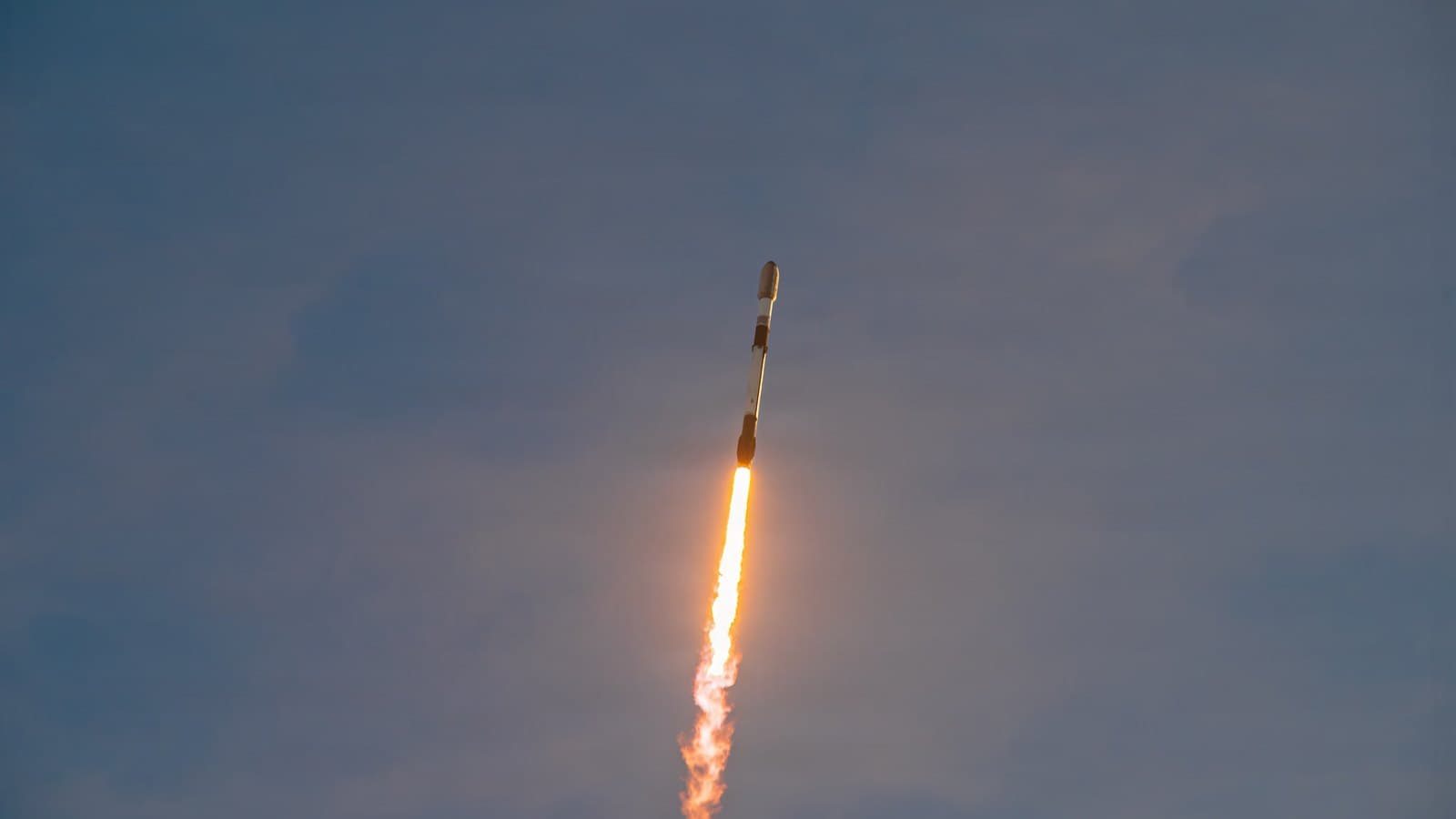
At 07:04 EDT on Tuesday (11:04 UTC), a Falcon 9 lifted off from Space Launch Complex 40 at Cape Canaveral Space Force Station with 32 payloads. Thirty-one belonged to customers. The thirty-second was Starfall, SpaceX's own uncrewed return capsule, flying for the second time.
Related reading: SpaceX Wants 80,000 Cell Sites, the Ground Half of a Fourth US Carrier · SpaceX Launches CRS-35 With the Final Pair of ISS Roll-Out Solar Arrays.
The launch had been set for Monday and slipped a day because of poor weather at the booster recovery zone. The 45th Weather Squadron had forecast a 90 percent chance of acceptable conditions for Tuesday. The first stage, booster B1085 on its 19th flight, landed on the droneship A Shortfall of Gravitas about nine minutes after liftoff. Spaceflight Now, previewing the flight, noted that a successful landing would be the 167th on that vessel and the 672nd Falcon booster landing overall.
The customer payloads deployed over roughly two hours, starting about 57 minutes after launch. Starfall was to separate last, around two hours and 48 minutes after liftoff, Space.com reported. Spaceflight Now's live coverage was updated to say that all customer payloads had deployed. The company has said nothing about Starfall's own deployment, reentry or recovery.
A capsule built for the downward trip
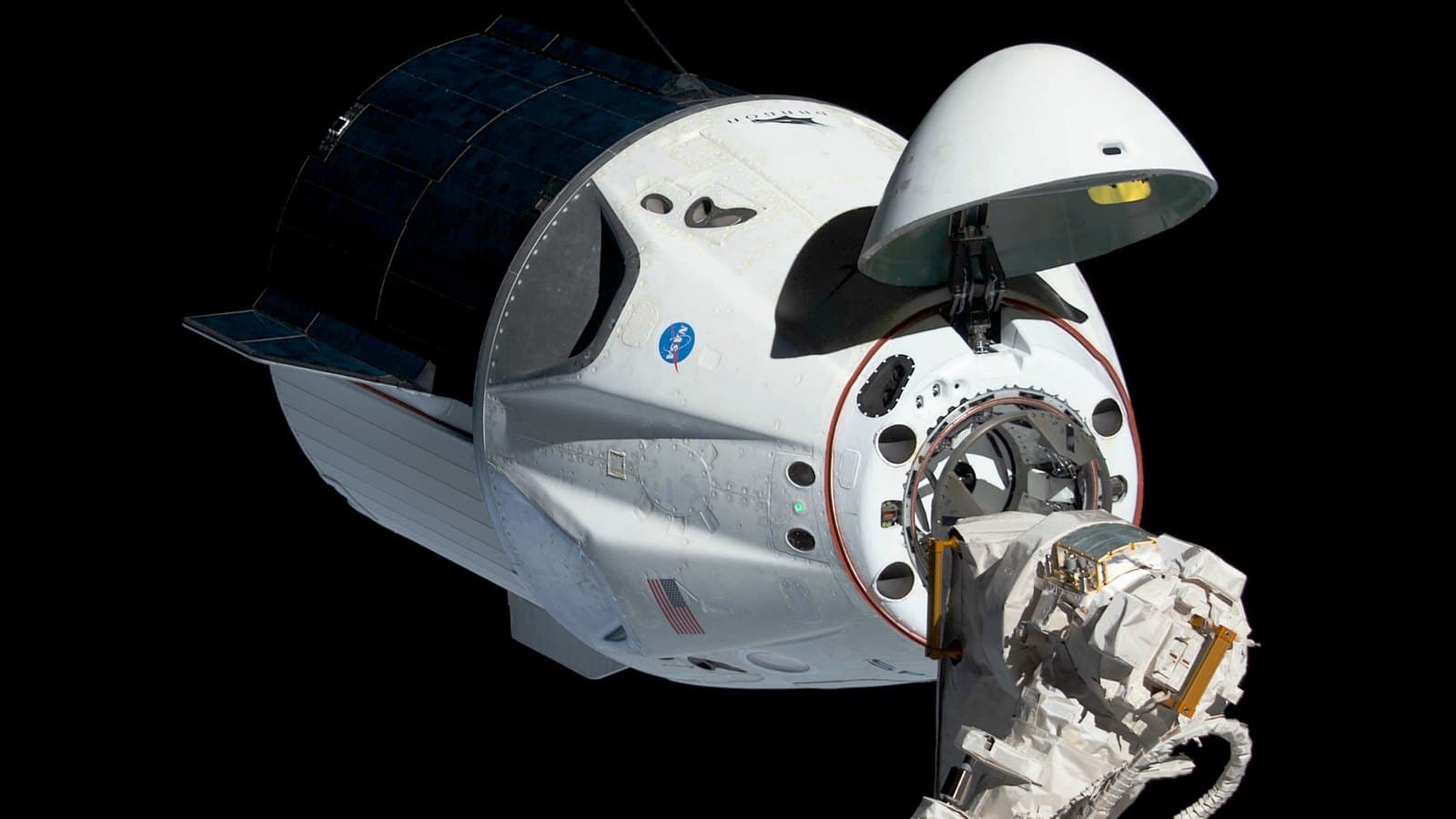
Starfall is a disk. The FAA's environmental assessment, still the most detailed public description of the vehicle, puts it at about 0.75 metres (2.5 feet) tall and 3.1 metres (10.2 feet) in diameter, with a mass of roughly 2,100 kg (4,600 lb) and room for up to 1,000 kg (2,200 lb) of payload. Spaceflight Now summarised those figures when the mission was announced. Wikipedia's entry adds a payload volume of 2.5 by 1.5 by 0.5 metres and a loaded mass of about 3,100 kg.
Its job is to bring things back. SpaceX frames the market as microgravity research and in-space manufacturing: experiments or production runs that benefit from weightlessness, sent up on one launch and returned on another. Zachary Luppen, an avionics supply chain engineer at SpaceX, made the case on the company's 23 June broadcast. "As we have seen demonstrated on the International Space Station, there is a huge opportunity to benefit life here on Earth through microgravity research and in-space manufacturing," he said, as Spaceflight Now reported.
Longer term, SpaceX talks about point-to-point cargo delivery: a capsule that comes down near where the cargo is needed rather than where the rocket launched. That remains an intention, not a service. The Starship connection matters too. Starship is meant to carry several Starfall units at once, which would let a single launch create several return opportunities. Wikipedia's summary of the design describes a top plate with manoeuvring thrusters, a heat shield that jettisons before a parachute-assisted splashdown, and recovery teams that retrieve the capsule, heat shield and parachutes.
The first flight came on 23 June 2026, on a Falcon 9 from the Cape. SpaceX played it quietly. The company did not disclose that Starfall was aboard until close to launch, showed only a rendering of the vehicle, and did not say during the broadcast when it would separate, Spaceflight Now noted. That makes the second flight different in one respect: Starfall flew on a mission where its presence was public in advance, in a stack of customer payloads, on a rideshare built around other companies' spacecraft.
Two flights, one licence
The FAA's final environmental assessment, published in late May 2026, covered two Starfall test missions. According to Wikipedia's account of the filings, those flights were meant to assess reentry, splashdown and recovery and to clear the way for safety licensing reviews. A finding of no significant environmental impact did not guarantee a reentry licence; SpaceX still had to meet the FAA's safety, risk and financial-responsibility requirements. The second of the two missions flew on 20 October. What the campaign has produced will depend on data SpaceX has not published.
What else rode along
Bandwagon is SpaceX's rideshare line for mid-inclination orbits, around 45 degrees, which puts payloads on a different ground track from the sun-synchronous Transporter missions. Bandwagon-5 was the fifth dedicated flight in that series. Exolaunch, the mission integrator, manifested 20 of the 31 customer payloads.
The manifest was heavy on satellites that listen and navigate. HawkEye 360 of Virginia sent four radio-frequency monitoring satellites. Xona Space Systems of California sent six navigation satellites. Iceye, a Finnish company, sent four spacecraft that Spaceflight Now described as communications satellites. Iceye is better known for radar Earth observation, and the report's wording is the one on the record. Planet's Pelican-12 Earth-observation satellite was also aboard, per Space.com.
Two other payloads deserve attention because they sit in the same business as Starfall. Varda Space Industries flew W-7, a return capsule about a third the size of Starfall. Despite the name it is Varda's ninth reentry capsule, following W-8 and W-9 on Transporter-18 earlier in October. W-7 carries the cancer drug Protac. "In microgravity, molecules can crystallize differently than they do on Earth, potentially producing crystal forms with improved properties, including better solubility," Varda wrote before launch, according to Spaceflight Now. The company's argument is that a drug manufactured in orbit may be easier to formulate, and that the only way to know is to bring samples home.
Portal Space Systems flew Starburst-1, a 260 kg spacecraft built for orbital manoeuvres with room for up to 50 kg of customer payload. Portal says the demo is fully funded by the company to prove the capability ahead of customer missions, which it advertises from 2027.
The silence is the story
By publication, nearly thirteen hours after liftoff, SpaceX had not issued a statement on Starfall's reentry or recovery. Trade coverage of the launch, including SpaceNews' report summarised by AIAA, described the ascent and the manifest. There was no confirmation of splashdown, no photograph of a capsule in the water, no note about the heat shield. The gap is not proof of failure. It is, though, unusual for a company that livestreams booster landings and posts mission pages within hours.
Two readings are available. The first is that SpaceX is treating Starfall as a test article and will speak when it has something worth saying, roughly how it handled the June flight. The second is that the flight did not go to plan, and silence is the default response to a bad result. Nothing in the public record separates them.
A reentry capsule is only useful if it comes back in a condition someone will pay for. That is the one thing this flight has not yet shown in public.
The distinction matters because Starfall is not a science project with a paper at the end. It is infrastructure for a market SpaceX wants to serve. A customer shipping a pharmaceutical experiment or a batch of optical fibre needs to know the odds that the capsule arrives, that the samples are intact, and that the schedule holds. Test flights are where those odds get established. A test flight with an undisclosed payload and an unconfirmed outcome produces no evidence a customer can use.
The regulatory angle sharpens it. The two-flight campaign was structured to validate reentry, splashdown and recovery before safety licensing reviews. If the second flight's result is unknown, so is the status of that campaign. A third flight would suggest the second did not close the question. No third flight has been announced.
The return leg as a business
SpaceX's business is built on the upward trip. Returning cargo at scale is a smaller market, and a harder one to enter, because the vehicle has to survive the atmosphere and then be found. Capsules that splash down need ships, crews and a sea state that cooperates. The FAA assessment puts the typical splashdown point about 1,300 km (810 miles) west of the United States or Mexico, which is a long way from a port.
Varda has a longer track record with commercial return capsules than SpaceX's Starfall programme, in a narrower way. W-7 is its ninth capsule, and it has now flown three in a month. That cadence is the clearest public evidence that returning material from orbit can become routine. SpaceX's advantage is capacity. A Falcon 9 rideshare already flies every few weeks, and a Starship could eventually carry several Starfall capsules in one go.
There is a financial backdrop, though it should not be overread. SpaceX is now a public company trading as SPCX. Reuters reported on 19 October that the shares were around $146, about 8 percent above the June 2026 IPO price, with a median 12-month target of $221. Seeking Alpha noted that investors were awaiting earnings when the Starfall launch went up. One capsule test will not move that story. The return leg is a small piece of a company valued mostly on launch cadence, Starlink and Starship.
What the record does and does not show
Start with the outcome. Nothing here establishes that Starfall reentered, that it splashed down, or that it was recovered. The confirmed events are the launch, the customer deployments and the booster landing. Any claim beyond that is unverified.
The payload is the second gap. SpaceX has not said what Starfall carried, if anything. That matches the June flight, and it means this mission cannot be judged as a customer demonstration, only as a vehicle test.
Then there is the specification. The dimensions and capacity figures come from an FAA environmental assessment and Wikipedia's compilation of it, not from a SpaceX data sheet. They may be accurate and still be incomplete. The point-to-point cargo idea is a stated intention with no announced customer and no announced date.
None of that makes the flight unimportant. A second flight is how a first flight stops being an anomaly. June showed that Starfall could be launched. This one was meant to show that it could be launched again, on someone else's mission, alongside 31 other payloads, without the whole thing being about Starfall.
The public record ends with the customer deployments. The interesting part happens later, out of camera range, when a small disk-shaped object meets the atmosphere at orbital speed and either survives or does not. SpaceX will know within hours. Everyone else is waiting for a sentence.
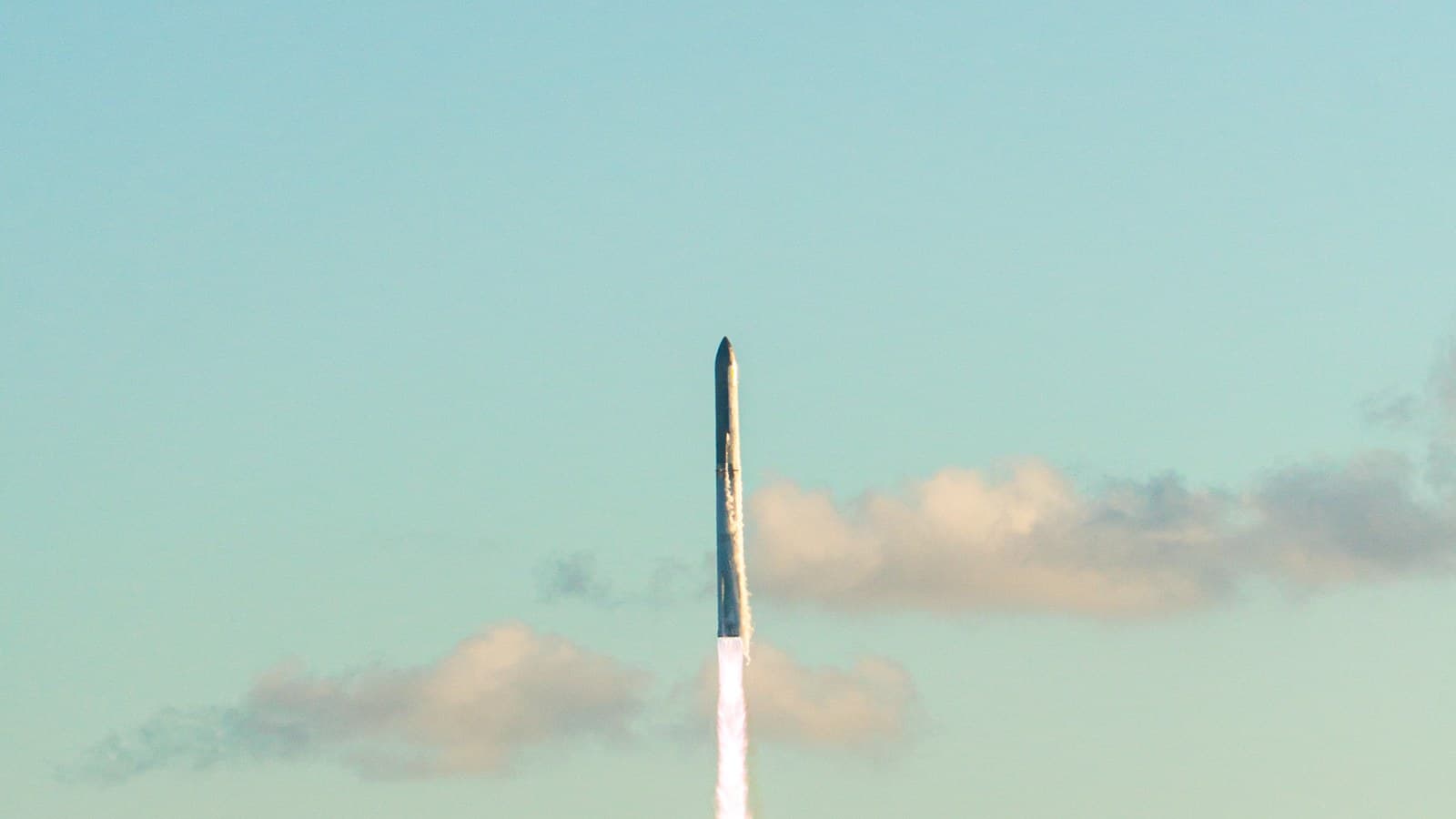
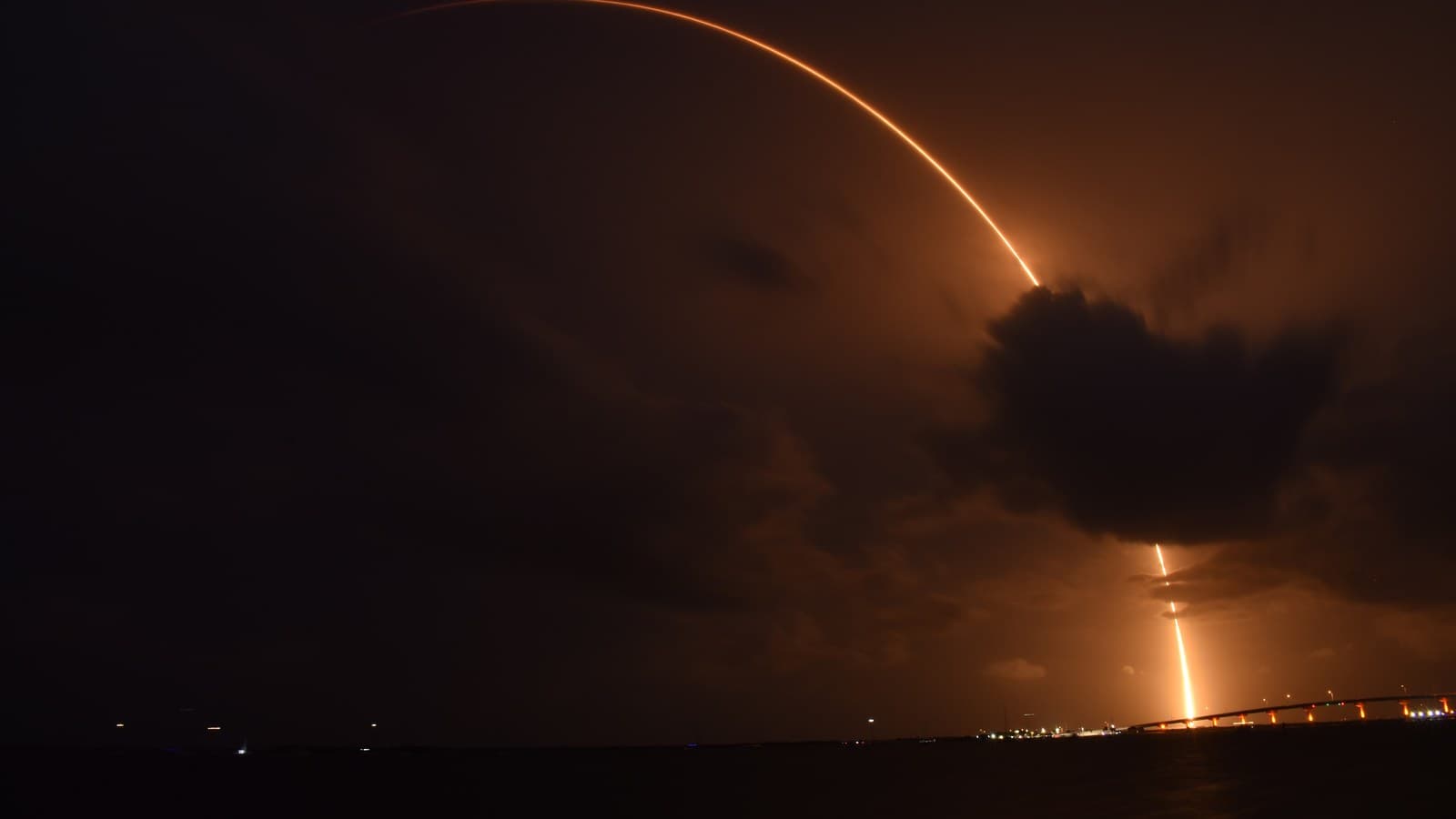
Cover image: U.S. Space Force photo by Gwendolyn Kurzen, public domain. The photo shows the first Starfall demo launch on 23 June 2026.
Tags
Frequently asked questions
- Did SpaceX's Starfall capsule land successfully on 20 October 2026?
- SpaceX has not said. The capsule launched on Bandwagon-5 and was due to separate last, about two hours and 48 minutes after liftoff, but as of publication there was no public confirmation that it reentered, splashed down or was recovered.
- What is SpaceX Starfall?
- Starfall is an uncrewed SpaceX capsule designed to bring payloads back from orbit and near orbit. It is intended for microgravity research and in-space manufacturing, with point-to-point cargo delivery as a longer-term goal. It first flew on 23 June 2026.
- How big is Starfall and how much can it carry?
- The FAA's environmental assessment describes a disk-shaped vehicle about 0.75 metres (2.5 feet) tall and 3.1 metres (10.2 feet) in diameter, with a mass of roughly 2,100 kg (4,600 lb) and room for up to 1,000 kg (2,200 lb) of payload.
- What else flew on Bandwagon-5?
- The Falcon 9 carried 31 customer payloads alongside Starfall, including four HawkEye 360 radio-frequency monitoring satellites, four Iceye spacecraft, six Xona Space Systems navigation satellites, Varda's W-7 return capsule and Portal Space Systems' Starburst-1 demo.

TPW Editorial
Editorial Team
TechPastWeek's editorial team reports and edits every story we publish. We research each piece against primary and credible secondary sources, and a human editor reviews and signs off before it goes live.