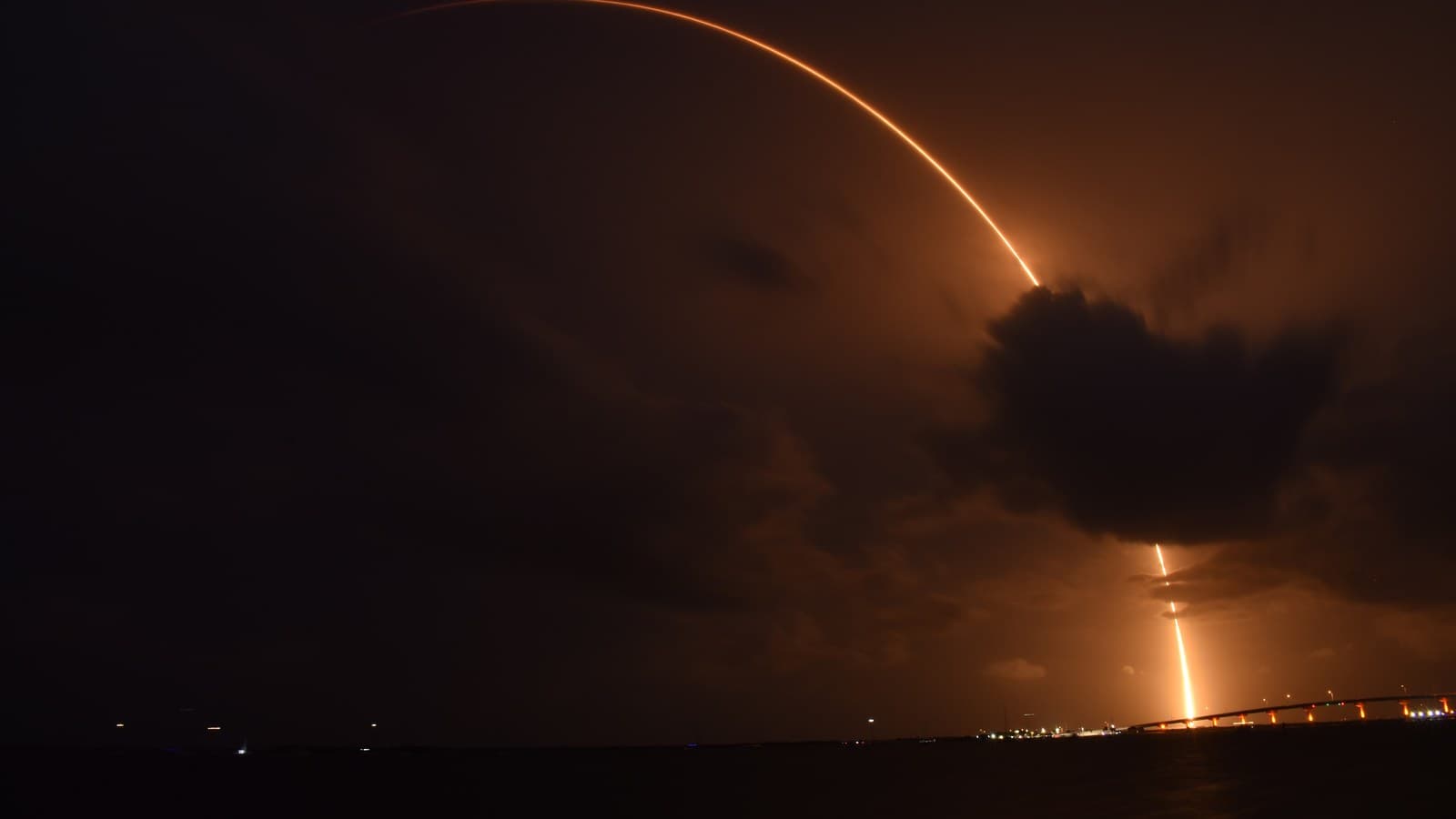
SpaceX Sets September 22 for Starship's First Orbital Flight and Its First Paying Payload
SpaceX is targeting September 22 for Starship's first orbital flight, a roughly ten-hour mission that would deploy 26 Starlink V3 satellites for the first time.

On this page
SpaceX said on September 15 that it is targeting September 22 for the first orbital flight of Starship, the 14th test of the vehicle and the first that is meant to put a payload into a closed orbit around Earth rather than follow a suborbital arc. A 75-minute launch window opens at 7:15 a.m. Central Time (12:15 UTC) from Starbase in South Texas, with the same window held on September 23 as a backup. The company says the attempt is pending regulatory approval.
Related reading: SpaceX's Starship Reaches Orbit for the First Time on Flight 14 · SpaceX Wants 80,000 Cell Sites, the Ground Half of a Fourth US Carrier.
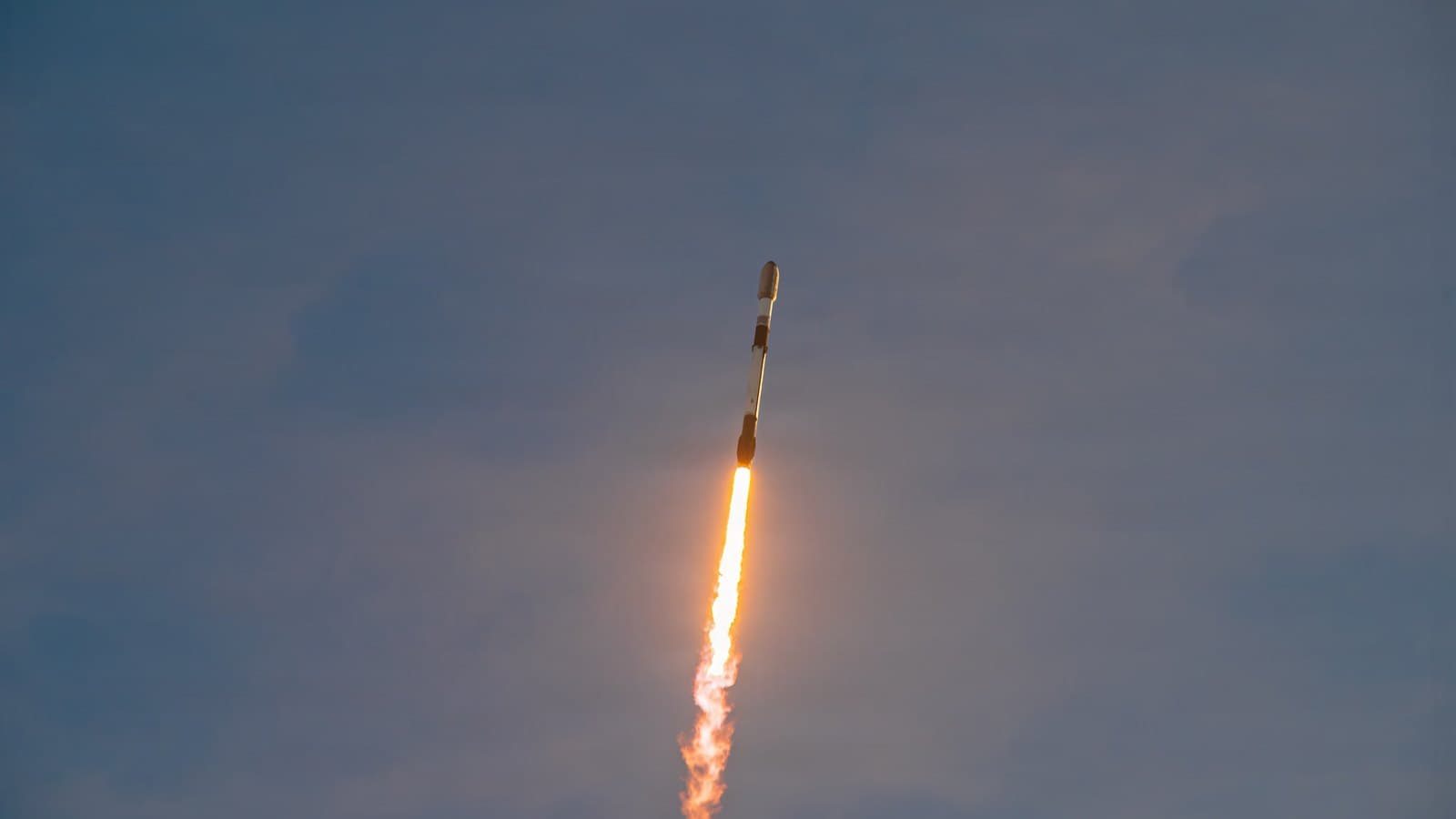
The mission profile is the most ambitious yet for the program. After stage separation, Super Heavy booster B21 will perform a boostback burn and an offshore landing burn in the Gulf of Mexico, a sequence modified after the previous flight. Ship 41, the upper stage, will then fire its Raptor Vacuum engines to reach orbital velocity of roughly 7.8 kilometres per second, enter an orbit about 275 kilometres up, complete six revolutions over a mission lasting nearly ten hours, deploy its satellite payload, perform a deorbit burn with a single Raptor engine, and re-enter for a controlled splashdown in the Pacific Ocean west of Chile, according to the mission description.
Neither stage will be caught. SpaceX has recovered Super Heavy with the launch tower's "chopstick" arms three times, but a ship catch has never been attempted and is not planned for this flight. Both vehicles will splash down in the ocean.
A revenue flight, not just a test
The payload is the part that changes the economics. Flight 14 is carrying 26 production Starlink V3 satellites, the larger generation of broadband spacecraft designed to be launched aboard Starship. SpaceX chief financial officer Bret Johnsen told investors at a Goldman Sachs conference on September 10 that the flight would be "a revenue-generating flight" specifically because those satellites will join the active constellation.
That framing matters for a program that has spent more than three years flying test articles. Twenty-six satellites is a small fraction of the thousands Starlink operates, but Starship's value proposition rests on deploying V3 satellites in volume at a cost per kilogram that Falcon 9 cannot match. A successful orbital insert and deployment would be the first operational data point for that argument.
Three of the 26 satellites have been modified with cameras aimed at the ship's heat shield. SpaceX intends to use the imagery to study tile performance during and after deployment, feeding the same problem that has dominated the program's reentry testing.
The heat shield is still the hard part
The reentry sequence is where the mission's risk concentrates. SpaceX has made several changes to the thermal protection system based on data from the previous flight, according to its mission page. They include extra retention mechanisms on tiles identified as most likely to shed during ascent, fixes for areas where plasma could flow behind tiles, and a curved tile design in some regions that has shown it can reduce heating in the gaps between tiles. Two tiles recovered from the previous ship, Ship 40, are being reflown on Ship 41, the first tile reuse in the program.
The booster changes address a specific failure. On the previous flight, the Super Heavy booster used all 33 engines on its boostback burn for the first time, but the three centre engines showed signs of ice clogging in the terminal phase, ending the burn early. The booster then lit 8 of 13 planned engines for its landing burn and made a hard splashdown. The booster flying this month has hardware changes to improve engine filtering and software changes to improve relight reliability.
The orbital profile also raises the bar for the regulators. For a suborbital flight, the Federal Aviation Administration analyses what happens if propulsion fails over water. For an orbital vehicle, it must also account for a deorbit burn that fails to fire, which would leave the ship in orbit and create an uncontrolled reentry risk. That analysis is why the mission is designated no earlier than September 22 rather than a firm date, and why the FAA's Current Operations Plan Advisory, which listed the September 22 window, is an airspace plan and not a launch licence.
The date has already moved twice
Flight 14 was previously targeted for around September 15, then September 18, before SpaceX settled on September 22. The date is designated "no earlier than," meaning it depends on a launch licence, the range, weather and a final flight-readiness review. Starship schedules have slipped repeatedly throughout the program, and a scrub or a further slip would be unremarkable.
Why the orbital milestone took this long
Starship debuted in April 2023 and has flown twice in 2026. All 13 previous flights were deliberately suborbital, designed to test ascent, stage separation, reentry and landing without committing to an orbital trajectory. Reaching orbit is not simply a matter of adding velocity; it requires the vehicle to demonstrate reliable in-space engine relight, the capability that a deorbit burn depends on.
SpaceX says the ship will only perform its orbital insertion burn after the flight control team confirms sufficient redundancy on the hardware needed for the deorbit burn at the end of the mission. If that condition is not met, the ship would follow a shorter trajectory rather than risk becoming stranded in orbit.
The mission also fits a broader launch cadence. Falcon 9 was flying its 106th mission of 2026 in mid-September, on pace to approach last year's record of 165 orbital flights, and the Space Force has expanded its national security launch contracting while betting on proliferated low Earth orbit constellations. Starship is meant to take over the heaviest of those missions, including the large Starlink V3 batches, once it reaches operational cadence. The company also needs orbital refuelling and ship recovery to work before the vehicle can support lunar or Mars missions, and both are deferred to later flights.
Why Starlink V3 needs Starship
Starlink V3 is a larger, higher-capacity satellite generation designed around Starship's payload bay. Falcon 9 can launch V2 satellites in useful numbers, but the build-out of the bigger spacecraft depends on a vehicle that can lift them in volume, which is why the first operational deployment of V3 makes Flight 14 a commercial milestone as well as a technical one. SpaceX has told investors the flight will generate revenue because the satellites will join the active constellation, a rare thing for a test campaign to claim.
The scale of the constellation is the point. Starlink is the revenue engine that funds much of SpaceX's ambition, and each generation of satellites has been tied to the launch capacity available to carry it. If Starship can insert 26 V3 spacecraft on a single flight and repeat the feat, the economics of the constellation change in a way Falcon 9 cannot match. If it cannot, the V3 rollout stays tied to a smaller vehicle that was never designed for it.
The same logic applies to SpaceX's other plans. Orbital refuelling, a prerequisite for Starship's lunar lander and for any Mars architecture, cannot be tested until the vehicle reliably reaches orbit and returns. The company deferred a ship catch in August, with Elon Musk saying a tower catch of the upper stage would likely come "in a few months," after a landing-zone safety review at Starbase is completed with the FAA. Flight 14 does not advance that directly, but it is the gate the later milestones sit behind.
A cadence problem, not just a rocket problem
Even a clean orbital flight would leave Starship well short of operational. The vehicle has flown twice in 2026, and reaching a useful launch rate requires far more than occasional test flights. Falcon 9, by contrast, was flying its 106th mission of the year in mid-September, on pace to approach last year's record of 165 orbital flights, according to TechTimes. The comparison is unfair to a test program, but it is the standard the market applies when Starship is pitched as the vehicle that will deploy large satellite batches and support national security missions.
Ground infrastructure has to keep pace with the vehicle. Starbase needs a working catch system, landing-zone safety approvals and the ability to turn a booster and ship around quickly. Each of those is a separate problem from reaching orbit, and each has its own timeline. Flight 14 is best understood as the moment the program moves from proving the vehicle can fly to proving it can be used.
What to watch
The first milestone is simply whether Ship 41 completes its two engine burns and settles into the planned 275-kilometre orbit. If it does, the deployment of 26 Starlink V3 satellites becomes the program's first operational payload release and the first test of the ship's satellite dispenser. The second is the deorbit and reentry, where the heat shield changes will be judged against a full orbital energy profile rather than the shallower suborbital reentries of earlier flights. The third is timing for the next steps. Ship catches, orbital refuelling and a higher flight rate all remain ahead, and none of them can proceed until SpaceX shows it can put a payload in orbit and bring the ship home in one piece.
A successful Flight 14 would not make Starship operational. It would make it credible, which is the distinction the program has been chasing since 2023.
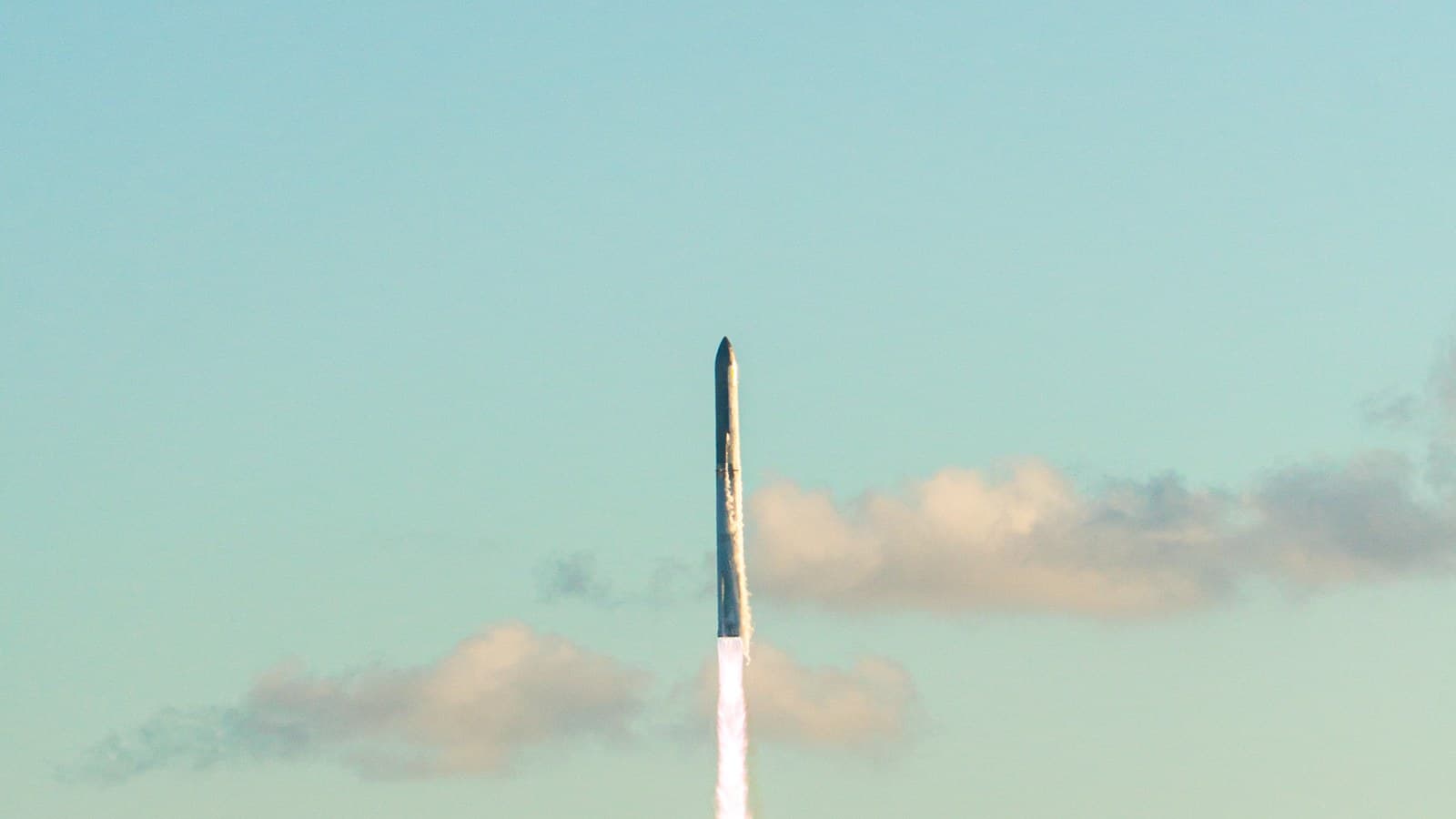
Cover: Starship lifting off from Starbase during flight test 11, by Shujianyang (CC BY-SA 4.0) via Wikimedia Commons.
Tags

TPW Editorial
Editorial Team
TechPastWeek's editorial team reports and edits every story we publish. We research each piece against primary and credible secondary sources, and a human editor reviews and signs off before it goes live.