SpaceX Wants 80,000 Cell Sites, the Ground Half of a Fourth US Carrier
SpaceX is in talks to lease access to at least 80,000 US cell sites, about half the country's towers, as it builds the ground layer of a fourth carrier.

On this page
Key takeaways
- Bloomberg reported on 22 October 2026 that SpaceX is in talks to secure access to at least 80,000 US cell sites, naming Crown Castle among the tower companies involved.
- The 80,000 target equals about half of the 158,500 purpose-built cell towers that the Wireless Infrastructure Association counted in the US last year.
- On 8 October 2026 SpaceX said it had acquired up to 14 MHz of paired low-band spectrum in the 800 MHz band and won FCC approval to deploy 15,000 V2 Starlink Mobile satellites.
- TD Cowen estimated that a nationwide terrestrial network for SpaceX would cost more than $80 billion and take many years to build.
- No lease has been announced, and SpaceX, Crown Castle, American Tower and Vertical Bridge did not immediately respond to Reuters requests for comment.
SpaceX is in talks to secure access to at least 80,000 cell sites across the United States, Bloomberg reported on Thursday, 22 October 2026, citing people familiar with the matter. The company is negotiating with at least one major cellular-infrastructure company, and Crown Castle, which operates about 40,000 US towers, is among those named.
Related reading: SpaceX's Starship Reaches Orbit for the First Time on Flight 14 · SpaceX Sets September 22 for Starship's First Orbital Flight and Its First Paying Payload.
Nothing has been signed. The talks are private, the sources are unnamed, and the reporting carries no price, no lease term and no construction schedule. SpaceX, Crown Castle, American Tower and Vertical Bridge did not immediately respond to Reuters requests for comment, Reuters reported. The 80,000 figure is a target described by people outside the company, not a completed contract.
What the number does show is the shape of the network SpaceX is assembling: spectrum it now owns, satellites the FCC has approved, and a ground layer it would rather rent than build.
A target equal to half the country's towers
The 80,000 sites are easier to read against the physical footprint. The Wireless Infrastructure Association counted 158,500 purpose-built cell towers in the US last year, according to Reuters, so the reported target is about half of them.
The ownership of that footprint is concentrated. Crown Castle holds roughly 40,000 US towers, American Tower about 42,000 sites, and privately held Vertical Bridge around 18,000. Three landlords control most of the structures a new carrier would need, and each has spent decades accumulating them piece by piece through zoning approvals, land leases and construction.
That is the part a satellite company cannot manufacture in orbit. A tower takes years to permit and build, and the tenants who occupy it sign multi-year leases. Renting space skips the slowest part of network deployment.
The spectrum half of the plan
The tower talks follow a spectrum announcement two weeks earlier. On 8 October 2026, SpaceX said it had acquired a portfolio of low-band licences, up to 14 MHz of paired spectrum in the 800 MHz band, and that the FCC had approved deployment of 15,000 V2 Starlink Mobile satellites promising more than 100 times the bandwidth of the current generation. The company said the combination would make Starlink Mobile the first network operator to deploy both satellite and terrestrial spectrum.
SpaceX had already bought spectrum above that band. In 2025 it acquired 2 GHz airwaves from EchoStar for $17 billion, The Verge reported. The 800 MHz licences add the band that behaves differently: low frequencies travel further, bend around obstacles and pass into buildings, which is why carriers have always used them for coverage rather than capacity.
Crown Castle's finance chief described the logic on the tower company's earnings call. “800MHz does solve one of the critical challenges for an eventual SpaceX deployment, which is you need low band to get into buildings,” Sunit Patel said, according to Data Center Dynamics. He added that low band is what provides breadth of coverage.
The architecture that results is conventional: low-band radios on towers and rooftops for reach and indoor service, higher frequencies and satellites for capacity, and a handset that moves between them. What is unusual is the owner, since one company would hold the satellites and the ground network they fall back to.
Who controls the bottleneck
Tower leasing is a business with unusual economics. The structure is expensive to build once and cheap to add a tenant to, so each additional antenna on a tower carries a high margin. That is why the tower business has produced steady rent for years, and why landlord shares move when a large potential tenant appears.
For SpaceX, the same economics work in reverse. Renting space on 80,000 sites means paying rent to companies that know the value of their footprint and face little competition on individual structures. A master lease agreement covering tens of thousands of sites would be an unusually large contract for the tower industry, and the terms would set the cost base for a national network. It would also turn capital spending into a recurring rent bill, which changes how the build looks on a balance sheet even when the total is similar.
The alternative is to build, and it is slow. Building towers independently means repeating the site-by-site work the landlords have already done. TD Cowen put a number on the alternative: a nationwide terrestrial network would cost more than $80 billion and require many years and billions of dollars in additional spending, Reuters reported. That estimate is an analyst calculation, not a SpaceX budget, and it describes a full build rather than a leased footprint.
What is reported, and what is not
Reported by Bloomberg, with Reuters relaying the account: the 80,000-site target, talks with at least one major tower company, and Crown Castle's involvement. Confirmed by SpaceX and the FCC: the 800 MHz licences and the approval to deploy 15,000 V2 satellites. Not reported anywhere: the price, the lease length, whether SpaceX equipment would be added to existing structures, whether the FCC would review a transaction, or a launch date for commercial service.
The market read it as a threat
Investors treated the report as a competitive event. Shares of AT&T, Verizon and T-Mobile fell between 4.2% and 5% in extended trading after it appeared, Reuters reported. A move that size across three carriers at once reads as a judgment about future pricing, not about this quarter's subscribers.
The question came up on Crown Castle's own earnings call. Asked on Wednesday, 21 October 2026 about leases with SpaceX and Amazon, chief executive Christian Hillabrant declined to discuss individual customers.
“I don't think I want to get into customer-specific detail, but you can assume that we're talking to all parties.” — Christian Hillabrant, chief executive of Crown Castle
That is the closest thing to confirmation on the record. It establishes that Crown Castle is in conversations, and it fits the Bloomberg account without verifying it. The company has not said a lease is close, and the other two large landlords have not commented publicly.
Musk has been explicit about the ambition. On SpaceX's earnings call in the week of 19 October, he said the company would build terrestrial networks “so there's broad-based connectivity anywhere that SpaceX and Starlink are allowed to operate,” and that launches plus spectrum purchases “will pave the way for Starlink Mobile to become a major mobile carrier in the US,” Bloomberg reported.
Not everyone in the industry thinks spectrum and towers settle the question. T-Mobile's John Saw has warned that building a competitive network takes more than spectrum, DCD reported. The scepticism has a basis: incumbents compete on density, backhaul, retail distribution and handset certification, and a tower lease supplies only the first.
The arithmetic of a fourth carrier
A national US carrier needs three things that are hard to buy quickly: licensed spectrum, physical sites and satellite capacity for coverage outside the grid. SpaceX now has a route to all three, which is why the tower report landed as a carrier story rather than a real-estate story.
The spectrum position is real but narrow. Fourteen megahertz of paired low-band is a coverage layer, not a capacity layer: it reaches handsets across a wide area, and it cannot carry the traffic of a dense city on its own. That is where the 15,000 approved satellites come in, and where the plan starts to depend on execution as much as on acquisitions.
The satellite figure needs care. The FCC approved deployment of 15,000 V2 satellites; it did not put them in orbit. How fast SpaceX can build and launch that constellation is a separate question from whether it can lease towers, and the two schedules have to meet for the network to work as described.
Then there is the regulatory layer. The reporting does not say whether an agreement to lease space on 80,000 towers would require FCC review. Spectrum transfers normally do; tower leases normally do not. A transaction that combines both could invite scrutiny from regulators and from competitors who would have standing to object.
Caveats
The account rests on people Bloomberg did not name, and none of the companies involved has confirmed it. Crown Castle has described conversations without naming a counterparty, and no lease has been announced by any of the four.
The 80,000 figure also mixes two units. Bloomberg reported cell sites; the comparison with 158,500 uses purpose-built towers counted by the Wireless Infrastructure Association. A site can host equipment from more than one operator, so the two numbers describe related things, not the same thing. The $80 billion is TD Cowen's estimate of a full build. It is not a SpaceX budget, and no price for any of the reported sites has been disclosed.
What the silence leaves open
The largest unknown is commercial. A master lease covering half the country's towers would be priced against a tenant that has no alternative at that scale, and the landlords have no reason to discount. Whether SpaceX would pay per site, per antenna or per unit of capacity, and for how long, is not reported.
The second unknown is technical. Adding a new tenant to a tower usually means new mounts, cabling and power, and sometimes structural reinforcement. At 80,000 sites, that work is itself a multi-year programme, and it would run alongside the satellite launches, not after them.
The third is competitive response. If SpaceX leases the same towers the incumbents use, its service stops looking like an add-on to their coverage, and pricing pressure would likely show up first in rural and prepaid segments where coverage is the selling point.
For now the count is the one number in the story that can be checked. Eighty thousand sites is half the country's towers, and a company that controls satellites, spectrum and a lease on that footprint has assembled the components of a fourth carrier. The leases themselves remain a report, and the tower landlords have not confirmed a single one.
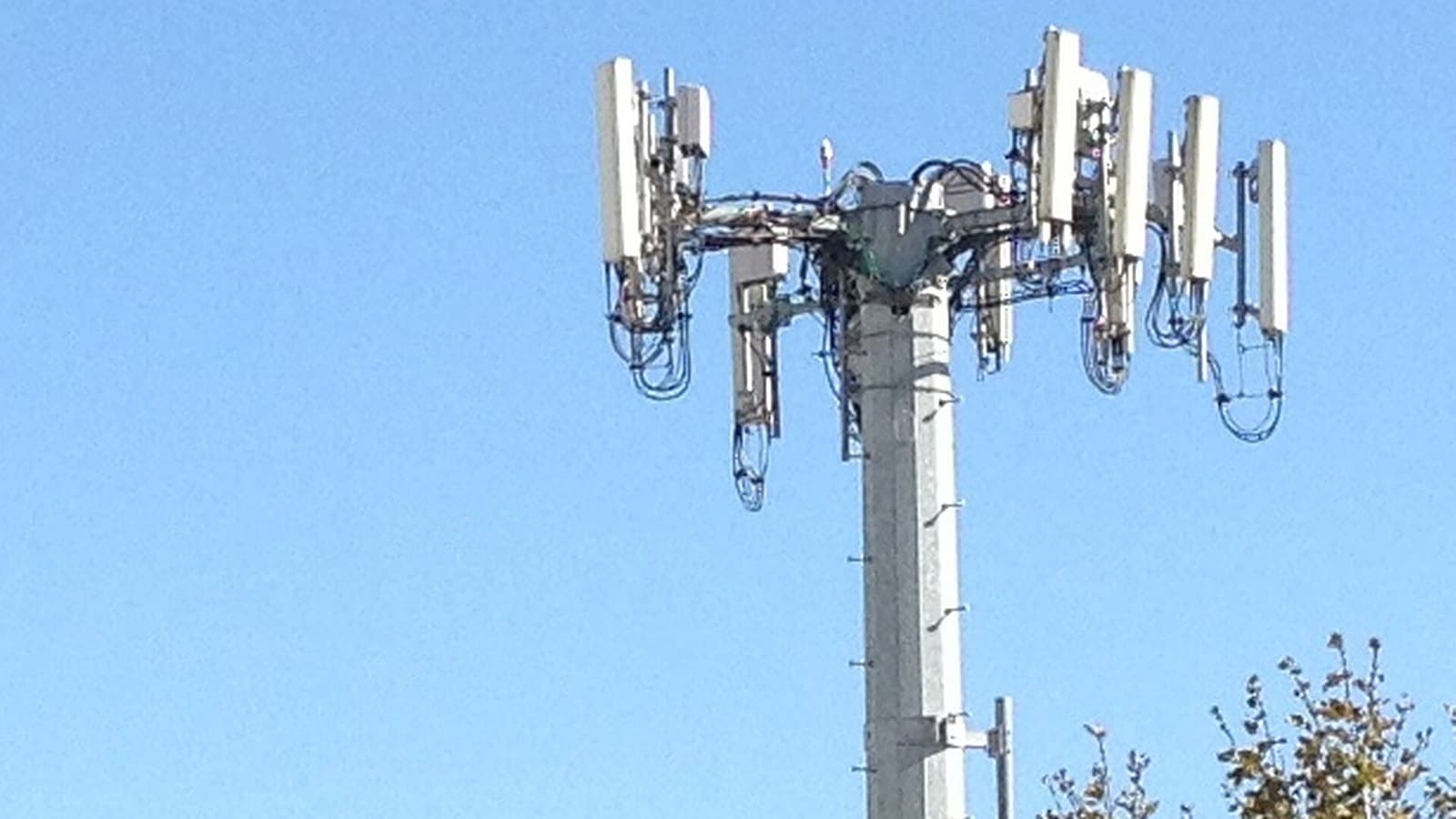
Cover image: An AT&T cell tower on Howard Street in San Francisco. Photo by David Broad, Wikimedia Commons, CC BY 3.0.
Tags
Frequently asked questions
- What did Bloomberg report about SpaceX and cell sites?
- Bloomberg reported on 22 October 2026 that SpaceX is in talks to secure access to at least 80,000 cell sites across the United States, citing people familiar with the matter. The report named Crown Castle as one of the tower companies in talks.
- Why does SpaceX need towers if it has satellites?
- Satellites can cover wide areas, but low-band terrestrial radios carry traffic indoors and in dense places where a signal from orbit is weak. Leasing existing towers gives SpaceX a ground network years faster than building one from scratch.
- Has SpaceX signed a deal with Crown Castle?
- No. Crown Castle's chief executive said on the company's 21 October 2026 earnings call that it talks to all parties, without naming customers. No lease, price or timeline has been announced.
- How much would a SpaceX mobile network cost to build?
- TD Cowen estimated that a nationwide terrestrial network would cost more than $80 billion and take many years, according to Reuters. The figure is an analyst estimate, not a number SpaceX has published.

TPW Editorial
Editorial Team
TechPastWeek's editorial team reports and edits every story we publish. We research each piece against primary and credible secondary sources, and a human editor reviews and signs off before it goes live.